A new documentary series, “Improbable Success,” looks at countries that have thrived by implementing free-market policies. The series is currently running on Sinclair Broadcast Group stations, which are found across the country, from WJLA in Washington, D.C., to KBFX in Bakersfield, California. (Sinclair stations are variously affiliated with all major networks.) This weekend, including at noon Sunday on WJLA, host Emerald Robinson will look at Chile’s economic growth since its reforms around 1980. Experts on the show include Jose Pinera, Ian Vasquez, and Richard Rahn, along with several Chilean entrepreneurs. Last week featured Estonia; next week, Switzerland.
Cato at Liberty
Cato at Liberty
Topics
Guns, Gay Persons, and Security, Before and After Orlando
Some work by Catoites responding to the lethal rampage by an Islamic State devotee at closing time last Sunday morning in Orlando’s LGBT-oriented Pulse nightclub:
- Michael Tanner on why our first reactions should not be partisan and why neither Team Red nor Team Blue delivered a message fully in keeping with national unity.
- I’ve got a piece at Ricochet about how the killer’s psychobiography is of less importance than his ideology: “Don’t Blame ‘Self-Loathing,’ Blame Jihadism.”
- Marian Tupy at Cato’s Human Progress website on how the evolution of social and cultural norms has made America both more socially tolerant and safer. Related, and published a few weeks before the massacre, from Cato Vice President David Boaz: “Capitalism, Not Socialism, Led To Gay Rights.”
- Adam Bates on terror watch lists and “no-fly, no-buy” gun control proposals; Ilya Shapiro on due process; and Trevor Burrus on why, contra the American Medical Association, shooting homicides in America (which have drastically declined in number from earlier levels) do not constitute a “public health crisis.”
- New Cato podcasts on motives of mass killers with Trevor Burrus and kneejerk policy prescriptions after tragedy with Adam Bates; and broadcast clips of Roger Pilon on gun control on KQED’s Michael Krasny show and Julian Sanchez on FBN’s Kennedy.
Writes Michael Tanner in his piece: “As Representative Justin Amash (R., Mich.) noted, he has heard ‘Democrats and Republicans endorse violating the 1st, 2nd, 4th, 5th, 6th, and 8th Amendments’ in response to the attack. About the only thing we are missing is a call to quarter troops in our homes.”
And more: “Without self-defense, there are no gay rights.” Dave Kopel has a post today at the Volokh Conspiracy, “The history of LGBT gun-rights litigation,” citing the pioneering work of several scholars and activists whose name will be familiar to Cato readers, including Cato University director Tom Palmer, leading up to and following the landmark D.C. v. Heller individual rights case.
The Dissent Channel Goes Public
This morning, the New York Times and the Wall Street Journal published excerpts and summaries of an internal memo by 51 State Department officials calling for airstrikes against the Assad regime in Syria. The key idea expressed in the memo is simple: take military action immediately to stem the tide of violence in Syria. It’s an understandable sentiment, especially from those who have been dealing with Syria’s barbaric civil war on a daily basis, as many of the signatories have. Unfortunately, it is also an exercise in wishful thinking, ignoring the concrete problems with further U.S. military commitment in Syria which have formed the basis for the Obama administration’s refusal to overthrow Assad.
The memo criticizes the Obama Administration’s decision to eschew military action in Syria, arguing instead for the “judicious use of stand-off and air weapons” against the Assad regime. Though such internal memos contesting the administration’s official policy – known as a ‘dissent channel cable’ – are not uncommon, the large number of signatories is more unusual. The memo blames the Assad regime’s violence towards civilians for both Syria’s instability and the appeal of ISIS, arguing that the moral rationale for airstrikes “is unquestionable.”
It is this moral rationale which appears to figure more highly for the authors than practical questions. Despite this, the memo stops short of explicitly calling for regime change, arguing instead that airstrikes will provide a credible threat against Bashar al-Assad and more solid footing for a future diplomatic settlement. But while the authors note that they are not “advocating for a slippery slope that ends in a military confrontation with Russia,” they fail to note how such a confrontation could be avoided. And in calling for partnership with moderate Syrian rebels, the memo appears to gloss over the many problems inherent in finding and arming such ‘moderates,’ which often coexist and fight alongside far more extreme groups.
At the same time, such arguments sound suspiciously like those made in advance of the 2011 Libya intervention, which did not explicitly call for regime change, but embraced it wholeheartedly almost as soon as airstrikes began. And though they say otherwise, it is unclear how the authors’ call to work with Syrian rebel groups against both ISIS and the Assad regime is not a call for regime change in Syria. Among the more ironic lines reported to be in the memo is an argument that U.S. military action would “increase the chances for peace by sending a clear signal to the regime and its backers that there will be no military solution to the conflict.”
As observers have noted, it’s extremely unlikely that this memo will alter the Obama administration’s stance on Syria. The White House has been clear that any benefits of intervention against the Assad regime are far outweighed by the inherent risks of escalation and the practical obstacles to it. Yet the simple fact that the memo was simultaneously leaked to the New York Times and Wall Street Journal, rather than simply referred through internal channels suggests that it was intended as much for public ears as official ones. Its existence has the potential to shape public debates on Syria in this election year.
The bias towards action seen in this report is understandable. In the face of human suffering, it is far easier to advocate for quick, effective military strikes than it is to pursue a process of patient diplomacy and humanitarian aid. But it is not always better in practice. It is extremely unlikely that U.S. airstrikes will improve the diplomatic process, or lessen Syria’s humanitarian toll. At the same time, airstrikes carry major risks: conflict with Russia, the empowerment of extremist groups, the further destabilization Syria, or even the collapse of today’s peace talks. The authors’ wishful thinking cannot reduce these risks.
Related Tags
You Ought to Have a Look: Paris Agreement Prospects, EPA Shenanigans, House Says No to a Carbon Tax
You Ought to Have a Look is a feature from the Center for the Study of Science posted by Patrick J. Michaels and Paul C. (“Chip”) Knappenberger. While this section will feature all of the areas of interest that we are emphasizing, the prominence of the climate issue is driving a tremendous amount of web traffic. Here we post a few of the best in recent days, along with our color commentary.
—
We’ll get right to it.
First up this week is an examination by the Global Warming Policy Foundation (GWPF) of the prospects of a quick ratification of the Paris Climate Agreement—something that President Obama desperately wants in order to insure that if the next president proves hostile to the Agreement, he won’t be able to derail the whole thing.
While Obama was all smiles when Indian Prime Minister Narendra Modi was in town recently discussing cooperation on the climate, Indian officials were quick to point out that we shouldn’t get the wrong idea, stating that India is “unlikely to sign the Agreement this year, or even the next.”
The GWPF analysis takes us through India’s stance was well as the opinions of other countries which are vital to the Agreement’s ratification. Some have ratified it already, while others, like India, aren’t rushing forward. From the GWPF:
Representing the two largest greenhouse gas emitters, the joint US and Chinese commitment to early entry into force is undoubtedly significant. Nonetheless, the picture becomes significantly more complicated looking at the next two largest emitters: Russia and India. Both countries have indicated that they are prepared to wait before they ratify the Agreement, wanting a clear set of rules and a greater recognition of differentiated responsibilities. The EU process of securing unanimity between 28 member states is likely to mean a significant delay to European ratification. This means that early entry to force is dependent on building a coalition of many smaller countries, a procedure that is likely to be challenging.
Next up is a good piece by Competitive Enterprise Institute’s Marlo Lewis showing just how dodgy the EPA’s calculation of “benefits” for their recent emissions regulations really is. Turns out that in addition to double counting them, they find health benefits from reducing emissions in regions which remain below the EPA’s cut-off concentrations for deleterious effects. Marlo wonders how it is that
EPA does not explain or try to justify why associations between PM2.5 [tiny particulate matter] and health that are too weak or uncertain to be used to determine what is requisite to protect the public health with an adequate margin of safety are strong and certain enough to calculate regulatory benefits.
He concludes that the reason is that if the EPA were to remove the monetized health “benefits” from those areas which are projected remain in attainment with EPA standards (which turns out to be most of impacted regions), the “benefits” drop to near zero. This not only applies to the EPA’s Mercury and Toxic Standards (MATS) rule, but to their Clean Power Plan (CPP) as well. Such a result would, in Marlo’s words, be a “potential PR disaster for the agency.”
And we can’t have that—so we imagine that the EPA will stick with their inconsistent methodology.
But some things are looking up.
Last week, the House of Representatives passed Rep. Steve Scalise’s (R‑LA) resolution “Expressing the sense of Congress that a carbon tax would be detrimental to the United States economy” by a vote of 237 to 163. Not a single Republican vote was cast against the resolution.
Seems “conservative thinkers” still have a lot of work ahead of them.
All the while, their work is being made more difficult by growing scientific evidence that the climate’s sensitivity to carbon dioxide emissions is considerably less than advertised—a situation which reduces the urgency to “do something” (like implementing a carbon tax) about global warming.
Which brings us, again, to the topic of the social cost of carbon—the monetary manifestation of the impetus to tax carbon dioxide emissions in the first place.
Before signing out this week, we wanted to point you to an article by Ross McKitrick in the Financial Post in which he explains the importance of his new analysis of the government’s social cost of carbon determination—an analysis that we highlighted in last week’s YOTHAL. In summary, Ross writes:
The numbers produced by the [U.S. federal government] have a large and growing influence over energy and economic policy in the U.S. and Canada and elsewhere. Unfortunately, for all its claims about following the science, where it really counts it ended up peddling guesstimates based on inconsistent models. To borrow a phrase, it is time to restore science to its rightful place. Calculations behind the social cost of carbon need to reflect empirical evidence about low climate sensitivity, and when this is done, the numbers appear to be much lower than those currently in use.
You ought to have a look.
Related Tags
Funding the FBI
On Fox News last night, Megyn Kelly agreed with her guest James Kallstrom that the FBI needs a larger budget. The horrific attack in Orlando has raised the issue of whether the FBI has sufficient resources to investigate potential terrorists.
I don’t know how large the FBI budget should be. The agency does fill a lot of crucial roles, including tackling never-ending corruption in federal, state, and local governments.
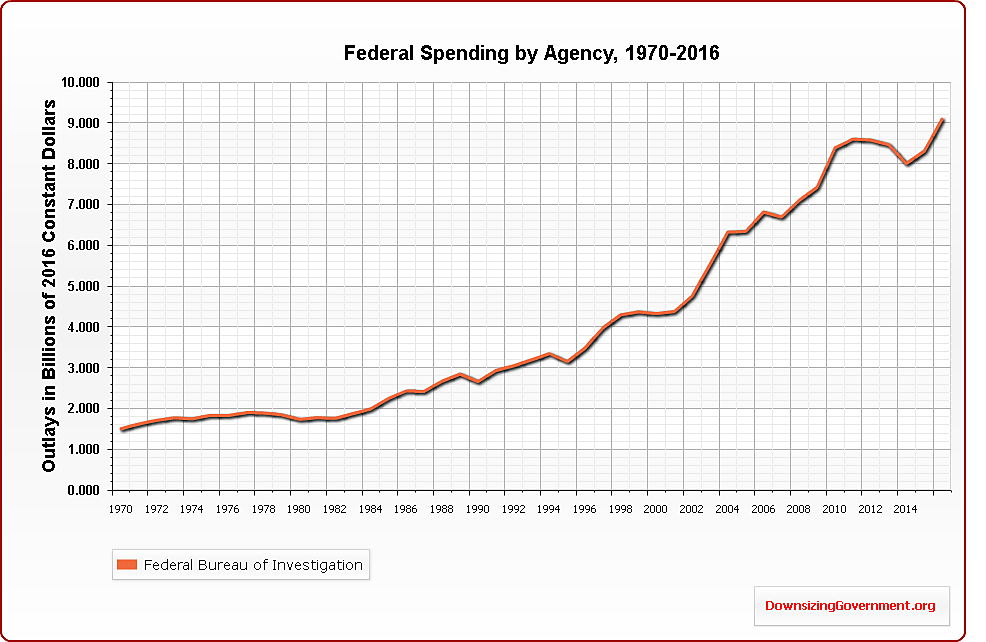
But I do know that the FBI has not been starved; its budget has grown rapidly. The chart, from DownsizingGovernment.org, shows that FBI spending in constant 2016 dollars has more than tripled since 1990, from $2.7 billion to $9.1 billion.
Related Tags
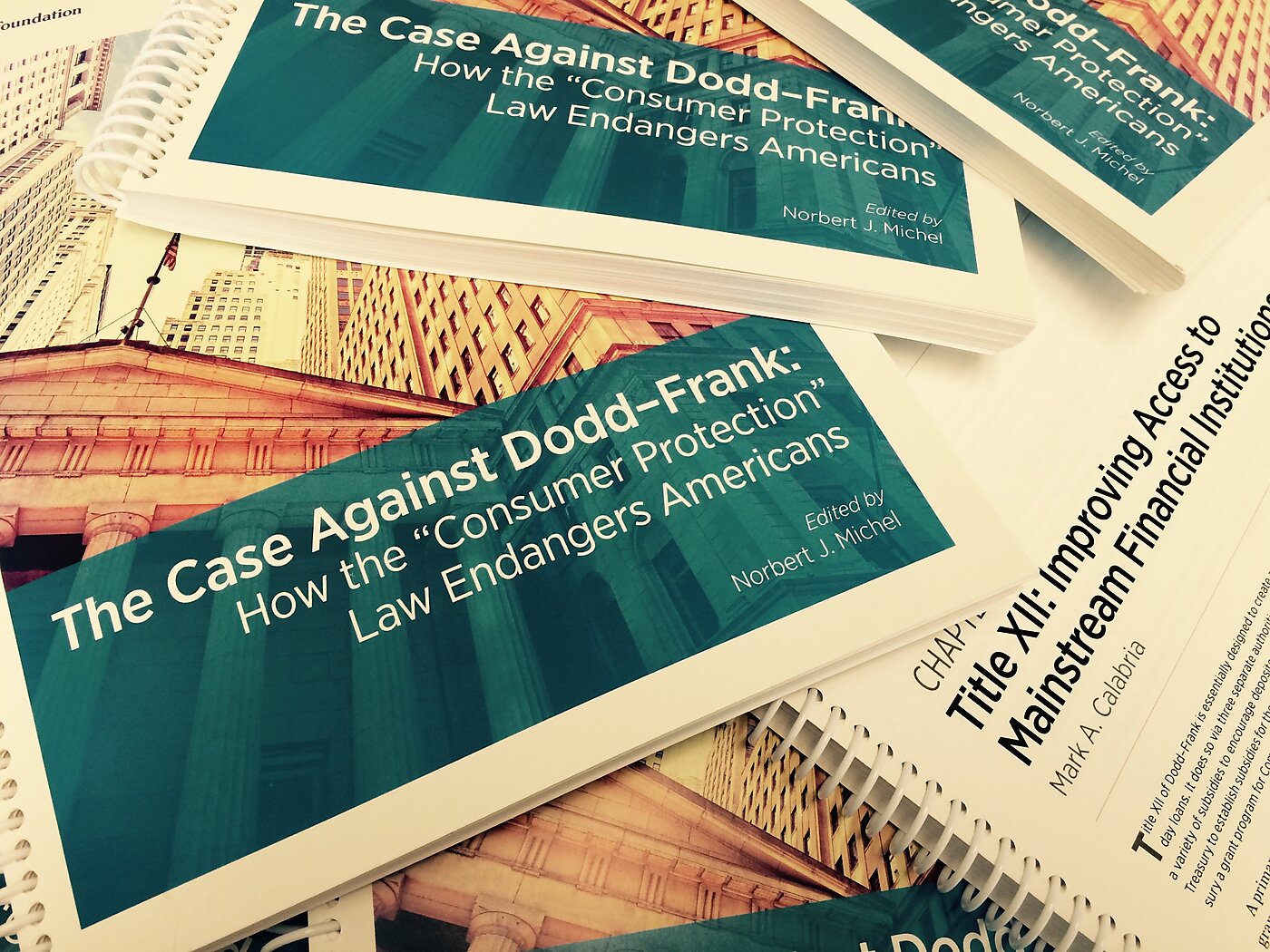
The Case Against Dodd-Frank
The book is particularly helpful because of its “problems and solutions” format, dissecting the problems of a specific section or title of Dodd-Frank, and then offering a plan policymakers can take to revise it. Of course, the solutions presented are second-best, at best. In our legislative system, shrinking the size of the regulatory state is much more difficult than growing it. When such beneficial shrinking does occur, it tends to be piecemeal. The solutions posed here are attuned to this reality.
The book offers a convenient chapter-by-chapter summary in its introduction, along with 10 principles governing the authors’ reform proposals. But let’s highlight a few topics of particular salience to Alt‑M: deposit insurance, mortgage securitization provisions, and Federal Reserve emergency lending.
Deposit Insurance
What makes deposit insurance so destabilizing? Mark Calabria argues that depositors have no incentive to closely scrutinize their bank’s capital holdings and investment activity. Consequently, bank managers do not have to worry that excessive risk taking will drive them away.
One doesn’t have to be a limited government advocate to realize that deposit insurance harms bank stability. Even President Franklin Roosevelt was a vocal opponent. When considering the Glass-Steagall bill in 1933 that contained the FDIC, he commented that deposit insurance “would lead to laxity in bank management and carelessness on the part of both banker and depositor.”
Empirical evidence confirms the moral hazard problem of deposit insurance. Comparing the Canadian versus American banking system in the 1920s and 30s, Calabria notes that the Canadian system, with no insurance, suffered only one failure, while the American system, with its state-based system of deposit insurance at the time, suffered 6,000 bank suspensions in the 1920s alone — the worst failures being in states with the most generous insurance systems. A current World Bank study of 150 countries found that the more generous a country’s deposit insurance, the more frequent that country faced banking crises, all else equal.
Dodd-Frank is likely to expand the share of insured, relative to uninsured, deposits among banks by changing how FDIC fund premium payments are calculated. Before Dodd-Frank, the premiums banks paid into the fund were based on the total amount of the bank’s liabilities covered by deposit insurance. Now, the premiums are based on a formula: total assets minus total tangible equity. The old formula encouraged banks to cautiously fund operations using debt or uninsured deposits; the new formula favors using insured deposits thereby “increasing moral hazard and placing the deposit insurance fund at ever greater risk.”
How can policymakers fix the mal-incentives of Dodd-Frank’s Section 331? Calabria believes that the first step is reducing the deposit insurance cap from $250,000 to the pre-1980 limit of $40,000. Given that the median dollar amount held in a U.S. checking account is $4,000 and the median for a certificate of deposit account is $16,000, federal insurance would still cover most depositors — a politically palatable proposition. The reduced cap, however, would restore some market discipline by encouraging larger deposit holders to become more informed about where they place their funds.
Mortgage Finance
Calabria also writes sections on mortgage and housing policy. A popular view after the crisis was that mortgage securitization allowed mortgage originators to make overly risky loans and then embed the risk deeper in the financial system via MBS. But Calabria points out, the buildup in securitization in the decades preceding the crisis is better understood as regulatory arbitrage resulting from the Basel capital standards’ relatively low risk weight for mortgage debt.
To curb securitization, Subtitle D of Dodd Frank’s Title IX introduced a provision requiring mortgage issuers to maintain “not less than five percent of the credit risk” for any loan that fell outside of the newly created “qualified residential mortgage” (QRM) safe harbor. While this provision, known as risk retention, won’t improve lending practices or financial stability, Calabria demonstrates that it will increase costs.
The provision that creates the QRM safe harbor standard is actually an amendment to the 1934 Securities Exchange Act, meaning that issuers of MBS retrospectively found to be containing non-QRM mortgages would be subject to the SEC rule 10b‑5 prohibition against fraud. This liability will “increase documentation and verification costs, which will ultimately be passed on to borrowers.”
Because Subtitle D of Title IX attaches “increased liability to any violation” of its mandated solutions for resolving conflicts of interest, rather than removing “artificial incentives for securitization,” Calabria favors a full repeal. Short of that, he suggests creating a simpler standard for risk retention, requiring it only for pooled subprime mortgages. Calabria also urges policymakers to reconsider the risk weight system actually responsible for encouraging excess investment in risky MBS.
Emergency Lending
Heritage’s Norbert Michel covers Section XI of Dodd-Frank, which attempts to restrict the Fed’s emergency lending powers. Michel shows how the Fed has consistently abused both the discount window and Section 13(3) emergency lending, issuing loans not justified by Bagehot’s classic lender of last resort principles.
In 1974, the Fed provided six months worth of discount window loans to the failed Franklin National Bank. In 1985, it lent to the failed Continental Illinois for a full year. Of the 530 depository institutions that failed from 1985–1991, sixty percent had outstanding discount window loans, valued at $8 billion in total. Of course, the largest instances of questionable Fed lending occurred during the recent crisis. The Fed lent $16 trillion; generally at below market rates, against suspect collateral, and to firms of questionable solvency. According to Michel, the Fed served as a “source of subsidized capital,” rather than a true last resort lender.
Section XI of Dodd-Frank amended 13(3) to allow emergency loans only if such loans had “broad based eligibility,” and to prohibit such loans from being extended to insolvent borrowers. Unfortunately, Dodd-Frank lets the Board of Governors make the rules defining “broad based” and “insolvent,” and their definitions do not amount to much of a restriction. Instead, Michel proposes both revoking Section 13(3) and closing the discount window entirely, to restrict Fed lending to broadly accessible open markets operations (OMO) only. As a complement, Michel advocates ending the primary dealer system, allowing all Fed member banks to directly participate in OMO, further ensuring Fed policymaking does not serve as de-facto preferred credit allocation.
Again, find complete online text of The Case Against Dodd-Frank here. And you can also check out a special event with several of the book’s authors next week at The Heritage Foundation; registration and live stream info here.
Disclaimer
This post was originally published at Alt‑M.org. The views and opinions expressed here are those of the author(s) and do not necessarily reflect the official policy or position of the Cato Institute. Any views or opinions are not intended to malign, defame, or insult any group, club, organization, company, or individual.
All content provided on this blog is for informational purposes only. The Cato Institute makes no representations as to the accuracy or completeness of any information on this site or found by following any link on this site. Cato Institute, as a publisher of this article, shall not be liable for any misrepresentations, errors or omissions in this content nor for the unavailability of this information. By reading this article and/or using the content, you agree that Cato Institute shall not be liable for any losses, injuries, or damages from the display or use of this content.
Related Tags
Congress Poised to Punt on Selective Service
Congress, in predictable fashion, seems poised to slap a band aid on a problem in the nation’s Selective Service system. The smarter long-term solution would end the practice of draft registration once and for all.
Changes to the military’s combat rules would open the Selective Service system to new legal challenges on equal protection grounds. The new rules allow women to serve in previously closed ground combat units, a sensible change in policy that reflects the realities of the modern military. But, given this change, it is unfair to require only 18-year-old males to register for the draft. If the rules remain in place — and they should — women should also be required to register.
The Senate version of the National Defense Authorization Act, which passed by a wide margin on Tuesday, includes this change. Hillary Clinton has come out in favor of draft registration for women. Some conservatives are now urging the House and Senate conferees to strip the provision, and, if they don’t, to vote against the entire NDAA. But these objections mostly revolve around the changed combat rules, not the inherent unfairness of requiring only men to register.
Congress should instead revisit whether we need a Selective Service, not whether both men and women should register for it. As I explained back in February in an online article for the Washington Post:
The entire draft architecture is anachronistic and unnecessary. We’ve operated with an all-volunteer force for decades; no one, regardless of gender, expects that they’ll be drafted; and the wars that we fight don’t depend upon conscription. Future wars aren’t likely to, either.
[…]
[I]t is highly unlikely that we’ll face threats that require troop deployments on a scale that would necessitate another draft. Policymakers in Washington have chosen to fight wars in the Middle East with smaller, more nimble and highly-trained special operators, along with air power, manned and unmanned, in part because the capabilities are available to them, but mostly because these wars do not engage vital U.S. national security interests or threaten our survival.
In the event that a mass-conscripted army was ever again required to defend our country from attack, Congress could immediately pass a law to make that happen. But any notion that today’s Selective Service System is what stands between us and military defeat is absurd. And the push to expand combat roles to women signals that more, rather than fewer, Americans are willing, voluntarily, to do their part to defend this nation. We should take this opportunity to recognize that we can get rid of the draft altogether.
You can read more here.