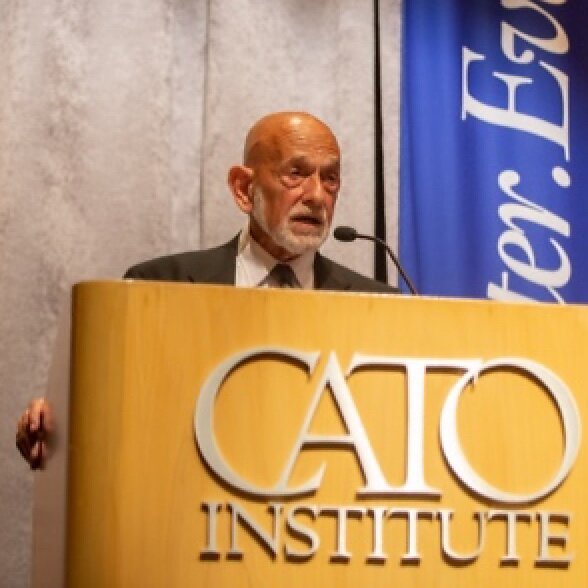
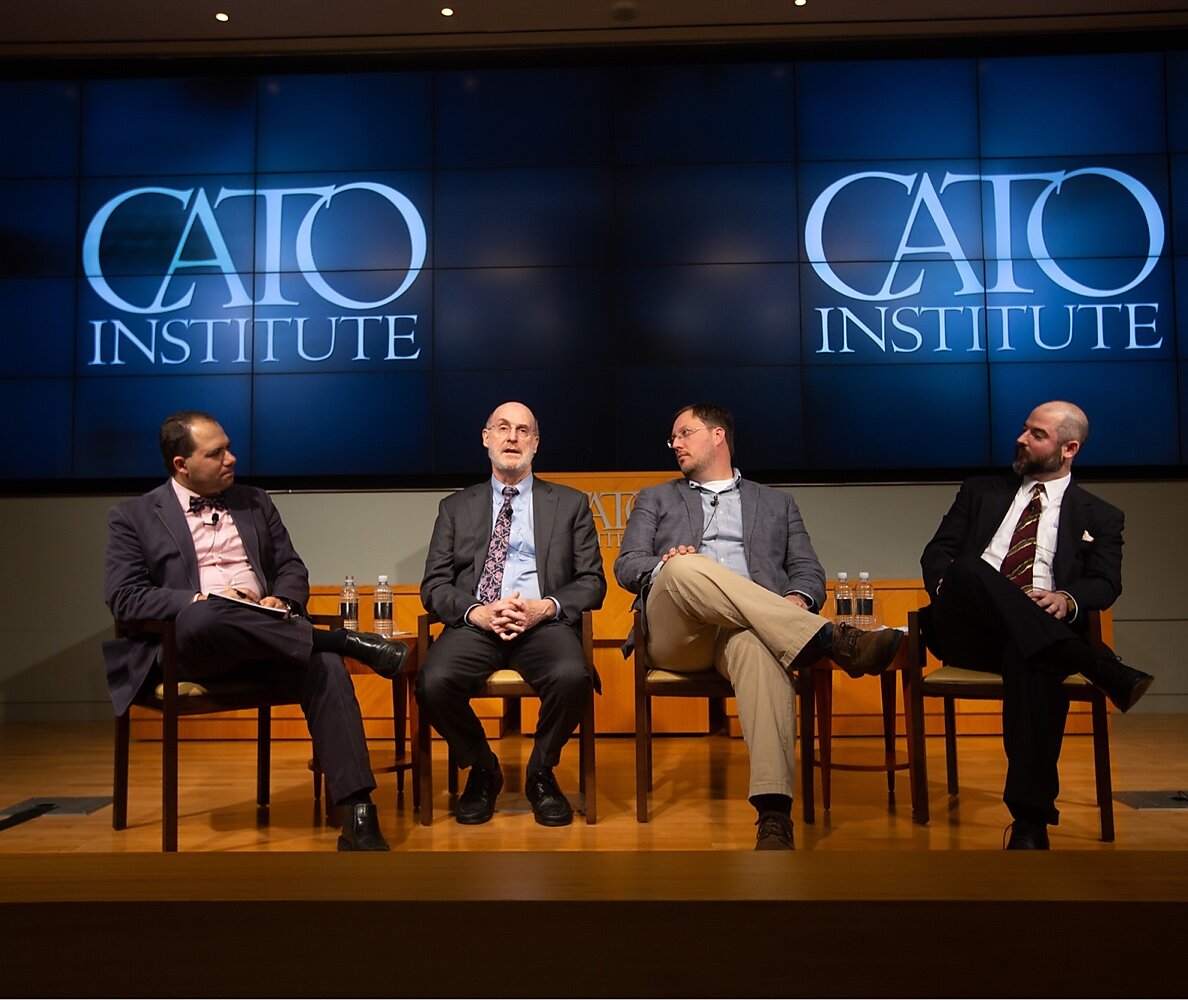
The Cato Institute is a public policy research organization — a think tank — dedicated to the principles of individual liberty, limited government, free markets, and peace. Its scholars and analysts conduct independent, nonpartisan research on a wide range of policy issues.

Founded in 1977, Cato owes its name to Cato’s Letters, a series of essays published in 18th- century England that presented a vision of society free from excessive government power. Those essays inspired the architects of the American Revolution. And the simple, timeless principles of that revolution — individual liberty, limited government, and free markets — turn out to be even more powerful in today’s world of global markets and unprecedented access to information than Jefferson or Madison could have imagined. Social and economic freedom is not just the best policy for a free people, it is the indispensable framework for the future.

How Cato Is Funded

In order to maintain its independence, the Cato Institute accepts no government funding. Cato receives approximately 80 percent of its funding through tax-deductible contributions from individuals, many of whom are responding to informative direct mail solicitations and program updates. The remainder of its support comes from foundations, corporations, and the sale of books and publications.

Cato’s Resources & Outreach

In an era of sound bites and partisanship, Cato remains dedicated to providing clear, thoughtful, and independent analysis on vital public policy issues. Using all means possible — from blogs, Web features, informative direct mail, op-eds and TV appearances, to conferences, research reports, speaking engagements, and books — Cato works vigorously to present citizens with incisive and understandable analysis.

Events

September 12

Fintech Unbound: The Cato Summit on Financial Regulation

Featuring Hester Peirce, Commissioner, U.S. Securities and Exchange Commission; Balaji Srinivasan, Chief Technology Officer, Coinbase; Paul Watkins, Director, Office of Innovation, Bureau of Consumer Financial Protection; Barry Wides, Deputy Comptroller for Community Affairs, Office of the Comptroller of the Currency; Gerry Tsai, Director of Applications and Fintech, Federal Reserve Bank of San Francisco; Spencer Bogart, Partner, Blockchain Capital LLC; John Collins, Partner, FS Vector; Matthew Feeney, Director, Project on Emerging Technologies, Cato Institute; Lydia Mashburn, Managing Director, Center for Monetary and Financial Alternatives, Cato Institute; Richard Neiman, Head of Regulatory and Government Affairs, LendingClub; Andrea O’Sullivan, Coauthor of Bitcoin: A Primer for Policymakers; Jay Reinemann, Partner, Propel Venture Partners; Ryan Zagone, Director of Regulatory Relations, Ripple; Diego Zuluaga, Policy Analyst, Center for Monetary and Financial Alternatives, Cato Institute; J.W. Verret, Associate Professor of Law, Antonin Scalia Law School, George Mason University.

9:00AM to 2:00PM PDT
Hotel Nikko - 222 Mason St., San Francisco, CA