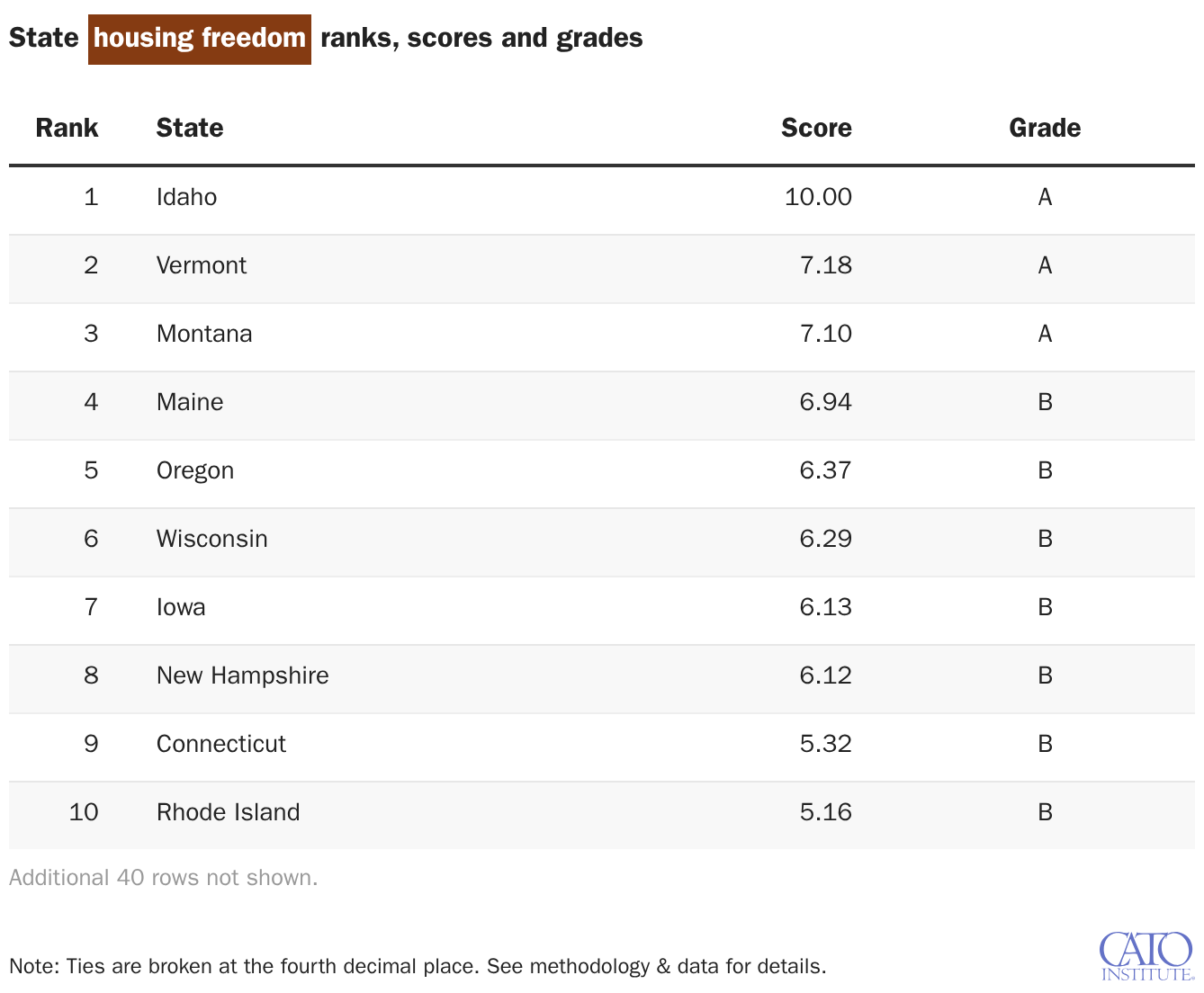
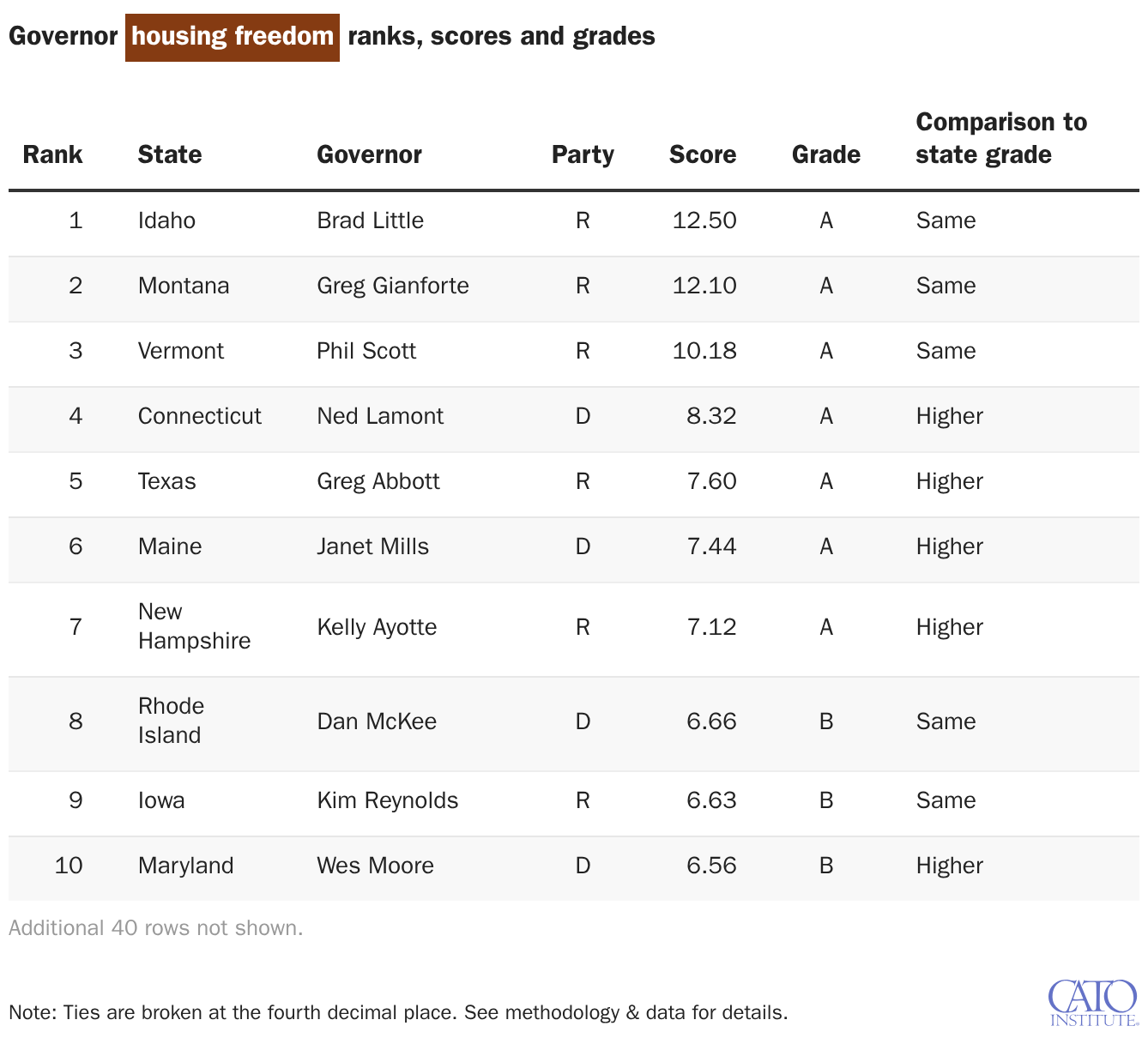
Policymakers in many states have begun to realize that the consistent protection of the rights of builders and homeowners should be a statewide matter, not subject to local political whims that create a patchwork of competing and counterproductive rules that can materially change across neighboring jurisdictions within the same metropolitan area. Reforms that preempt burdensome local zoning codes are becoming more common.
This category measures the strength of state laws that protect individuals’ property rights and housing choices from local restrictions. It favors states and governors that have enacted statewide reforms to rein in local governments in several ways. Yet not all states have enacted such reforms, and the severity of local zoning laws varies from state to state. We can’t ignore those constraints either. This category can be thought of as a mix of recent reforms and the most significant local restrictions that remain in states that have not enacted statewide reforms.
This category should not be construed as a measure of housing affordability for a state. Many of these reforms are new, and their effects will take time to be realized and documented. Others are older but have not kept up with housing demand. Over time, more freedom for property owners will lead to more housing options for everyone. The resulting increases in the supply of housing types that people actually demand can bring down prices at all points. Whether and how quickly these effects materialize in a state will depend on policy and market conditions over a long-term horizon. The policy snapshot we measure here is therefore best thought of as measuring a state’s movement toward supply-expanding reform in the present.