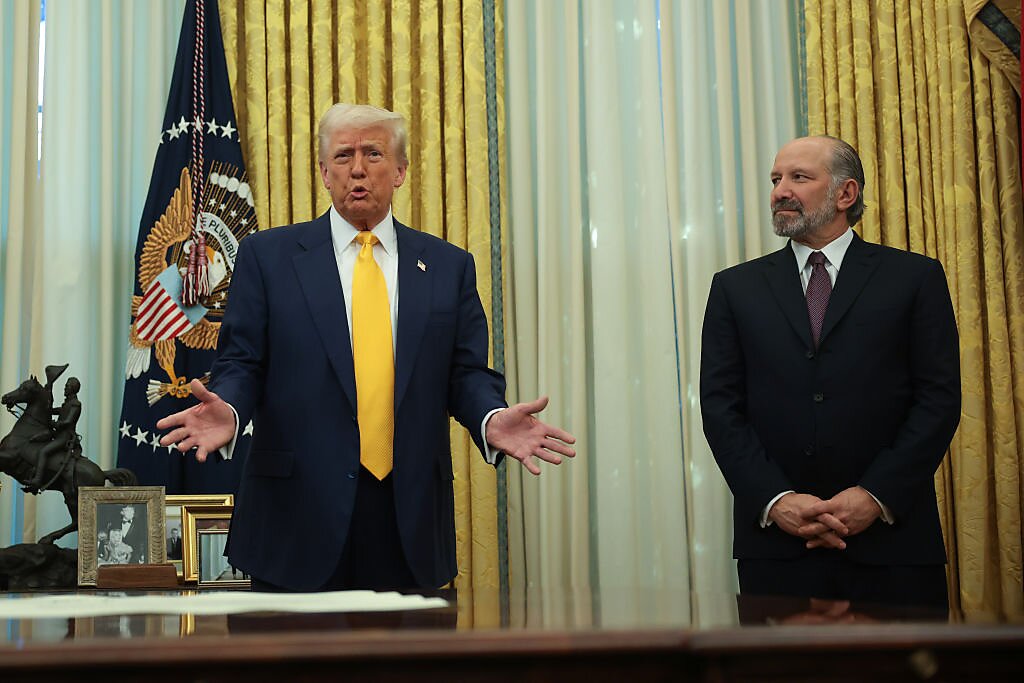
Last Tuesday (July 28), the Senate confirmed Jay Clayton to be the new director of national intelligence (DNI). Yet Clayton was not sworn in until today, with William Pulte continuing to purportedly serve as the acting director of national intelligence for all of last week. Bizarrely, both men attended the cabinet meeting on Friday at Camp David. But while the administration was within its rights to delay Clayton’s swearing in as long as it wished, it could not extend Pulte’s acting service. Under the plain language of the Federal Vacancies Reform Act, Pulte’s time limit as acting DNI expired the moment the Senate confirmed Clayton. Everything Pulte has done as acting DNI since that moment has been legally illegitimate and is vulnerable to a court challenge.
Cato at Liberty
Cato at Liberty
Topics
DSA’s Own Leaders Reveal Just How Far Outside the Mainstream the Movement Really Is
The Democratic Socialists of America are out of touch with normal Americans. That was made abundantly clear by a July interview with a DSA co-chair, during which she affirmed that the organization is far more radical than many voters may realize. Fox News’s Shannon Bream asked Megan Romer of the DSA to respond to a list of the most fringe reforms in the organization’s platform with a “true or false” response. She agreed that the group supports the following proposals:
- “Abolish the Senate”
- “Replace the presidency and Supreme Court as we now know them”
- “Abolish ICE”
- “Abolish borders”
- “Defund the Pentagon”
- “Government or public ownership of large corporations”
Related Tags
NORTHCOM CONPLAN 3900: A Prelude to Insurrection Act Invocation?
On his first day in office for his second term as president, Donald Trump issued a slew of executive orders and proclamations. One proclamation declared a “national emergency” on the US-Mexico border. In that proclamation, Trump directed the Defense Department to “support the activities of the Secretary of Homeland Security in obtaining complete operational control of the southern border of the United States.” He also directed that within 90 days of the proclamation (April 20, 2025), the Defense and Homeland Security departments were to “submit a joint report to the President about the conditions at the southern border of the United States and any recommendations regarding additional actions that may be necessary to obtain complete operational control of the southern border, including whether to invoke the Insurrection Act of 1807.”
Election Policy Roundup #28: China Data Concerns, Voting Rights, and Maryland’s Redistricting Battle
Number 28 in our series of occasional roundups on election law and policy:
- “When more than a third of the [House] seats see no competition at all, polarization and gerrymandering can explain some of the problem, but not all,” said [Olson]. And none of the other likely explanations “are exactly good signs for democracy.” [Eric Boehm, Reason]
- Did the Chinese collection of American voting data constitute a huge security breach? States say federal authorities never notified them about it [Washington Post via ELB] Hard to discern any new resultant chill on relations with China [Phelim Kine, Politico] or with Russia, for that matter [Alan Feuer and Dustin Volz, New York Times]
- Read the rest of this post →
How “Liberation Day” Cost America Its Tourists
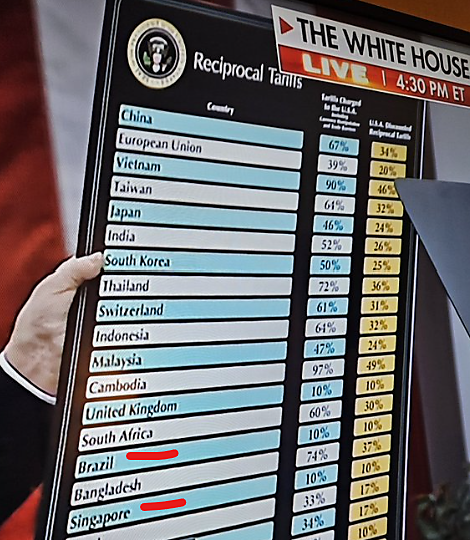
Perhaps one of the most puzzling developments in the aftermath of the Trump administration’s multiple tariff salvos has been the lack of retaliation by the governments of affected countries. Most US trading partners have (so far) refused to impose duties on American exports, and many have even negotiated “reciprocal” trade agreements with the administration. Yet, as my colleague Scott Lincicome explained in a column for The Dispatch last year, amid this lack of tit-for-tat response by foreign governments, private individuals abroad are pushing back against Trump’s trade policies by limiting their consumption of American goods and services—most notably, tourism in the United States.
While survey and government data already pointed to declines in foreign visits to the United States (see figures 1 and 2), a recent working paper finds that the “Liberation Day” tariff announcements in April 2025 led to a significant decline in tourism to the United States, costing the sector over $1 billion in lost revenue per month.
Related Tags
“The Trump Transaction Tax”
A new Wall Street Journal investigation reports that companies are comparing notes about the extra cost of doing business in Washington these days. Its most revealing section concerns companies with business before the federal government.
Several CEOs and board members told the Journal they believe their contributions and access to Trump are linked. When a company’s problem reaches him, the president reportedly wants to know how much it has given. Many companies being solicited are seeking federal contracts or lobbying on trade, defense, regulation, and appropriations.
The Journal’s analysis puts the amount raised through Trump-linked political committees and projects at more than $800 million.
Related Tags
Secretary Hegseth’s $37.5 Billion Iran War Claim Doesn’t Add Up
$37.5 billion. A huge sum of money for most people, but pocket change for the Pentagon. This is the amount that Secretary Hegseth, as he pleaded with the Senate to pass a $60 billion defense supplemental and a $1.15 trillion Pentagon budget, claimed that the Department of Defense has spent in its war with Iran. Hegseth defended these requests by stating, “This is a new request based on new realities of a world we face, stepping up to meet that moment.”
Yet, Hegseth’s $37.5 billion price tag obscures reality. None of Hegseth’s remarks checks out.