In 1995, when petitioner Holsey Ellingburg, Jr., robbed a bank, federal criminal restitution was governed by the Victim and Witness Protection Act (VWPA). The VWPA provided that a defendant’s liability to pay restitution ended twenty years after the entry of judgment. Then, in 1996, Congress enacted the Mandatory Victim Restitution Act (MVRA), which extended the liability period to twenty years after a defendant’s release from imprisonment and required that restitution include interest. The MVRA’s drafters apparently anticipated the possibility that its retroactive application might violate the Constitution’s Ex Post Facto Clause: Congress explicitly made the Act retroactive only “to the extent constitutionally permissible.”
Cato at Liberty
Cato at Liberty
Topics
Constitutional Law
Fifteen Minutes on ICE’s Mass Deportation Agenda
On June 26, the National Foundation for American Policy and the Cato Institute hosted a briefing for congressional staffers. I detailed how the Trump administration is carrying out its mass deportation agenda. Here’s the four-part plan I discussed:
- Strip people of their legal status, legal protection, and citizenship.
- Arrest based on convenience, not threat, and use of profiling.
- Deny due process and judicial review of deportation plans.
- Divert all governmental resources to this agenda.
Note that this was before the Supreme Court’s ruling in the birthright citizenship case, which has eroded the courts’ ability to stop violations of our rights with nationwide injunctions and could make it vastly more difficult to prove our citizenship going forward.
Stuart Anderson, executive director of the National Foundation for American Policy, explained the threats that the administration poses to legal immigration. His main point is that the Trump administration is massively restricting legal immigration, and again, this was before the news about further limits on stay for international students from this weekend.
You can watch the full event with questions and answers below:
Related Tags
The Supreme Court Cuts Injunctions Down To Size
What follows is adapted from a statement I wrote on June 27 following the Supreme Court’s decision in Trump v. CASA, the universal injunctions/birthright citizenship case:
Do courts have the power to tell the government to stop enforcing an unconstitutional measure, period, or may they only tell it to stop enforcing it against whoever sued? In the 1925 Pierce v. Society of Sisters case, whose centennial we celebrate this year, was the district court right to say that Oregon could not enforce its ban on private schools at all, or should it have told the state to stop enforcing the ban against the particular private schools that sued? In West Virginia State Board of Education v. Barnette (1943), was the district court right to order the state not to expel any students who declined to salute the flag or say the Pledge of Allegiance, or should it have confined itself to the rights of the two Jehovah’s Witness children who sued?
Today, a majority of the Supreme Court rushed to declare a sweeping new ban on so-called universal injunctions. As a policy matter, there are serious arguments both for and against many uses of these injunctions, suggesting that resort to a single overarching rule might not make sense. And as Justice Sotomayor’s dissent makes clear, the historical materials on the extent to which court orders across American history have purposely vindicated the rights of persons not in court are a mixed bag, again not well suited to peremptory dismissal.
The most prudent—perhaps also the most equitable—course might have been for the Court simply to turn away the Trump administration’s request for stays and let ordinary litigation proceed in its course. As Sotomayor notes, that would be consistent with the idea that the federal government had not itself come to court seeking to do equity, as equity requires—it is instead attempting to subvert a precious and well-established constitutional right, that of birthright citizenship—and that it does not suffer what the law should deem “irreparable injury” by having to delay such designs.
Even in less dangerous times, the Court would have done better to leave the grandest issues raised in Trump v. CASA, Inc. for a later day. But the present moment—in which the Trump administration has launched a full-court press of deliberate lawbreaking and is seeking to escape the judicial scrutiny that inevitably follows—is a peculiarly inopportune time to clear the decks of supposed judicial obstruction.
More reading: Colleague Ilya Somin is generally critical but notes that “exactly how bad the consequences will be depends on the extent to which other remedies can be used to forestall them.” Anthony Sanders in The UnPopulist foresees bad results in cases where federal district courts respond to unlawful behavior by states or cities (often overlooked in the federal-centric coverage of this weekend). From the other side, Jack Goldsmith makes what I suppose is the most optimistic case available: that the decision 1) was long foreshadowed and would inevitably have happened at some point and 2) preserves in the Court’s own hands the basic tools needed for judicial restraint of executive illegality, provided this and future administrations actually live up to the representations made at oral argument of future compliance with Supreme Court rulings. (Which seems like a lot to stake on a “provided.”) And to be fair, I should mention that academic commentators whose work I usually find persuasive, such as Samuel Bray and Will Baude, believe Justice Amy Coney Barrett’s majority decision was correct on the law.
Cross-posted with minor changes from the author’s Substack.
Related Tags
A Disappointing Supreme Court Decision Weakens Online First Amendment Protections
Today, in Free Speech Coalition v. Paxton, the Supreme Court upheld as constitutional a Texas law mandating that websites impose age verification if those websites feature one-third or more content that is obscene for minors. In rejecting a First Amendment challenge to the law, the Supreme Court held that the law should neither be subjected to the most searching and skeptical form of judicial review (strict scrutiny) nor the most lenient and deferential (rational basis scrutiny). Rather, the Court applied the middle-ground “intermediate scrutiny.”
The Court’s opinion by Justice Clarence Thomas emphasized that many areas of the law distinguish based on age, including minimum age requirements to purchase guns, drive a car, or get married. And the Court reasoned that ID checks are a natural requirement for enforcing such distinctions. Prior Supreme Court cases have held that some forms of sexual content are obscene for children (meaning states can ban minors from viewing them without violating the First Amendment) but not obscene for adults. The Court concluded that if a state wants to enforce a law restricting minors’ access to obscene content, ID checks are the natural means of enforcement.
On this basis, the Court concluded that only intermediate scrutiny should apply to laws establishing ID checks for access to age-restricted obscene content. The Court reasoned that the intermediate scrutiny standard is sufficient to ensure that the government is not using such ID checks as a pretext for a law aimed at limiting the access of adults to protected speech.
After determining that intermediate scrutiny applied, the Court held that the law survived intermediate scrutiny. It held so because the law advances the state’s interest in shielding children from sexual content. The Court held, in addition, that requiring adults to verify their ages online before accessing such content did not impermissibly burden the speech rights of adults. Because the Court applied only intermediate (rather than strict) scrutiny, the Court did not require Texas to prove that it could achieve the state’s interest in protecting children in a way that imposed less of a burden on adults.
Unfortunately, this decision upends two decades of settled understanding about adults’ freedom to access legal content online without government-mandated ID checkpoints. In the 2004 case Ashcroft v. ACLU, the Supreme Court held that strict scrutiny applied to a very similar federal law, affirming a decision blocking that law. Implausibly, the Court today attempted to distinguish Ashcroft as not binding in this case. The Court reasoned that the law in Ashcroft required websites to show they had verified IDs as a defense to a prosecution, while the Texas law requires the state to show that a website lacked the required ID verification process at an earlier stage of an enforcement proceeding.
But although the procedures and burdens of proof in the two laws differed, the upshot of both laws was the same: mandatory ID checks for accessing online adult content. In effect, the Court has now overruled Ashcroft’s application of strict scrutiny to laws mandating such ID checkpoints.
In addition, the Court’s application of intermediate scrutiny significantly downplayed the unique risks and burdens of online ID checks for adult content. In his majority opinion, Justice Thomas wrote that “the decades-long history of some pornographic websites requiring age verification refutes any argument that the chill of verification is an insurmountable obstacle for users.” But the First Amendment test has never been whether a law presents an “insurmountable obstacle.” As Justice Elena Kagan noted in her dissent, the “First Amendment prevents making speech hard, as well as banning it outright.”
Indeed, online ID checks for adult content make it harder for adults to access that speech because the risk of leaks and blackmail is significantly higher for online ID checks than for in-person ID checks. Scans and photos can all too easily be accessed for nefarious purposes. As Justice Kagan wrote in dissent, an online ID scan is not “like having to flash ID to enter a club.” Rather, it is “turning over information about yourself and your viewing habits—respecting speech many find repulsive—to a website operator, and then to … who knows? The operator might sell the information; the operator might be hacked or subpoenaed.” Thus, as we at Cato wrote in our amicus brief, online ID checkpoints dissuade adults from accessing lawful speech and from exercising their constitutional rights. That chilling effect is far greater than any caused by ID checks for a marriage license or driver’s license.
Fortunately, the Court’s reasoning applies only to ID checks for content that is obscene for minors, which is the only category of speech where the Court has held that age makes a constitutional difference. The Court’s reasoning today does not justify ID checks for online speech that is legal and constitutionally protected for people of all ages, such as social media. While the Court’s decision today is disappointing, it remains to be seen whether it will lead to a weakening of First Amendment protections in any area outside the context of obscenity.
The Supreme Court Is Right on Reading Opt-Outs, But That’s Not Enough
Parents have a right to opt their children out of readings in public schools that violate parents’ religious beliefs. So argued the Supreme Court today in a case that typifies a fundamental problem with public schooling: forcing people with diverse values to fund a single system of government schools inherently leads to either imposition or avoidance of material some people want and others do not. It inherently breeds inequality and conflict.
The decision was correct, as far as it goes: Public schools should not be able to impose values on children contrary to their parents’ religious beliefs, and that happened in this case. But opt-outs are not sufficient to solve the problem.
We have tracked Mahmoud v. Taylor since its inception because it is a values-based public schooling conflict and, hence, is on our Public Schooling Battle Map interactive database. The basic facts are that the Montgomery County, MD, school district implemented a program of LGBTQ+-inclusive readings for children in grades K through 5, from which many religious families sought to remove their children. After initially allowing opt-outs, the district changed the policy because it felt accommodating all of the requests was too disruptive. Several religious families sued on the grounds that the requirement violated their free exercise of religion.
As the court majority establishes with several quotes from officials, the district was trying to impose values on students, not simply expose them to the reality of a diverse world. That said, the majority wrote that even if the intent was just exposure, it would not be sufficient justification to violate parents’ religious free exercise. On the flip side, the dissent is right that it is at least theoretically possible that if parents start to demand to opt their children out of anything they dislike, running a public school will become very difficult, requiring teachers to create numerous alternative lessons. That, or many children will spend time doing nothing while other students receive the appointed lessons.
Then there is the insufficiency of opting out to obtain full equality for all groups. While religious families can keep their children out of lessons that are at odds with their religion, what if they want education that is affirmatively consistent with their beliefs? Opting out does not give them that; it just protects their kids from government imposition of values they oppose.
As long as there is public funding of education, the only full answer to the question of how to educate everyone in a diverse society without government bias is to attach funding in some way to students—through vouchers, tax credits, education savings accounts—and let all families choose the education they think is best. While not calling for funds following kids, today’s ruling notes that it is not sufficient to just say parents are welcome to choose something else if public schools violate their religious beliefs. That requires giving up a benefit for which one has already paid.
School choice avoids that penalty, and does so not just for religion. It allows anyone to choose education consistent with their values, whatever those might be. That is most consistent with freedom and equality under the law.
Today, the Court declared that the government cannot impose values on children at odds with their parents’ religious beliefs. That is good, but not enough.
Related Tags
Punishing Universities for Their Viewpoints Violates the First Amendment
The Trump administration has taken actions to withhold billions of dollars in contracts from Harvard University unless the institution both adopts governance structures approved by the administration and engages in affirmative efforts to promote underrepresented conservative viewpoints on campus. Harvard has now sued the Trump administration, arguing that these conditions violate the First Amendment (among other claims). Cato has joined a broad coalition of organizations, led by the ACLU, to file an amicus brief supporting Harvard.
Our brief explains why the actions taken by the administration violate core principles of free speech and academic freedom. While government funding is not a right, freedom from ideological coercion is a constitutional guarantee. Using the government’s purse strings to compel the government’s preferred speech environment violates both academic freedom and the First Amendment. Allowing coercion here would invite a wider regime of retaliation, coercion, and ideological bullying throughout American life.
At the heart of the First Amendment lies a simple rule: the government may not impose its preferred viewpoint on private parties. Viewpoint discrimination is presumptively unconstitutional, even when officials claim they merely want to “better balance” ideological representation. Indeed, even coerced preferences for truly underrepresented perspectives still amount to unconstitutional viewpoint-based restrictions, because the state has no authority to dictate the proper mix of opinions within a private institution.
Further, government pressure to alter privately expressed viewpoints is presumptively unconstitutional even when that pressure is exerted through a loss of government funding. Governments may cut benefits programs for many legitimate reasons. But once the government establishes a benefits program, it cannot condition participation on a recipient’s exercise—or non-exercise—of rights that fall outside the program’s scope.
Here, officials have openly cited speech by Harvard students and faculty, wholly unrelated to any federally funded project, as the reason to terminate grants. That is textbook unconstitutional discrimination.
This violation is especially troubling given the university’s role in a free society. Higher education is both a crucible of knowledge and a structural check on unchecked governmental power. The Supreme Court has long held that conditions attached to public funds face heightened scrutiny when they burden the “four essential freedoms” of academia: deciding who may teach, what shall be taught, how it shall be taught, and who may study. Subordinating these freedoms to the political aims of the party in power would replace free inquiry with political doctrine.
Finally, our brief makes clear that nothing in our argument minimizes or exempts Harvard from its viewpoint-neutral obligations to comply with federal civil rights law. To the extent that the Trump administration seeks to remedy alleged violations of laws like the Civil Rights Act, it can—indeed must—do so. But the Civil Rights Act must be enforced through its procedures and in a manner consistent with the First Amendment.
The administration’s wholesale cancelation of funding to exert ideological control over private education merely wields allegations of lawbreaking as a tool for unlawful ends, and the courts should hold that it violates the First Amendment.
Can Mail Ballots Be Lawfully Counted If Received After Election Day? Where the Law Stands
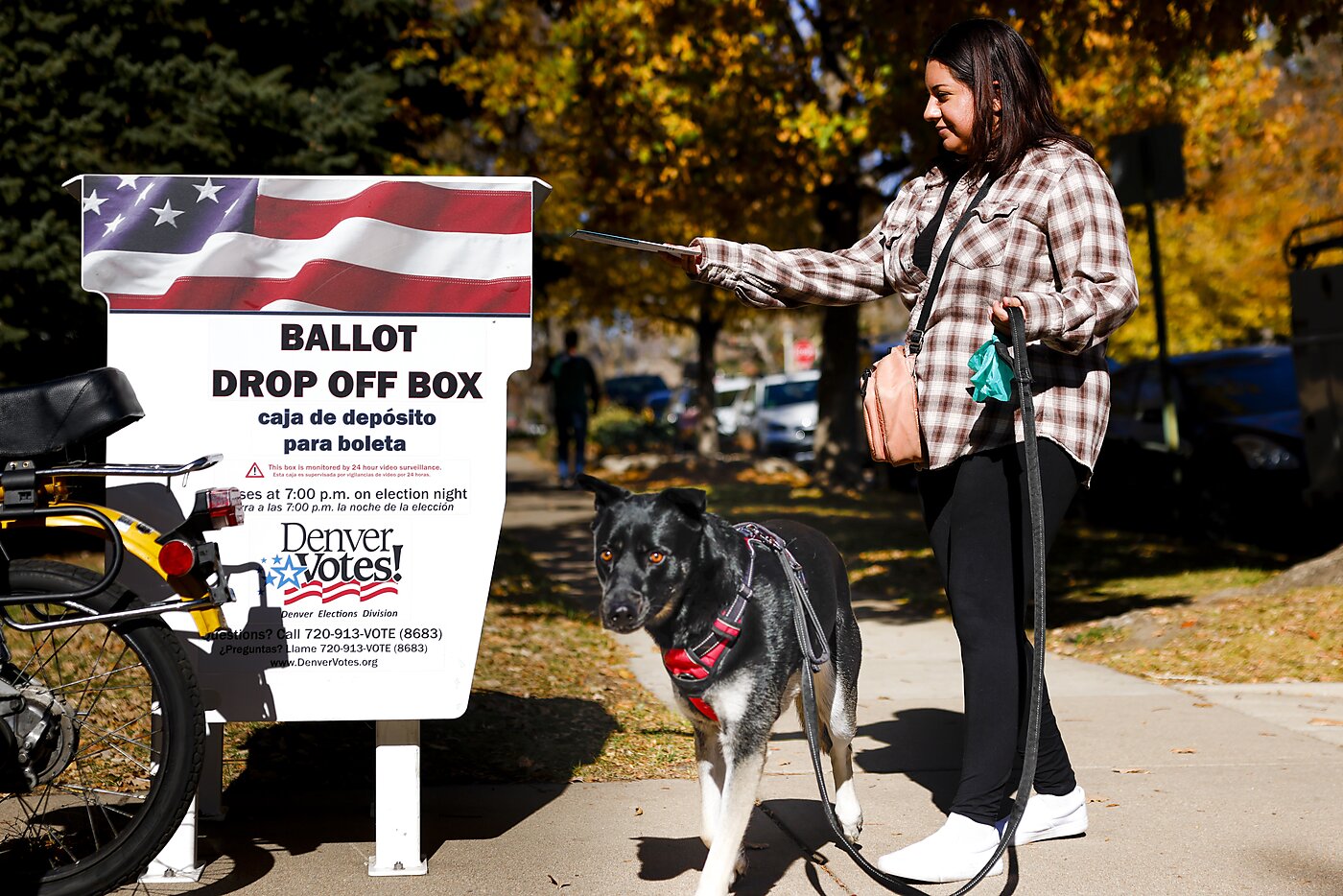
Can mail ballots be lawfully accepted after Election Day if they are postmarked on Election Day?
This legal question came up 10 days ago when Federal District Court Judge Denise Casper enjoined parts of President Trump’s March 25, 2025 executive order on election administration.
Judge Casper is not the first to rule against the president’s election executive order.
On April 24, Judge Colleen Kollar-Kotelly enjoined a number of the executive order’s provisions, including, most significantly, the requirement of documented proof of citizenship to register to vote (see my previous Cato post on that ruling).
Judge Casper agreed with Judge Colleen Kollar-Kotelly regarding documented proof of citizenship.
But Judge Casper went further and also enjoined section 7(a) of the president’s executive order, which sought to prevent states from accepting mail ballots after election day:
“The Attorney General shall take all necessary action to enforce 2 U.S.C. 7 and 3 U.S.C. 1 against States that violate these provisions by including absentee or mail-in ballots received after Election Day in the final tabulation of votes for the appointment of Presidential electors and the election of members of the United States Senate and House of Representatives.”
Currently, every state requires that voters complete, as in, fill out their ballots by Election Day.
However, many states allow mail ballots to arrive after Election Day so long as they are postmarked by Election Day: Alaska, California, Illinois, Kansas, Maryland, Massachusetts, Mississippi, Nevada, New Jersey, New York, North Dakota, Ohio, Oregon, Texas, Virginia, Washington, and West Virginia.
President Trump’s executive order calls attention to a fractured legal question.
On October 25, 2024, the Fifth Circuit ruled that Mississippi’s return policy was preempted by federal law. Under Mississippi law, mail ballots must be “postmarked on or before the date of the election and received by the registrar no more than five (5) business days after the election.”
But according to the Fifth Circuit, this Mississippi law was inconsistent with the federal definition of “the day for the election.”
“The State’s problem is that it thinks a ballot can be ‘cast’ before it is received. What if a State changes its law to allow voters to mark their ballots and place them in a drawer? Or what if a State allowed a voter to mark a ballot and then post a picture on social media? The hypotheticals are obviously absurd. But it should be equally obvious that a ballot is ‘cast’ when the State takes custody of it.
“Second, finality. The Supreme Court has said ‘the word [election] now has the same general significance as it did when the Constitution came into existence—final choice of an officer by the duly qualified electors.’ Newberry v. United States, 256 U.S. 232, 250 (1921). An election involves more than government action; it also involves the polity’s final choice of an officeholder.
“A voter’s selection of a candidate differs from the public’s election of the candidate. Officials tally each voter’s selection and then declare a winner of the election. Those are the not (sic) the same thing. And while an individual voter might be able to make his or her selection in private, alone, it makes no sense to say the electorate as a whole has made an election and finally chosen the winner before all voters’ selections are received.”
This ruling departed from rulings from other jurisdictions, as well as the trend of state legislatures, more and more of which had been allowing mail ballots postmarked by Election Day to be counted as valid even if received after Election Day (see above).
In Bost v. Ill. State Bd. of Elections, the US District Court for the Northern District of Illinois considered Illinois law that “allows ballots cast in federal elections to be received and counted for up to 14 days after Election Day, so long as the ballot was postmarked or certified on or before Election Day.” It noted that “[s]tates have wide discretion to establish the time, place, and manner of” their elections, and ruled that “wide discretion broad deference that Congress found that the “Ballot Receipt Deadline Statute operates harmoniously with the federal statutes that set the time for federal elections.”
The Bost ruling came out in July 2023. The Federal District Court for the District of New Jersey had ruled similarly in October 2020, noting that states have “wide discretion in the formulation of a system for the choice by the people of representatives.”
Returning to the present day, Judge Casper’s ruling from mid-June focused more on whether the president had the authority to dictate ballot receipt deadlines. She ruled he likely did not.
But Judge Casper also issued commentary that the district courts of Illinois and New Jersey likely had it right and that the Fifth Circuit had it wrong. That is, states can choose if they want to permit the receipt of ballots after Election Day, so long as they are postmarked by Election Day.
As a matter of policy, I agree with President Trump that states should require that ballots be received by election offices by Election Day. Voting has never been more accessible—most states now allow no-excuse vote-by-mail, no-excuse early voting, as well as in-person Election Day voting. The benefit of tacking on a few extra days for procrastinators is outweighed by the damage done by the prolonged suspense of knowing the winners of close elections.
But as a matter of law, I don’t know where the courts will go. I just know that state legislatures and election officials will want to know the law in plenty of time for the 2026 midterm elections.