To paraphrase Ronald Reagan, the problem with Rep. John Garamendi (D‑CA) isn’t so much that he is uninformed, it’s just that he knows so many things that aren’t so. That, at least, is the impression one is left with after reading the California congressman’s latest op-ed in defense of the Jones Act which is replete with errors, half-truths, and contradictions. Disturbingly, the Chairman of the House Armed Services Committee’s Readiness Subcommittee fudges even basic facts. In the op-ed’s fourth paragraph, for example, Rep. Garamendi claims there are only 81 U.S.-flag oceangoing vessels. The latest data from the U.S. Maritime Administration, however, shows 180 such ships. Rep. Garamendi later warns about the dangers of employing foreign-flag ships to transport supplies and equipment for the U.S. military, claiming that during the 1991 Gulf War “The foreign crews on thirteen vessels mutinied, forcing those ships to abandon their military mission.” But that’s not true. The United States Transportation Command’s official history of its performance in Operations Desert Shield and Desert Storm makes no mention of mutinies or mutineers and says that only two ships, the Trident Dusk and the Banglar Mamata, failed to deliver their cargo. Eleven other ships expressed some hesitation but did, in fact, fulfill their missions, and the Transportation Command says crews on foreign flag ships “on the whole proved dependable” and were “overall, reliable.” Furthermore, Rep. Garamendi’s invocation of these foreign flag bulkers is curious, as the Jones Act is commonly presented as avoiding this very kind of foreign dependence. Plainly it is not accomplishing this goal. Indeed, another item mentioned by the Transportation Command’s report is that the United States was desperately short of ships that it twice asked the Soviet Union to borrow one of theirs. The op-ed also suffers from other curious leaps of logic and seeming contradictions. Rep. Garamendi, for example, hits back at criticisms the Jones Act is outdated and harmful by noting that “Ninety-one U.N. member states comprising 80 percent of the world’s coastlines have cabotage laws protecting domestic maritime trade.” But this observation does nothing to refute the law’s critics or prove that the Jones Act is somehow useful. Notably, countries that have moved to loosen their cabotage laws such as the Philippines and New Zealand (see page 6) have experienced positive results. In addition, Rep. Garamendi fails to mention that there is considerable variation in the severity of these cabotage laws. Only a handful of countries, for example, have Jones Act-style domestic-build requirements. Indeed, the Jones Act is such an extreme outlier that the World Economic Forum has deemed it the world’s most restrictive example of a cabotage law. And if the commonplace nature of cabotage laws somehow validates the Jones Act, then by the same logic doesn’t the unusual nature of its U.S.-build requirement suggest that this provision should be discarded? Rep. Garamendi also claims that repealing the Jones Act would undermine U.S. economic development, but says that eliminating the law would lead to marine transportation along U.S. coastlines to be outsourced to “the cheapest foreign bidder.” Well, which is it? Would the repeal of the Jones Act undermine growth or would it lead to foreign providers of shipping offering their services at cheap prices, thus saving Americans money? Unless Rep. Garamendi believes that economic prosperity is derived from higher costs and reduced purchasing power, these two statements are in direct conflict with each other. In his concluding paragraph, meanwhile, Rep. Garamendi calls for maintaining the Jones Act as necessary to preserve the United States’ status as a “great maritime power,” but this description seems in conflict with some of his other recent comments. Just last month he bemoaned the country’s “dwindling merchant fleet” and in a recent letter to the Trump administration said the U.S.-flag international fleet was “in a state of precipitous decline.” He has also admitted the sad state of U.S. commercial shipbuilding, stating at the Brookings Institution last month that it has been reduced to “mostly small shipyards” and a “few large ones.” How do these statements comport with being a great maritime power? Or the Jones Act as a public policy success? There is a final item that rankles. Rep. Garamendi declares the Jones Act to be the “lifeblood” of a U.S. maritime trade that “supports 650,000 jobs and almost $100 billion in annual economic impact.” His figures are almost certainly based on a report from PricewaterhouseCoopers for the pro-Jones Act Transportation Institute. Notably, no copy of this report has ever been publicly released, making its findings impossible to verify or critique. That Jones Act supporters repeatedly cite a report and then refuse to release it for independent study should raise eyebrows. The American people deserve an honest discussion about the Jones Act. Unfortunately, defenders of this law don’t seem intent on giving them one.
Cato at Liberty
Cato at Liberty
For those of us who support the North American Free Trade Agreement (NAFTA), the renegotiation process had us at the edge of our seats each day. Would the three parties be able to reach agreement? If not, would the Trump administration try to withdraw from NAFTA? And if so, would Congress act to stop the withdrawal? When the newly minted U.S.-Mexico-Canada Agreement (USMCA) was signed last November, there was a brief reprieve from the stressful, high-stakes negotiations.
That break is now over. The U.S. International Trade Commission (USITC) released its independent assessment of the economic impact of the USMCA, a procedural step that clears the way for Congress to take up debate on ratification of the deal. That debate looks like it will be acrimonious, as leaders of both parties have been pushing the Trump administration with specific demands in exchange for supporting USMCA.
Democrats have already aired a number of concerns over the new agreement, particularly with regard to labor enforcement, but their specific demands are a bit vague, and vary a bit depending on which Democrat you talk to.
But now the Republicans are weighing in, and the biggest battle over the ratification of USMCA may come from the president’s own party. And in terms of trade liberalization, it is a particularly important one, because it involves removing tariffs (the USMCA itself does not have much impact on tariffs, as NAFTA has removed virtually all of them on trade between the three parties). Writing in the Wall Street Journal, Senator Chuck Grassley (R‑IA) called on President Trump to lift the Section 232 steel and aluminum tariffs on Canada and Mexico, declaring, “If these tariffs aren’t lifted, USMCA is dead. There is no appetite in Congress to debate USMCA with these tariffs in place.” In essence, Grassley is making his support for USMCA conditional on the removal of these tariffs. Grassley’s threat should be taken seriously, not least because he serves as Chairman of the Senate Finance Committee, which gives him the power to indefinitely delay putting USMCA up for a vote in the Senate.
Beyond the politics, his proposal just makes a lot of sense. A report from the Peterson Institute describes the impact of steel tariffs in this way:
Calculations show that Trump’s tariffs raise the price of steel products by nearly 9 percent. Higher steel prices will raise the pre-tax earnings of steel firms by $2.4 billion in 2018. But they will also push up costs for steel users by $5.6 billion. Yes, these actions create 8,700 jobs in the US steel industry. Yet for each new job, steel firms will earn $270,000 of additional pre-tax profits. And steel users will pay an extra $650,000 for each job created.
Essentially, while a few steel producers have benefitted from the tariffs, the tab is being picked up by everybody else who has to buy steel. A part of that cost is ultimately paid by the consumer. As a result, the overall impact of the tariffs on the U.S. economy is negative.
Furthermore, it makes little sense that these tariffs are being maintained on our closest trading partners, especially after they negotiated in good faith to address many U.S. concerns with NAFTA. During the NAFTA negotiations, the issue of steel and aluminum tariffs lingered like a dark cloud overhead. Both the Canadian and Mexican delegations were under the impression that the 232 tariffs would be lifted once the agreement was signed. That, however, did not end up being the case. These tariffs are still in place, and as a result, Canada and Mexico have placed retaliatory tariffs on the United States. These retaliatory tariffs have resulted in a decrease in U.S. exports to Canada by 25% and to Mexico by 10% since they have been in effect. Lifting the 232 tariffs on Canada and Mexico will minimize any further harm on both sides of our borders.
One important point to keep in mind, however, is that tariffs could be replaced by quotas, as was the case for the Section 232 tariffs on South Korea and a couple of other countries. Quotas can actually be worse than tariffs in terms of their impact. Thus, Senator Grassley and his colleagues should demand that the removal of the Section 232 import restrictions be complete and total: No tariffs, no quotas, no nothin’.
The ball is now in President Trump’s court. In the past, he has called himself a “Tariff Man,” but the negative impact of the tariffs imposed so far should illuminate the benefits of open markets. By firing this shot in the USMCA ratification battle, Grassley has made the choice before Trump abundantly clear: support the passage of the deal by delivering on his promise of being a great dealmaker, or stay the Tariff Man. The path he chooses will be an important signal for ongoing and future trade negotiations the administration undertakes. Most importantly, it will provide clarity as to whether the administration simply sees tariffs as a tool to negotiate better deals, or whether tariffs are an end in themselves. We await the response.
1. Did Trump collude with Russians who tried to influence the 2016 presidential election?
No. In Volume 1 of his report, Mueller didn’t mention “collusion,” which is not a legal term. He did, however, find that there was no evidence of a conspiracy, and he therefore exonerated Trump on that count. Still, Mueller concluded that the Russians did interfere, Trump was aware of the interference, he benefited from and encouraged the interference – e.g., Don, Jr. was eager to get and use information on Hillary Clinton – and he didn’t report the interference to the FBI. So, there was no crime and maybe no impeachable offense, but Mueller’s findings will likely inform voters regarding Trump’s fitness for office.
2. Did Trump obstruct justice by impeding either Comey’s or Mueller’s investigations?
Maybe. In Volume 2, Mueller cited numerous acts that could have frustrated both investigations. Trump fired Comey, tried to fire Mueller – but didn’t succeed because White House counsel Don McGahn refused to follow instructions – discouraged testimony, encouraged lying, and dangled (but didn’t actually offer) pardons. Given the evidence, Mueller concluded that he could not exonerate Trump from an obstruction charge. Nonetheless, Mueller would not say whether there was an indictable crime because of a written Justice Department policy that a sitting president cannot be indicted. It would be unfair to charge the president without affording him an opportunity to defend himself at trial. In other words, there may or may not have been sufficient evidence of a crime or impeachable offense; but there was clearly too much evidence to exonerate. Mueller left the criminal charge up to Attorney General Barr; and he left impeachment up to Congress.
3. Since the FBI director serves at the pleasure of the president, could Trump fire Comey at will?
Yes. There are no statutory conditions on the president’s authority to remove the FBI director. He or she serves at the will of the president. But if the president acts with “corrupt intent” – e.g., to impede an investigation into his own conduct – then he can be charged with obstruction of justice. In this instance, by Trump’s own words, hefired Comey because of “this Russian thing.”
4. But can there be corrupt intent if “this Russian thing” was not a crime?
Yes. It’s not necessary to prove an underlying crime in order to charge someone with obstructing justice. Admittedly, however, it’s more difficult to show corrupt intent if there’s no underlying crime. After all, how could Trump have obstructed justice related to the conspiracy investigation if there was no conspiracy? The short answer is that Trump’s motive might have been corrupt even if unrelated to proving his innocence. For example, he may have wanted to protect personal (e.g., family) interests, or business interests, or his political standing with voters. Or he may have wanted to frustrate an investigation into someone else’s crime; or to avoid exposure to a gray area of the law, or to non-criminal impeachment.
5. Trump cooperated with the investigation. How then could he have obstructed justice?
On one hand, Trump provided roughly one million documents; he did not invoke executive privilege; and he allowed White House counsel Don McGahn to testify. But, on the other hand, he refused to testify in person, and he provided inadequate answers to Mueller’s written questions. If time were not of the essence, Mueller would likely have used his subpoena power. Limited cooperation isn’t sufficient to preclude an obstruction charge.
6. Mueller’s report, as released, was redacted by Attorney General Barr. Were the redactions proper?
Yes. Barr followed the law, which requires that he redact grand jury testimony, classified material, items related to ongoing investigations, and details that could compromise the privacy of innocent persons. Barr committed to as much transparency as lawful, and it appears that he honored that commitment. Only a few of the redactions were grand jury related; most of the redactions involved ongoing investigations.
7. Barr, in his summary of Mueller’s report, concluded that the evidence didn’t support a charge of obstruction. Did Barr overreach?
Maybe. The Mueller report presented substantial evidence that might have led to an obstruction charge. Indeed, Mueller concluded that the scope and nature of the evidence foreclosed exonerating the president. Yet Mueller declined to charge Trump with obstruction – not for lack of evidence, but because Justice Department policy barred indictment of a sitting president. That left the matter in the hands of Mueller’s boss – initially Acting Attorney General Rosenstein (who first appointed Mueller as special counsel), then Attorney General Barr. It was Barr’s prerogative either to charge Trump, exonerate him, or say nothing further. With Rosenstein’s backing, Barr concluded that the evidence was insufficient to charge Trump with obstruction. Some observers disagreed – probably including Mueller himself, although we don’t know for sure. Other observers thought the decision was reached in haste. But it’s clear that the decision was Barr’s to render.
8. Should the House of Representatives undertake further investigation of Trump’s conduct?
Yes. As noted, Mueller proffered significant evidence of obstruction by Trump. It was Barr, but not Mueller, who decided that the evidence was insufficient to charge Trump. Congress may believe that Barr’s decision was wrong or premature. But even if Congress were to agree with Barr, the job of the House is not to charge the president with a crime, but to determine if impeachment is warranted. Impeachment does not require a prosecutable crime. The standard is treason, bribery, or other high crimes and misdemeanors. The House is empowered to conduct further investigations to determine if that standard has been met. Given the evidence compiled by Mueller, my sense is that further investigation is justified.
9. Should Congress be able to subpoena the un-redacted Mueller report?
Perhaps not the full report, but a less redacted version. Congress’s and the public’s need to know must be balanced against privacy and secrecy requirements as well as separation-of-powers concerns. Barr’s redactions were less than anticipated, and mostly related to ongoing investigations. But some redacted grand jury testimony might yet be unveiled. One exception to grand jury secrecy is disclosure “preliminary to or in connection with a judicial proceeding.” If the House opens a preliminary investigation into impeachment, that investigation would likely qualify as a judicial proceeding. It might also be desirable for a federal judge to review redacted material in private to determine if further disclosures are permissible.
10. Will Trump be impeached?
Probably not. Despite Barr’s denial, Trump may have obstructed justice. Even if not, he may have committed “high crimes and misdemeanors” that are impeachable offenses. At the time of the Framing, “misdemeanors” meant misdeeds, not petty crimes as the term is now understood. Accordingly, a president can probably be impeached for non-criminal behavior that amounts to serious dereliction of duty, abuse of power, or other conduct that demonstrates his unfitness to serve. That said, impeachment is more of a political process than a legal process. There are no well-established rules of procedure, rules of evidence, or due process safeguards. Moreover, the public seems disinclined to impeach President Trump – especially with a Republican-controlled senate and little chance that a conviction, requiring a 2/3 vote, could be secured. House Democrats may therefore prefer that voters make the final decision regarding the president’s asserted misbehavior. In other words, let the 2020 ballot box dictate the outcome – unless, of course, further House investigation uncovers additional evidence that is sufficiently compelling to persuade 20 of 53 Republicans to join 45 Democrats and 2 Independents in removing President Trump.
11. Was the cost of the investigation justified?
I have no basis on which to determine whether the investigation was efficiently conducted, or whether the special counsel might have fulfilled his mission at lower cost. Weighed against the cost – now estimated at $30 million – are the direct and indirect results of the investigation. Dozens of people and three companies were charged, with guilty pleas by five persons. Indictments were filed against former campaign manager Paul Manafort, deputy campaign chair Rick Gates, foreign policy advisor George Papadopoulos, national security advisor Michael Flynn, advisor Roger Stone, personal attorney Michael Cohen, and others. Perhaps more important, Mueller documented the depth and breadth of Russian interference in the 2016 election, even as he exculpated President Trump of conspiracy charges. And Mueller’s report has provided Congress and the American public with extensive evidence related to Trump’s possible obstruction of justice.
12. The Mueller investigation was fueled, in part, by the so-called Steele dossier. Should Mueller have investigated its provenance? Should Congress do so?
Yes and yes. The dossier was compiled by former British spy Christopher Steele on behalf of Fusion GPS, an opposition-research firm working for the Hillary Clinton campaign and the Democratic National Committee. The media obtained the dossier, which relied in significant part on Russian sources, and used it to feed the now-disproved “collusion” narrative that was the primary focus of the Mueller investigation. The FBI used the dossier to support its application to the Foreign Intelligence Surveillance Court for a secret warrant on one of Trump’s foreign policy advisors, Carter Page. Mueller barely mentioned the dossier in his report, but he refuted and rejected its claims. Trump supporters may legitimately question whether a special counsel should have been authorized to conduct an extensive and extended probe based on fabricated intelligence that was funded for political motives by the opposition party. Even if the Mueller report has produced useful information, an inquiry into its origin and rationale seems warranted.
N.B.: This post contains descriptions of medical examinations stemming from allegations of sexual abuse of a small child. Over at Reason, Robby Soave reports a horrifying story out of Albuquerque. A kindergarten teacher alleged one of her students—pseudonymously “Becca,” age 4— had been sexually abused by both her father, Adam Lowther, and her seven-year-old brother, “Charlie.” With the aid of the police, the New Mexico Children, Youth, and Families Department (CYFD) removed the children from their parents and set off a course of events that traumatized the Lowther family and Becca in particular. After the better part of a year, the prosecutor declined to prosecute Adam and he was reunited with his children—but after his career was derailed and his reputation in tatters after being accused of one of the most detestable crimes against his own child. Becca had been subjected to examinations and photographs of her genitals and anus without her parents present, and her family reports that she is now terrified of doctors. The Lowthers are suing all the individuals and organizations involved in the separation and investigation. Certainly, government agencies have the responsibility to investigate claims of sexual and other abuse of children. But such investigations must be handled with the utmost care and prudence lest the investigation itself traumatize (or re-traumatize) the children involved. According to the Reason report and the lawsuit, the authorities in Albuquerque acted in haste, with zeal, and disregard for the welfare of the Lowther children:
“The forensic interviews and physical examinations were conducted without a warrant or court oversight. CYFD, who was the guardian of the children, acted with indifference to the trauma caused by the forensic interviews and examinations. Indeed, the removal decision was made in furtherance of the criminal investigation—not to keep the children safe from harm. This itself was contrary to the children’s interests and violative of their constitutional rights.”
In a perverse and bitter irony, careless and overzealous government actors can inflict the sexual trauma they are charged with preventing. While the Lowther case is particularly jarring, there is reason to suspect that law enforcement and other government officials are inflicting similar harms to children and their families across the country. Just last week, Cato filed an amicus brief asking for the U.S. Supreme Court (SCOTUS) to take a case that involved the warrantless strip search and photographing of a child at preschool. The brief, and two other briefs we helped coordinate in the case I.B. v. Woodard, are part of the latest effort in our ongoing campaign to get SCOTUS to revisit the doctrine of qualified immunity. Under federal civil rights law, government actors “shall be held liable” for violating individuals’ constitutional rights in performance their duties. In plain English, individuals can be sued in their official capacities for civil damages to be paid to the victims they wronged. Qualified immunity is a court-made exception to that law, and effectively cuts off the only means of accountability for government agents who violate constitutional rights. Administrative procedures—suspension, termination, and other discipline—are unreliable, at best, and are often shielded from public view by laws protecting government personnel records. Criminal charges are rarely applied to actions while a government official is on duty and, even when they are, convictions for even egregious offenses are very difficult to obtain. Thus, civil liability—which is explicitly provided for in American civil rights law and dates back to the English common law tradition—is supposed to be the primary method to hold government agents accountable. As a result of the qualified immunity doctrine, government actors have little institutional incentive to respect the rights of individuals with whom they come into contact in performance of their duties. This is not to say that government actors are acting in bad faith. But in the Lowther and Woodard cases, one can assume the best intentions of everyone involved and recognize the zealous pursuit of evidence of abuse caused its own damage. An institution and its agents that are sensitive to the liabilities of their actions will likely have better safeguards and practices for collecting the evidence in such sensitive situations. Cato’s campaign against qualified immunity is not only about getting money to individuals whom the government has wronged. The campaign seeks to restore the best mechanism for government accountability that American civil rights law intended. What happened to the children and families in these cases should not happen again, and the courts should hold the government accountable to better ensure these abuses are not repeated.
Earlier this month, the effort to impeach President Trump looked like a #Resistance fantasy. The release of the Mueller Report seems to have shifted the debate dramatically. This week, Democratic presidential contenders Sen. Kamala Harris and Sen. Elizabeth Warren called on the House to impeach Trump for obstruction of justice.
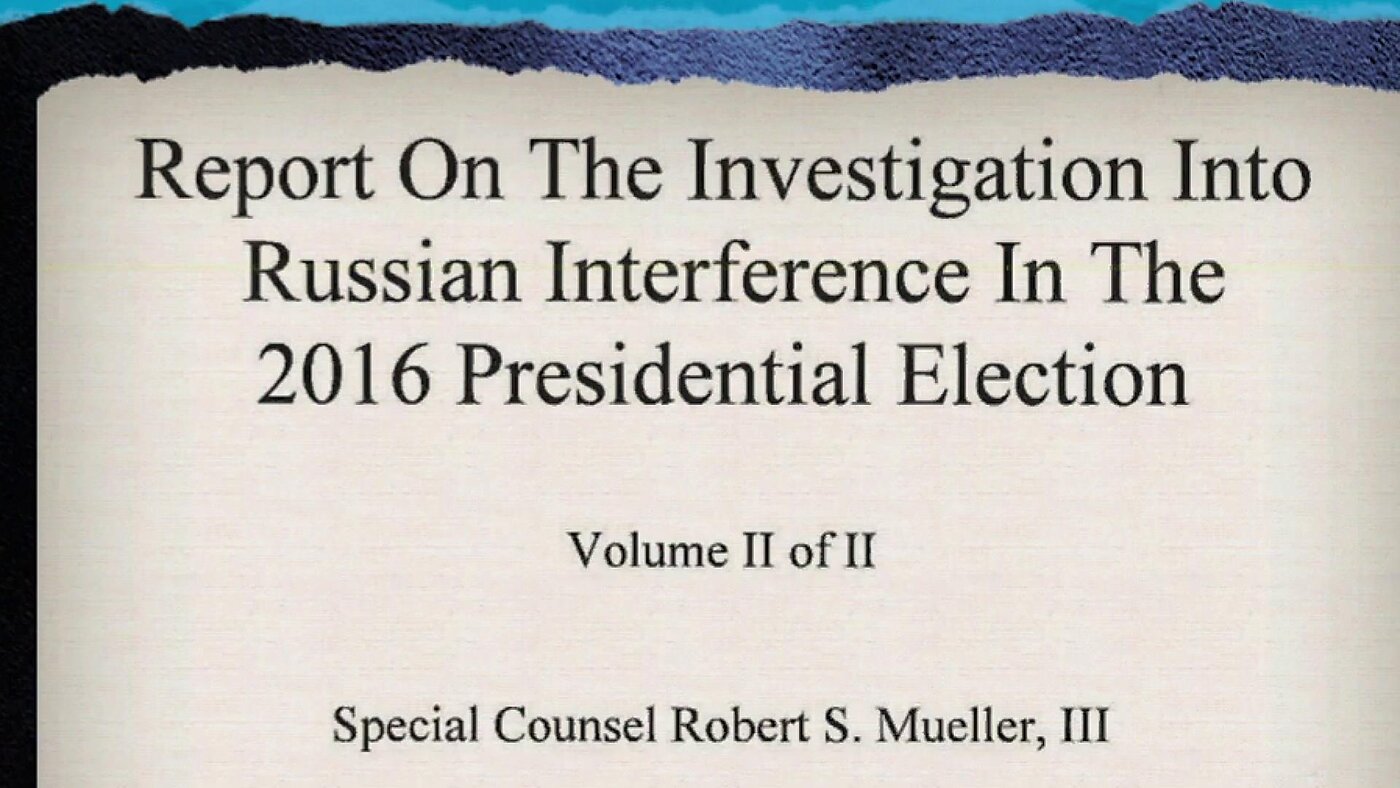
Is obstruction of justice an impeachable offense? Yes. It’s one of the few offenses where we have presidential precedent. Obstruction charges played a central role in two of the three serious presidential impeachment cases in American history, forming the basis for Article I of the charges against Richard Nixon, and Article II against Bill Clinton.
Should President Trump be impeached for obstruction of justice? I’m not going to answer that question here; like the cagey Mayor Pete, I’m “going to leave it to the House and Senate to figure that out.” Instead, I want to stress something that should be obvious, but tends to get lost amid the statutory exegesis in Mueller Vol. II: whether the president is guilty of criminal obstruction and whether he’s guilty of impeachable obstruction are different questions.
Summing up Article I of the case against Nixon, the 1974 House Judiciary Committee report explained that:
President Nixon’s actions…. were contrary to his trust as President and unmindful of the solemn duties of his high office. It was this serious violation of Richard M. Nixon’s constitutional obligations as president, and not the fact that violations of Federal criminal statutes occurred, that lies at the heart of Article I [emphasis added].
The Judiciary Committee report on the Clinton impeachment echoed that analysis a quarter-century later: “the actions of President Clinton do not have to rise to the level of violating the federal statute regarding obstruction of justice in order to justify impeachment.”
The standards are different because impeachment and the criminal law serve distinct ends and have very different consequences. “The purpose of impeachment is not personal punishment,” the Judiciary Committee emphasized in its 1974 staff report on “Constitutional Grounds for Presidential Impeachment”; instead, impeachment’s function “is primarily to maintain constitutional government.” And where the criminal law deprives the convicted party of liberty, a successful impeachment mainly puts him out of a job.
I’ve complained before about “the overcriminalization of impeachment,” the widespread tendency to confuse impeachment with a criminal process. Congress has contributed to that confusion by offloading much of its responsibility for policing executive misconduct to special prosecutors. Mueller wasn’t tasked with looking into “high Crimes and Misdemeanors”; his brief was to probe “federal crimes committed in the course of, and with intent to interfere with, the Special Counsel’s investigation.” Naturally, then, the report speaks in the language of the criminal law.
But impeachment aims at fundamental breaches of the public trust, and therefore, as Alexander Hamilton put it, “can never be tied down by such strict rules” as operate in the criminal law. In an impeachment proceeding, the key question isn’t whether the president technically violated one or more of the federal obstruction statutes. It’s whether his transgressions are serious enough to justify removal from office.
That sort of inquiry is, in many ways, less forgiving than the criminal law approach. Though the Constitution nowhere specifies a particular burden of proof for impeachment, “criminal prosecutions require that the government prove guilt beyond a reasonable doubt in a proceeding in which the defendant enjoys many significant procedural protections.” As Michael Rappaport has observed, “a criminal prosecution model underenforces against executive misconduct, because it ignores noncriminal misconduct that may justify dismissing an executive official,” such as “‘high Crimes and Misdemeanors,’ which need not constitute violations of criminal or civil law.”
A prosecutor needs to prove every element of a statutory offense: a generalized showing of contempt for the rule of law won’t suffice. It’s fair game in impeachment, however. “Unlike a criminal case,” the Nixon Inquiry Report explains, “the cause for the removal of a President may be based on his entire course of conduct in office. In particular situations, it may be a course of conduct more than individual acts that has a tendency to subvert constitutional government.”
In other important respects, however, an impeachment inquiry can be more lenient toward the accused. “Not all presidential misconduct is sufficient to constitute grounds for impeachment,” the Nixon Inquiry Report emphasizes: “There is a further requirement—substantiality.” Impeachment should “be predicated only upon conduct seriously incompatible with either the constitutional form and principles of our government or the proper performance of constitutional duties of the presidential office.” Even provable, criminal obstruction will not meet the standard of “high Crimes and Misdemeanors” in every case.
For instance, when viewed through the lens of the criminal law, the case against Bill Clinton was quite strong. Here’s Judge Richard Posner’s assessment, from his 1999 book on the Clinton impeachment, An Affair of State:
To summarize, it is clear beyond a reasonable doubt, on the basis of the public record as it exists today, that President Clinton obstructed justice, in violation of federal criminal law, by (1) perjuring himself repeatedly in his deposition in the Paula Jones case, in his testimony before the grand jury, and in his responses to the questions put to him by the House Judiciary Committee; (2) tampering with witness Lewinsky by encouraging her to file a false affidavit in lieu of having to be deposed, … and (3) suborning perjury by suggesting to Lewinsky that she include in her affidavit a false explanation for the reason that she had been transferred from the White House to the Pentagon.
After the Senate trial, however, multiple senators explained their votes to acquit in terms of substantiality: that although obstruction could, under certain circumstances, merit removal, the offense in this case wasn’t grave enough to justify that penalty. There’s no “it was about sex” defense to a charge of criminal obstruction, but in an impeachment trial, what—if anything—the president was trying to cover up matters.
In Trump’s case, the Mueller Report outlines a (lackluster and inept) cover-up without an underlying crime. As the Report reminds us, “proof of such a crime is not an element of an obstruction offense”—for the purposes of a criminal conviction, it doesn’t matter whether there’s an underlying crime. But for the purposes of an impeachment, arguably, it should.
On the other hand, what’s in the Mueller Report is only part of the picture. As a group of prominent conservative attorneys and academics put it in a public statement released Tuesday:
The report’s details add to an existing body of information already in the public domain documenting the President’s violations of his oath, including but not limited to his denigration of the free press, verbal attacks on members of the judiciary, encouragement of law enforcement officers to violate the law, and incessant lying to the American people. We believe the framers of the Constitution would have viewed the totality of this conduct as evidence of high crimes and misdemeanors.
An inquest based on the president’s “entire course of conduct in office” could be a lot less forgiving.
Earlier this month, I had the pleasure of delivering some remarks to the New York League of Independent Bankers. I spoke about how and why financial regulation often has consequences that are very different from the ones that policymakers intend. What follows are my written remarks — I hope you enjoy reading them.
Finding myself in New York before a group of community bankers, I cannot help but think of George Bailey, the lead character in the 1946 movie It’s A Wonderful Life.
Bailey is of course the manager of Bailey Bros.’ Building and Loan, the local bank in Bedford Falls, New York. He’s also the very picture of the upstanding community banker: generous, altruistic, and always ready to sacrifice himself for his family and neighbors. When Bailey falls on hard times and is contemplating suicide, his guardian angel can show him multiple examples of how the world would be a worse place without him.
For decades, that movie shaped popular perceptions of the good that banking can do. It offered a welcome contrast to the all-too-common stereotype of banking as a business of questionable social value, altogether separate from “the real economy.” The people in this room scarcely need reminding that, were it not for all the services that banks provide at a comparatively low cost — diversification, payments, safekeeping, the transfer of funds across time and place, and more — life would be harder, less secure, and less comfortable.
Structural changes in the U.S. banking landscape
Yet, watching It’s A Wonderful Life in 2019, one also wonders whether George Bailey could run his little local thrift today. In some ways, of course, his life might be less difficult: deposit insurance means most bank customers don’t rush to bank offices in times of stress — although some did, in America, Britain, and elsewhere, at the height of the last financial crisis.
But a number of long-term changes in the U.S. banking landscape make me skeptical that the Bailey Bros.’ Building and Loan could remain a thriving, independent institution in 2019.1 Some of these changes are benign: Economies of scale, technological innovation, and the removal of branching restrictions since the late 1970s have ushered in major bank consolidation.

Where there existed more than 14,000 FDIC-insured commercial banks in the mid-1980s, there are now just under 5,000.
That doesn’t mean access to banking services has declined; in fact, for most people it has increased, with the number of bank offices more than double what it was in the 1960s. Were Bailey around today, he would probably find himself vying for his neighbors’ custom with the Bedford Falls branches of Chase, Citibank, and Bank of America.
But it would be naïve to suggest that the consolidation of the last four decades is just the consequence of increased competition and other market phenomena. On the contrary, along with the spread of branching and information technology, one of the strongest secular trends in banking since 1970 is the steady increase in government regulation. According to the Mercatus Center, the number of regulatory restrictions and mandates related to credit intermediation quadrupled between 1970 and 2010, from around 10,000 to just over 40,000.

Source: Mercatus Center
That, of course, was before the passage of Dodd-Frank. Mercatus researchers estimate that the post-crisis legislation on its own added more than 27,000 new restrictions to the rulebook, calling it “one of the biggest regulatory events ever.”

Source: Mercatus Center
George Bailey would struggle to recognize the 21st-century banking landscape. And he might also struggle to hold on to his bank. Below are the FDIC’s 2018 data on the return on assets and shareholder equity among different-sized banks. As the table shows, banks with less than $100 million in assets — of which the FDIC alone regulates 1,278 — have rates of return 20 to 40 percent below those of larger institutions. Their return on equity, at an average of 7.59 percent, is also considerably lower than the 10 percent figure that equity analysts consider healthy.
As it turns out, being a small bank in 2019 is sometimes not such a wonderful life.
With regulation as with so much else, there is a strong status quo bias: we assume that whatever is today will remain forever. One of the most entertaining parts of my research at Cato is going through the archives to see what regulators, industry players, and policymakers in the past thought would be the future of banking. Invariably, all overstated the permanency of the status quo and discounted the possibility of radical transformation.
We assume the regulation that exists today will be there tomorrow. Many among us also assume that all financial regulation is there for a good reason: after all, new rules typically follow bad experiences during times of stress. Experts identify the policies and behaviors that they believe caused these problems, come up with what they deem to be appropriate fixes, and enact them for what they consider to be the good of the public. Problem solved. That, at least, is the conventional account of financial regulation.
But is it true? Consider Dodd-Frank, or, to use the legislation’s formal name, the Wall Street Reform and Consumer Protection Act. Most people would agree that the overwhelming policy issue that the financial crisis uncovered was the “too-big-to-fail” problem — the existence of an implicit government bailout guarantee for the largest financial institutions. Indeed, many sections of Dodd-Frank mandate new regulations for the industries and products at the epicenter of the crisis: insurance, credit default swaps, orderly liquidation, and SIFI capital buffers, for instance. But more than a few people would doubt the contention that post-crisis regulation has successfully removed that implicit bailout guarantee. Even before 2008, the U.S. financial system, weighed down by 40,000 separate regulations, was anything but a “Wild West.” That fact alone warrants further skepticism that more rules are the necessary and sufficient fix.
Another reason to doubt the conventional narrative around financial regulation is that the process of regulatory design is much messier than what that narrative suggests. Financial regulation, especially in the high-stakes political environment of 21st-century America, where government accounts for roughly 38 percent of GDP, is hardly the exclusive province of academics and public-spirited technocrats. It’s a tug-of-war involving interest-group pressures, reciprocal favors between politicians, rent-seeking, and political grandstanding — along with some well-intentioned advocacy, to be sure. Yet even then, good intentions are no guarantee of satisfactory outcomes.
Intentions vs. Consequences in Financial Regulation
Broadly, there are four motivations for most financial regulation:
- prudential regulation, or what has misleadingly come to be called “financial stability”;2
- consumer protection from fraud and abuse;
- national security and the prosecution of crime;
- industrial interventions, whether to promote competition or to restrict it.3
Most financial legislation throughout America’s history can be attributed to one or more of those four motivations. The National Banking Acts of 1863 and 1864, for instance, mainly belong in category 4, although its proponents might also have cited 1 as another reason to enact them. The 1913 Federal Reserve Act is associated primarily with category 1, because many people attribute the frequency and severity of financial crises to the absence of a lender of last resort.4 The 1970 Bank Secrecy Act falls under category 3, while the Dodd-Frank package passed in 2010 includes measures related to 1, 2, and 4.
Those are the motivations behind financial regulation, but that doesn’t ensure that regulation ends up achieving its desired aims. The National Banking Acts and subsequent Civil War legislation made it increasingly difficult for state-chartered banks to compete with nationally chartered banks. The Federal Reserve Act gradually removed the right of note issue from all U.S. banks. But the presence of a lender of last resort did not mitigate the widespread panics and bank failures of the Great Depression. Deposit insurance, enacted in 1934 to prevent bank runs, has had the unintended effect of providing banks with a cheap funding source, and international evidencesuggests that the more generous the deposit insurance system, the more risk banks are willing to take on.
That past financial regulation has had effects different from, and sometimes even contrary to, the ones its authors intended gives additional reason to doubt that “this time will be different.” Nor is it likely, unfortunately, that the process of regulating will become any “cleaner” or less vulnerable to interest-group abuse. If anything, the proliferation of regulation leads to a growth in the number of vested interests, who have much to lose from removing regulation. I’d like to discuss three examples of such regulatory entrenchment from my own research, which will hopefully resonate with you: the Community Reinvestment Act (CRA), the Bank Secrecy Act (BSA), and the use of prudential capital buffers.
Community Reinvestment Act
Passed in 1977, the CRA required depository institutions — except for credit unions — to lend in the areas where they collected deposits. At the time, anti-competitive restrictions on branching, along with statutory ceilings on the rates that banks could pay on customer deposits, meant that banks had little incentive to satisfy all the profitable credit demand in their communities. A 40-year legacy of redlining had also caused a paucity of data on the value of collateral in certain (typically minority) neighborhoods, making credit underwriting more difficult. In that context, a regulatory mandate for lending may have been defensible, although even at the time, the relevant regulators found the CRA to be an imperfect means of addressing redlining.
Four decades later, the American banking system has changed dramatically, and mostly for the better. Greater local competition has made credit rationing unattractive. Interest-rate ceilings are long gone, meaning new banks can lure customers away from incumbents by offering more competitive terms. Finally, despite the regrettable persistence of residential segregation — now driven by socioeconomic rather than institutional factors — a diversity of providers, both banks and nonbanks, has emerged to cater to the needs of historically marginalized groups.
These auspicious trends are rendering the CRA increasingly obsolete. You would think that this would provide an impetus for reforming and even repealing this legislation. After all, there are other rules in place — such as the Equal Credit Opportunity Act (ECOA) and the Home Mortgage Disclosure Act (HMDA) — to prevent and punish individual instances of discrimination in credit provision.
To its credit, the OCC last year launched a review of CRA enforcement, and the FDIC and Fed have recently joined these efforts. But all available evidence suggests that any changes in regulatory supervision will be modest — possibly involving the replacement of the CRA’s current system of vague qualitative assessments with a more predictable quantitative score. Any consideration of repeal, however, seems out of the question, despite accumulating evidence that the CRA has, in some cases, harmed banks’ safety and soundness. In other cases, research shows that the CRA has caused credit to flow not to those most in need (low-income and minority borrowers) but to the best credits in CRA-eligible assessment areas (people like me, who have average or above-average incomes but live in gentrifying neighborhoods).
With $4.5 trillion worth of CRA lending commitments between 1992 and 2007, and with an explicit requirement that regulators consider CRA ratings when banks apply to merge or expand, the CRA has become a big business for activist groups. They lobby banks and regulators for promises of “community development” funding, and they protest vociferously when their requests go unheeded. Not surprisingly, these groups are the ones most bitterly opposed to any CRA reform.
Bank Secrecy Act
The BSA aims to combat illicit finance. Its anti-money-laundering/know-your-customer (AML/ KYC) provisions have gradually grown in depth and scope, notably with the passage of the USA PATRIOT Act in the wake of 9/11. Being concerned with law enforcement and national security, the BSA is a set of financial regulations to which policymakers across the political spectrum are particularly sensitive.
However, as BSA-related rules have increased in number, they seem to be yielding diminishing returns, even as their costs mount. A 2018 survey of community banks by the St. Louis Fed found the BSA to be the most onerous financial regulation, accounting for nearly a quarter of bank compliance costs. A study by the Heritage Foundation estimated aggregate BSA-related compliance costs at somewhere between $4.8 billion and $8 billion.
Last year, financial institutions filed more than 5 million reports of suspicious financial activity — but only about a million of those seem to have been prompted by major security concerns, such as money-laundering, cybersecurity risks, and terrorism. Nearly two million have vague tags, such as “other suspicious financial activity.” The relationship between BSA reporting and criminal prosecutions is also somewhat tenuous: the number of money-laundering investigations by the IRSand FBI has declined as BSA reports have escalated. In fact, candid off-the-record conversations with law enforcement veterans often reveal that BSA reports typically played a marginal role in their investigations.
Yet the BSA remains in place. Not only that, but as the nominal dollar thresholds for reporting transactions haven’t changed since 1970, many more routine financial operations are caught in the BSA’s net than legislators had originally intended.
The status quo has some obvious and powerful beneficiaries: law enforcement authorities, understandably, are eager to get their hands on as much transaction data as possible. After all, it might conceivably be useful in the future, and the cost of reporting isn’t borne by law enforcement, but by the private sector. Politicians also benefit from supporting the Act, as it allows them to appear tough on crime without committing taxpayer dollars to those efforts.
The losers are banks and their customers, some of whom may have their transactions flagged even though they are guilty of no wrongdoing. The BSA also carries with it the major yet often ignored cost of financial privacy. Competition and financial innovation suffer as well, since the Act’s heavy compliance costs make entry into banking less attractive, and banking innovation potentially riskier: consider an innovative new product — say, a blockchain-based payment services provider — that might potentially be used by wrongdoers. The costs of developing and marketing this product, and other technologies like it, would hardly seem worth the likely outcome of regulatory rejection.
Capital requirements
Capital buffers are an essential form of prudential risk management by banks. There is reason to believe that, even in a free market where regulatory capital requirements didn’t exist, banks would still have a strong incentive to hold significant amounts of capital. Capital reserves are the collateral that creditors require to lend to the bank at reasonable rates.
But so long as we’re far from that hypothetical free market, decisions on capital buffers are likely to come from regulators. That doesn’t mean capital planning has to be a complicated exercise, involving two dozen different measures, calibrated by internal models, verified by public authorities, and subject to periodic tinkering by the Basel Committee and the Federal Reserve. In fact, post-crisis studies strongly indicate that simple leverage ratios without any risk weights were better predictors of impending failure before 2008 than the supposedly more scientific models prescribed by Basel. That research, by the way, comes not from free-market think tanks but from the venerable Bank of England, among others.
Small community banks tend to prefer simple leverage ratios. The unsuccessful Financial CHOICE Act, along with the less ambitious but successful Economic Growth, Regulatory Relief, and Consumer Protection Act (EGRRCPA), which passed last year, both included an off-ramp from complicated capital rules in the form of a single leverage ratio. The one passed by Congress in the EGRRCPA is limited to institutions with $10 billion or less in assets, and the level of the ratio is yet to be set by regulators. But it’s a promising start.
However, larger banks are skeptical of a simple leverage rule. Part of their wariness is understandable: having spent considerable resources complying with the complicated set of existing requirements, they fear the disruption of moving to a new system of assessment. Furthermore, who can assure them that the single leverage measure won’t gradually creep upward over time? Yet another part of their skepticism is also due to their understanding that complicated capital measures can be tinkered with, lobbied for and against, and ultimately gamed. For large and complex institutions with a great deal of political influence, such a playing field can be exceedingly attractive.
The Road to Financial Regulatory Reform
These examples — the CRA, the BSA, and the prudential capital regime — illustrate that attempts for meaningful change in financial regulation almost always meet with fierce resistance. But regulation needs to change, because the way we save, borrow, insure, and invest today is much different from the way we used financial services in the past.
The pressure to remove and change outdated regulation often comes from outside. Consider the rise of Uber, which has made a stronger case for the abolition of taxi medallions and regulated pricing than a thousand public policy economists could have mustered before its advent. Similarly, the effort to reconsider the enormous burden of banking mandates and restrictions has become more urgent with the rapid rise of nonbanks and fintech companies. These challengers are competing with banks while eschewing some of the more highly regulated aspects of the banking business. In addition, they’re showing that innovation in areas such as credit-scoring, underwriting, and marketing can achieve the goals of regulation — consumer protection, adequate risk management, and effective competition — without the need for rigid regulatory mandates.
The growing number of partnerships between fintechs and banks is likely to further hasten the review of existing regulations for their fitness. I’d like to aim for a model of activity-based regulation — that is, one where similar regulations apply to institutions performing similar functions — and where policymakers recognize the efficiency of competitive markets in addressing customer needs and preferences. To paraphrase Adam Smith, the founder of the science of economics, “It is not from the benevolence of the butcher, the brewer, or the baker that we expect our dinner, but from their regard to their own interest [TripAdvisor rating].”
The portrait of the community banker depicted in It’s A Wonderful Life emphasized the close relationship between George Bailey and his customers. The regulator is a distant presence — and a nagging one at that, as demonstrated when the carelessness of George’s uncle almost drives Bailey Bros.’ Building and Loan into bankruptcy and an OCC inspector arrives. Yet policymakers have long since forgotten that the George Baileys of the world, if given appropriate incentives, can serve the public much more effectively than distant regulators can. Contrary to popular perception — and again paraphrasing Adam Smith — creative and competent individuals can often better promote the public interest from the private sector than from within government. Indeed, I’d wager that, if the generous and public-spirited George Bailey were around today, he’d be running a small innovative bank or a fintech company.
Thank you.
1 Cato colleagues have rightly pointed out that thrifts such as Bailey Bros. largely disappeared after the savings and loan crisis in the 1980s. For our purposes, however, it’s the size of Bailey’s institution — not its status as a thrift rather than a community bank — that matters.
2 I write “misleadingly,” because the term “financial stability” suggests that any change in the current structure of banking — further consolidation, integration of different financial services activities, and periodic bank failures — are undesirable. That is emphatically not the case.
3 It is worth noting that much bank regulation historically also had a fiscal motive. For example, the National Banking Acts, by tying note issue to a bank’s holdings of U.S. Treasury securities, helped to pay for the Civil War.
4 My CMFA colleague George Selgin, however, argues that the true motivation behind this specific solution, which a U.S. federal central bank devised, was in fact to maintain the privileges of correspondent banks, mainly in New York City, while mitigating the impact of liquidity crunches on unit banks around the country.


*****
Finding myself in New York before a group of community bankers, I cannot help but think of George Bailey, the lead character in the 1946 movie It’s A Wonderful Life.
Bailey is of course the manager of Bailey Bros.’ Building and Loan, the local bank in Bedford Falls, New York. He’s also the very picture of the upstanding community banker: generous, altruistic, and always ready to sacrifice himself for his family and neighbors. When Bailey falls on hard times and is contemplating suicide, his guardian angel can show him multiple examples of how the world would be a worse place without him.
For decades, that movie shaped popular perceptions of the good that banking can do. It offered a welcome contrast to the all-too-common stereotype of banking as a business of questionable social value, altogether separate from “the real economy.” The people in this room scarcely need reminding that, were it not for all the services that banks provide at a comparatively low cost---diversification, payments, safekeeping, the transfer of funds across time and place, and more---life would be harder, less secure, and less comfortable.
Structural changes in the U.S. banking landscape
Yet, watching It’s A Wonderful Life in 2019, one also wonders whether George Bailey could run his little local thrift today. In some ways, of course, his life might be less difficult: deposit insurance means most bank customers don’t rush to bank offices in times of stress---although some did, in America, Britain, and elsewhere, at the height of the last financial crisis.
But a number of long-term changes in the U.S. banking landscape make me skeptical that the Bailey Bros.’ Building and Loan could remain a thriving, independent institution in 2019.[1] Some of these changes are benign: Economies of scale, technological innovation, and the removal of branching restrictions since the late 1970s have ushered in major bank consolidation.
Where there existed more than 14,000 FDIC-insured commercial banks in the mid-1980s, there are now just under 5,000.

That doesn’t mean access to banking services has declined; in fact, for most people it has increased, with the number of bank offices more than double what it was in the 1960s. Were Bailey around today, he would probably find himself vying for his neighbors’ custom with the Bedford Falls branches of Chase, Citibank, and Bank of America.
But it would be naïve to suggest that the consolidation of the last four decades is just the consequence of increased competition and other market phenomena. On the contrary, along with the spread of branching and information technology, one of the strongest secular trends in banking since 1970 is the steady increase in government regulation. According to the Mercatus Center, the number of regulatory restrictions and mandates related to credit intermediation quadrupled between 1970 and 2010, from around 10,000 to just over 40,000.

Source: Mercatus Center
That, of course, was before the passage of Dodd-Frank. Mercatus researchers estimate that the post-crisis legislation on its own added more than 27,000 new restrictions to the rulebook, calling it “one of the biggest regulatory events ever.”

Source: Mercatus Center
George Bailey would struggle to recognize the 21st-century banking landscape. And he might also struggle to hold on to his bank. Below are the FDIC’s 2018 data on the return on assets and shareholder equity among different-sized banks. As the table shows, banks with less than $100 million in assets---of which the FDIC alone regulates 1,278---have rates of return 20 to 40 percent below those of larger institutions. Their return on equity, at an average of 7.59 percent, is also considerably lower than the 10 percent figure that equity analysts consider healthy.


As it turns out, being a small bank in 2019 is sometimes not such a wonderful life.
With regulation as with so much else, there is a strong status quo bias: we assume that whatever is today will remain forever. One of the most entertaining parts of my research at Cato is going through the archives to see what regulators, industry players, and policymakers in the past thought would be the future of banking. Invariably, all overstated the permanency of the status quo and discounted the possibility of radical transformation.
We assume the regulation that exists today will be there tomorrow. Many among us also assume that all financial regulation is there for a good reason: after all, new rules typically follow bad experiences during times of stress. Experts identify the policies and behaviors that they believe caused these problems, come up with what they deem to be appropriate fixes, and enact them for what they consider to be the good of the public. Problem solved. That, at least, is the conventional account of financial regulation.
But is it true? Consider Dodd-Frank, or, to use the legislation’s formal name, the Wall Street Reform and Consumer Protection Act. Most people would agree that the overwhelming policy issue that the financial crisis uncovered was the “too-big-to-fail” problem---the existence of an implicit government bailout guarantee for the largest financial institutions. Indeed, many sections of Dodd-Frank mandate new regulations for the industries and products at the epicenter of the crisis: insurance, credit default swaps, orderly liquidation, and SIFI capital buffers, for instance. But more than a few people would doubt the contention that post-crisis regulation has successfully removed that implicit bailout guarantee. Even before 2008, the U.S. financial system, weighed down by 40,000 separate regulations, was anything but a “Wild West.” That fact alone warrants further skepticism that more rules are the necessary and sufficient fix.
Another reason to doubt the conventional narrative around financial regulation is that the process of regulatory design is much messier than what that narrative suggests. Financial regulation, especially in the high-stakes political environment of 21st-century America, where government accounts for roughly 38 percent of GDP, is hardly the exclusive province of academics and public-spirited technocrats. It’s a tug-of-war involving interest-group pressures, reciprocal favors between politicians, rent-seeking, and political grandstanding---along with some well-intentioned advocacy, to be sure. Yet even then, good intentions are no guarantee of satisfactory outcomes.
Intentions vs. Consequences in Financial Regulation
Broadly, there are four motivations for most financial regulation:
- prudential regulation, or what has misleadingly come to be called “financial stability”;[2]
- consumer protection from fraud and abuse;
- national security and the prosecution of crime;
- industrial interventions, whether to promote competition or to restrict it.[3]
Most financial legislation throughout America’s history can be attributed to one or more of those four motivations. The National Banking Acts of 1863 and 1864, for instance, mainly belong in category 4, although its proponents might also have cited 1 as another reason to enact them. The 1913 Federal Reserve Act is associated primarily with category 1, because many people attribute the frequency and severity of financial crises to the absence of a lender of last resort.[4] The 1970 Bank Secrecy Act falls under category 3, while the Dodd-Frank package passed in 2010 includes measures related to 1, 2, and 4.
Those are the motivations behind financial regulation, but that doesn’t ensure that regulation ends up achieving its desired aims. The National Banking Acts and subsequent Civil War legislation made it increasingly difficult for state-chartered banks to compete with nationally chartered banks. The Federal Reserve Act gradually removed the right of note issue from all U.S. banks. But the presence of a lender of last resort did not mitigate the widespread panics and bank failures of the Great Depression. Deposit insurance, enacted in 1934 to prevent bank runs, has had the unintended effect of providing banks with a cheap funding source, and international evidence suggests that the more generous the deposit insurance system, the more risk banks are willing to take on.
That past financial regulation has had effects different from, and sometimes even contrary to, the ones its authors intended gives additional reason to doubt that “this time will be different.” Nor is it likely, unfortunately, that the process of regulating will become any “cleaner” or less vulnerable to interest-group abuse. If anything, the proliferation of regulation leads to a growth in the number of vested interests, who have much to lose from removing regulation. I’d like to discuss three examples of such regulatory entrenchment from my own research, which will hopefully resonate with you: the Community Reinvestment Act (CRA), the Bank Secrecy Act (BSA), and the use of prudential capital buffers.
Community Reinvestment Act
Passed in 1977, the CRA required depository institutions---except for credit unions---to lend in the areas where they collected deposits. At the time, anti-competitive restrictions on branching, along with statutory ceilings on the rates that banks could pay on customer deposits, meant that banks had little incentive to satisfy all the profitable credit demand in their communities. A 40-year legacy of redlining had also caused a paucity of data on the value of collateral in certain (typically minority) neighborhoods, making credit underwriting more difficult. In that context, a regulatory mandate for lending may have been defensible, although even at the time, the relevant regulators found the CRA to be an imperfect means of addressing redlining.
Four decades later, the American banking system has changed dramatically, and mostly for the better. Greater local competition has made credit rationing unattractive. Interest-rate ceilings are long gone, meaning new banks can lure customers away from incumbents by offering more competitive terms. Finally, despite the regrettable persistence of residential segregation---now driven by socioeconomic rather than institutional factors---a diversity of providers, both banks and nonbanks, has emerged to cater to the needs of historically marginalized groups.
These auspicious trends are rendering the CRA increasingly obsolete. You would think that this would provide an impetus for reforming and even repealing this legislation. After all, there are other rules in place---such as the Equal Credit Opportunity Act (ECOA) and the Home Mortgage Disclosure Act (HMDA)---to prevent and punish individual instances of discrimination in credit provision.
To its credit, the OCC last year launched a review of CRA enforcement, and the FDIC and Fed have recently joined these efforts. But all available evidence suggests that any changes in regulatory supervision will be modest---possibly involving the replacement of the CRA’s current system of vague qualitative assessments with a more predictable quantitative score. Any consideration of repeal, however, seems out of the question, despite accumulating evidence that the CRA has, in some cases, harmed banks’ safety and soundness. In other cases, research shows that the CRA has caused credit to flow not to those most in need (low-income and minority borrowers) but to the best credits in CRA-eligible assessment areas (people like me, who have average or above-average incomes but live in gentrifying neighborhoods).
With $4.5 trillion worth of CRA lending commitments between 1992 and 2007, and with an explicit requirement that regulators consider CRA ratings when banks apply to merge or expand, the CRA has become a big business for activist groups. They lobby banks and regulators for promises of “community development” funding, and they protest vociferously when their requests go unheeded. Not surprisingly, these groups are the ones most bitterly opposed to any CRA reform.
Bank Secrecy Act
The BSA aims to combat illicit finance. Its anti-money-laundering/know-your-customer (AML/ KYC) provisions have gradually grown in depth and scope, notably with the passage of the USA PATRIOT Act in the wake of 9/11. Being concerned with law enforcement and national security, the BSA is a set of financial regulations to which policymakers across the political spectrum are particularly sensitive.
However, as BSA-related rules have increased in number, they seem to be yielding diminishing returns, even as their costs mount. A 2018 survey of community banks by the St. Louis Fed found the BSA to be the most onerous financial regulation, accounting for nearly a quarter of bank compliance costs. A study by the Heritage Foundation estimated aggregate BSA-related compliance costs at somewhere between $4.8 billion and $8 billion.
Last year, financial institutions filed more than 5 million reports of suspicious financial activity---but only about a million of those seem to have been prompted by major security concerns, such as money-laundering, cybersecurity risks, and terrorism. Nearly two million have vague tags, such as “other suspicious financial activity.” The relationship between BSA reporting and criminal prosecutions is also somewhat tenuous: the number of money-laundering investigations by the IRS and FBI has declined as BSA reports have escalated. In fact, candid off-the-record conversations with law enforcement veterans often reveal that BSA reports typically played a marginal role in their investigations.

Yet the BSA remains in place. Not only that, but as the nominal dollar thresholds for reporting transactions haven’t changed since 1970, many more routine financial operations are caught in the BSA’s net than legislators had originally intended.
The status quo has some obvious and powerful beneficiaries: law enforcement authorities, understandably, are eager to get their hands on as much transaction data as possible. After all, it might conceivably be useful in the future, and the cost of reporting isn’t borne by law enforcement, but by the private sector. Politicians also benefit from supporting the Act, as it allows them to appear tough on crime without committing taxpayer dollars to those efforts.
The losers are banks and their customers, some of whom may have their transactions flagged even though they are guilty of no wrongdoing. The BSA also carries with it the major yet often ignored cost of financial privacy. Competition and financial innovation suffer as well, since the Act’s heavy compliance costs make entry into banking less attractive, and banking innovation potentially riskier: consider an innovative new product---say, a blockchain-based payment services provider---that might potentially be used by wrongdoers. The costs of developing and marketing this product, and other technologies like it, would hardly seem worth the likely outcome of regulatory rejection.
Capital requirements
Capital buffers are an essential form of prudential risk management by banks. There is reason to believe that, even in a free market where regulatory capital requirements didn’t exist, banks would still have a strong incentive to hold significant amounts of capital. Capital reserves are the collateral that creditors require to lend to the bank at reasonable rates.
But so long as we’re far from that hypothetical free market, decisions on capital buffers are likely to come from regulators. That doesn’t mean capital planning has to be a complicated exercise, involving two dozen different measures, calibrated by internal models, verified by public authorities, and subject to periodic tinkering by the Basel Committee and the Federal Reserve. In fact, post-crisis studies strongly indicate that simple leverage ratios without any risk weights were better predictors of impending failure before 2008 than the supposedly more scientific models prescribed by Basel. That research, by the way, comes not from free-market think tanks but from the venerable Bank of England, among others.
Small community banks tend to prefer simple leverage ratios. The unsuccessful Financial CHOICE Act, along with the less ambitious but successful Economic Growth, Regulatory Relief, and Consumer Protection Act (EGRRCPA), which passed last year, both included an off-ramp from complicated capital rules in the form of a single leverage ratio. The one passed by Congress in the EGRRCPA is limited to institutions with $10 billion or less in assets, and the level of the ratio is yet to be set by regulators. But it’s a promising start.
However, larger banks are skeptical of a simple leverage rule. Part of their wariness is understandable: having spent considerable resources complying with the complicated set of existing requirements, they fear the disruption of moving to a new system of assessment. Furthermore, who can assure them that the single leverage measure won’t gradually creep upward over time? Yet another part of their skepticism is also due to their understanding that complicated capital measures can be tinkered with, lobbied for and against, and ultimately gamed. For large and complex institutions with a great deal of political influence, such a playing field can be exceedingly attractive.
The Road to Financial Regulatory Reform
These examples---the CRA, the BSA, and the prudential capital regime---illustrate that attempts for meaningful change in financial regulation almost always meet with fierce resistance. But regulation needs to change, because the way we save, borrow, insure, and invest today is much different from the way we used financial services in the past.
The pressure to remove and change outdated regulation often comes from outside. Consider the rise of Uber, which has made a stronger case for the abolition of taxi medallions and regulated pricing than a thousand public policy economists could have mustered before its advent. Similarly, the effort to reconsider the enormous burden of banking mandates and restrictions has become more urgent with the rapid rise of nonbanks and fintech companies. These challengers are competing with banks while eschewing some of the more highly regulated aspects of the banking business. In addition, they’re showing that innovation in areas such as credit-scoring, underwriting, and marketing can achieve the goals of regulation---consumer protection, adequate risk management, and effective competition---without the need for rigid regulatory mandates.
The growing number of partnerships between fintechs and banks is likely to further hasten the review of existing regulations for their fitness. I’d like to aim for a model of activity-based regulation---that is, one where similar regulations apply to institutions performing similar functions---and where policymakers recognize the efficiency of competitive markets in addressing customer needs and preferences. To paraphrase Adam Smith, the founder of the science of economics, “It is not from the benevolence of the butcher, the brewer, or the baker that we expect our dinner, but from their regard to their own interest [TripAdvisor rating].”
The portrait of the community banker depicted in It’s A Wonderful Life emphasized the close relationship between George Bailey and his customers. The regulator is a distant presence---and a nagging one at that, as demonstrated when the carelessness of George’s uncle almost drives Bailey Bros.’ Building and Loan into bankruptcy and an OCC inspector arrives. Yet policymakers have long since forgotten that the George Baileys of the world, if given appropriate incentives, can serve the public much more effectively than distant regulators can. Contrary to popular perception---and again paraphrasing Adam Smith---creative and competent individuals can often better promote the public interest from the private sector than from within government. Indeed, I’d wager that, if the generous and public-spirited George Bailey were around today, he’d be running a small innovative bank or a fintech company.
Thank you.
___________
[1] Cato colleagues have rightly pointed out that thrifts such as Bailey Bros. largely disappeared after the savings and loan crisis in the 1980s. For our purposes, however, it’s the size of Bailey’s institution – not its status as a thrift rather than a community bank – that matters.
[2] I write “misleadingly,” because the term “financial stability” suggests that any change in the current structure of banking---further consolidation, integration of different financial services activities, and periodic bank failures---are undesirable. That is emphatically not the case.
[3] It is worth noting that much bank regulation historically also had a fiscal motive. For example, the National Banking Acts, by tying note issue to a bank’s holdings of U.S. Treasury securities, helped to pay for the Civil War.
[4] My CMFA colleague George Selgin, however, argues that the true motivation behind this specific solution, which a U.S. federal central bank devised, was in fact to maintain the privileges of correspondent banks, mainly in New York City, while mitigating the impact of liquidity crunches on unit banks around the country.