Cato at Liberty
Cato at Liberty
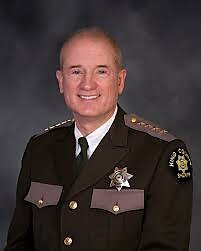
Today the Senate Judiciary Committee held a hearing on the interaction between federal and state law with respect to marijuana. Last November, voters in Colorado and Washington approved referenda that would legalize marijuana in those states. The most impressive witness at today’s hearing was Sheriff John Urquhart, who is responsible for the Seattle area in Washington. He said the drug war is a failure and that the people in his state are ready to try something new. Here is a link to the video for the entire hearing. Check out Sheriff Urquhart’s five minute introduction which begins at the 1 hour 29 minute mark. His written testimony can be found here.
For other police officials who call for ending the drug war, check out LEAP (Law Enforcement Against Prohibition).
Global Science Report is a weekly feature from the Center for the Study of Science, where we highlight one or two important new items in the scientific literature or the popular media. For broader and more technical perspectives, consult our monthly “Current Wisdom.”
Let us see if we can help New York Times’ global warming reporter Justin Gillis out.
In his article yesterday about the upcoming Fifth Assessment Report of the U.N.’s Intergovernmental Panel on Climate Change (IPCC), Gillis laments that the IPCC seems to be tamping down some of the more alarmist scenarios when it comes to the projected rate of rise of global temperatures and sea level.
Concerning projections of sea level rise, Gillis bemoans that the IPCC looks like (the final version of the Summary for Policymakers of the new report isn’t scheduled for release until the end of the this month at the conclusion of an IPCC editorial meeting in Stockholm) it will discount the “outlier” estimates that the rise this century will exceed five feet. Gillis writes “The drafters of the report went with the lower numbers, choosing to treat the outlier science as not very credible.”
When it comes to how fast the global average temperature is projected to rise, Gillis rues the possibility that the IPCC will lower its assessed value of the climate sensitivity, writing “In this case, the drafters of the report lowered the bottom end in a range of temperatures for how much the earth could warm, treating the outlier science as credible.”
Gillis can’t wait for the explanation:
…[I]t would be nice to hear an explanation from the drafters of this coming report as to why they made decisions that effectively play up the low-end possibilities. But with the report still officially under wraps, they are not speaking publicly. We are thus left wondering whether it is a matter of pure professional judgment — or whether they have been cowed by the attacks of recent years.
Assuming these decisions withstand final review, it will be fascinating to hear the detailed explanations in Stockholm.
We’ll end the suspense for him.
The reason that the IPCC should discount the possibility that the sea level will rise more than three feet by the year 2100 is that such a possibility has largely been discredited in the scientific literature and well as simply by looking out the window (i.e., the observed rate of sea level rise is only about 1.25 inches per decade and there is A LOT of ice in Greenland and Antarctica that is not going anywhere fast).
We documented this is numerous places, notably here, here, here, and here.
And the reason that the IPCC should lower its estimates of the earth’s climate sensitivity (i.e., how much the earth’s average temperature rises as a result of a doubling of the atmospheric concentration of carbon dioxide) is that the overwhelming majority of the recent findings in the scientific literature show that the most likely value is far beneath what it was assessed at in previous IPCC reports. In fact, the new equilibrium climate sensitivity estimates are so low as to put the IPCC in a quandary—if they were to fully embrace the new findings, they would have to discredit all the future climate projections made in the new report as they were generated by climate models with and average climate sensitivity that is nearly 75 percent higher than the new findings suggest. So if anything, the IPCC will likely be too conservative in lowering its assessment of the climate sensitivity in the final version of its Fifth Assessment Report.
Of course, we have explained all of this as well. See here, here, here, and here for starters.
So, pure and simple, the reason that the IPCC should embrace estimates of a slower global temperature increase and a lower global sea level rise is because that is what the current science supports.
Gillis could have saved himself a lot of wondering (and ink) had he only been reading these pages!
Related Tags
During the November 2010 election, a number of Minnesota voters were greeted at the polls with threats of criminal prosecution just for wearing hats, buttons, or shirts bearing the images, slogans, or logos of their favorite political causes (typically not relating to the Republican or Democratic parties).
Election officials cited Minnesota Statute § 211B.11, which makes it a misdemeanor to wear a “political badge, political button, or other political insignia” to the polls on election days. While there is no definition of “political” in the statute, an Election Day Policy distributed before the election explained that the statute bans any material “designed to influence or impact voting” or “promoting a group with recognizable political views.”
After several of their members were forced to cover up or remove clothing or accessories deemed to be political — in the sole discretion of an election official — a group of organizations and individuals brought suit to challenge the state law on the grounds that it unlawfully stifles core First Amendment-protected speech. The federal district court dismissed the suit, finding that § 211B.11 satisfied the lesser degree of judicial scrutiny to which viewpoint-neutral speech restrictions are subject. On appeal, a divided panel of the U.S. Court of Appeals for the Eighth Circuit upheld the law’s constitutionality, citing precedent permitting bans on active campaigning at polling sites and extending that reasoning to allow prohibitions even on passive political expression.
Those challenging the law have now asked the Supreme Court to review their case. Cato joined the Rutherford Institute on a brief supporting them, arguing that the Minnesota law’s absolute ban on “political” materials at polling sites is an unconstitutional restriction of core First Amendment speech.
Protecting the right of the people to advocate political causes is one of the primary purposes of our constitutional protections for the freedom of speech, so government restrictions in this area must be narrowly drawn and for a truly compelling reason, regardless of the type of forum where the ban applies. While the Eighth Circuit relied on precedent permitting bans on campaigning at polling sites, prohibiting inert political expression at these locations doesn’t serve a similar interest; passive expression simply doesn’t pose the same threats to elections — intimidation and chilling of voters — that active campaigning can. Accordingly, § 211B.11 cannot pass strict scrutiny; in legal terms, the restrictions it imposes are simultaneously under-inclusive, over-inclusive, and overly broad.
The Supreme Court will decide whether to take the case of Minnesota Majority v. Mansky late this fall.
Two different organizations are circulating information on Capitol Hill pertaining to the situation in Syria. The handouts are interesting, though for different reasons.
FreedomWorks, a grassroots organization credited with helping to get the Tea Party movement off the ground, issued a letter last Friday encouraging FreedomWorks’ supporters to contact their members of Congress and “urge them to vote NO on the upcoming Syrian war resolution.”
In the letter, FreedomWorks president Matt Kibbe cites the anticipated costs of the operations, but also warns about the “unintended consequences” that could cost far more. While FreedomWorks has typically steered clear of foreign policy issues, the letter explains why they have chosen to get involved this time, by linking back to the organization’s core issues: federal spending, burdensome regulations, and crushing debt. Even if the war in Syria doesn’t end up costing nearly as much as the wars in Iraq and Afghanistan, time spent debating our involvement in yet another Middle Eastern civil war distracts attention from more urgent challenges here at home.
I had a chance to speak with Kibbe yesterday. The debate in Washington surrounding intervention in Syria, Kibbe explained, reminded him a lot of the late summer in 2008, when a bipartisan coalition in Washington, led by Nancy Pelosi and John Boehner, made the case for bailing out the nation’s banks. The leaders called for immediate action to rescue the nation from the economic precipice, but the public wasn’t buying it. Pelosi and Boehner, along with President Bush and Treasury Secretary Paulson, eventually secured passage of TARP, but it generated even more opposition out in the hinterland to the disconnected class here in Washington.
Party leaders have even less power today, Kibbe said. “It is harder to buy votes” because the government is drowning in red ink, and the vote-buying to secure passage of ObamaCare generated a “backlash” that drove out unpopular incumbents. Fear of that same backlash is deterring a few holdovers from that Congress from trading favors in return for casting an unpopular vote for an unnecessary war.
“A few years ago,” Kibbe told me, “I never would have dreamed we could have stopped” a president’s call for military action. But the debate over intervention in Syria, he went on to say, “touches on a lot of other things” that has people upset at Washington today.
Not everyone is pleased, however, with Congress’s uncharacteristic deference to public sentiment. Other organizations are sending around information on Capitol Hill making the case for war, and hoping that Congress will ignore the people back home.
For example, the Foreign Policy Initiative’s “Fact Sheet for Congressional Debate on Syria,” provides “key background” on the conflict, quoting Obama administration officials and assuring readers that the Syrian opposition is populated by “moderate and respected” leaders who are committed “to a tolerant and inclusive vision of Syria.”
The fact sheet excerpts liberally from a single Wall Street Journal op-ed by Elizabeth O’Bagy, an analyst with the Institute for the Study of War. O’Bagy’s op-ed also served as a point of reference for Secretary of State John Kerry’s congressional testimony. The advocates for war want the public to believe that military strikes will be narrow and targeted, but they hope that U.S. intervention will tip the scales to the Syrian opposition without drawing the United States more deeply into the conflict. Building support for the opposition is key to making the case for war stick.
That is why O’Bagy is also working on behalf of the Syria Emergency Task Force (SETF), an organization that, according to its website, advocates “for greater U.S. action in Syria.” The group boasts that its D.C. team has met “with over two-thirds of the House and ninety percent of the Senate over the past year.” O’Bagy is listed on SETF’s website as the “political director.”
O’Bagy’s moonlighting for SETF caught the attention of publications on both the left and right. The Wall Street Journal saw fit to issue a clarification appended to O’Bagy’s op-ed, belatedly revealing her work for an advocacy organization. FPI does not mention O’Bagy’s affiliation with the SETF in the literature that it is handing out on Capitol Hill. For her part, O’Bagy doesn’t see a conflict of interest, and states on her ISW bio page that she does not lobby on behalf of SETF. She explained to the Daily Caller that she was working for the Syrian people.
In the run-up to the war in Iraq, organizations like the Committee for the Liberation of Iraq and the Project for a New American Century peddled claims about the heroic Iraqi opposition that would rise up after Saddam Hussein’s ouster, welcome American troops with open arms, and establish a thriving liberal democracy in the heart of the Middle East. They dismissed expert opinion suggesting that the collapse of the Baathist regime would unleash a horrific civil war, and they cast aside evidence that the individuals likely to emerge victorious from such a fight would be skeptical of Western-style democracy and likely hostile to the United States. They said that the war would be over quickly, and that our troops would come home soon. They trotted friendly, smiling Iraqis around Washington and introduced them to members of Congress. These were the people, they said, who represented the true spirit of the Iraqi people. Now we know the rest of the story, but that hasn’t stopped the advocates for this war from telling a similar one again.
The public can be forgiven for overwhelmingly opposing intervention in Syria, given what they have learned (but apparently many here in Washington have not) about supposedly limited military operations to punish dictators. In the case of war with Syria, FreedomWorks is following public sentiment, while the Foreign Policy Initiative is trying to lead Washington away from it.
Related Tags

ooray, the U.S. News and World Report college rankings are out! No, they aren’t perfect — Creighton probably isn’t slightly better than Butler, or Berkeley than UVA — but the relative standings of schools is but one piece of information U.S. News provides to help both consumers and the publication’s bottom line. You know, a win-win. Indeed, most of the information that President Obama thinks Washington needs to publish, at least according to the “fact sheet” to go with his recent college tour, is already provided by U.S. News. You will have to pay $30 for access to all of it, but that’s a microscopic investment compared to the six-figure choice many prospective students will be making.
Let’s run the presidential rating-items list:
- “Percentage of students receiving Pell grants”: Check!
- “Average tuition”: Check!
- “Scholarships”: Check and check!
- “Loan debt”: Roger that!
- “Graduation…rates”: Better believe those are checks!
- “Transfer rates”: Not exactly check, but close.
- “Graduate earnings”: OK, not in U.S. News, but readily available right here!
- “Advanced degrees of college graduates”: Here’s the only clear non-check for easy data availability. U.S. News’ “graduation and retention” sections for each college have many advanced study categories, but most don’t give data.
Other than specifics about transfer rates, advanced studies pursued by a school’s graduates, and graduates’ earnings, everything the White House wants to use for ratings is on the U.S. News site. And of those missing items, U.S. News offers a decent approximation for one and PayScale gives you the other. Oh, and U.S. News furnishes tons of additional information the fact sheet doesn’t mention, including rankings of undergraduate business and engineering programs; schools with the most emphasis on teaching; student body ethnic diversity; student housing; and much more.
Of course, again, U.S. News isn’t perfect. Which is why it is so great that it has lots of competitors, including Forbes, The Princeton Review, Washington Monthly, and more. In other words, the market provides, and we don’t need more government “help.” Indeed, what we need from government is much, much less.
Related Tags
On Sunday, Mexican President Enrique Peña Nieto unveiled a fiscal reform bill that is an important corollary of his energy reform proposal. The legislation’s main goal is to increase the federal government’s tax intake in the face of diminished oil revenues due to the reforms that will let Petróleos de México (Pemex) keep more of its money for investments.
Approximately one third of the government’s revenues comes from oil. The fact that oil production is declining significantly (it dropped 25 percent in the last decade), adds urgency to generating new sources of tax revenue or reducing spending. Mexico’s fiscal deficit last year was 2.6 percent of its GDP, but without oil revenues it would have been close to 8 percent instead.
The good: The bill will simplify Mexico’s complex tax system. In the World Bank’s Doing Business report, Mexico ranks 107th among 185 economies on its ease of paying taxes. It takes an average Mexican businessman 337 hours every year to calculate and pay his taxes, whereas his peers in the mostly developed nations of the OECD have to spend an average 176 hours every year doing their taxes. A complex tax system constitutes a burden on the economy and can also be extremely inefficient since it encourages people to elude and evade taxes (particularly in developing countries with weak institutions). Thus, you can have a country such as Mexico with high tax rates and yet low tax revenues. This is a problem because it can lead to a slippery slope where politicians try to extract more revenue via higher taxes from a dwindling pool of taxpayers.
The current top rate on the personal income tax is 30 percent. The corporate tax rate is also 30 percent. The Value Added Tax (VAT) is 16 percent. And yet Mexico’s tax intake was only 9.7 percent of its GDP in 2012. This is not to say that Mexico should have a higher tax burden, but to point out that there is something wrong with a tax system if it has fairly high tax rates that don’t generate much revenue.
The reform introduced by the government aims to simplify the tax code by closing loopholes, getting rid of inefficient taxes, and eliminating or capping tax deductions. As a result, the income tax law will go from having 299 articles to 186. A tax on bank savings will be scrapped, along with a corporate version of the Alternative Minimum Tax. The bill will eliminate distorting provisions, such as having some border towns paying a lower VAT rate of 11 percent or allowing corporate groups to offset the losses of some of its subsidiaries against the profits of others. This will make the tax code more neutral and reduce the scope for rent seeking by interest groups.
The bad: The bill is a significant tax increase. First, a “fiscal reform” worth its name would tackle both sides of the equation: taxes and spending. In this case, Peña Nieto’s proposal only deals with taxes while forgoing spending cuts. There are many areas where government spending can be cut. One of them is energy subsidies, which include gasoline, electricity, and gas. According to John Scott from CIDE, a think tank, those subsidies amount to 14 percent of GDP from 2006 to 2012. Agricultural subsidies are also high and they tend to benefit the well-off and are easily abused. If the government’s goal was to put its finances in order before reducing its reliance on oil revenues, it should have included spending cuts.
Second, it’s good that the bill aims at simplifying the tax code by getting rid of loopholes, capping and scraping deductions and eliminating distorting special tax rates that benefit certain regions or groups. As I mentioned earlier, that makes the tax code more neutral and diminishes rent seeking by interest groups. It weakens the discretional power of politicians and bureaucrats too. But the bill should also have lower tax rates to stimulate the private sector. It doesn’t. The corporate tax rate will stay at 30 percent but a new top personal income tax rate of 32 percent will be created for people making over $38,000 a year. The VAT will remain at 16 percent but it will cover more products and services, such as private education, concerts, transportation (outside cities), pet food, jewelry, etc. The bill creates a new capital gains tax of 10 percent. It also introduces a carbon tax and flirts with social engineering by creating a tax on sugary drinks aimed at fighting obesity.
Taking more money from the private sector and giving it to the government will hardly help the Mexican economy grow. Let’s keep in mind that Mexico only grew by an average of 2 percent a year in the last decade, one of the lowest rates in Latin America. The fiscal reform bill will increase the burden of those who already pay taxes while doing little to reduce the informal sector where 59 percent of the Mexican labor-force works. According to Doing Business, the total tax rate paid by an average Mexican businessman (as a percentage of his profits) is 52.5 percent while the average in the OECD is 42.7 percent. If the economic research of the last 30 years is any indication, increasing taxes won’t reduce the size of the informal sector.
On a positive note, if Mexicans want big government, the burden of such a system will be more direct and visible. Bloated and wasteful government spending heavily financed by oil revenues is a curse to any economy. Perhaps if Mexicans feel the pinch in their pockets from higher taxes they will have an incentive to demand less government.
The ugly: The fiscal reform will increase the size of government. Instead of simply filling the hole left by lower oil revenues, Peña Nieto already stated that the expected revenue for the reform (1.4 percent of GDP by next year and 3 percent of GDP by 2018) will pay for more social spending including a universal pension for people over 65 years and a new unemployment insurance scheme. If the tax increase will pay for higher spending, then more tax revenue will be needed in the medium term to make up for lower oil revenues.
The bill will probably undergo changes in the legislature. If those amendments undermine the goal of simplifying the tax code, then there will be little, if anything, good in this fiscal reform.