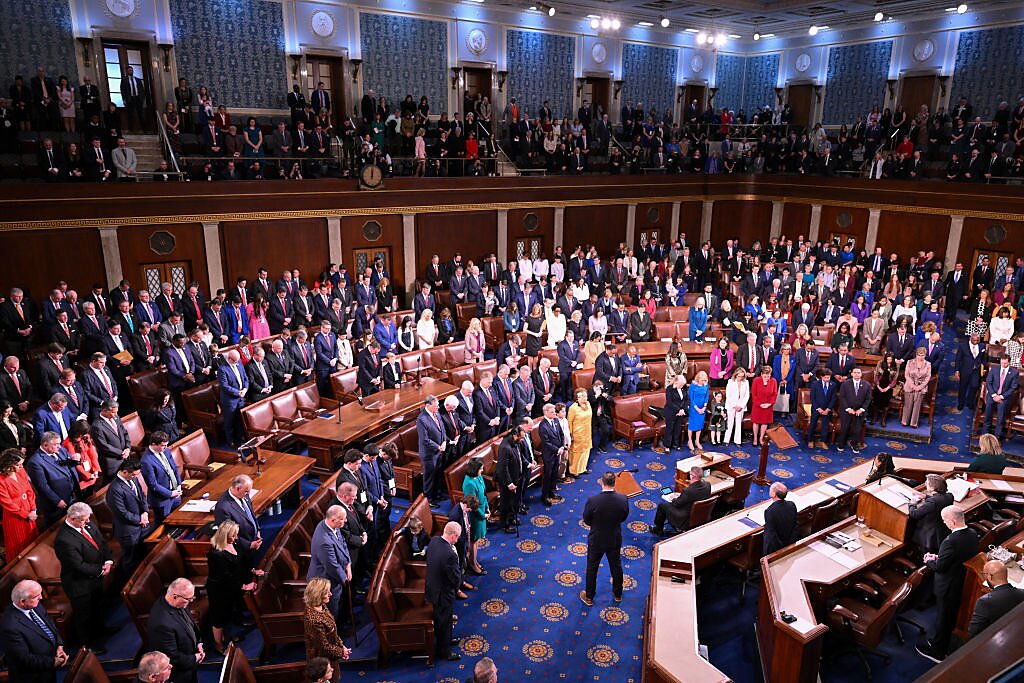
Cato scholars have argued for years that Congress should take back some of the tariff powers it handed to the executive branch over roughly the last hundred years. Article I, Section 8 of the Constitution gives Congress, not the president, the authority to “lay and collect Taxes, Duties, Imposts and Excises” and to regulate commerce with foreign nations. Throughout President Trump’s two terms in office, Congress has watched from the sidelines while the administration unilaterally imposes one legally dubious (to say the least) and economically destructive tariff after another, most recently reviving a nearly 100-year-old, never-before-used law (Section 338 of the Tariff Act of 1930) to heavily tax imports from Canada. Yet a recent bill introduced by Sen. Ron Wyden (D‑OR) is a positive sign that Congress may soon finally take this constitutional role seriously.
Cato at Liberty
Cato at Liberty
Topics
Duvall v. Maryland Brief: Protecting the Right to Interstate Travel While Armed
In 2022, Lloyd Muldrow, a Marine veteran and self-defense instructor, stopped an attack by an armed assailant in a Baltimore bar. For his heroism, he would later receive the Carnegie Medal, which recognizes those who perform extraordinary acts of heroism in civilian life. But before that recognition, he suffered the humiliation of arrest and prosecution solely because he carried a firearm in Maryland with a Virginia carry permit, which Maryland refused to honor. As reported, “Police thanked him—and then they arrested him.”
Mr. Muldrow would eventually receive probation for his “crime.” His experience underscores that the issue of interstate carry rights is not limited to this case. Rather, it threatens responsible, licensed carriers nationwide.
Read the rest of this post →Related Tags
Free-Market Reforms Take Time to Pay Off
A recent analysis warns that evaluating the impact of free-market reforms too early can obscure their true effects.
The study used
Read the rest of this post →data from the Fraser Institute’s Economic Freedom of the World index for 1950–2023 … [and] identified one reform episode in each of 30 countries by finding the shortest window over which its index score increased by two or more points.
Related Tags
Wealth Taxes Fail
Californians will vote on a 5 percent tax on billionaire wealth this November. In Congress, Sens. Elizabeth Warren (D‑MA) and Bernie Sanders (I‑VT) are pushing plans for an annual wealth tax. And abroad, Norway and Spain have expanded their wealth taxes, and some countries want to impose a global wealth tax.
Our new Cato study, “Failures of Wealth Taxation,” discusses why these efforts are misguided. The study describes how a dozen European countries have tried wealth taxes but then repealed them in failure. Wealth taxes raise little revenue, drive out investment and entrepreneurs, and become riddled with loopholes.
Read the rest of this post →Related Tags
Congress Can’t Police the Foreign Deals It Doesn’t Know About
The Constitution’s treaty ratification process, which requires the consent of two-thirds of the Senate, covers a shrinking share of the promises the United States makes to other countries. The rest are concluded as executive agreements under varying degrees of congressional authorization. For decades, the Case–Zablocki Act’s (Case Act) reporting requirements have been Congress’ main window into the executive branch’s growing practice of striking international deals outside the treaty process. But it’s a poor substitute for affirmative consent, and as a recent US Government Accountability Office (GAO) report makes clear, administrations routinely flout even those modest obligations, resulting in Congress learning about US commitments sometimes months after they’ve been finalized.
Read the rest of this post →Related Tags
Would the SAVE America Act Have Prevented the New Jersey Noncitizen Voter Snafu? Maybe, Maybe Not.
President Trump’s pet legislation—the Safeguard American Voter Eligibility Act, or SAVE America Act—would require Americans to provide documented proof of citizenship upon registering to vote, usually a passport or birth certificate. This, the act’s proponents argue, would prevent noncitizen actors from illegally registering and participating in American elections. The recently revealed registration mishap in New Jersey has led to renewed advocacy for the act. Vice President JD Vance weighed in; so, too, did Sen. Dave McCormick (R‑PA) and Trump’s “Rapid Response” social media account. (“Yet another reason to PASS THE SAVE AMERICA ACT!”)
But it’s unclear if the SAVE America Act would have prevented what happened in New Jersey.
Read the rest of this post →Related Tags
Social Media Laws Could End Anonymous Speech Online Without Making Anyone Safer
Recently, the House of Representatives passed the KIDS Act, an omnibus package of bills that could fundamentally change how all users experience the internet. This approach puts policymakers, not parents, in control of what their children see online. And it threatens speech and privacy rights for adult users, too.
Perhaps most importantly, it has been tried elsewhere. And in those places, it has failed. The result is always the same: the internet becomes much less interesting—and much less useful.