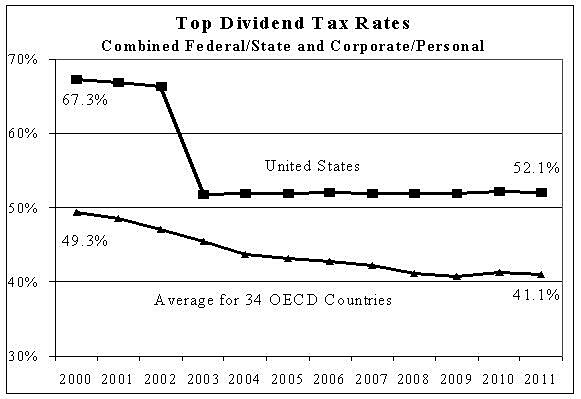
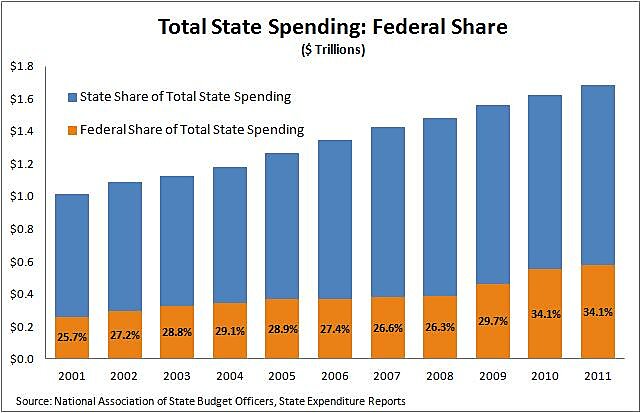
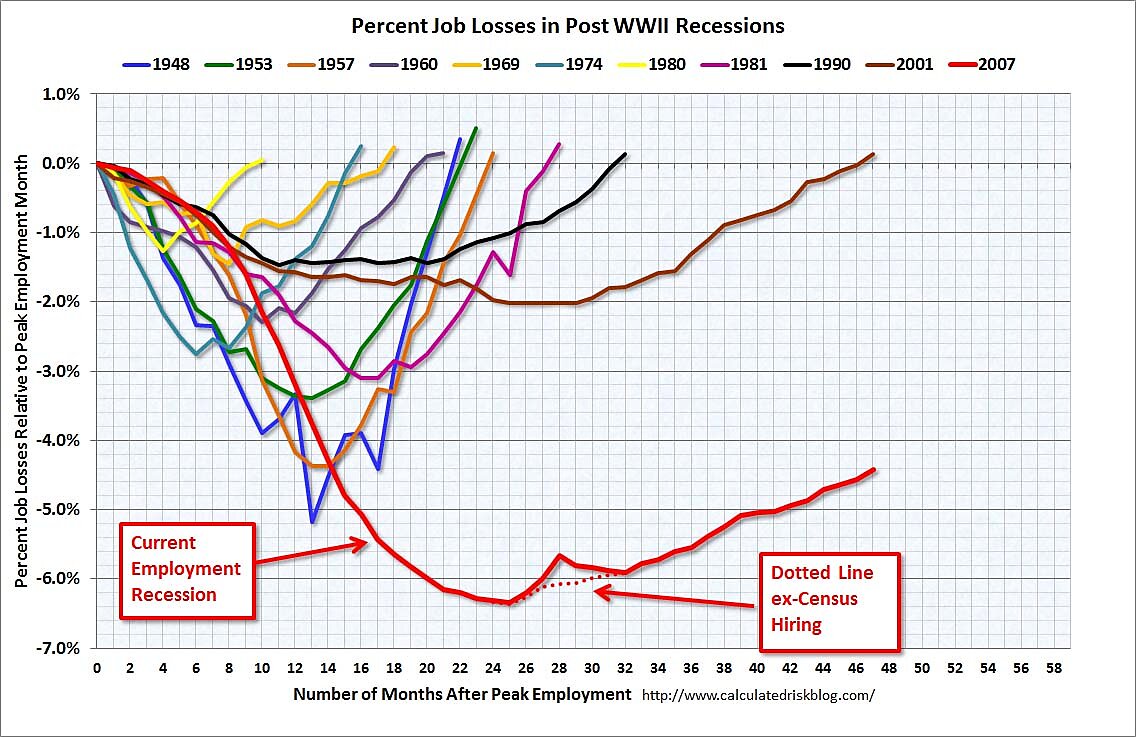
I am debating the need for more government spending to goose the economy and create jobs over at PolicyMic.com. I argue that we’ve had enough government “stimulation” (see here). My opponent argues that the federal government hasn’t spent enough money (see here). Readers will decide the “winner” and can add their own two cents.
Cato at Liberty
Cato at Liberty
Topics
Tax and Budget Policy
It Goes Beyond the Supercommittee
Today Politico Arena asks:
Should Obama have led the supercommittee?
My response:
Whether or not Obama had led the supercommittee in its effort to trim a pittance from our federal deficits and debt, the effort was doomed from the start for the reasons committee co-chairman Jeb Hensarling stated in this morning’s Wall Street Journal: “Ultimately, the committee did not succeed because we could not bridge the gap between two dramatically competing visions of the role government should play in a free society, the proper purpose and design of the social safety net, and the fundamentals of job creation and economic growth.”
Obama has proven himself clueless about economics from the time he first entered public life, as evidenced by the economic disaster surrounding him and his party. Their vision was soundly rejected by the voters a year ago. If it is rejected again a year from now, we may start the slow climb out of the hole that they, as well as Republicans who share their vision, have put us in. But if the voters give us a mixed result, it’s only a matter of time before our creditors exact the price of our economic irresponsibility. These lessons, the subjects of children’s books and learned lectures, are as old as humanity itself. We have only to heed them.
Related Tags
American Politicians Should Copy Canada’s Leftist Government of the 1990s and Cap Spending
Since I’ve written before about Canada’s remarkable period of fiscal restraint during the 1990s, I was very pleased to see that the establishment press is finally giving some attention to what our northern neighbors did to reduce the burden of government spending.
Here are some key passages from a Reuters story.
“Everyone wants to know how we did it,” said political economist Brian Lee Crowley, head of the Ottawa-based think tank Macdonald-Laurier Institute, who has examined the lessons of the 1990s. But to win its budget wars, Canada first had to realize how dire its situation was and then dramatically shrink the size of government rather than just limit the pace of spending growth. It would eventually oversee the biggest reduction in Canadian government spending since demobilization after World War Two. …The turnaround began with Chretien’s arrival as prime minister in November 1993, when his Liberal Party — in some ways Canada’s equivalent of the Democrats in the U.S. — swept to victory with a strong majority. The new government took one look at the dreadful state of the books and decided to act. “I said to myself, I will do it. I might be prime minister for only one term, but I will do it,” said Chretien. …The Liberals thought their first, rushed budget — delivered in February 1994, three months after taking office, was tough. It reformed unemployment insurance entitlements, and cut defense and foreign aid… The upstart Reform Party, then the main national opposition party, had campaigned on “zero-in-three” — balance the budget in three years. “We were always trying to go faster,” said Reform’s leader at the time, Preston Manning. …The Liberals were stung by the criticism and, at first reluctantly but then with gusto, they got out the chain saws. …Cutting government spending programs went against the Liberal grain. Contrary to the Reform Party, the Liberals saw a more important role for government. Paul Martin now has a lasting reputation as the finance minister who slayed Canada’s deficit, but the conversion from spender to cutter was painful. His father, also called Paul, had helped create Medicare, Canada’s publicly funded health care system, and suddenly here was Paul Junior contemplating massive cuts.
This is a remarkable story. My only real quibble is that the fiscal restraint actually started the year before the Liberal Party took power, as the chart illustrates.
But the key thing to understand is that Canada enjoyed a five-year period when government spending increased by an average of only 1 percent each year.
There are more good passages in the story. Can anybody imagine Obama doing this?
At one 1994 cabinet meeting, Martin announced a spending freeze. A minister put forward a project that needed funding but Chretien cut him off, reminding him of Martin’s freeze. A second minister raised his hand to ask for funding, and a testy Chretien told the cabinet that the next minister to ask for new money would see his whole budget cut by 20 percent. …The ratio of spending cuts to tax hikes was seven-to-one. Asked why, Chretien said simply: “There was more need on one side than the other.” …Cuts ranged from five percent to 65 percent of departmental budgets.
By the way, while there were a few tax hikes implemented, they were trivial. Tax revenue as a share of GDP rose from 44.2 percent of GDP to 44.5 percent a GDP, an increase that probably was going to happen anyhow as Canada’s economy recovered.
So what were the results of Canada’s spending freeze?
The following passage has some numbers, but the second chart shows that the burden of government spending in Canada (right axis) fell from 53 percent of GDP to 44 percent of GDP in just five years. And red ink (left axis) completely disappeared.
The deficit disappeared by 1997 and the debt-to-GDP ratio began a rapid decline — it is now at about 34 percent. …After wrestling the deficit to the ground, Canada enjoyed what Crowley calls the payoff decade, outperforming the rest of the G7 on growth, job creation and inward investment. From 1997 to 2007, it averaged 3.3 percent economic growth. while U.S. growth averaged 2.9 percent.
The most important thing to understand is that Canada’s economy improved because the burden of government spending was reduced. Moreover, because the underlying disease was being treated, this meant two of the symptoms of excessive government — deficits and debt — also became less of a problem.
Last but not least, there are rewards for good policy. Just as Reagan enjoyed a landslide in 1984 after sticking to his guns, Canada’s Liberal Party also reaped the benefits of doing the right thing.
The final lesson is that you can impose painful spending cuts and still win elections. Chretien went on to win two more back-to-back to form majority governments, a rare feat. „,Drummond, who later moved to the private sector and is now an advisor helping the Ontario provincial government slash its deficit, noted that governments on the right and left in Saskatchewan, Alberta and Ontario won more voter support after their own budget cuts in the 1990s.
Here’s a video I narrated that looks at the Canadian experience, as well as similar good reforms in New Zealand, Ireland, and Slovakia.
Last but not least, let’s put all of this in context. As demonstrated here, the U.S. would enjoy a balanced budget in just eight years if politicians could be convinced to limit spending so that it increased by 1 percent each year.
Related Tags
Supercommittee Fails; Now Let’s Talk Specific Cuts
It looks like the congressional supercommittee has failed to agree on a deficit-reduction plan. That’s probably a good thing because it sets up an automatic sequester to trim spending by $1.2 trillion over 10 years.
If the supercommittee had agreed to a deal, it might have paired phony spending cuts with real tax increases. For example, while Republicans had offered to raise taxes by $400 billion, there had been talk of adopting smoke-and-mirrors savings of $700 billion for the withdrawal of troops from Iraq and Afghanistan.
Also, one of the tax increases that Republicans were apparently offering was to change the indexing of income tax brackets. That would have been the worst kind of tax hike, as it would have been a hidden way of steadily increasing marginal tax rates over time.
A sequester is far from the best way to cut spending, and spendthrift members of Congress will have until January 2013 to try and weasel out of cuts. However, it does help to put the big spenders on the defensive. If defense hawks such as Senator John McCain want to reverse the roughly $55 billion a year in defense savings, then they have the burden of coming up with alternative cuts that can gain broad agreement.
CBO has analyzed the sequester mechanism. In typical congressional style, the simple sequester idea of “across-the-board cuts” has morphed into complex procedures that only Washington lawyers would love. The sequester’s main effect will be to reduce the discretionary caps on defense and nondefense spending that are in place from the Budget Control Act passed earlier this year. The sequester will make only tiny cuts to so-called entitlement programs. Still, any cuts are good cuts.
What’s the next step for budget control? Conservative Republicans have focused nearly all of their energy this year on trying to impose overall limits on the budget. The Budget Control Act and likely sequester have established discretionary caps for the next decade. Meanwhile, an effort to pass a Balanced Budget Amendment has failed.
Now Republicans should do what most of them have been evading all year—start pushing cuts to particular programs in order to launch a discussion about the federal government’s proper role. How about ending federal subsidies for public housing, high-speed rail, urban transit, farm businesses, and energy? How about raising the Social Security retirement age, increasing Medicare deductibles, and block-granting Medicaid?
To his credit, Rep. Pompeo is showing the way with his push to eliminate the Economic Development Administration. The EDA is a relatively small program, but Pompeo did a nice job on Fox last week making the case for termination. We need every fiscal conservative in Congress to do some research and then target a handful of specific programs for repeal.
Enough of the “noncommittal gibberish” about cuts, as Robert Samuelson says today. The nation’s “adult discussion” on the budget will begin when policymakers start talking specifics.
Related Tags
Supercommittee Tax Fight Is About Increasing Spending, not Reducing Deficits
Some people have asked why I’m so agitated about the possibility that Republicans may acquiesce to tax increases as part of the Supercommittee negotiations.
Rather than get into a lengthy discourse about the proper role of the federal government or an analysis of how the Bush-Obama spending binge worsened America’s fiscal situation, I think this chart from a previous post says it all.
Republicans are considering a surrender on taxes because they are afraid that a deadlock will lead to a sequester, which would mean automatic budget savings. And the sequester, according to these politicians, would “cut” the budget too severely.
But as the chart illustrates, that is utter nonsense.
There are only budget cuts if you use dishonest Washington budget math, which magically turns spending increases into spending cuts simply because the burden of government isn’t expanding even faster.
If we use honest math, we can see what this debate is really about. Should we raise taxes so that government spending can grow by more than $2 trillion over the next 10 years?
Or should we have a sequester so that the burden of federal spending climbs by “only” $2 trillion?
The fact that this is even an issue tells us a lot about whether the GOP has purged itself of the big-government virus of the Bush years.
A few Republicans say that a sellout on tax hikes is necessary to protect the defense budget from being gutted, but this post shows that defense spending will climb by about $100 billion over the next 10 years under a sequester. And that doesn’t even count all the supplemental funding bills that doubtlessly will be enacted.
In other words, anyone who says we need to raise taxes instead of taking a sequester is really saying that we need to expand the burden of government spending.
So even though Ronald Reagan and Calvin Coolidge are two of my heroes, now you know why I don’t consider myself a Republican.
Related Tags
Adios Balanced Budget Amendment
The House failed to pass a particularly bad version of the Balanced Budget Amendment this afternoon. Good. Kudos to the four Republicans who voted against it (see vote breakdown here).
House Republicans wanted a vote on a BBA for political purposes. The GOP wanted to be able to present the Democratic “no” votes to voters as proof that those particular members aren’t serious about reining in the exploding federal debt. They probably aren’t, but Republicans who voted “yes” shouldn’t cite their vote as evidence that they’re serious about cutting spending unless they’re prepared to detail what all they would cut in order to bring the budget into balance.
Related Tags
This Week in Government Failure
Over at Downsizing the Federal Government, we focused on the following issues this past week:
- The Washington Post does a nice job describing how Solyndra is just one of many energy subsidy failures of recent decades.
- The cheerleaders for federal redistribution schemes would have the public believe that it’s all about “helping those in need” when in fact it’s really about fostering dependency on taxpayers.
- Chris Preble on cutting military spending and rethinking our grand strategy.
- U.S. policymakers should be asking: What have other countries privatized that we can privatize in this country?
- Chris Edwards on crumbling bridges and infrastructure fear-mongering.
- The “minibus” spending bill is largely business as usual.
Follow Downsizing the Federal Government on Twitter (@DownsizeTheFeds) and connect with us on Facebook.