Last week, still-unnamed federal Immigration and Customs Enforcement (ICE) agents in Minneapolis shot and killed Alex Pretti, a 37-year-old ICU nurse who was lawfully carrying a concealed firearm while documenting ICE activities. Video evidence contradicts federal officials’ claims that Pretti posed a threat; he never drew his weapon before agents tackled, disarmed, and killed him. Pretti’s death came less than three weeks after another ICE agent fatally shot Renée Good, a 37-year-old American citizen, in circumstances where video similarly contradicts the government’s self-defense narrative.
In the aftermath of Pretti’s killing, President Trump and FBI Director Kash Patel stated that Americans can’t bring guns to protests—false claims that brought sharp rebukes from multiple Second Amendment advocacy groups. At the same time, and over 1,200 miles to the southeast, an even larger battle over gun rights was unfolding in Richmond, Virginia.
On January 26, 2026, the Virginia Senate Committee for Courts of Justice advanced SB 749, legislation that would ban the sale, transfer, and possession of so-called “assault firearms” and magazines holding more than ten rounds. The bill’s sponsors portray it as a common-sense public safety measure. In reality, it represents an unconstitutional assault on Virginians’ fundamental rights. Should SB 749 become law, it will undoubtedly face challenges in courts at the state and federal levels.
The Supreme Court’s Framework
The constitutional analysis begins with the Supreme Court’s decision in New York State Rifle & Pistol Association v. Bruen (2022), which established a two-step test for Second Amendment challenges. First, courts must determine whether the Second Amendment’s plain text covers the regulated conduct. If yes, the government must prove its regulation is “consistent with this Nation’s historical tradition of firearm regulation.”
This “text and history” standard replaced decades of interest-balancing tests that allowed courts to weigh governmental interests against individual rights. Under Bruen, such balancing is generally impermissible. The government must identify historical analogues—regulations from the founding era (1791) or Reconstruction (1868) that are “relevantly similar” to modern restrictions.
SB 749 fails both steps of this test.
Step One: Protected “Arms”
The Supreme Court in District of Columbia v. Heller (2008) held that the Second Amendment protects arms “in common use” for lawful purposes. This standard should be fatal to SB 749’s assault weapons ban.
AR-15 pattern rifles are the most popular centerfire rifles in America. The National Shooting Sports Foundation (NSSF) estimates 24.4 million modern sporting rifles (MSRs) were in civilian circulation as of 2022, with production increasing by 4.5 million units between 2020 and 2022 alone. Updated figures through 2024 show over 30 million MSRs in circulation. That’s more than the 16 million Ford F‑150 trucks—America’s best-selling vehicle—on the road as of 2021.
These rifles serve lawful purposes, including home defense, hunting, and recreational shooting. They are not “weapons of war”—the American military services only employ fully automatic weapons for combat operations.
The inflammatory and literally inaccurate “weapons of war” label also ignores the fact that semi-automatic rifles have been available to American civilians since 1906, when Remington introduced the Model 8, designed by the legendary John Moses Browning. The first semi-automatic pistol available for public purchase was the Borchardt C‑93 in 1893, followed by Colt’s Model 1900 in 1900. Semi-automatic firearms with detachable magazines have been lawfully owned by civilians for 118 years—well within the historical tradition Bruen requires courts to examine.
Magazine capacity restrictions fare no better.
The NSSF’s 2024 Detachable Magazine Report documented that approximately 717.9 million magazines with capacity exceeding ten rounds are in circulation, compared to just 245.8 million magazines of ten rounds or fewer. Standard-capacity magazines (15–30 rounds) come factory-installed in most modern pistols and rifles. The Glock 17—one of the most common police sidearms—ships with 17-round magazines. AR-15 rifles use 30-round magazines as standard. These aren’t exotic accessories; they’re the default configuration that millions of Americans rely on for self-defense or recreational shooting.

The Fourth Circuit got this analysis backwards in Bianchi v. Brown (2024), the Maryland assault weapons ban case. The en banc court held that AR-15s fall outside Second Amendment protection because they’re “military-style weapons designed for sustained combat operations.” This reasoning inverts Heller’s framework and is factually inaccurate regarding the civilian vs. military use cases cited above.
The Supreme Court denied certiorari in Bianchi (renamed Snope v. Brown) on June 2, 2025, but that denial carries no precedential weight outside the case in question. Justice Clarence Thomas dissented sharply, as did Justices Alito and Gorsuch. Justice Brett Kavanaugh’s concurring statement acknowledged that AR-15 owners “have a strong argument” that these rifles are in common use and therefore protected, but suggested waiting for more circuit court rulings before granting review. He predicted the Court “should and presumably will address the AR-15 issue soon, in the next Term or two.”
Translation: In the eyes of at least four members of the Supreme Court, the Fourth Circuit’s reasoning is constitutionally suspect. The Court probably wants a cleaner case or a more developed circuit split before intervening. Virginia legislators betting that Bianchi provides cover for SB 749 are likely betting wrong.
Step Two: Historical Tradition
SB 749 would also fail the Bruen test because Virginia cannot identify any historical tradition of feature-based firearms bans.
Bruen requires examining the regulations from 1791 and 1868. The author’s research to date has uncovered no Founding-era or Reconstruction-era jurisdictional firearm bans based on cosmetic features such as pistol grips, folding stocks, or threaded barrels. No historical laws restricted magazine capacity. No colonial or early American government prohibited citizens from owning the same arms carried by militias.
To the contrary, colonial Virginia required militia members to own military-pattern arms. Revolutionary Virginia armed civilians with the same muskets as the Continental Army. The 19th century saw no restrictions on rifle features or capacity—even as repeating firearms became available. The Girandoni air rifle (circa 1780), carried by Lewis and Clark, held 20–22 rounds and could fire 40 shots per minute. It was perfectly legal.
If the Founders didn’t restrict 20-shot repeating weapons, the argument that ten-round magazine limits have a historical pedigree collapses.
The historical record reveals only narrow categories of firearms regulation: laws against concealed carry (conduct-based, not weapon-based), restrictions on carrying weapons “to the terror of the people” (also conduct-based), disarmament of Revolutionary era British Loyalists (based on allegiance, not weapon type), prohibitions on “dangerous and unusual” weapons like sawed-off shotguns that lacked both common use and militia utility, and a very limited number of place-specific weapons bans (legislative assemblies, polling places, and courthouses).
None of these categories encompasses SB 749’s feature-based ban. The bill prohibits firearms based on adjustable stocks, pistol grips, and barrel threading—cosmetic or functional characteristics that don’t affect lethality. A Ruger Mini-14 ranch rifle with traditional stock and non-threaded barrel fires the same .223 cartridge at the same rate as an AR-15 but wouldn’t be banned under SB 749. However, if that same Mini-14 has a threaded barrel—a feature used primarily for attaching hearing-protective suppressors—it becomes a banned “assault” firearm. This demonstrates the arbitrary nature of feature-based classifications. This arbitrary line-drawing lacks historical precedent and fails Bruen’s test.
The Equal Protection Problem
SB 749’s exemptions potentially create multiple constitutional vulnerabilities under the Fourteenth Amendment’s Equal Protection Clause.
Law Enforcement Exemptions: The bill exempts current law enforcement officers (LEOs) “acting within the scope of his duties.” But what does this mean? Does it cover off-duty possession? Home storage? Training at private ranges? The ambiguity creates arbitrary enforcement opportunities.
More fundamentally, the LEO exemption undermines any public safety rationale. If AR-15s are too dangerous for public safety, that danger doesn’t disappear when an off-duty officer carries one. If off-duty LEOs need them for self-defense, ordinary citizens have the same need—criminals don’t check badges before attacking.
Retired LEO Exemption: Section 18.2–309.1(C) allows retired LEOs to keep magazines transferred to them upon retirement. This is naked class legislation. A retired officer has exactly the same legal status as any other citizen: no arrest powers, no qualified immunity, no duty to intervene in crimes. The only distinction is former employment. Why should prior government service grant permanent superior constitutional rights?
Family Transfer Restrictions: The bill defines “immediate family member” as “spouse, children, parents, and siblings.” Why can grandfathers gift AR-15s to adult sons but not adult grandsons? Why are siblings included but aunts and uncles excluded? Why is the status of stepchildren ambiguous? The arbitrary line-drawing has no rational basis and discriminates against non-traditional families, long-term domestic partners, and extended family relationships.
Grandfathering Creates Wealth Discrimination: SB 749 allows continued possession of assault firearms lawfully acquired before July 1, 2026. This creates a closed class of privileged owners. Post-ban, only those wealthy enough to afford grandfathered rifles (which will command premium prices) can exercise their Second Amendment rights. Young adults, lower-income Virginians, and future generations are permanently excluded. This wealth-based barrier to fundamental rights may well violate equal protection principles, a possibility worthy of serious review by federal courts.
Potential Litigation Dynamics
SB 749 faces multiple independent grounds for constitutional challenge:
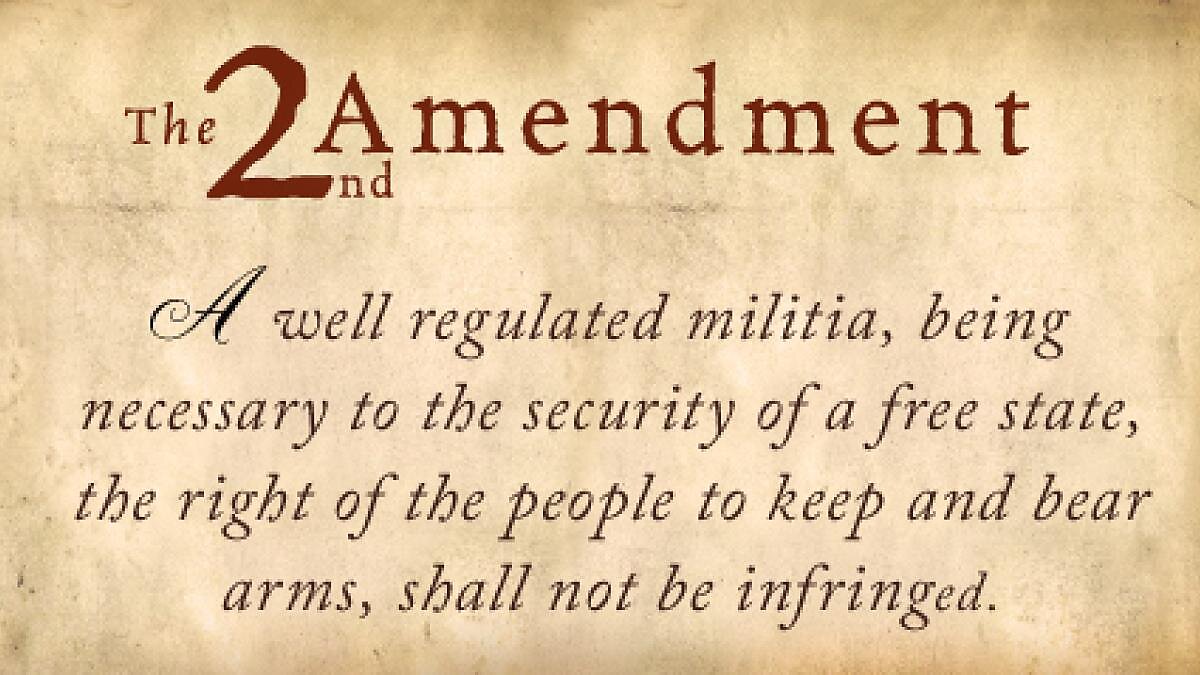
Second Amendment: The bill bans arms in common use for lawful purposes, directly violating Heller’s core holding. It has no historical analogue under Bruen’s framework. While the Fourth Circuit’s Bianchi decision creates an uphill battle in that circuit, Justice Kavanaugh’s statement suggests the Supreme Court will eventually take an assault weapons ban case—and the reasoning in Bianchi is highly vulnerable.
Equal Protection: LEO exemptions, especially for retired officers, create arbitrary classes without rational basis. The wealth discrimination from grandfathering and arbitrary family definitions both represent independent potential equal protection violations.
Void for Vagueness: Terms like “acting within the scope of his duties” and “temporary transfer” create enforcement ambiguity that likely violates due process.
The Political Calculation
Virginia legislators supporting SB 749 face a choice: enact constitutionally dubious legislation that will likely be enjoined or recognize that post-Bruen jurisprudence has fundamentally clarified and rationalized Second Amendment law.
The Fourth Circuit’s Bianchi decision likely provides only temporary cover. Three justices voted to grant certiorari; a fourth (Kavanaugh) explicitly signaled he expects the Court to address assault weapons bans “in the next Term or two.” When that happens, the Court will apply Bruen’s text-and-history test—and feature-based bans that prohibit commonly-owned rifles probably cannot survive that scrutiny.
Meanwhile, SB 749 would criminalize conduct by hundreds of thousands of Virginians who own AR-15s and standard-capacity magazines, and it would create a privileged current and former government class (law enforcement officers) exempt from prohibitions applied to ordinary citizens.
Constitutional rights are not subject to legislative override based on shifting political majorities. SB 749 represents an unconstitutional overreach that will—and should—fail in court. Virginia’s legislators would serve their constituents better by crafting narrowly tailored public safety measures that respect constitutional constraints rather than inviting costly, protracted litigation over legislation virtually certain to be struck down.
The Second Amendment protects the right of law-abiding Virginians to own commonly used firearms for self-defense. SB 749 violates that right. The only question is how much time and money Virginia will waste learning what the Constitution already makes clear.