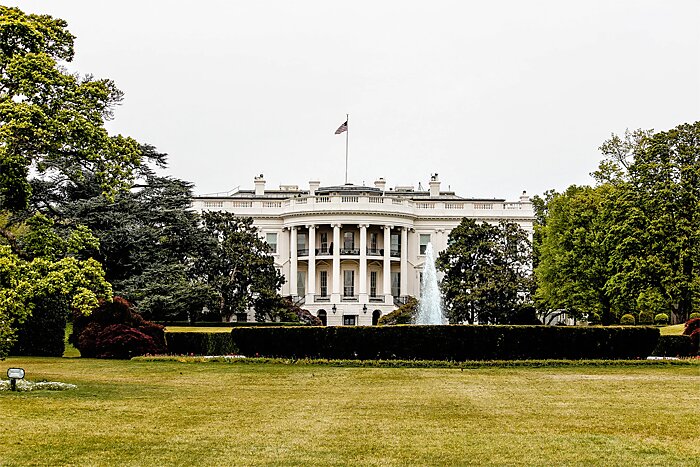
Last Tuesday (July 28), the Senate confirmed Jay Clayton to be the new director of national intelligence (DNI). Yet Clayton was not sworn in until today, with William Pulte continuing to purportedly serve as the acting director of national intelligence for all of last week. Bizarrely, both men attended the cabinet meeting on Friday at Camp David. But while the administration was within its rights to delay Clayton’s swearing in as long as it wished, it could not extend Pulte’s acting service. Under the plain language of the Federal Vacancies Reform Act, Pulte’s time limit as acting DNI expired the moment the Senate confirmed Clayton. Everything Pulte has done as acting DNI since that moment has been legally illegitimate and is vulnerable to a court challenge.
Cato at Liberty
Cato at Liberty
Topics
Defense and Foreign Policy
Secretary Hegseth’s $37.5 Billion Iran War Claim Doesn’t Add Up
$37.5 billion. A huge sum of money for most people, but pocket change for the Pentagon. This is the amount that Secretary Hegseth, as he pleaded with the Senate to pass a $60 billion defense supplemental and a $1.15 trillion Pentagon budget, claimed that the Department of Defense has spent in its war with Iran. Hegseth defended these requests by stating, “This is a new request based on new realities of a world we face, stepping up to meet that moment.”
Yet, Hegseth’s $37.5 billion price tag obscures reality. None of Hegseth’s remarks checks out.
Related Tags
Dealing with the Defense Industry’s Revolving Door in the 2027 NDAA
As the National Defense Authorization Act (NDAA) makes its way through Congress, with the Senate set to vote on it later today, it’s important for the public to be made aware of its waste. Such examples include the Golden Dome, the F‑35, and the F‑47. Each weapon and program in this legislation should have clear national security objectives, though many of the weapons in this defense authorization fail at this.
Yet critics of the NDAA should note what is not included in its current draft. Congress has put forth no proposals to address the sources of the waste and corruption within the defense industry. One source of this waste is the revolving doors between the Pentagon, defense contractors, and Congress.
Related Tags
Why It Makes Sense to Bring Back the Pacific Command
The second Trump administration has indulged in the art of changing names. The Pentagon, the Kennedy Center, the tallest mountain in the US, and the body of water west of Florida and east of Mexico have all been objects of rebranding (or attempted rebranding). In a surprise announcement on June 16, the Pentagon’s largest geographic combatant command joined the list. According to the press release, the US Indo-Pacific Command, which has operational authority over US military forces from Hawaii west to India, has reverted to its original name, the US Pacific Command or “PACOM.”
This reverses the 2018 decision of the first Trump administration to tack on “Indo.” That revision was enthusiastically adopted first by the foreign policy community and then by the Biden administration as a proclamation linking US interests in the Western Pacific with its interests in the Indian Ocean. The Department of Defense says the reversion “honors the command’s deep historical roots” and “collective spirit.”
The change does not alter the geographic scope of the command, but the fact that it is a reversal suggests it has policy import. Under Secretary of Defense for Policy Elbridge Colby and his office, which almost certainly had a say in the decision, have worked to prioritize and discipline US defense policy toward the goal of sustaining a balance of power in Asia—particularly by denying a Chinese attack on the First Island Chain, which runs from Northern Japan to Taiwan to the Philippines. The 2026 National Defense Strategy defined this as America’s most important geographic objective short of preserving US dominance in the Western Hemisphere. Secretary of Defense Pete Hegseth dropped “Indo” from his May 2026 remarks to the Shangri-La Dialogue, saying “our approach in the Pacific centers on deterrence by denial along the First Island Chain.” Its formal deletion is a further bureaucratic and diplomatic manifestation of this focus.
It is also a welcome embrace of reality. The First Island Chain is the center of gravity for the US military presence west of Hawaii and the main defense perimeter of US interests across the Pacific Ocean. It contains two treaty allies, dozens of US bases, and roughly 55,000 US troops (three treaty allies and 80,000 troops if South Korea is included). By contrast, there is one US military base in the Indian Ocean—at Diego Garcia. The US has interests in the Indian Ocean and in cultivating closer ties with India, but these are peripheral to the stakes and challenges of our boots-on-the ground posture in the Western Pacific.
“Indo-Pacific” was a rhetorical and diplomatic aspiration. The phrase originated with the late Japanese Prime Minister Shinzo Abe, who meant for it to help diversify Japanese grand strategy. The thinking was that balancing China would be easier if India were part of Japan’s strategic neighborhood. Its adoption by the US government and the members of the Quadrilateral Security Dialogue (“the Quad” group of Japan, India, Australia, and the US) seemed to give it unstoppable cachet. But aspirations and geographic abstractions are also a route to potential mission creep. Eight years of “Indo-Pacific” did not will into being a decisive coupling of the Indian Ocean and Pacific theaters or meaningfully alter US strategic circumstances along China’s maritime frontier.
Those circumstances are imperiled, if not quite desperate. The US posture and base structure on and near the First Island Chain are a legacy of the early Cold War, when the US possessed a large conventional military advantage in the region and China had yet to field large arsenals of drones and theater ballistic missiles. Today, US forces in the Pacific are increasingly vulnerable, as are the security commitments they underpin. They are within range of at least hundreds of Chinese conventional missiles and in a conflict may become liabilities, as US bases in the Middle East have become in the Iran War. Efforts since the 2010s to improve the resilience of these forces through hardening and dispersion have not sufficiently moved the needle, so it is not surprising that an effort to “build, posture, and sustain a strong denial defense along the [First Island Chain]” is a core pillar of the 2026 National Defense Strategy.
Bringing back the Pacific Command does not magically remedy the vulnerability of our forward deployments. Rather, the change will help focus the minds of US and allied defense planners on the most urgent problem of our security role in Asia: how to sustain our regional military commitments without military dominance.
Related Tags
More Defense Spending Won’t Save the Economy
The Trump administration has failed so far to deliver on its affordability promises. Yet, in a recent Department of Defense video on X, Secretary Hegseth boasted that the administration’s $1.5 trillion proposed defense budget would “supercharge” the American economy. It’s not exactly a novel plan.
The secretary’s statement echoes a long-standing argument since the publishing of NSC-68 in 1950: More defense spending is good for the economy. Of course, as with all federal spending, defense budgets certainly do affect Americans—just not in the way Secretary Hegseth thinks.
Instead of boosting economic growth, increased defense spending stunts the US economy, wastes money, and raises costs for Americans.
True enough, defense spending can create jobs and contribute to the economy. But this misses a more fundamental question: Which type of federal spending is most beneficial for the economy? The federal government can spend and borrow only so much money, and there are only so many resources and workers to go around. Should scientists be hired for defense research or domestic manufacturing? Should land be used for missile production or building a school? With limited resources and people, policymakers need to know how to spend federal dollars efficiently to limit waste and bloat.
Herein lies the central problem with Hegseth’s argument: Of all federal outlays, defense spending creates the least number of jobs. And the reasoning is simple—it is a “parasitic output.” The finished products from defense spending—tanks, missiles, bullets, and so on—leave the market once they are made. When that $4 million Patriot missile is built, that’s it. That $4 million either sits in storage or explodes in combat. Parasitic output is accounted for as part of a country’s gross domestic product, which is why, among other reasons, measuring defense spending as a contribution to GDP is misleading.
Increased defense spending also weakens America’s manufacturing industry, an economic sector in rough shape these days. The workers, research, and capital that could’ve been used to strengthen domestic manufacturing are being used to make weapons. Yes, building new weapons may increase employment rates. But such an obsessive focus on defense production means missing out on the wider employment and economic benefits of manufacturing other products with higher returns on investment.
Additionally, increased defense spending puts upward pressure on inflation. As the federal government pumps more money into the economy with little return, inflation rises. To offset this, governments have three primary options: increase interest rates, raise taxes, or reduce spending in other sectors. All three options are politically unpopular.
Reducing defense spending is the logical position for policymakers to take. Reforming the weapon acquisition process and walking back US military commitments abroad, for instance, are compelling policy options. But bolder action is needed. A spending cap should be placed on the defense budget, which is in fact how these budgets were made prior to the 1960s. Such a cap would force the military to make use of set funds, laying down an imperative to spend efficiently.
Matching the defense budget to America’s national interests makes sense in theory. And indeed, this is what the current Planning, Programming, Budgeting, and Execution process aims to do. Yet, threat inflation regularly goads Congress into paying any price to safeguard against exaggerated threats.
Proponents of hiking the defense budget argue that proposals to reduce defense spending put money before national security and that less spending in a world characterized by risk is radical. But what is truly radical is the notion that the United States can sustain its exorbitant defense spending indefinitely. It’s also radical to suppose that there are no trade-offs with federal spending. And it is radical to separate economic conditions from national security.
If the Trump administration is serious about lowering costs for American families, it cannot pretend that defense spending is somehow exempt from basic economic realities. A larger Pentagon budget does not create prosperity out of thin air. Lawmakers will need to scrutinize defense spending more heavily if they hope to fix the country’s economic woes.
Related Tags
Band-Aid Budgeting: How the Annual Defense Budget Misses the Mark on Needed Reforms
The annual process to provide the nation’s defense budget, the Fiscal Year 2027 (FY27) National Defense Authorization Act (NDAA), is well underway on Capitol Hill. The Armed Services Committees in both the House and Senate have put their pencils down, and legislation from both chambers is expected to be the focus of debate after the Fourth of July. This year’s price tag? Approximately $1.15 trillion.
A recent report from the Committee for a Responsible Federal Budget estimates that, if passed, this would be an approximately 67% increase from last year’s base funding levels. This year’s defense budget comes alongside separate discussions of providing additional funds to the Pentagon via an Iran war emergency supplemental and a third reconciliation funding package, both major asks of the Trump administration.
To promote the massive spending request to members, the chairman of the House Armed Services Committee released a fact sheet early in the process, pitching the FY27 NDAA as the key to rebuilding the US defense industrial base. While in our view the sales pitch is a bit overstated, the chairman’s summary fairly points out that the United States faces systemic and structural challenges that contribute to a defense industrial base bogged down by supply chain challenges, extremely long acquisition timelines, and regulatory barriers to entry. Yet, the chairman’s pitch fails to demonstrate how this year’s legislation gets at the root causes of such problems, which have compounded over time and cannot be solved simply by more spending. Moreover, Congress itself stymies the positive impact it could have by refusing to exercise fiscal responsibility in reducing expansive and expensive US security commitments that are out of step with the narrow set of priorities articulated in the Trump administration’s National Defense Strategy.
A Lack of Strategy
The FY27 NDAA lacks alignment with America’s overall strategic direction. Currently, US defense commitments outstretch our capabilities. The Trump administration’s National Defense Strategy (NDS) confronted decades of failed strategic doctrine and flipped the script from overextension to prioritization. The NDS narrowed the nation’s core defense interests down to four priorities: defending the US homeland, deterring China along the First Island Chain, increasing burden sharing with US allies and partners, and reviving the US industrial defense.
Ideally, the nation’s defense budget should largely align with the strategic priorities identified in the National Defense Strategy and reduce spending in non-priority areas. However, in practice, Congress is a hindrance to such strategic logic in two ways. First, prioritization has never been a strong suit for Congress, where special interests and pet projects abound. The proposed FY27 NDAA, for example, still includes funding for things like the Baltic Security Initiative in Europe and counter-ISIS train and equip programs in the Middle East, which do not incentivize greater burden sharing. Second, Congress refuses to live in strategic reality and give any credence to evidence that the United States is overcommitted globally. For example, the proposed budget continues significant limitations imposed last year on the Pentagon’s ability to reduce US defense commitments by reducing posture in Europe or certain segments of the Indo-Pacific.
The power of the purse and the stewardship of taxpayer dollars are massive constitutional responsibilities, and to execute them willfully blind to the realities of scarcity and tradeoffs is a dangerous operating posture.
High-Cost Programs
Spending more is the easy way of avoiding confrontation with systemic issues that arise in the procurement of high-value, high-cost weapons systems. Yet, these are the reforms, alongside strategic alignment, which are desperately needed. Take the F‑35 program and the modernization of the ground-based leg of the nuclear triad known as the Sentinel program as two prominent examples. Both have raised numerous oversight concerns on cost overruns, budget accuracy, timeliness at various stages, and the expected final product, and sustainability over each program’s lifecycle. Additionally, overregulation is another major factor minimizing competition in the defense industry and stymying the agility the defense industrial base so desperately needs. These are not problems that arose from a lack of cash. Rather, such issues require a Congress willing to put parochial political special interests aside, delve deep under the hood of our costliest programs, and make tough reforms to both advance the development of necessary US weaponry and balance fiscal responsibility.
The Spending Problem
Lack of clarity on how the federal government will pay for this “historic” defense budget is also a major elephant in Capitol Hill backrooms. Adjusting for inflation, the United States will spend more on defense than it did at the heights of World War II, the Vietnam War, and the Reagan defense buildup in this year’s proposed defense budget. Amid skyrocketing national debt and increasing domestic costs, it’s unclear how the United States can afford this hike in defense spending.
The Trump administration also identified “supercharging” the American economy as a central element of its sales pitch for a $1.5 trillion defense budget. Let’s pull back the curtain on this. Unless the federal government raises taxes or interest rates, this drastic increase in defense spending would place upward pressure on inflation. Such inflationary pressure couldn’t come at a worse time, when Americans face serious challenges with affordability. Spending more money on defense also diverts funds and skilled workers from domestic spending and savings programs, which are more financially beneficial to the US economy, to the US industrial base, and to the American people.
Compared to sectors like healthcare, infrastructure, and domestic manufacturing, the defense industry creates fewer succeeding jobs, as it is heavily specialized work. For every dollar spent on infrastructure, for instance, over $1.5 in GDP is created, whereas every dollar spent on defense creates $0.6 to $1.2 of GDP. Taken together, these dynamics mean the priority shouldn’t be simply ballooning the defense budget. Rather, the more fiscally responsible path would be to right-size the topline and focus on structural reforms to reduce costs.
Process Problems
Finally, one political party shouldn’t have unilateral say over the entirety of our nation’s defense budget. Yet, this is exactly what is being proposed by the Trump administration and Republican leaders in both houses of Congress, in using the process known as reconciliation to pass a significant portion of defense spending. The Founders gave Congress the power of the purse, but certainly not with the intent that the majority party rig the entire process from start to finish and box out the minority. A durable defense budget, one that includes many of the structural reforms we discuss in this piece, demands a strong political consensus. Yes, that means bipartisan support. Such critical decisions about the nation’s security, made with eyes wide open to strategic reality, should be largely apolitical. Moreover, the budget process itself should prioritize preserving the Founders’ intent for a balance between majority and minority and the respective roles of the House and the Senate over quick political gains.
Conclusion
As it stands, the FY27 NDAA will largely preserve a wasteful and broken defense industrial base. But it is important to acknowledge that this does not have to remain the status quo. Throwing more money at the defense industrial base may ostensibly seem like an easy solution, but a facade won’t solve deeper structural flaws. Congress should take more time to critically evaluate the decision to spend over a trillion dollars on defense, make a greater attempt at serious structural reforms, and follow a regular order process for the defense budget to produce a strong political consensus.
Related Tags
The Iran War Supplemental Is Rife with Wasteful Spending and Should Be Rejected
On June 24, the White House requested $87.6 billion in emergency supplemental funding. Most of the request—some $72 billion—is ostensibly related to the war in Iran. But a significant share has nothing to do with the war, ranging from $11 billion in agricultural subsidies to $1 billion to modernize New York City’s Penn Station. Legislators should not reward the administration for prosecuting an expensive war of aggression against Congress’s will. Congress should reject the request; short of that, it should demand dollar-for-dollar offsets for any new spending.
What’s in the Supplemental Funding Request?
Because Congress has already finalized its FY2026 appropriations, the administration has turned to an emergency supplemental. Such requests traditionally receive expedited consideration and less scrutiny. To prevent abuse, emergency spending is supposed to meet a five-part AND test, meaning that an emergency designation must be:
- necessary (essential or vital, not merely useful or beneficial);
- sudden (coming into being quickly, not building up over time);
- urgent (requiring immediate action);
- unforeseen; and
- not permanent.
Yet, Congress routinely ignores this test, abuses this emergency spending process, includes non-emergency spending requests, and adds trillions of dollars to the public debt using the “emergency” label. This latest emergency request is more of the same. Table 1 breaks down the White House’s $87.6 billion request into four buckets: the war in Iran, farm subsidies, Ebola response, and government pork.
The war in Iran claims the largest share of spending, with the Department of Defense alone receiving a whopping $67 billion. As my colleague Benjamin Giltner explains, at least a quarter of the supplemental would finance ongoing operations, adding to “the roughly $113 billion this war has already cost.” The administration also requests $21 billion to replenish depleted munitions; $1.2 billion for unspecified “administration priorities”; and $12 billion for classified programs. It is doubtful that all of these qualify as emergencies.
Another $2 billion goes to the Coast Guard for border security, only tangentially related to the war. And the request omits any funds for repairs to damaged bases—a cost that would push the price tag higher still. Congress should be skeptical of approving emergency designations for many of these line items. America has a long history of military overspending and irresponsible wartime budgeting.
The second bucket is farm subsidies (Table 3). Congress routinely uses “emergency” supplementals to pile on new farm aid. This time around, the administration wants $10 billion in economic assistance for row and specialty crops planted this year, plus $1.1 billion for producers, largely in Florida, hit by last winter’s storms. Neither qualifies as an emergency. Crops follow a predictable annual schedule, weather losses are insurable, and this kind of subsidy is already a permanent fixture in the budget. The federal government already spends $26 billion each year on farm subsidies, and that spending is on the rise, before considering one-off supplemental plus-ups like those proposed by the administration. Besides, this is farm policy that belongs in the farm bill or annual appropriations, not a war supplemental.
The third bucket is international disease response, prompted by the Ebola outbreak in Uganda and the Democratic Republic of the Congo (see Table 4). Arguably, it meets the sudden, unforeseen, and non-permanent prongs of the test. Yet whether it is necessary or urgent is far from clear. By the CDC’s own assessment, the risk of spread is “very low,” and even if it reaches US shores, the risk of community spread is “also low.” It thus seems premature to spend $1.4 billion here, especially when the federal government already spends more than $12 billion a year on global health funding across several budget accounts.
The final bucket is classic pork: local subsidies and parochial priorities that didn’t make the cut in regular appropriations (see Table 5). For example, the administration requests $500 million for the National Park Service to renovate the Tidal Basin Seawall and World War II Memorial in DC. That is not a necessary, sudden, urgent, or unforeseen use of funds by any stretch. Neither is the full $1 billion the administration wants for expedited Penn Station modernization, nor the $600 million ask for elevator and energy upgrades in federal buildings. Nor the $1 billion to raise benefits for pensioners affected by General Motors’ 2009 bankruptcy. None of this merits the emergency label or new deficit spending.
Absent offsets, every dollar of this supplemental would be deficit-financed. And borrowing is not free: $87.6 billion borrowed in FY2026 would add $38 billion in interest through 2036. That pushes the supplemental’s true price tag closer to $126 billion.
More War Spending Is Hard to Justify
Strip away the pork, the farm subsidies, and the Ebola money, and the core of this request is hard to justify. Base discretionary defense spending already approaches $1 trillion a year, and last year’s reconciliation law—the One Big Beautiful Bill Act—added more than $150 billion on top. The military is not starved for resources. Any case for more military spending that rests on threats elsewhere, such as replenishing munitions for a future fight with China, is really a case for prioritizing within the existing budget. If replenishing munitions is a genuine long-term national priority, then lawmakers can fund it within the regular budget with offsets.
Worse, if Congress reliably covers the costs of every conflict on an emergency basis, it cheapens the decision to start one, at least in how the executive branch makes decisions. In effect, Congress would be rewarding the administration for launching a pointless, costly war, with a train station and a pension bailout thrown in for good measure.
Reject It, or Offset It
Congress should reject this request. Most of it does not merit the emergency label, and America cannot afford $126 billion in new borrowing amid $2 trillion deficits. If legislators insist on passing some version of it, they should strip every line item that is not a genuine emergency and offset the rest dollar-for-dollar. No offsets, no deal.
The author would like to thank Eleanor Barrett for her assistance with this piece.