According to Paul Krugman, the government shutdown amounts to a potentially big libertarian experiment.
With nine departments and multiple agencies closed, maybe for months, the New York Times columnist and Nobel laureate envisages a coming test of whether the country can live without the Food and Drug Administration, the Small Business Administration and farm subsidies.
So are those of us at Cato who believe in the abolition of these programs celebrating? Not quite.
As the vast majority of the U.S. population go about their daily lives, barely noticing that 25 percent of federal discretionary spending has been paused, it’s certainly possible many will wonder why debt is being racked up for programs that have no noticeable effect on their well-being. Who knows, many employees, businesses and farms may also reconsider the wisdom of placing their livelihoods at the whims of the political process.
Better still, the shutdown may bring attention to these otherwise rarely-scrutinized programs. If major columnists continue identifying Cato as proponents of scrapping things such as farm subsidies and small business cronyism, linking to our research on the damaging economic, political, and social consequences of existing provisions, the shutdown could serve a useful public education role too!
But, the truth is, most libertarians aren’t cheering current events because shutdowns appear not to change much in regards the size and scope of government in the long term, yet bring chaos, ill-feeling and uncertainty in the short.
Markets are powerful precisely because they allow people to interact in voluntary ways to fulfil wants and needs. Necessity, as they say, is the mother of invention.
Libertarians are indeed confident that, as in countries such as New Zealand, scrapping agricultural subsidies would deliver a more efficient industry, taxpayer savings, and a bigger economy.
But it’s obvious, as Krugman acknowledges, that temporary suspension of promised support is not an environment conducive to farmers making long-term crop or farm ownership decisions, private companies banding to form market-based food safety certification agencies, or small businesses sourcing new finance.
Yes, economic actors will take steps to mitigate the effects of disruption. But knowing government will eventually reopen, there is little to no incentive for the new institutions to develop or businesses and farms to undertake the structural change we would see if government absented from these roles. Instead, businesses and individuals are temporarily crippled in their forward planning and paralyzed by the uncertainty promises made to them being broken.
The natural priority for those farms, businesses and federal employees right now is to lobby successfully for the government to reopen and their payments to start flowing again. Hence the newspaper stories we see already about their difficulties, indicating precisely the diffuse costs yet concentrated benefits associated with much government spending.
That doesn’t mean libertarians are any less supportive of removing government from these activities. In fact, as Chris Edwards shows, a host of other areas likely to be noticeably affected by a sustained shutdown – security screening at airports, air traffic control, and the management of national parks – are better managed in other countries with more private sector involvement. If the shutdown brings attention to this, then great.
Overall though, libertarians are fully aware that for the real policy experiments we desire, the public and/or politicians must be convinced of the necessity or desirability for permanent policy change in a market-based direction. The best chance for success with that is in an environment where those affected can adjust in an orderly manner, and replacement private-sector institutions have time to develop.
Krugman knows it is disingenuous to suggest that the current chaos is some libertarian policy experiment. But as some Republicans do make the case that the programs above are vital for the health of the economy, and libertarians continue to make the case for their abolition, perhaps he will finally cease lumping Republicans and libertarians together in his columns.
Cato at Liberty
Cato at Liberty
General
Alexandria Ocasio-Cortez hit headlines last week for advocating marginal income tax rates “as high as 60% or 70%” on those earning $10 million plus per year. Under her plan, revenues from such a policy would be put towards funding a “Green New Deal.”
Matt Yglesias, Paul Krugman and Noah Smith were quick out of the blocks to defend the idea of massive marginal tax hikes on high earners as simply sensible, mainstream economics. They appealed to the work of economists Peter Diamond, Emmanuel Saez, Thomas Piketty and others, who have set out the case for very high marginal tax rates on top incomes in academic journals over the last two decades.
These economists have indeed recommended the optimal marginal tax rate for the top 1% of income earners in the U.S. should be a combined (federal, state and local taxes) rate of 73 percent or higher – designed with the aim of maximizing revenue from top taxpayers.
But their recommendation is not analogous to jacking up marginal federal income tax rates on very high earners in our current code. Furthermore, their result depends on highly contentious philosophical positions and economic assumptions.
A question of philosophy, not economics
Where does their type of result come from? The most important driver is your view on the role of government and redistribution.
Diamond, Saez and others think government can assess the utility that different income groups obtain from keeping more of their own money. They think the government can then aggregate the usefulness of income for different groups to develop an overall “social welfare function,” aiming to allocate our incomes to maximize the welfare of society.
Assuming the very rich do not find additional income very useful, they argue we should attach zero weight to the welfare of the rich when setting tax policy. The only thing that matters is setting a rate to maximize revenues from the wealthy to redistribute to those further down the income scale.
Now, one could challenge this on practical grounds (would a Green New Deal really transfer resources to the poor? Are the rich only useful for their tax dollars?) But more on that later.
The key point is that the redistributive tastes of the economists overwhelmingly drive their result. Given the actual current tax system is nothing like their ideal, such tastes do not seem to reflect the preferences of the public.
Don’t take my word for it. Emmanuel Saez himself, in an older paper on this issue co-authored with Jonathan Gruber, set out different redistributive tastes governments might hold. These included:
- A Rawlsian view – where the government cares only about the poorest members of society (a policy of maximizing total revenue to redistribute)
- A Progressive Liberal view – where the government assumes the social weight we put on individuals declines as income rises, right down to zero for those at the top (a policy of maximizing revenue from the very rich)
- A Conservative utilitarian view – treating the rich and middle-classes with equal social weight, but those with very low incomes as in need of extra assistance (a policy of more limited redistribution)
- No redistribution at all (a policy designed to raise revenue to maximize efficiency with no concern for equity).
Gruber and Saez calculated the optimal marginal tax rates for each of these agendas presuming government could design a new tax code to raise the average level of revenue collected in the 1980s, given their own calculations about the responsiveness to taxes of different income groups.
The result for the optimal marginal tax rate on the rich (those earning $100k and above) was indeed 73 percent for the Rawlsian and Progressive Liberal outlook. But for a Conservative utilitarian approach, it was just 30 percent. And for a government that did not want to redistribute at all, the optimal rate would be just 3 percent.
What does the 73 percent optimal tax rate result really mean?
Thinking a top 73 percent marginal tax rate optimal then is overwhelmingly driven by your philosophical priors. As Greg Mankiw has previously intimated, it’s not clear that ordinary people share the view of the rich held by progressive liberals.
But, importantly, it is also a bait and switch for Krugman and Smith to use this result as implicit support for 73 percent marginal income tax rates being added to today’s tax code as proposed by Ocasio-Cortez.
Jonathan Gruber and Emmanuel Saez’s paper used data from the 1980s tax reform to estimate the responsiveness of different broad income groups to changes in tax rates. These calculated elasticity figures (which showed the rich more responsive than others to changes in tax rates) were then plugged into the social welfare functions described above to estimate what optimal tax rates should be according to a government’s redistributive objective.
But the results represent the optimal marginal tax rate if we had just a single tax on all income to replace existing taxes. This is very different from adding a top new rate of 73 percent rate for the federal income tax, as Ocasio-Cortez appeared to endorse. The 73 percent result assumes that in the new tax system “the social planner is free to reshape the tax system and remove all the deductions and exemptions embodied in the current law.” This would make it more difficult for people to tax plan or avoid high rates by changing the timing of charitable donations and realized capital gains, for example.
Helpfully, Gruber and Saez set out what the optimal total tax rate would be if all existing deductions and exemptions were assumed sacrosanct because they were politically difficult to abolish. In that case, the revenue maximizing, optimal marginal total tax rate (even under a progressive worldview) would be just 49 percent. This is only slightly above the 45 percent combined top marginal rate they observed the US tax system actually delivered at that time.
In fact, Saez and Gruber’s calculations, finding that the rich (and particularly high-income itemizers) are much more responsive to tax changes than the middle-class or the poor, imply that marginal tax rates on the highest income groups should be lower than those faced further down the income scale. The main policy implication of the Saez-Gruber work is that tax rates on all groups earning gross income below $100,000 should be jacked up to fund more redistribution to the poorest, if you’re a good progressive. Good luck to Miss Ocasio-Cortez making that argument!
What about the more recent paper by Peter Diamond and Emmanuel Saez cited by Krugman? Here, the 73 percent optimal marginal tax figure for top earners (those earning over $300,000) comes as part of a recommended package where marginal tax rates rise with income and peak for highest earners.
This result is again driven by a progressive social welfare function, but the optimal rising marginal rates result comes from the economists assuming a much weaker responsiveness of taxable income to changes in the tax rate than Saez’s earlier work. AEI economists have previously shown that the assumption used by Diamond and Saez of an elasticity of just 0.25 is far too low relative to other literature. But Diamond and Saez wave this concern away by saying that, ideally, governments can reform the tax code to minimize tax avoidance.
Making this heroic assumption, again, makes a big difference to the results. Diamond and Saez acknowledge that if they took the current tax system as given, with all its deductions and exemptions and assuming that state, local and payroll taxes were fixed, then the revenue-maximizing total marginal tax rate would be 54 percent (were top taxpayers as responsive as Saez previously believed).
This would mean something like a 48 percent top federal marginal income tax rate – certainly higher than the 37 percent top income tax rate we see for 2019, but way, way lower than the idea of tacking on a 73 percent rate for earners of $10 million plus proposed by Ocasio-Cortez.
It’s true that some other work – particularly that of Piketty, Saez and Stantcheva – have similarly recommended top marginal tax rates of between 71 percent and 83 percent. But their results use elasticities of tax responsiveness for the whole population, not just higher earners. Their “optimal” results depend on the U.S. government essentially eliminating the ability to tax plan through fundamental reform, including simultaneous huge hikes to capital gains and taxes on corporations too. And they postulate that top pay for the very rich essentially just arises through socially-wasteful rent-seeking, meaning it doesn’t matter if the activity is discouraged.
Strangely, none of Krugman, Yglesias or Smith highlight that these economists’ calculated optimal rates assume that fundamental tax reform would eliminate almost all deductions and exemptions. This is one of the reasons why using Diamond-Saez’s work to back up Ocasio-Cortez’s idea while also comparing her proposed rate to tax rates in 1950s is so misleading (deductions were numerous back then, making the gap between statutory and effective rates huge.)
The U.K.: a case study
As an aside on the elasticity point, the U.K. has in recent years undertaken an experiment on first hiking its top rate of income tax from 40 percent to 50 percent, and then lowering it from 50 percent to 45 percent. The government’s rationale for the latter move, in the face of strong pressure, was that the elasticity of taxable income to the net-of-tax rate was somewhere between 0.4 and 0.7. This is substantially higher than Diamond and Saez’s 0.25. As such, the U.K. government believed that cutting the rate would barely lose revenue, but would be good for the rich themselves, and for broader economic health.
What happened? As I wrote in January 2014:
Cutting the 50p rate to 45p, as implemented by George Osborne, was only estimated to reduce the exchequer revenues by around £100 million after behavioral effects, including steps to avoid the tax, had been considered. Early indications after the tax was implemented suggested that the behavioral effects might be more significant still. In pure revenue terms, HMRC figures show that in 2011/12 and 2012/13 the amount collected from top income taxpayers was £41.3 billion and £41.6 billion respectively under the 50p rate before jumping to £49.4 billion in 2013/14, when the top rate was cut to 45p.
Of course, much of this may have been due to forestalling of income and other activities based on knowledge of the planned rate changes – but at the very least the ease with which those top rate taxpayers were able to rearrange their tax affairs should put significant doubt in the minds of those who believe that a permanent rate would lead to significant extra revenues.
What are the rich good for?
Perhaps the biggest problem with the analysis of Krugman and others though is that it views the responses of the rich to tax rates in a very static sense. Results are largely driven by how useful we consider current, existing income to different groups. Little thought is put into the long-term incentives to earn income in the first place. Yet tax rates could, on the margin, affect people’s decisions to invest in human capital or undertake the development of new ideas.
After all, income later in life is one “reward” or payoff for hard work or taking risks through entrepreneurial activity. It stands to reason that hiking top tax rates reduces the financial payoff to such activity and so may deter it. We know that superstar inventors are very responsive to tax rates in terms of their location decisions, as are star scientists. Diamond and Saez themselves acknowledge too that the long-term elasticity of income to net-of-tax rates could well be higher than they envisage because of deterring human capital accumulation.
Yet in Paul Krugman’s column, he implies that the usefulness of the rich to the poor is purely the tax revenue the former provide to be redistributed through government. As John Cochrane notes, this completely ignores the question of how people get rich in a market economy: by providing goods and services people want and need, and hence generating consumer surplus. If on the margin high tax rates deter a potential entrepreneur from deciding to set up the next Amazon, the loss to social welfare would be huge.
Krugman and Piketty seek to diminish this potential effect by looking at broad economy-wide growth rates historically under different tax rate regimes. Growth was good in the 1950s, they say, so high tax rates are evidently not that damaging. Sure, taxes are not the be-all and end-all. But, as noted by Magness, there was a huge difference between statutory tax rates and effective tax rates in the 1950s. Again, one cannot on the one hand claim that the 1950s shows high tax rates were fine for growth while also appealing to Diamond-Saez’s work which recommends eliminating the deductions which existed in the 50s.
Besides, there is another body of work – not least papers by Karel Mertens – that finds top marginal income tax rates *do* matter for GDP growth. And as Charles Jones has noted, if we accept new ideas drive economic growth and acknowledge after-tax income is a financial reward for innovation, then the optimal tax rate would be much, much lower than Saez suggests (Jones estimates 28 percent), precisely because we all benefit from the better products and higher GDP that result.
Conclusion
As I hope this piece has demonstrated then, the results of Diamond-Saez’s work:
a) Are dependent on a progressive worldview that is seemingly rejected through the revealed preference of voters
b) Are predicated on a wholesale tax reform including the elimination of deductions, exemptions and opportunities for avoidance (unlike when the U.S. previously had high marginal rates)
c) Are dependent on the assumption of less responsiveness of high-income individuals to tax rates than found in most studies
d) Ignore the potential impact that high tax rates might have on future human capital accumulation or entrepreneurial activity
Krugman, Yglesias and Smith could use the Diamond-Saez work to say “there’s a progressive case for major tax reform, including high tax rates across the distribution, eliminating all deduction and very high rates on top earners.” Alternatively, they could say “there’s a progressive case for modestly higher top tax rates within the current code.” But they cannot claim simultaneously Ocasio-Cortez’s ideas merely echo the 1950s *and* reflect the work of Diamond-Saez.
Perhaps more importantly, they cannot claim those of us with different philosophical views, and hence different preferences for redistribution, are somehow ignorant of economics.
Related Tags
Scott Sumner had a wonderful post on Econlog last week. He was responding to an Atlantic article lamenting behavioral economics not taking a prominent role in introductory economics courses.
Scott’s key point was that many insights in behavioral economics are intuitive, while important economic concepts are not. In a world in which there is so much misunderstanding about trade, migration, the price mechanism and much else, the real value added of introductory economics comes in giving students the toolkit to “think like an economist.” Hence, it makes sense to spend more time teaching standard micro over human heuristics and biases.
I couldn’t agree more. But there is perhaps another point Scott could have made.
Though behavioral economics is interesting and can have beneficial applications to our own life and in policy areas where clear defaults must be set, leaning so heavily on human irrationality in introductory courses risks behavioral economics becoming a kind of “Market Failure version 2.”
What I mean by that is that, absent a thorough treatment in courses with applications about trade-offs, unintended consequences, or case studies, the risk of throwing out basic economics so early in favor of declaring “humans are irrational” is that policy debates become even more heavily weighted towards unthinking intervention to “correct” for our supposed biases.
As with market failure, the undercurrent of lots of behavioral economic contributions – the throwaway implications – are that government intervention is needed to fix the biases of behavioral consumers. Intervention is often thought implicitly pareto improving over non-intervention (helping behavioral consumers without harming others.) But there are at least six reasons why this may not be the case (even if we see what we consider evidence of behavioralism):
1) Behavioral consumers (BCs) might themselves respond “behaviorally” to interventions or nudges designed to help them, potentially leaving them worse off (e.g. drug prohibition, payday loan restrictions, some smart disclosures on credit costs).
2) Seemingly behavioral decision-makers may, in fact, be acting rationally, especially given the costs associated with accessing information or switching (e.g. in credit card markets and in relation to fuel economy).
3) Interventions to correct for irrational decision-making by BCs may impose substantial costs on others, maybe even failing a reasonable overall welfare evaluation (e.g. autoenrollment often comes with lower default savings rates, caps on payday loan interest rates can reduce services for non-BCs too).
4) Developing policies to correct the biases of BCs may distract attention from policy approaches that are welfare-improving for all groups (e.g. opt-out organ donation vs. organ markets, environmental behavioral approaches vs. more direct tax incentives).
5) Interventions can increase the complexity of economic decision making or worsen inaccurate perceptions of risk (e.g. disclosure laws, overdraft protection).
6) Interventions can undermine the “ecological rationality” of the market, dampening incentives to learn from mistakes or for entrepreneurs to deliver new protections for BCs.
Yes, behavioral economics is an important body of economic knowledge. But putting irrationality front and center of very introductory economic courses would both constrain time from teaching more difficult economic concepts, and worsen economic policy debates absent teaching the difficulties associated with correcting perceived biases through interventions or nudges.
Related Tags
Spotted multiple places on the web, author unknown:
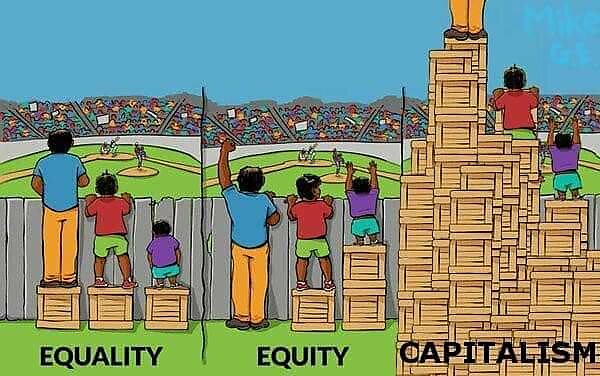
The new meme isn’t quite satisfactory either, since capitalism provides no guarantees about maximizing access to un-paid-for game views, but it’s nice to see someone challenge the highly unsatisfactory old meme.
Related Tags
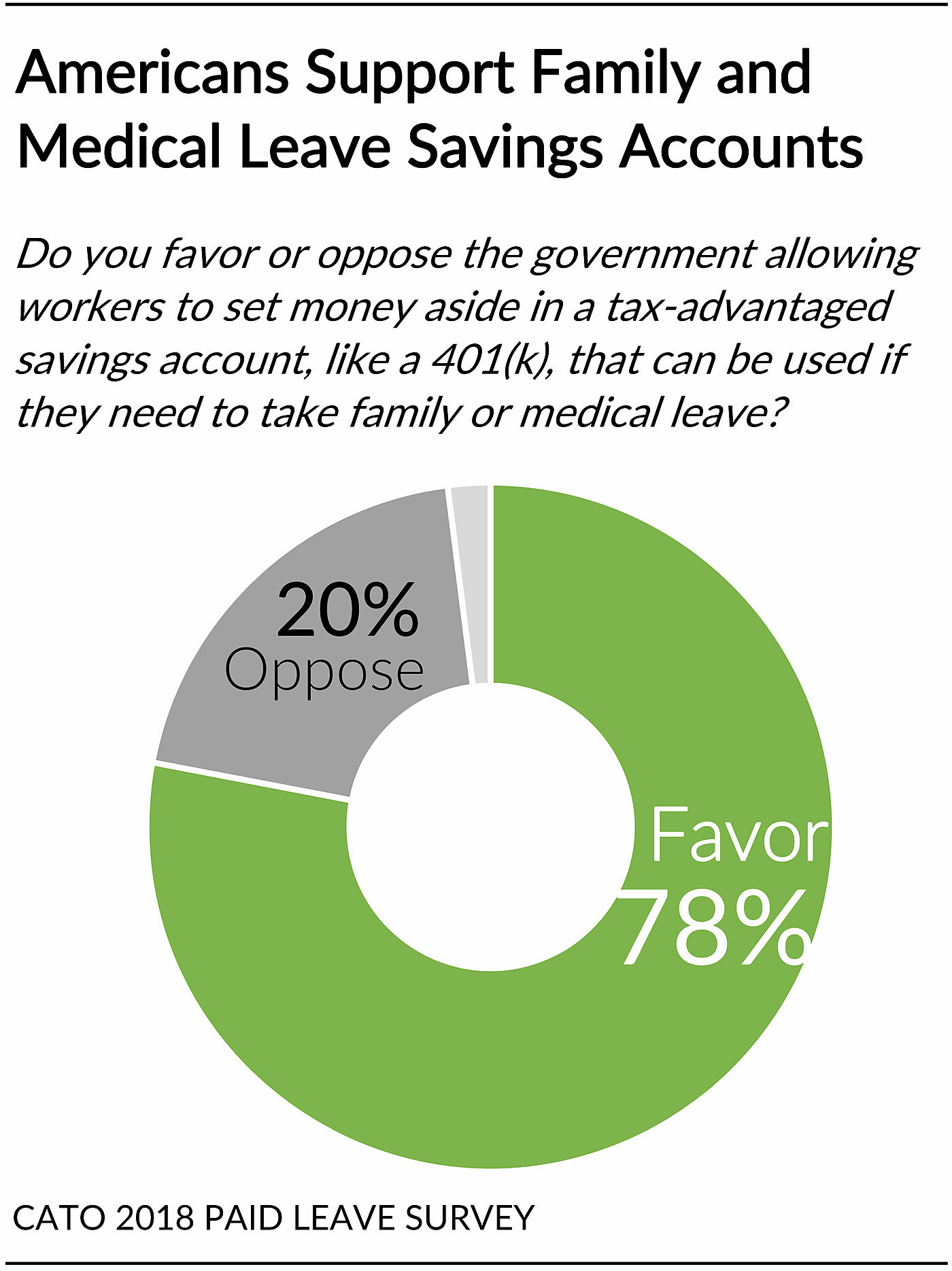
Nearly 8 in 10 Americans (78%) support creating family and medical leave savings accounts. The national Cato 2018 Paid Leave Survey of 1,700 adults finds the public favors allowing workers to set aside money in tax-advantaged savings accounts that could be used if they need to take family or medical leave. A fifth (20%) would oppose the creation of family and medical leave accounts.
Read about the full survey results and methodology here.
Establishing family leave savings accounts enjoys rare bipartisan support: 82% of Democrats, 80% of Republicans and 69% of independents support offering tax-advantages to people who set aside money for parental, family, or medical leave.
Women (80%) and men (76%) also overwhelmingly agree about establishing these types of accounts. These numbers include 85% of Democratic women, 82% of Republican women, and 78% of Democratic and Republican men.
Support for parental and family leave savings accounts aren’t reserved for the wealthy. Nearly three-fourths (73%) of those earning less than $25,000 a year also support such savings accounts. Support heads upwards from there with 86% in favor among those earning $80,000 a year or more.
Finding an image of a piggy bank or savings jar with “family leave” or “parental leave” written on the side to compliment this post was difficult. Instead, one can easily find images of piggy banks and savings jars with labels to save for retirement, to buy a house, for college as well as future travel and stocks. For these needs and wants, we’ve cultivated a culture of saving.

Over time our society has fostered a set of social norms that we instill in our young people starting at an early age. We were reminded when we were young, just as we remind the next generation, to start saving early for an education, a house, big purchases, emergencies, investments in the future, etc. We were reminded to delay consumption today so we have more for later. Doing so can provide peace and security to feel like we’ve done our part to prepare for the future. People usually don’t enter the world with a set of expectations about the value of saving and what they should save for. Thus it’s useful to establish social norms that encourage saving early on.
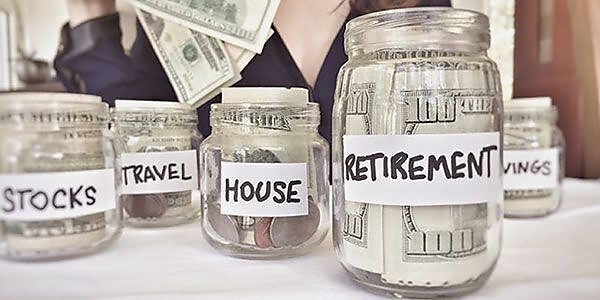
However, a gap exists in our present cultural norms when it comes to saving for parental and family leave. The fact that I could not easily find an image of a piggy bank or savings jar with “parental leave” or “family leave” as a savings goal is indicative of our culture not yet establishing a norm for these savings goals. While family leave savings accounts need not crowd out other innovations to help support working people who take time to care for new children, family members, or themselves, it can be part of the discussion. These poll results suggest society may be ripe for establishing new social norms of saving for parental and family leave.
Related Tags
In a recent talk, my Harvard colleague Martin Feldstein posits ten answers:
divAn entrepreneurial culture. Individuals in the U.S. demonstrate a desire to start businesses and to grow them. There is little opprobrium in the U.S. for failing and starting again.
A financial system that supports entrepreneurship. The United States has a more developed system of equity finance than the countries of Europe, including angel investors who are willing to finance startups and a very active venture capital market that helps finance those firms as they grow. The U.S. also has a large decentralized banking system with more than 7,000 small banks that provide loans to entrepreneurs.
World-‐class research universities. Universities provide much of the basic research that drives high-‐tech entrepreneurship. Faculty members and doctoral students often spend time with nearby startups, and the culture of the universities and the businesses encourages this activity. Top research universities attract the best students from around the world, many of whom end up staying in the United States.
Efficient labor markets. U.S. labor markets link workers and jobs, unimpeded by labor unions, state owned industries and excessively restrictive labor regulations. Less than 7 percent of the private sector U.S. labor force is unionized, and there are virtually no state owned enterprises. While the U.S. does regulate working conditions and hiring, the rules are much less onerous than in Europe. As a result, workers have a better chance of finding the right job, firms find it easier to innovate, and new firms find it easier to get started and grow.
A population that is growing, including from immigration, and geographically mobile within the United States. America’s growing population means a younger and therefore more trainable and flexible workforce. Although there are restrictions on immigration to the United States, there are also special rules to provide access to the U.S. economy and a path to citizenship based on individual talent and industrial sponsorship. A separate “green card lottery” system provides a way for eager people to come to the United States. The country’s ability to attract qualified immigrants has been an important reason for its prosperity.
A culture and a tax system that encourage hard work and long hours. The average employee works 1,800 hours per year, substantially more than the 1,500 hours worked in France and the 1,400 hours worked in Germany (although not as much as the 2,200 hours in Hong Kong, Singapore and South Korea.) In general, working longer hours means producing more and therefore means higher real incomes.
A supply of energy that makes North America energy independent. Natural gas fracking in particular has provided U.S. businesses with plentiful and relatively inexpensive energy.
A favorable regulatory environment. Although U.S. regulations are far from perfect, they are less burdensome on businesses than the regulations imposed by European countries and the European Union.
A smaller government than in other industrial countries. According to the OECD, outlays of the US governments at the federal, state and local levels totaled 38% of GDP while the corresponding figure was 44% in Germany, 51% in Italy and 57% in France. The higher level of government spending in in other countries implies not only a higher share of income taken in taxes but also higher transfer payments that reduce incentives to work.
A decentralized political system in which states and local governments compete.Competition among states and communities encourages entrepreneurship and work. States also compete for businesses and for individual residents with their legal rules and tax regimes. Some states have no income taxes and have labor laws that limit unionization. The United States is perhaps unique among major high-‐ income nations in its degree of political decentralization.
divNote that most of these credit small government, directly or indirectly, for U.S. economic success. Government is bigger in the United States than libertarians would like; but overall, still better (i.e., smaller) than in most countries.
Related Tags
“Late Capitalism,” with its implication of a system due to come to an end, is such an irritatingly pretentious trope. Noah Rothman at Commentary traces some of its recent appearances in complaints that “range from lamentations over long work weeks and the commodification of blood donations to violent fantasies about the prospect of an inter-class shooting war in America,” those examples being taken from Vice News alone. Last year Annie Lowrey traced the lefty roots of the phrase (Werner Sombart and Frankfurt School via Frederic Jameson) and noted that “late capitalism” has become a popular wording in places like The New Yorker and The Atlantic, the outlet in which she was writing.
It’s definitely not the sort of phrase that’s novel any more, its circulation having taken off in the 1970s per Google Ngram. My theory is that by now it’s been Late Capitalism for so long that we’ve moved on to the insomniac Late Late and Late Late Late versions. Then you glance outside and what do you know? It’s Capitalism Dawn.