The US manufacturing sector has been on a nice run in 2026, and some Trump administration officials and protectionist pundits are crediting the president’s tariffs. In my new column for The Dispatch, I detail why we should doubt the pro-tariff story. In particular, both “soft” data (surveys) trumpeted by the administration and “hard” data on output, capacity, and utilization indicate that the sector’s recent growth is owed to other, nontariff factors and, if anything, would be even better without all the import taxes.
Read the rest of this post →

Cato at Liberty
Cato at Liberty
Topics
Trade Policy
The Next Round of US Tariffs on Canada Could Be the Harbinger of Even More Chaotic Trade Policy
Fifty percent tariffs on a range of imports from Canada are set to take effect on August 19. President Trump announced the tariffs, which would be levied under Section 338 of the Tariff Act of 1930, on July 20 as a means to address discrimination by Canada and its provinces against American exports of dairy products, alcoholic beverages, and motor vehicles. Though the announcement of these duties—given their limited scope and the foreign practices they are aimed at—appeared to amount to a negotiating tactic ahead of bilateral talks with Canada on extending the US-Mexico-Canada Agreement (USMCA), their forthcoming imposition carries significant risks for the future of US trade policy that extend beyond these specific duties. In a worst-case scenario, Section 338 could become the next presidential “tariff button,” wielded much as the International Emergency Economic Powers Act (IEEPA) was in 2025 and early 2026, before the Supreme Court’s decision invalidating its use to tax imports. Congress should quickly step in and repeal this outdated statute.
Section 338 authorizes the president to impose tariffs of up to 50 percent on imports from a country that: a) imposes “any unreasonable charge, exaction, regulation, or limitation” on a product from the United States that is not equally enforced on like products from every foreign country, or b) discriminates, through its laws, regulations, and/or practices against the commerce of the United States and, thereby, places it at a disadvantage vis-à-vis the commerce of any other foreign country. On the latter precondition, the statute’s definition of what may constitute a discriminatory practice is broad, citing “any customs, tonnage, or port duty, fee, charge, exaction, classification, regulation, condition, restriction, or prohibition” as instances thereof. As he has done with previous tariffs imposed through other statutes, President Trump is using the broad language in Section 338 to justify this next round of duties.
Related Tags
National Security Tariffs on Tubas, Fridges, and Sofas?
More than eight years after President Trump dusted off Section 232 of the Trade Expansion Act of 1962 to tax US imports of steel and aluminum, no one should be surprised to hear that the president has stretched the meaning of “national security” in the statute (or lack thereof) to impose tariffs on a widening array of products of dubious national security relevance. Since March 2018, the Trump administration has extended the steel and aluminum duties to cover a vast array of steel and aluminum “derivatives” (i.e., products made using these metals) and imposed additional “national security” tariffs on imports of automobiles and auto parts; copper and copper derivatives; timber, lumber, and their derivatives; medium- and heavy-duty trucks, parts thereof, and buses; semiconductors; and pharmaceuticals. (Additional “national security” tariffs on polysilicon and its derivatives are set to go into effect on December 4.)
Yet, perhaps more concerning than this headline expansion in “national security” protectionism is the administration’s move to extend the Section 232 tariffs to cover products that the average American would struggle to connect to the nation’s defense imperatives. For instance, the administration deems refrigerators, washing machines, and air-conditioning (AC) units to be steel derivatives and kitchen cabinets, sofas, and couches to be timber/lumber derivatives, thus levying a 25 percent tariff on imports of these products. Table 1 lists these and other ridiculous examples of nondefense-related products subject to (or soon to be subject to) Section 232 tariffs. Under the guise of protecting and reinvigorating manufacturing industries whose output includes defense and critical infrastructure–related products, the administration is taxing everyday items, even if the mere suggestion that such products pose a threat to the nation’s safety is ludicrous.
Read the rest of this post →Related Tags
Fifteen Years of Solar Tariff Fever and the Only Prescription Is More Solar Tariffs
In the seventh major solar trade action under the fourth legal authority in 15 years, the Trump administration has announced Section 232 “national security” tariffs and price floors for polysilicon and its downstream “derivatives,” including solar panels (modules) and the cells that go into them. It is the latest entry in the unfortunate and unsurprising saga of US solar protectionism, which has now spanned two decades with little to show for it.
Let’s recap:
-
Following the failure of the 2009 American Recovery and Reinvestment Act’s solar subsidies to boost the American solar industry, the Coalition for American Solar Manufacturing successfully petitioned the government in 2011 for anti-dumping and countervailing duties (AD/CVDs) on Chinese solar imports, which initially ranged from 23.75 to 254.66 percent.
Read the rest of this post →
Related Tags
How “Liberation Day” Cost America Its Tourists
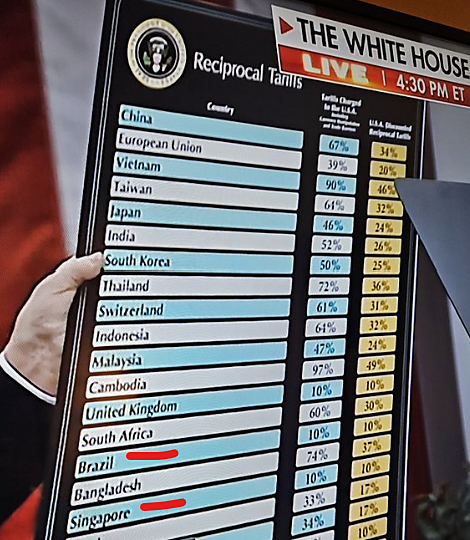
Perhaps one of the most puzzling developments in the aftermath of the Trump administration’s multiple tariff salvos has been the lack of retaliation by the governments of affected countries. Most US trading partners have (so far) refused to impose duties on American exports, and many have even negotiated “reciprocal” trade agreements with the administration. Yet, as my colleague Scott Lincicome explained in a column for The Dispatch last year, amid this lack of tit-for-tat response by foreign governments, private individuals abroad are pushing back against Trump’s trade policies by limiting their consumption of American goods and services—most notably, tourism in the United States.
While survey and government data already pointed to declines in foreign visits to the United States (see figures 1 and 2), a recent working paper finds that the “Liberation Day” tariff announcements in April 2025 led to a significant decline in tourism to the United States, costing the sector over $1 billion in lost revenue per month.
Related Tags
Trump’s Tariffs Push US Companies Back into China
Many stalwart defenders of President Trump’s tariffs cite China as the primary motivation for the import taxes. Yes, so the theory goes, the tariffs impose economic costs, but they are a small and necessary price to pay for de-risking—or even decoupling—the US and Chinese economies to reduce American vulnerabilities to future coercion (or worse) by Beijing. As others and I at Cato have patiently explained, there have long been reasons to question this view, including, but not limited to, the fact that the president’s tariffs and trade deals often advantage China over alternative suppliers like Vietnam or Mexico, or otherwise bring the two economies closer together rather than further apart.
Related Tags
Transportation Institute’s Rebuttal Doesn’t Rescue Its Original Claim
Yesterday, I published a critique of the Transportation Institute’s claim that foreign ships operating under the current Jones Act waiver are unsafe, noting that these ships have lower rates of deficiency findings in US Coast Guard inspections than the domestic Jones Act fleet. This prompted a rebuttal, the centerpiece of which is that international Port State Control (PSC) inspections—the basis for its claims that foreign ships are dangerous—and domestic US Coast Guard Certificate of Inspection (COI) exams aren’t comparable systems.
That’s a fair point worth engaging honestly. It doesn’t, however, rescue the group’s original argument.