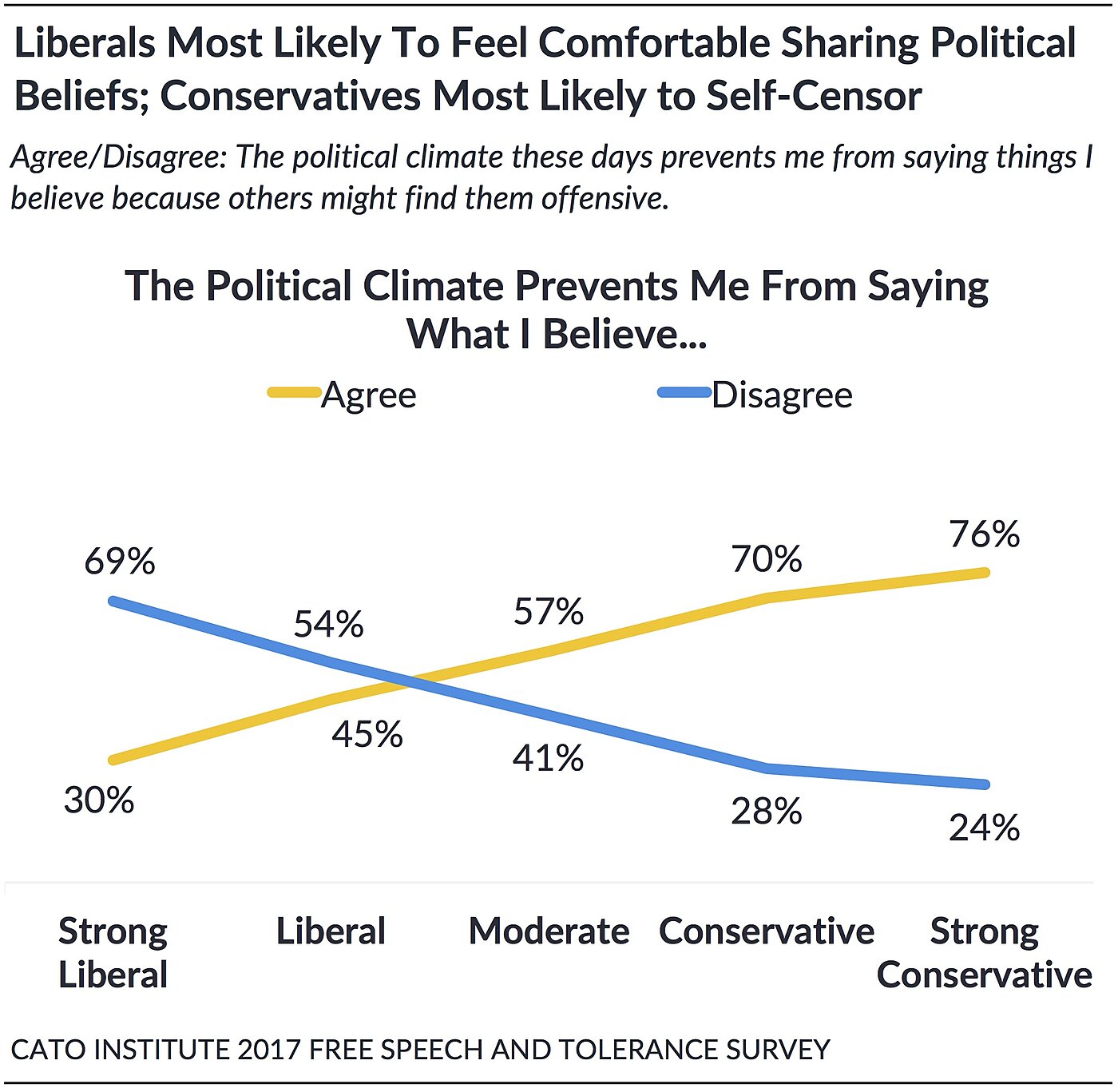
The Cato 2017 Free Speech and Tolerance Survey, a new national poll of 2,300 U.S. adults, finds that 71% Americans believe that political correctness has silenced important discussions our society needs to have. The consequences are personal—58% of Americans believe the political climate prevents them from sharing their own political beliefs.
Democrats are unique, however, in that a slim majority (53%) do not feel the need to self-censor. Conversely, strong majorities of Republicans (73%) and independents (58%) say they keep some political beliefs to themselves.
Full survey results and report found here.
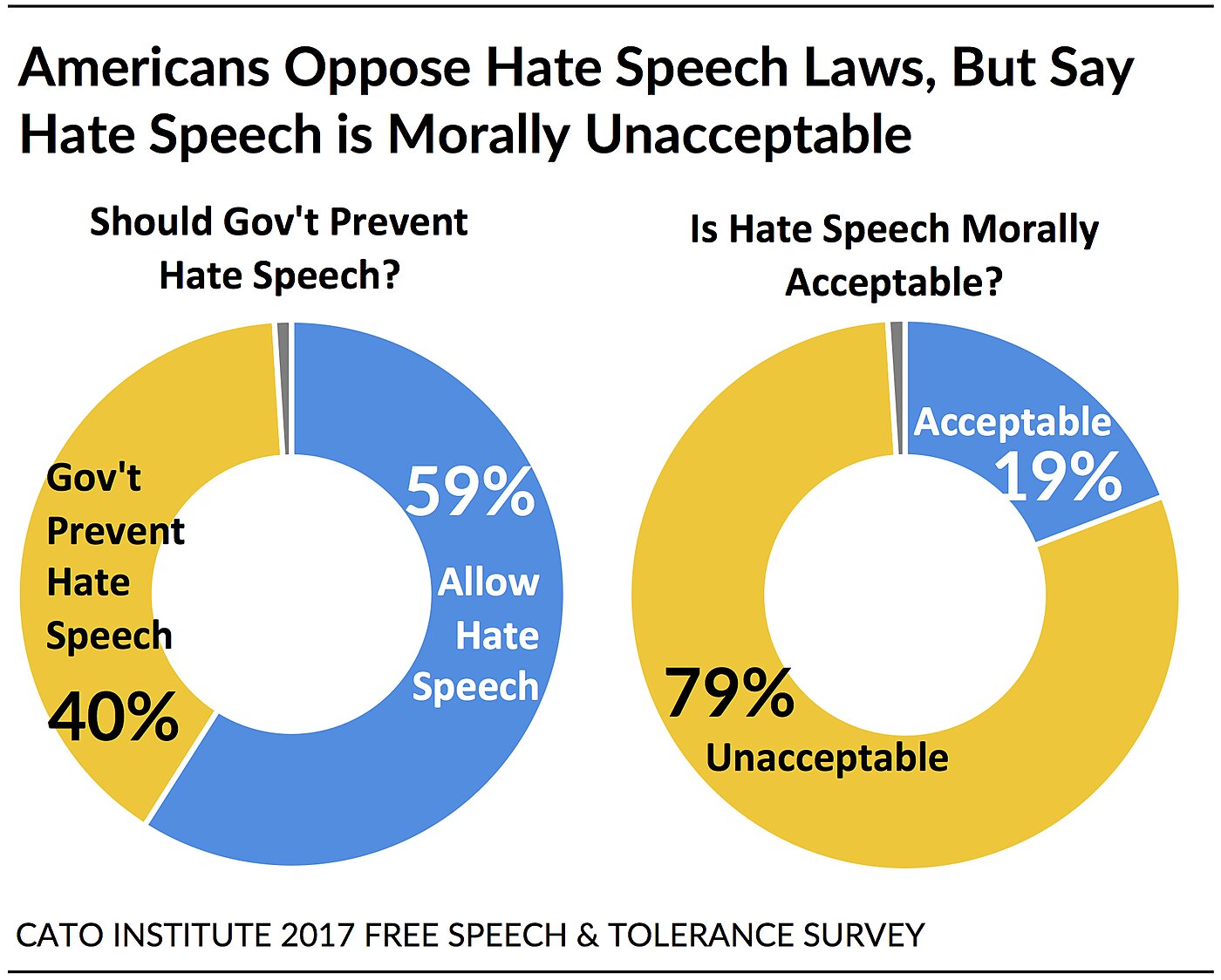
It follows that a solid majority (59%) of Americans think people should be allowed to express unpopular opinions in public, even those deeply offensive to others. On the other hand, 40% think government should prevent hate speech. Despite this, the survey also found Americans willing to censor, regulate, or punish a wide variety of speech and expression they personally find offensive:
- 51% of staunch liberals say it’s “morally acceptable” to punch Nazis.
- 53% of Republicans favor stripping U.S. citizenship from people who burn the American flag.
- 51% of Democrats support a law that requires Americans use transgender people’s preferred gender pronouns.
- 65% of Republicans say NFL players should be fired if they refuse to stand for the anthem.
- 58% of Democrats say employers should punish employees for offensive Facebook posts.
- 47% of Republicans favor bans on building new mosques.
Americans also can’t agree what speech is hateful, offensive, or simply a political opinion:
- 59% of liberals say it’s hate speech to say transgender people have a mental disorder; only 17% of conservatives agree.
- 39% of conservatives believe it’s hate speech to say the police are racist; only 17% of liberals agree.
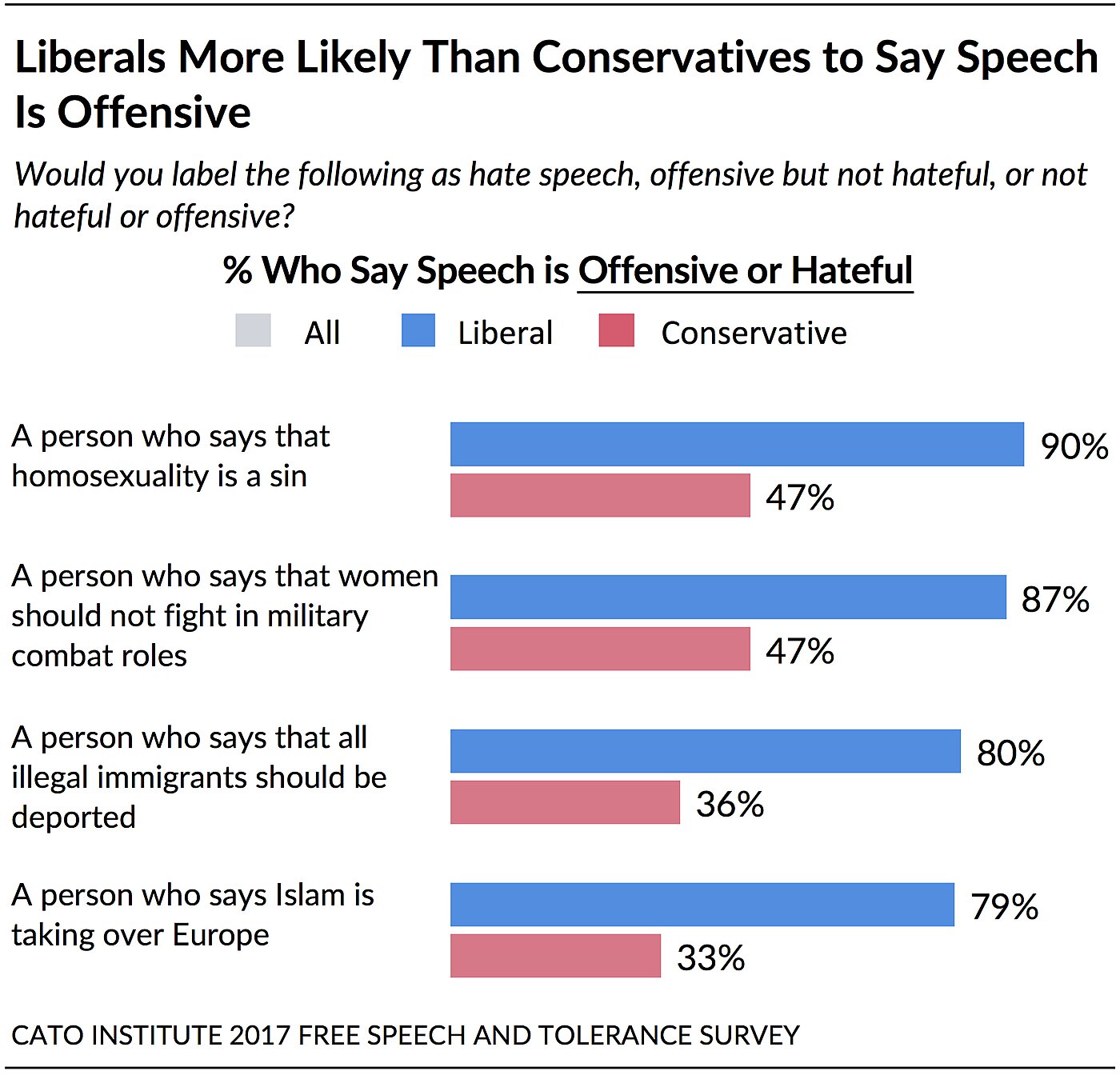
- 80% of liberals say it’s hateful or offensive to say illegal immigrants should be deported; only 36% of conservatives agree.
- 87% of liberals say it’s hateful or offensive to say women shouldn’t fight in military combat roles, while 47% of conservatives agree.
- 90% of liberals say it’s hateful or offensive to say homosexuality is a sin, while 47% of conservatives agree.
Americans Oppose Hate Speech Bans, But Say Hate Speech is Morally Unacceptable
Although Americans oppose (59%) outright bans on public hate speech, that doesn’t mean they think hate speech is acceptable. An overwhelming majority (79%) say it’s “morally unacceptable” to say offensive things about racial or religious groups.
Black, Hispanic, and White Americans Disagree about How Free Speech Operates
African Americans and Hispanics are more likely than white Americans to believe:
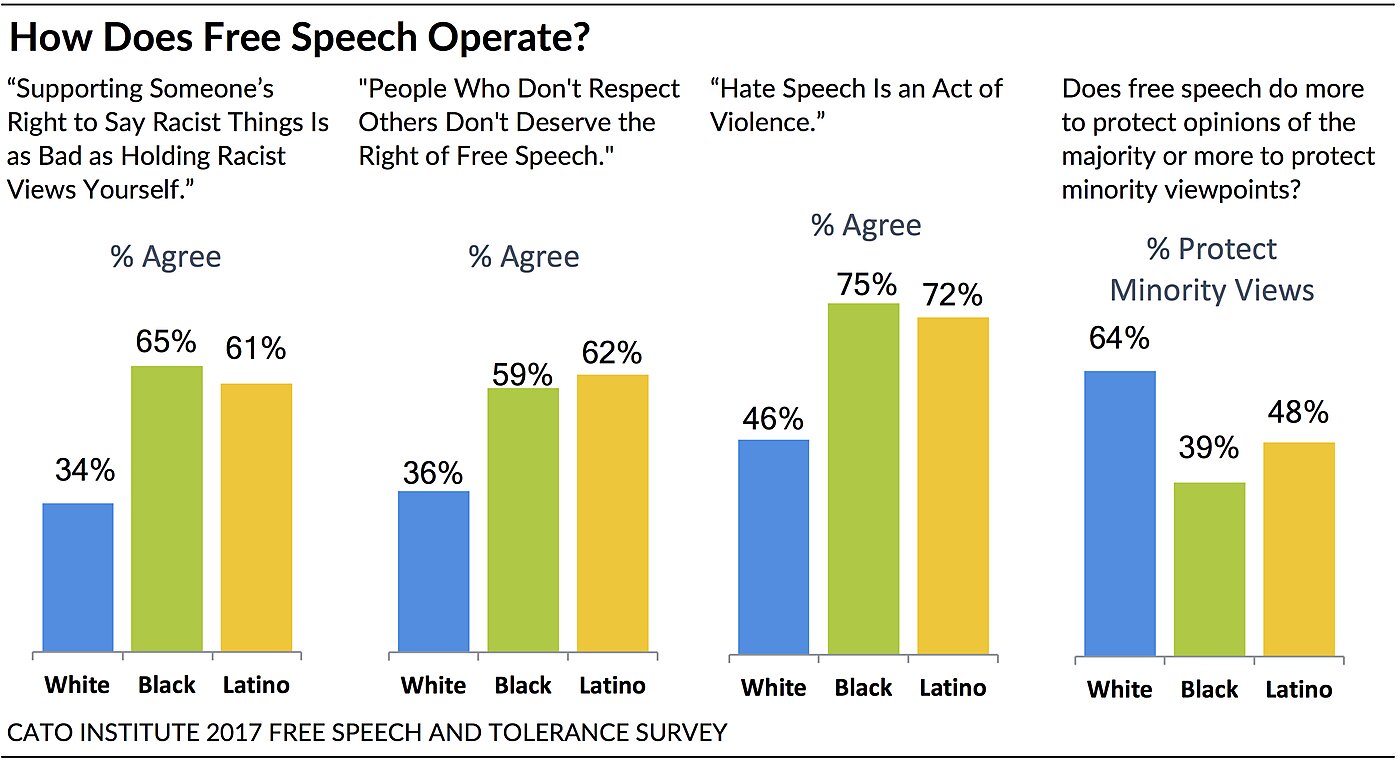
- Free speech does more to protect majority opinions, not minority viewpoints (59%, 49%, 34%).
- Supporting someone’s right to say racist things is as bad as holding racist views yourself (65%, 61%, 34%).
- People who don’t respect others don’t deserve the right of free speech (59%, 62%, 36%).
- Hate speech is an act of violence (75%, 72%, 46%).
- Our society can prohibit hate speech and still protect free speech (69%, 71%, 49%).
- People usually have bad intentions when they express offensive opinions (70%, 75%, 52%).
However, black, Hispanic, and white Americans agree that free speech ensures the truth will ultimately prevail (68%, 70%, 66%). Majorities also agree that it would be difficult to ban hate speech since people can’t agree what hate speech is (59%, 77%, 87%).
Two-Thirds Say Colleges Aren’t Doing Enough to Teach the Value of Free Speech
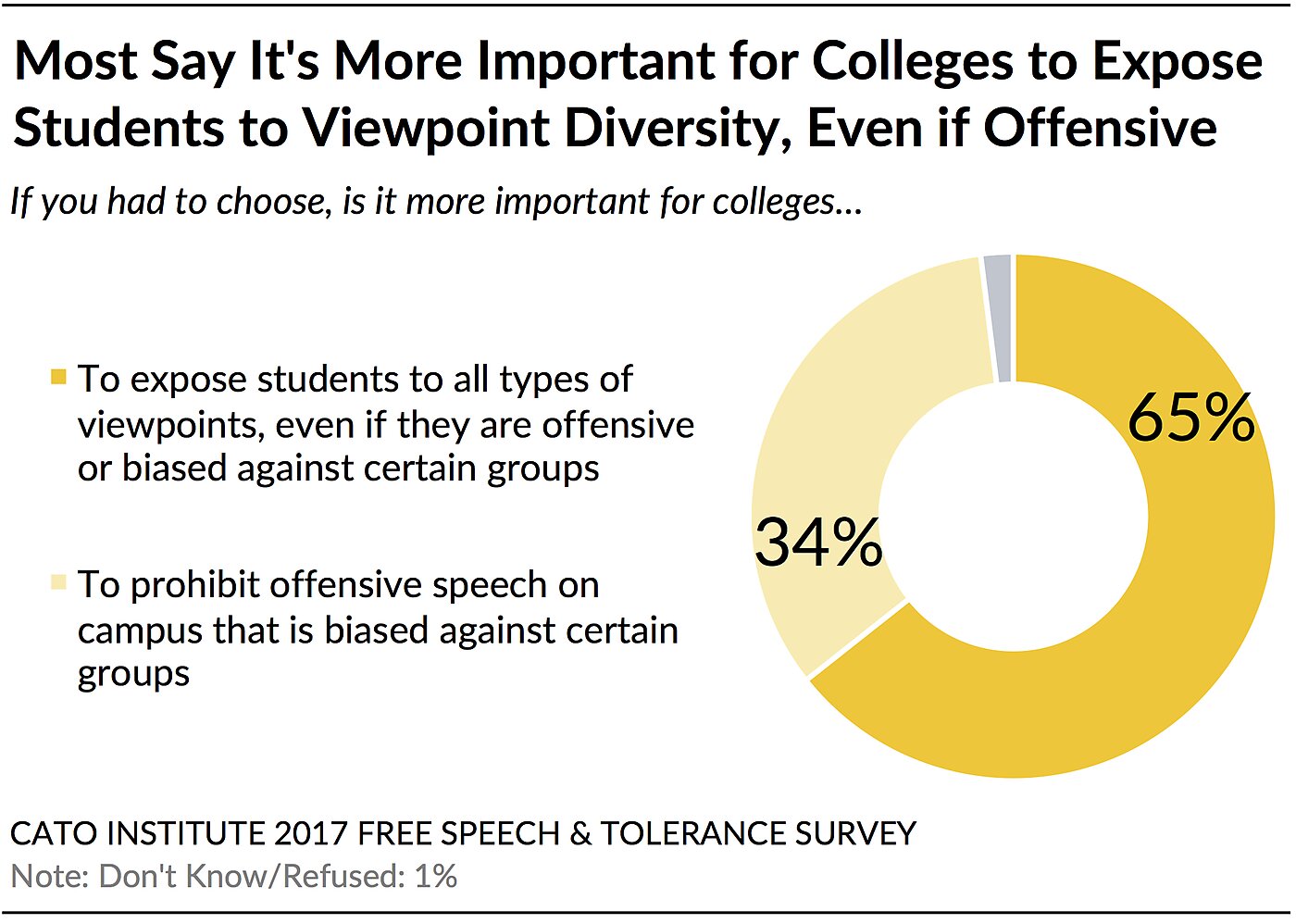
Two-thirds of Americans (66%) say colleges and universities aren’t doing enough to teach young Americans today about the value of free speech. When asked which is more important, 65% say colleges should expose students to “all types of viewpoints even if they are offensive or biased against certain groups.” About a third (34%) say colleges should “prohibit offensive speech that is biased against certain groups.”
But Americans are conflicted. Despite their desire for viewpoint diversity, a slim majority (53%) also agree that “colleges have an obligation to protect students from offensive speech and ideas that could create a difficult learning environment.” This share rises to 66% among Democrats; 57% of Republicans disagree.
76% Say Students Shutting Down Offensive Speakers Reveals “Broader Pattern” of How Students Cope
More than three-fourths (76%) of Americans say that recent campus protests and cancellations of controversial speakers are part of a “broader pattern” of how college students deal with offensive ideas. About a quarter (22%) think these protests and shutdowns are simply isolated incidents.
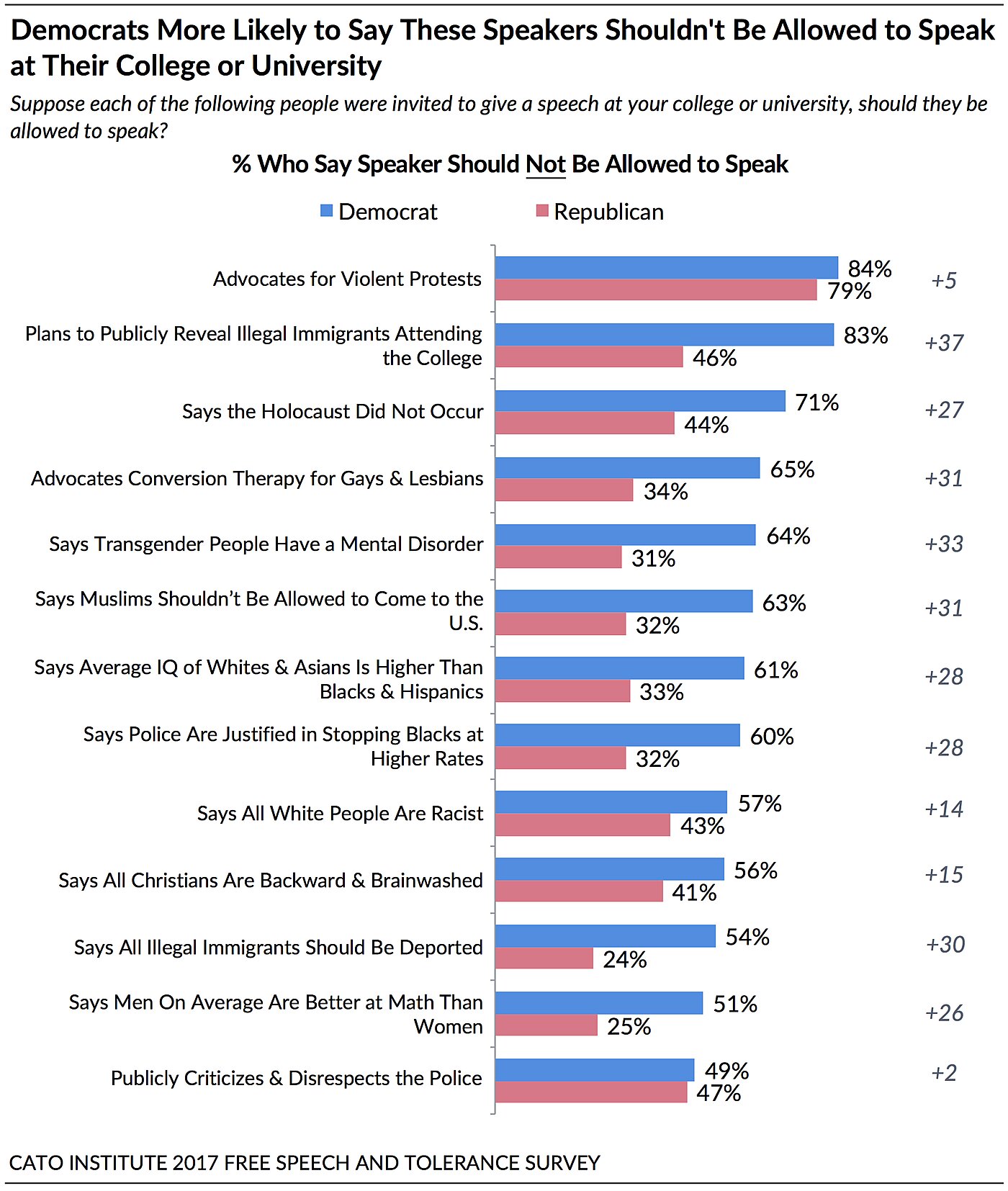
However, when asked about specific speakers, about half of Americans with college experience think a wide variety should not be allowed to speak at their college:
- A speaker who says that all white people are racist (51%)
- A speaker who says Muslims shouldn’t be allowed to come to the U.S. (50%)
- A speaker who says that transgender people have a mental disorder (50%)
- A speaker who publicly criticizes and disrespects the police (49%)
- A speaker who says all Christians are backwards and brainwashed (49%)
- A speaker who says the average IQ of whites and Asians is higher than African Americans and Hispanics (48%)
- A speaker who says the police are justified in stopping African Americans at higher rates than other groups (48%)
- A speaker who says all illegal immigrants should be deported (41%)
- A speaker who says men on average are better at math than women (40%)
Nevertheless, few endorse shutting down speakers by shouting loudly (4%) or forcing the speaker off the stage (3%). Current college and graduate students aren’t much different; only about 7% support forcibly shutting down offensive speakers.
65% Say Colleges Should Discipline Students Who Shut Down Invited Campus Speakers
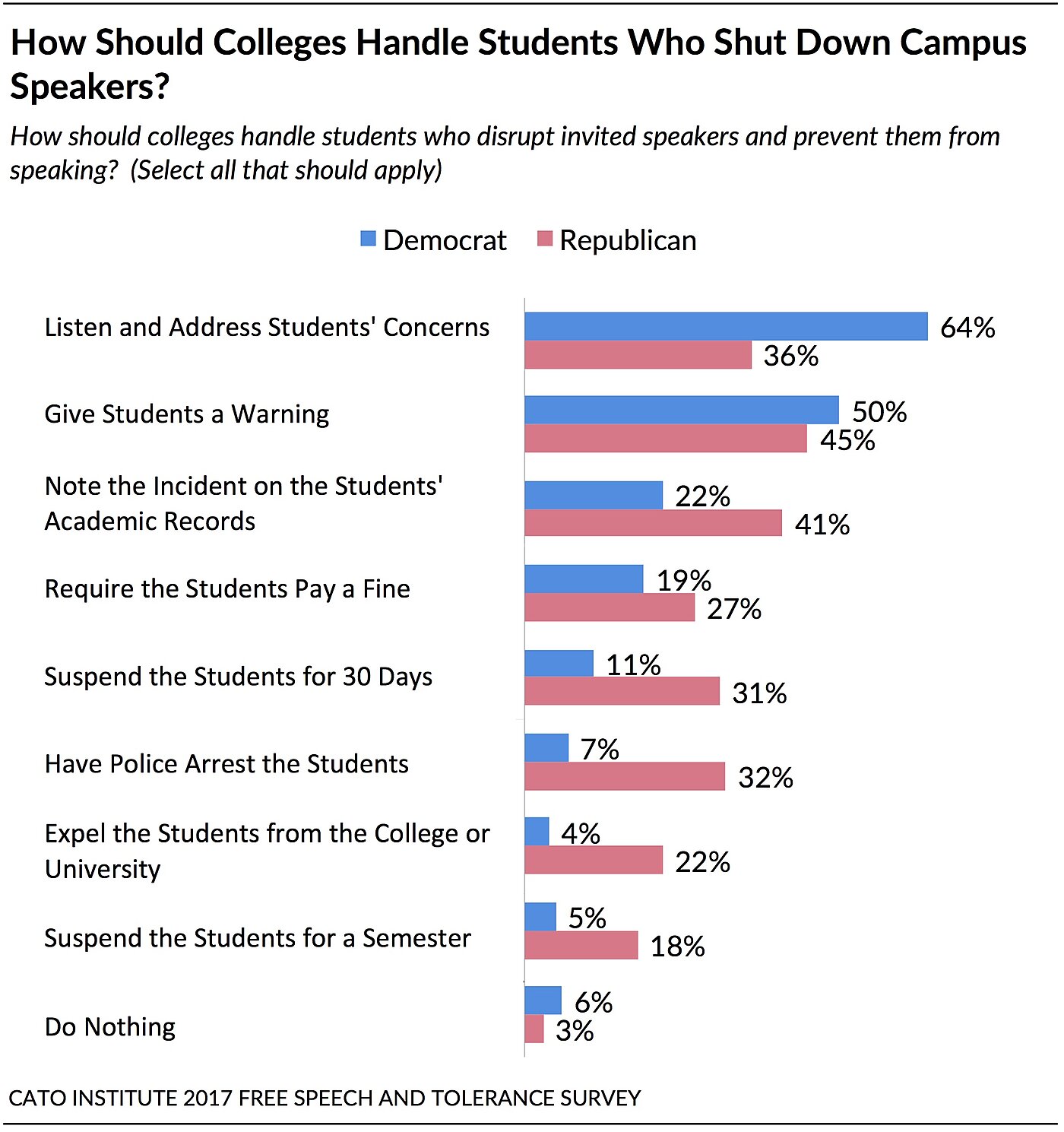
Two-thirds (65%) say colleges need to discipline students who disrupt invited speakers and prevent them from speaking. However, the public is divided about how: 46% want to give students a warning, 31% want the incident noted on the student’s academic record, 22% want them to pay a fine, 20% want to suspend them, 19% favor arresting the students, 13% want to fully expel the students. Three-fourths (75%) of Republicans support some form of punishment for these students, compared to 42% of Democrats.
People of Color Don’t Find Most Microaggressions Offensive
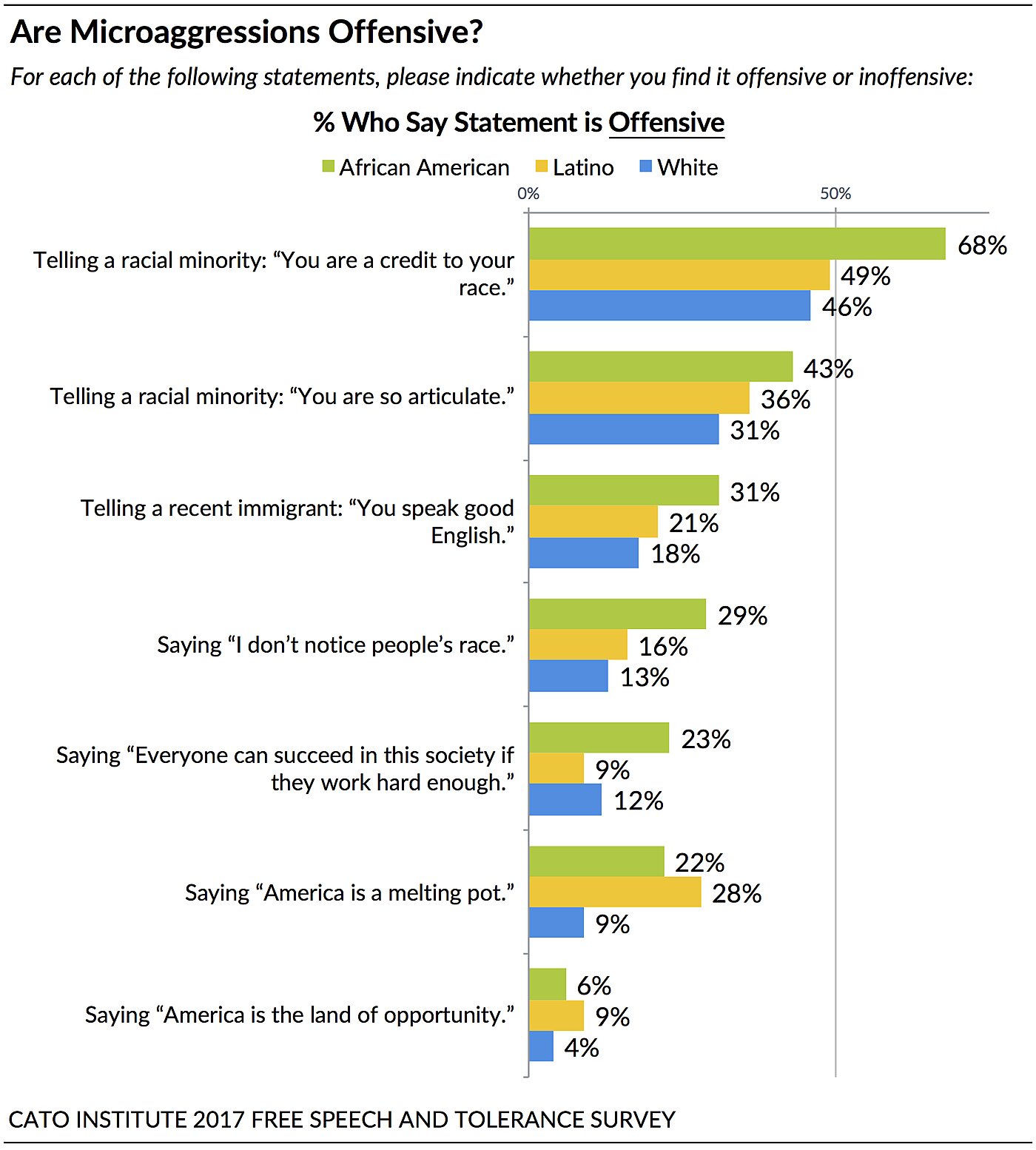
The survey finds that many microaggressions colleges and universities advise faculty and students to avoid aren’t considered offensive by most people of color. The percentage of African Americans and Latinos who say these microaggressions are not offensive are as follows:
- Telling a recent immigrant: “You speak good English” Black: 67% Latino: 77%
- Telling a racial minority: “You are so articulate” Black: 56% Latino: 63%
- Saying “I don’t notice people’s race” Black: 71% Latino: 80%
- Saying “America is a melting pot” Black: 77% Latino: 70%
- Saying “Everyone can succeed in this society if they work hard enough.” Black: 77% Latino: 89%
- Saying “America is the land of opportunity” Black: 93% Latino: 89%
The one microaggression that African Americans (68%) agree is offensive is telling a racial minority “you are a credit to your race.”
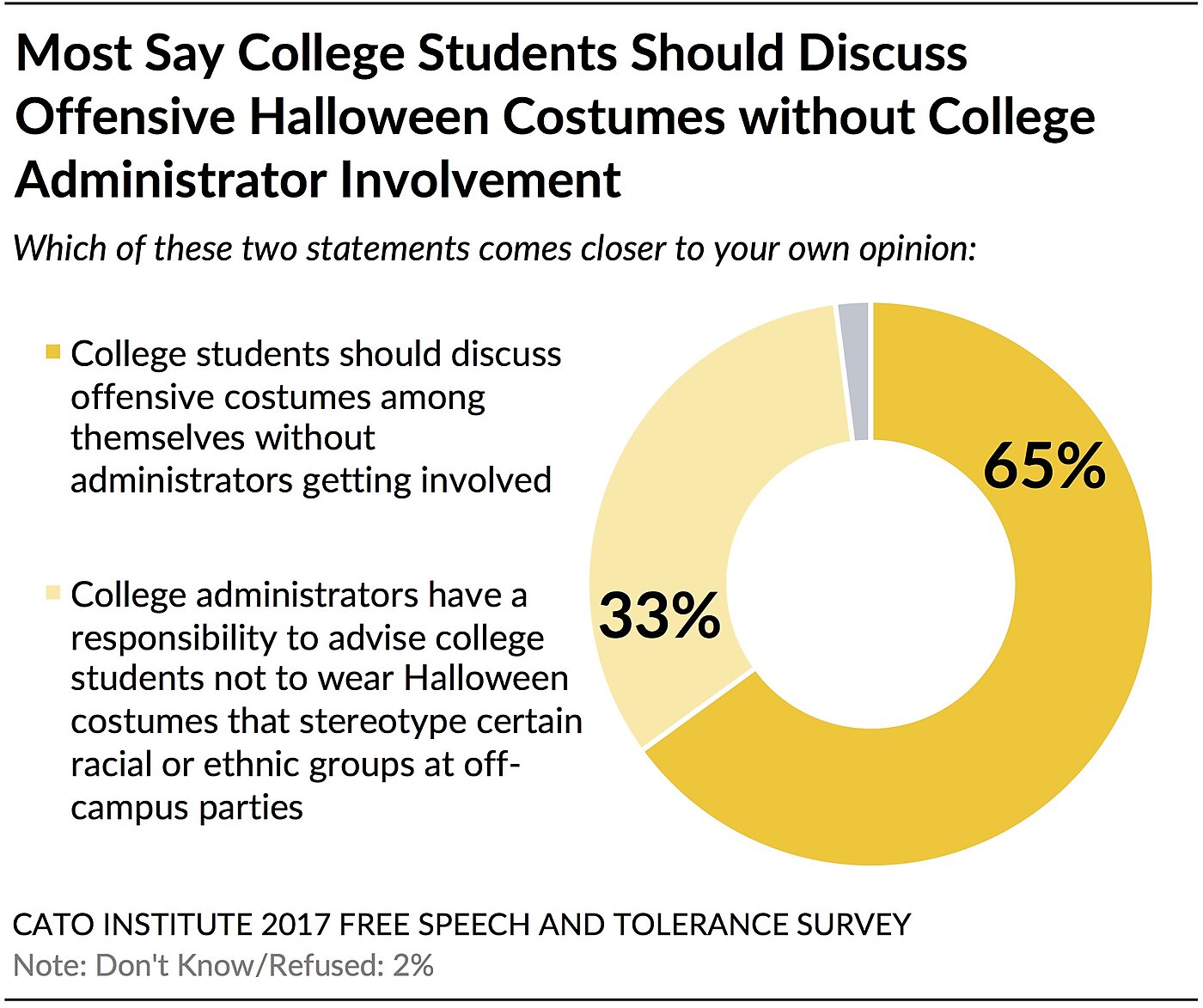
Americans Don’t Think Colleges Need to Advise Students on Halloween Costumes
Nearly two-thirds (65%) say colleges shouldn’t advise students about offensive Halloween costumes and should instead let students work it out on their own. A third (33%) think it is the responsibility of the university to remind students not to wear costumes that stereotype racial or ethnic groups at off-campus parties.
20% of Current Students Say College Faculty Has Balanced Mix of Political Views
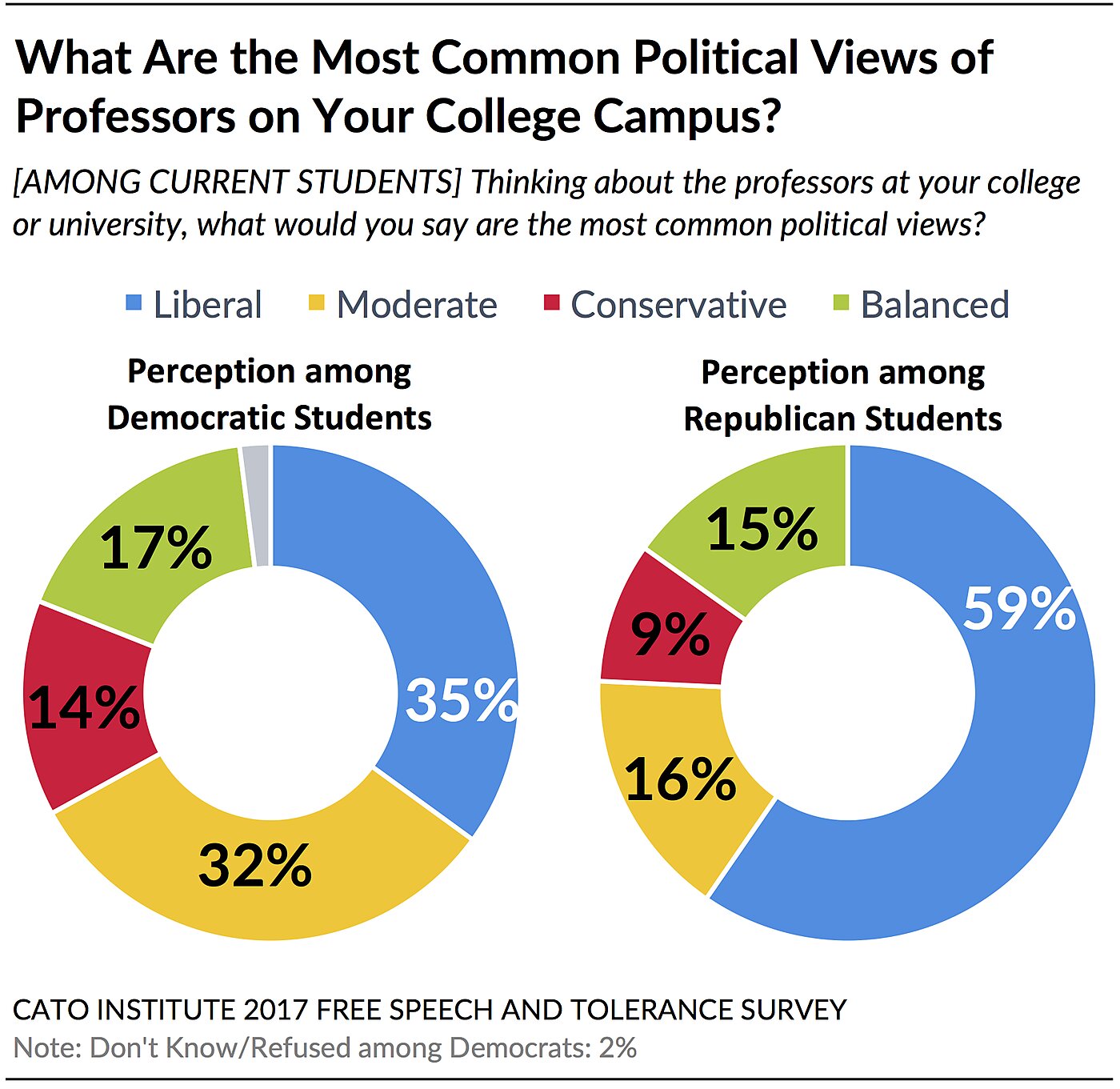
Only 20% of current college and graduate students believe their college or university faculty has a balanced mix of political views. A plurality (39%) say most college and university professors are liberal, 27% believe most are politically moderate, and 12% believe most are conservative.
Democratic and Republican students see their college campuses differently. A majority (59%) of Republican college students believe that most faculty members are liberal. In contrast, only 35% of Democratic college students agree most professors are liberal.
What Beliefs Should Get People Fired?
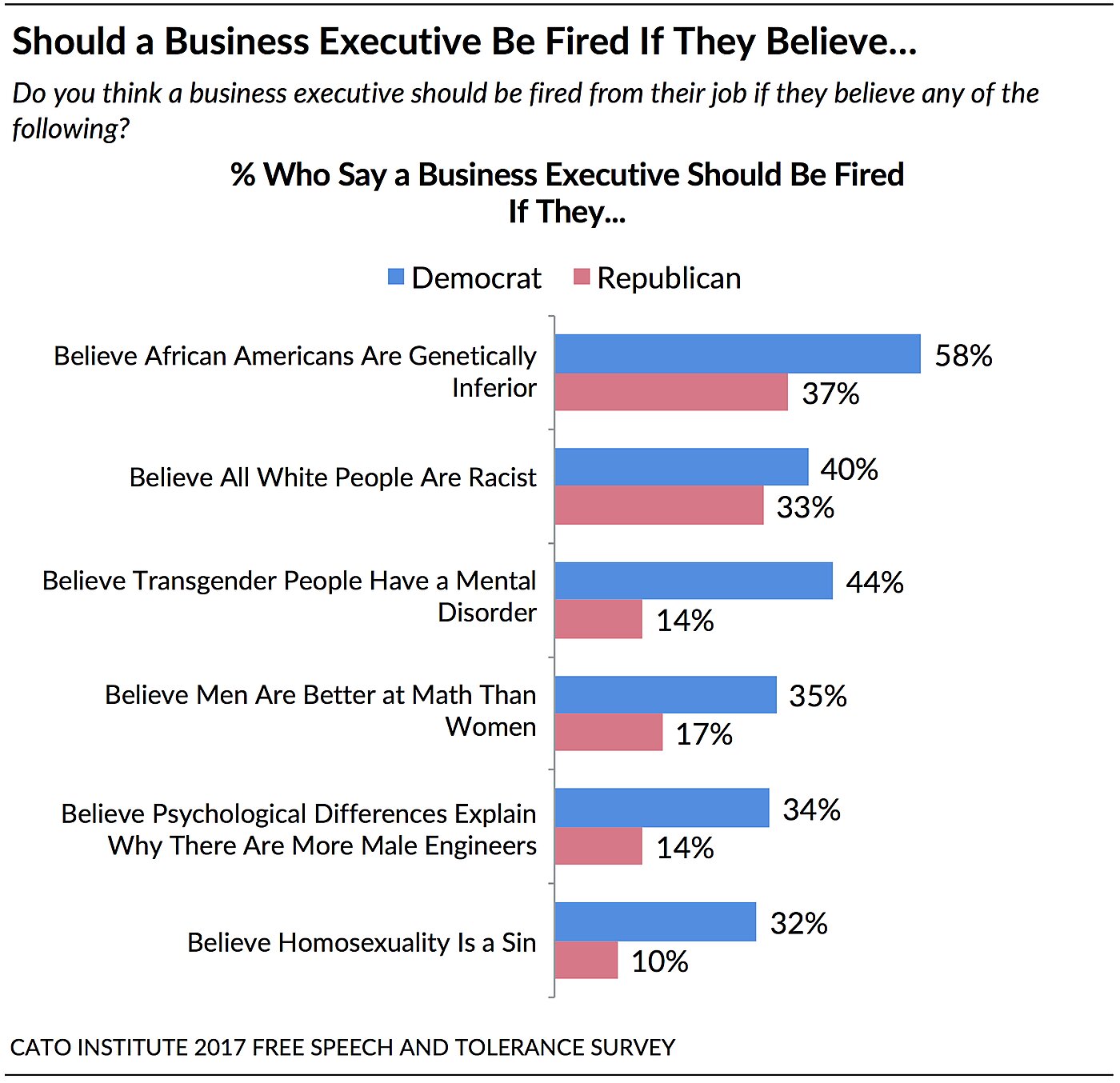
Americans tend to oppose firing people for their beliefs. Nevertheless, Democrats are more likely than Republicans to say a business executive should be fired if she or he believes transgender people have a mental disorder (44% vs 14%), that homosexuality is a sin (32% vs 10%), and that psychological differences help explain why there are more male than female engineers (34% vs. 14%). Conversely, Republicans are more likely than Democrats to say a business executive should be fired if they burned the American flag at a weekend political protest (54% vs. 38%).
Republicans Say Journalists Are an Enemy of the American People
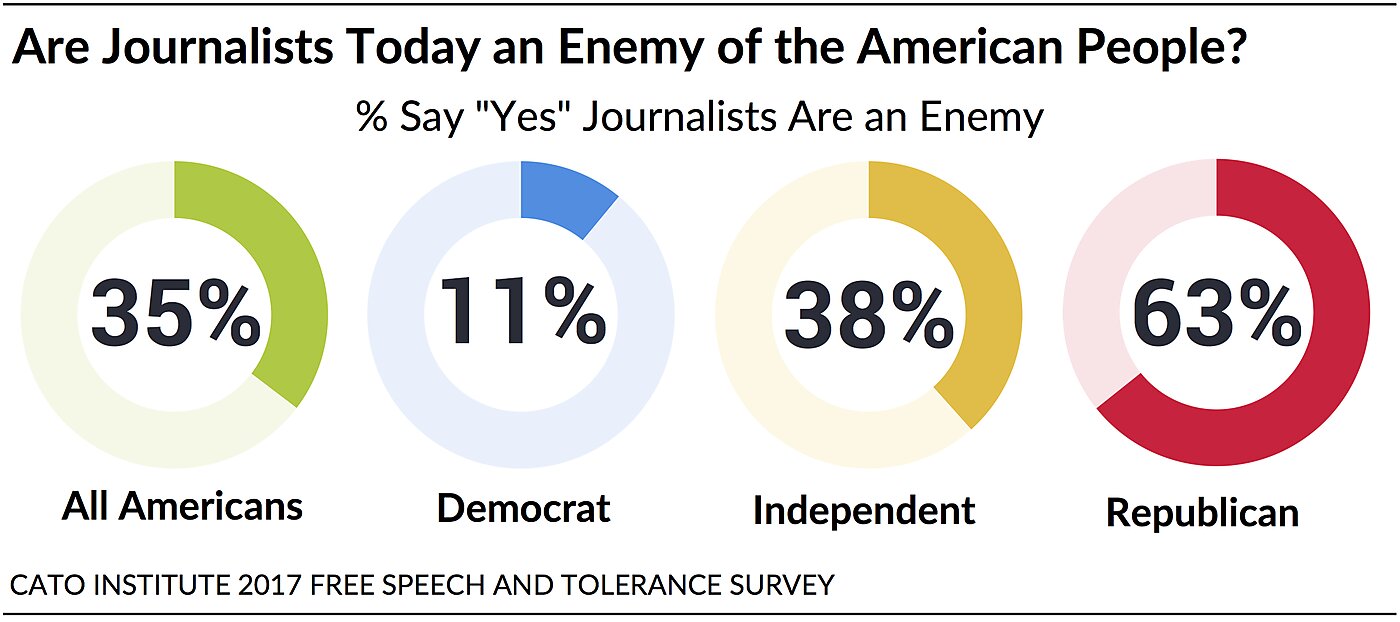
A majority (63%) of Republicans agree with President Trump that journalists today are an “enemy of the American people.” Conversely, most Americans (64%), as well as 89% of Democrats and 61% of independents, do not view journalists as the enemy.
These results aren’t surprising given that most Americans believe many major news outlets have a liberal bias, including The New York Times (52%), CNN (50%), and MSNBC (59%). Fox is the one news station in which a majority (56%) believe it has a conservative bias.
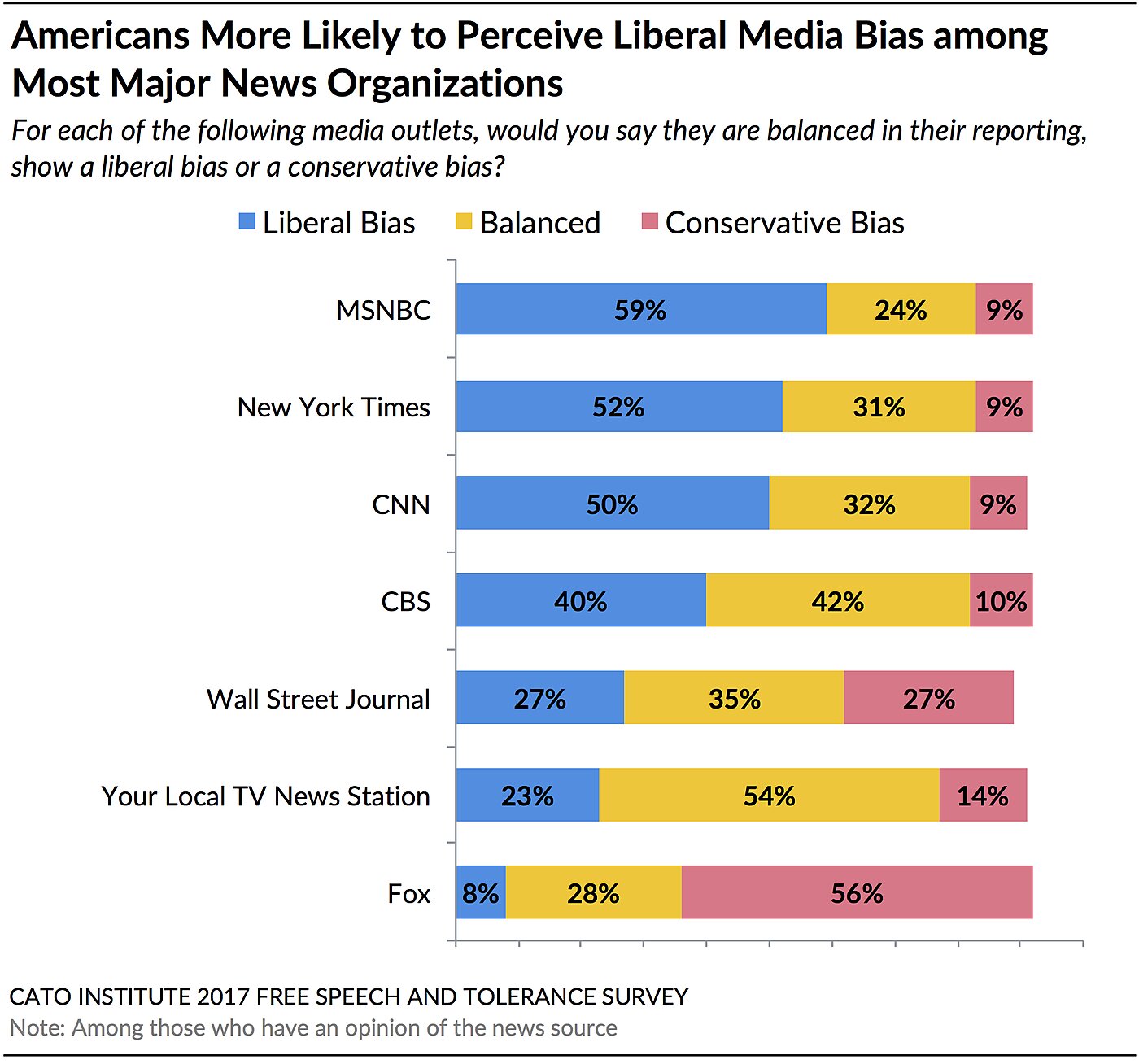
Democrats, however, believe most major news organizations are balanced in their reporting including The New York Times (55%), CNN (55%), and CBS (72%). A plurality (44%) also believe the Wall Street Journal is balanced. The two exceptions are that a plurality (47%) believe MSNBC has a liberal tilt and a strong majority (71%) say Fox has a conservative bias.
Republicans, on the other hand, see things differently. Overwhelming majorities believe liberal bias colors reporting at The New York Times (80%), CNN (81%), CBS (73%), and MSNBC (80%). A plurality also feel the Wall Street Journal (48%) has a liberal bias. One exception is that a plurality (44%) believe Fox News has a conservative bias, while 41% believe it provides unbiased reporting.
Despite perceptions of bias, only 29% of the public want the government to prevent media outlets from publishing a story that government officials say is biased or inaccurate. Instead, a strong majority (70%) say government should not have the power to stop such news stories.
Americans Say Wedding Businesses Should Be Required to Serve LGBT People, Not Weddings
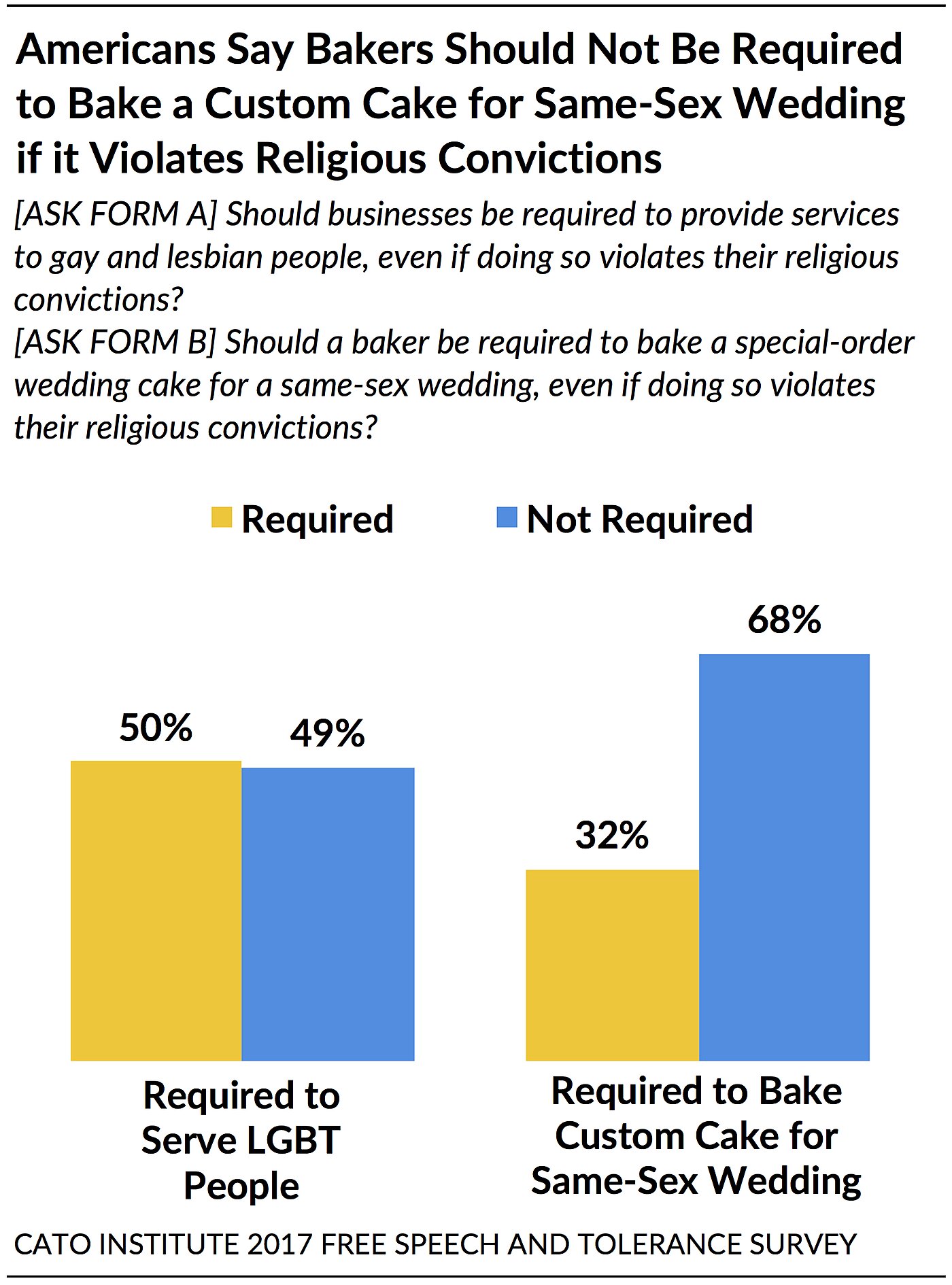
The public distinguishes between a business serving people and servicing weddings:
- A plurality (50%) of Americans say that businesses should be required to “provide services to gay and lesbian people,” even if doing so violates the business owners’ religious beliefs.
- But, 68% say a baker should not be required to provide a special-order wedding cake for a same-sex wedding if doing so violates their religious convictions.
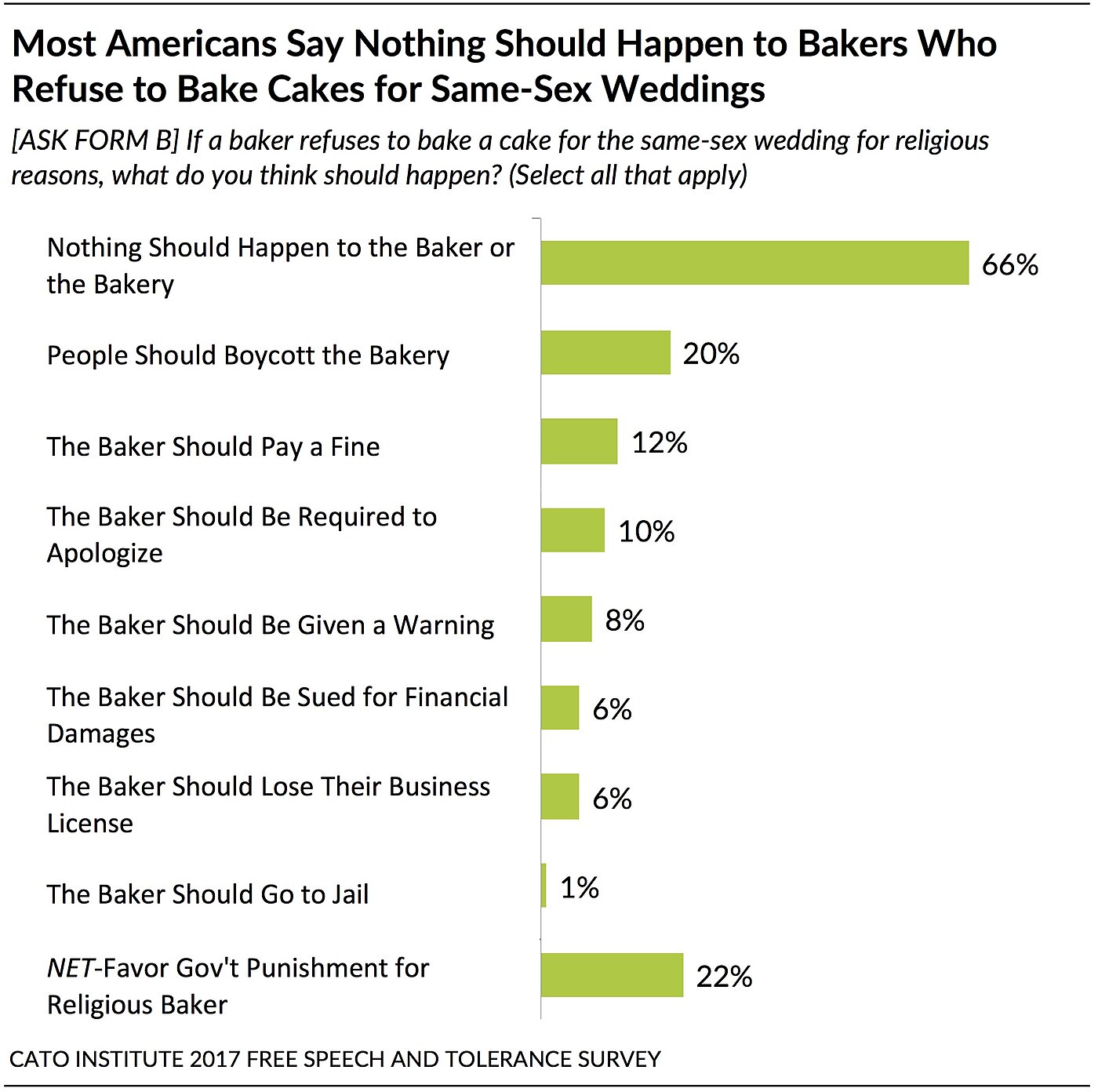
Few support punishing wedding businesses who refuse service to same-sex weddings. Two-thirds (66%) say nothing should happen to a bakery which refuses to bake a cake for a same-sex wedding. A fifth (20%) would boycott the bakery, another 22% think government should sanction the bakery in some way, such as fining the bakery (12%), requiring an apology (10%), issuing a warning (8%), taking away their business license (6%), or sending the baker to jail (1%).
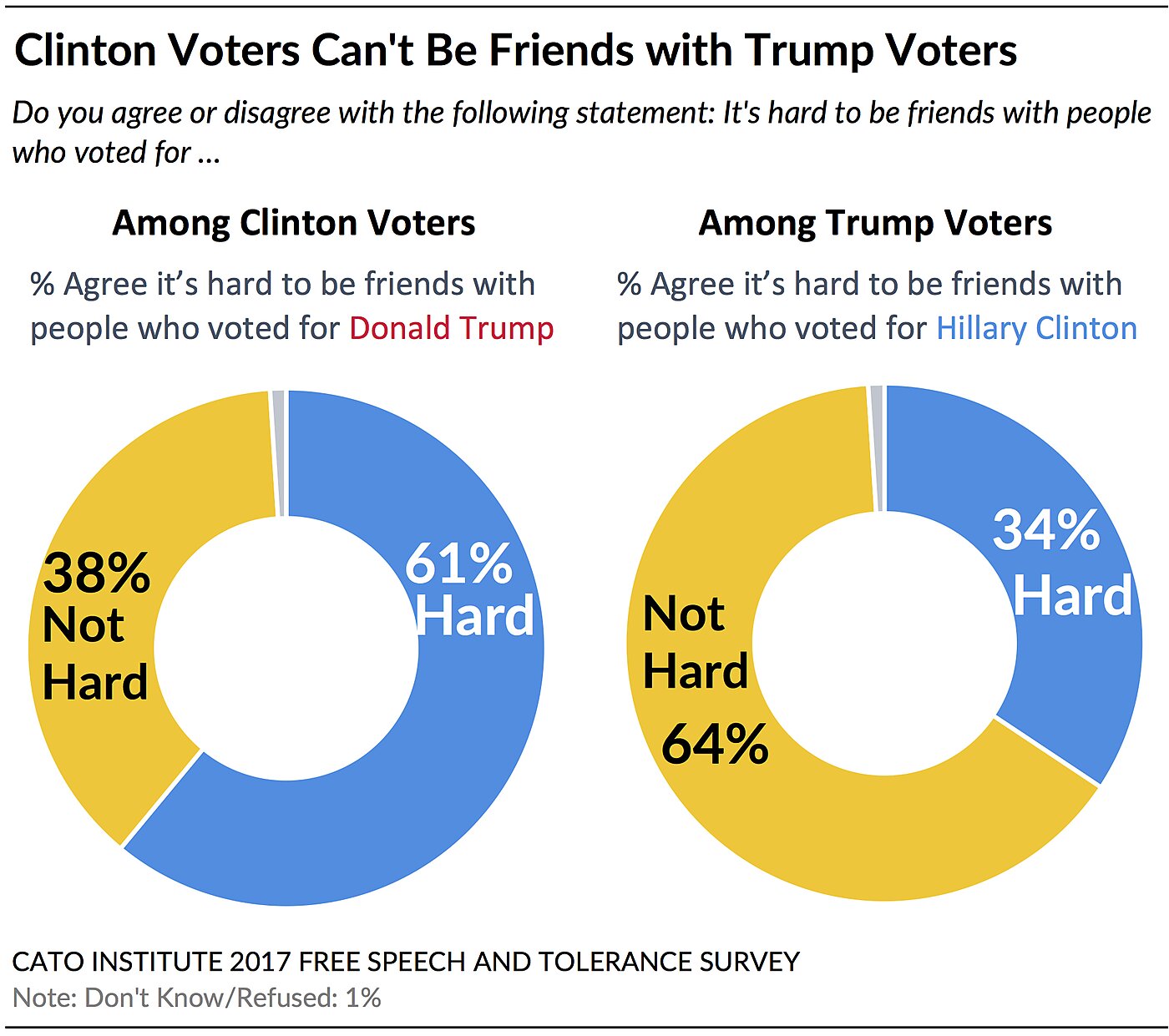
Clinton Voters Can’t Be Friends with Trump Voters
Nearly two-thirds (61%) of Hillary Clinton’s voters agree that it’s “hard” to be friends with Donald Trump’s voters. However, only 34% of Trump’s voters feel the same way about Clinton’s. Instead, nearly two-thirds (64%) of Trump voters don’t think it’s hard to be friends with Clinton voters.
Sign up here to receive forthcoming Cato Institute survey reports
The Cato Institute 2017 Free Speech and Tolerance Survey was designed and conducted by the Cato Institute in collaboration with YouGov. YouGov collected responses online August 15–23, 2017 from a national sample of 2,300 Americans 18 years of age and older. The margin of error for the survey is +/- 3.00 percentage points at the 95% level of confidence.
