—Cato Statement of Principles
Chapter Three
Unleashing the Freedom to Prosper

Chapter Three
Unleashing the Freedom to Prosper
Liberty and free markets create prosperity and progress by giving us the opportunity and incentives to use our talents and to cooperate with others to create and produce.
Defending the Free Economy
Free markets have lifted billions out of poverty, fueling what Cato scholar Deirdre McCloskey calls the Great Enrichment—an explosion of prosperity so transformative that today’s middle class enjoys luxuries beyond the imagination of past kings.
And yet the fight for economic freedom is far from over. Governments continue to impose barriers that stifle growth, innovation, and wealth creation. That’s why the Cato Institute is on the front lines, defending capitalism and shaping the conversation in ways that even a decade ago might have seemed impossible.
Today, some of the world’s most influential voices are echoing Cato’s arguments. On Joe Rogan’s podcast, Elon Musk quoted Milton Friedman while making the case for economic freedom. On X, Musk reposted an interview with Cato senior fellow Johan Norberg, amplifying our ideas to his 219 million followers. Sen. Rand Paul (R‑KY) called Norberg’s The Capitalist Manifesto “a must-read,” and used it to remind his millions of followers to “give thanks for progress” on Thanksgiving.
Venture capitalist Marc Andreessen, a fierce defender of free markets, recently declared Cato scholars “the patron saints of optimism,” specifically naming Johan Norberg, Deirdre McCloskey, and Marian Tupy. And it’s no wonder—Tupy’s work on Superabundance and Cato’s HumanProgress project have shown, with hard data, that the world is getting richer, healthier, and more innovative thanks to economic freedom.
But influence isn’t enough—we turn ideas into action. In 2024, Cato scholars led the charge against industrial policy, exposing the failures of corporate welfare in the Wall Street Journal and the New York Times. Our research dismantled the case for President Biden’s Buy American mandates, while our work on permitting reform helped build the case for cutting red tape on infrastructure and energy projects.
At a time when economic freedom is under siege, Cato is shifting the tide—winning the battle not just in Washington, but in the minds of millions.
Bringing Fiscal Sanity to Washington
Washington’s reckless spending isn’t just a policy debate—it’s a looming crisis that threatens to mortgage the futures of our children and grandchildren. With the national debt soaring past $36 trillion, unchecked federal expansion risks slower economic growth, higher inflation, and crushing tax burdens on future generations. The fight to rein in spending isn’t just about balance sheets—it’s about protecting the American dream.
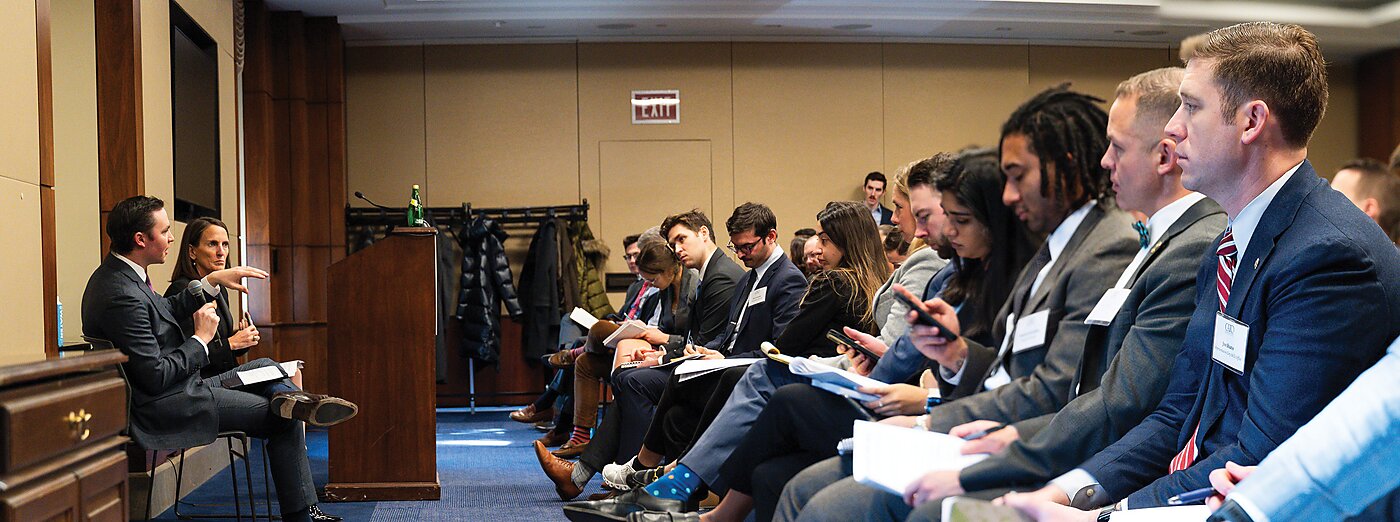
That’s why Cato is leading the charge to stop the debt spiral. In December 2024, Cato scholars Romina Boccia, Adam N. Michel (director of tax policy studies), and Chris Edwards (Kilts Family Chair in Fiscal Studies) held a standing-room-only Capitol Hill briefing for more than 100 congressional staffers. They laid out a road map for the 119th Congress—alongside President Trump and the DOGE team—to take bold steps to streamline federal operations, curb inflation, and reignite economic growth.
Their work is getting noticed. The House Budget Committee reposted Boccia’s urgent call to strengthen requirements that force any administration to offset new executive actions that would increase mandatory spending by more than $1 billion over a decade. Former Speaker of the House Paul Ryan also praised Boccia’s innovative proposal for a bipartisan commission to cut federal spending, urging legislators to embrace it with this stark reality check: “It’s either chaos, or this plan you don’t like, but that’s better than the chaos.”
And momentum is building. In January 2024, the House Budget Committee passed the Fiscal Commission Act of 2024, incorporating key elements of Boccia’s proposal—including independent experts on a congressional fiscal commission to stabilize the debt by reining in Washington’s runaway spending.
Cato is proving that the fight for fiscal sanity isn’t a lost cause. With bold ideas and growing support, we’re pushing Washington to confront the debt crisis before it’s too late.
Emergency Spending Run Amok
Director of Budget and Entitlement Policy Romina Boccia and policy analyst Dominik Lett’s research on Congress’s misuse of emergency spending—supported by a unique dataset tracking three decades of such spending—has shaped the debate on emergency spending reforms. Six bills introduced in Congress reflect recommendations from their work, including efforts to offset new emergency spending and improve oversight. Nearly 50 congressional staff members, including senior staff from both parties on the House and Senate budget committees, attended their May 2024 briefing on how excessive emergency spending fuels federal debt.

Romina Boccia, director of budget and entitlement policy, testified before Congress on the urgent need to address the nation’s unsustainable fiscal path. Her detailed plan to rein in federal spending and reduce the federal debt has gained significant traction among lawmakers and policymakers seeking practical solutions to America’s mounting budget challenges.

Since joining Cato in 2023, Director of Tax Policy Studies Adam Michel has hosted more than 100 private and small-group meetings with staffers from both political parties. His public briefings on Capitol Hill—attended by nearly 500 policy- makers, business leaders, and journalists—have helped shape the conversation on much-needed reforms to America’s tax code.
Social Security: Robin Hood in Reverse
Boccia has also been a prominent voice calling on Congress to address our dire fiscal situation. She has developed strategies to take on two of the most significant fiscal threats we face today: Social Security insolvency and the national debt.
Boccia has decried the current Social Security system as a “reverse Robin Hood” model that robs the working class to pay the already wealthy. She explains it as an “income transfer program,” in which retirees are paid with the taxes currently paid by their children and grandchildren, or someone else’s children and grandchildren.
In May 2024, Sen. Bill Cassidy (R‑LA) delivered a keynote speech at Cato’s Social Security symposium, organized by Boccia, where he urged politicians to take responsibility for solving the impending Social Security crisis.

With the 90th anniversary of Social Security on the horizon—and its trust fund projected to run dry by 2033—Cato convened a high-level symposium to confront the looming fiscal crisis. Romina Boccia, Cato’s director of budget and entitlement policy, brought together international experts and US lawmakers, including Sen. Bill Cassidy (R‑LA) to explore reform lessons from around the globe.
Leading the Fight for Pro-Growth Tax Reform
Cato has long been at the forefront of the battle for lower, simpler, and more pro-growth taxation. Our work played a key role in shaping the historic 2017 tax cuts, which slashed corporate rates and spurred economic growth. Now, as new tax battles emerge, Cato is once again leading the charge.
In 2024, Adam N. Michel’s work helped secure two major tax policy victories early in the second Trump administration. He was instrumental in opposing the Global Tax Deal, an effort led by the Organisation for Economic Co-operation and Development (OECD) to impose extraterritorial taxes on US businesses. Through congressional briefings, testimony before the House Ways and Means Committee, and behind-the-scenes engagement with key legislators, Michel helped drive a Senate push to halt US funding for the OECD’s tax scheme. His efforts contributed to a major shift in policy: Trump issued an executive order withdrawing the United States from the deal, marking a decisive departure from his first administration’s stance.
At the same time, Michel successfully advanced a critical reform to IRS rulemaking. In Cato’s handbook on executive orders, Michel called for restoring Office of Information and Regulatory Affairs oversight of IRS regulations, arguing that tax rules—some of the most economically consequential government actions—should not be exempt from regulatory review. His recommendation became reality in Trump’s “Unleashing Prosperity Through Deregulation” executive order, signed in January 2025.
Michel’s work extended far beyond these early policy victories. He developed a comprehensive tax reform plan for Cato, emphasizing the need to lower rates while broadening the tax base. Alongside Chris Edwards, he also crafted a spending reform proposal that outlined 14 targeted cuts to reduce federal spending by $4.8 trillion over the next decade—an essential step toward controlling deficits and ensuring long-term economic stability. His research was featured prominently in congressional testimony, including a Joint Economic Committee hearing in which Vice Chairman Rep. David Schweikert (R‑AZ) cited Cato’s work. In June, Michel’s tax reform briefing drew more than 100 attendees, including senior staff members from the House Ways and Means Committee and leading tax policy journalists.
New Talent
Boosting Our Policy Firepower
Thanks to the support of Cato’s Partners, we’ve expanded our policy teams in key areas—bringing on experienced voices to advance the fight for economic freedom and smarter policy solutions.
Thomas J. Sargent
VISITING SCHOLAR
- Received a Nobel Prize in Economic Sciences in 2011
- Researches critical issues: inflation, government spending, and the role of central banks, promoting economic stability and growth
Tad DeHaven
POLICY ANALYST, GENERAL ECONOMICS
- Rejoined Cato to tackle fiscal policy and economic issues
- Was featured on BBC News discussing the East Coast port strike and Biden vs. Trump’s economic plans
Stephen Slivinski
SENIOR RESEARCH FELLOW, GENERAL ECONOMICS
- Focuses on reducing government barriers in the economy
- Leads efforts on occupational licensing reform, housing policy, zoning reform, and the repeal of certificate-of-need laws
Dominik Lett
POLICY ANALYST, ENTITLEMENT SPENDING
- Works alongside Romina Boccia to drive crucial entitlement reform
Andrew Gillen
RESEARCH FELLOW
- Focuses on higher education policy
- Authored proposals to end costly, inflationary government student loans and to privatize student lending
Brandan Buck
RESEARCH FELLOW
- Brings unique experience as an intelligence and geospatial analyst to Cato
- Researches 20th-century US military, diplomatic, and political history; the domestic politics of American foreign policy; and the impact of the managerial state and bureaucratic politics on American foreign relations
Breaking Washington’s Grip on Energy
Travis Fisher, director of energy and environmental policy studies, has been a leading voice in exposing how the Inflation Reduction Act (IRA) distorts energy markets. He has made the case for repealing all IRA energy subsidies and has championed a pro-innovation agenda to unleash free enterprise in meeting the electricity demands of artificial intelligence.
Fisher has pinpointed three major barriers preventing the energy sector from growing and adapting:
- A power grid already facing severe backlogs, unable to expand fast enough to meet demand;
- A federal regulatory and permitting system that punishes builders instead of enabling progress; and
- State-level monopoly protections that block entrepreneurs from bringing new solutions to market.
In 2024, Fisher testified five times, including before the House Energy and Commerce Committee, detailing how President Biden’s energy policies are driving up costs for Americans. He also provided critical testimony at a public hearing led by Rep. Andy Harris (R‑MD) on offshore wind, exposing the complex web of subsidies, regulations, and mandates that have turned the power grid into a growing liability.
Defending Financial Freedom in Congress
Three Testimonies, Two Weeks, One Message: Protect Financial Privacy and Free Markets
Cato scholars took center stage in March 2024, delivering critical testimony before Congress on financial privacy, government-controlled pricing, and the lack of accountability of the Securities and Exchange Commission (SEC).
March 7 – Doubleheader Testimonies

Norbert Michel (CMFA director) warned the House Judiciary Committee about the grave erosion of financial privacy, urging Congress to reform the Bank Secrecy Act.

Nicholas Anthony (policy analyst) testified before the House Financial Services Committee, exposing President Biden’s “war on prices” and defending free-market pricing for financial services.
March 20 – Holding the SEC Accountable

Jennifer Schulp (director, financial regulation) called out the House Financial Services Committee on the SEC’s lack of transparency, arguing that it “fails to hold itself to the same standards it imposes on others.” Schulp has been appointed to the SEC’s Investor Advisory Committee, which advises the SEC on regulatory priorities.
Stopping the Biggest Threat to Financial Privacy
A US central bank digital currency (CBDC) would be the death of financial privacy. By giving the federal government a direct line into every American’s transactions, a CBDC would mean sweeping financial surveillance, the power to freeze or censor purchases, and a serious threat to free markets and cybersecurity. It is the mother of all privacy concerns—and Cato is leading the fight to stop it.
Cato’s Center for Monetary and Financial Alternatives (CMFA) has been the driving force in exposing the dangers of a CBDC to lawmakers, the media, and the public. When Sen. Cynthia Lummis (R‑WY) thanked Cato policy analyst Nicholas Anthony on X for briefing her Senate colleagues, she was one of many policymakers relying on Cato’s expertise. About 75 congressional staffers attended the CMFA’s briefings on Capitol Hill, ensuring that key decisionmakers understood the risks.
This work is paying off. In January 2025, President Trump’s executive order prioritized “taking measures to protect Americans from the risks of Central Bank Digital Currencies (CBDCs), which threaten the stability of the financial system, individual privacy, and the sovereignty of the United States.”
Anthony’s research has earned major recognition, including two Anthem Awards—part of the prestigious Webby Awards—for his work on the Human Rights Foundation’s CBDC Tracker. His analysis of financial surveillance also made it into the Congressional Record, submitted by Rep. Warren Davidson (R‑OH) during a House hearing on the future of finance. At one point, Davidson could be seen holding Anthony’s statement as he made the case against a CBDC.

As financial services have become increasingly digitized, the volume of records to which the government has easy—and often unfettered—access has grown exponentially. At Cato’s Financial Privacy Under Fire conference in April 2024, Jennifer Schulp, director of financial regulation studies at the Center for Monetary and Financial Alternatives, sat down with Rep. Patrick McHenry (R‑NC), chair of the House Financial Services Committee, to discuss the risks to Americans’ financial privacy.
The CMFA’s influence extends beyond Washington. Entrepreneur and investor Marc Andreessen, with 1.6 million followers on X, amplified Cato’s work by reposting CMFA Director Norbert Michel’s Forbes column on Operation Choke Point—an exposé on how government agents attempted to freeze law- abiding citizens out of the financial system. Andreessen has also shared multiple posts by Nicholas Anthony on how regulators have pressured banks to crack down on crypto- currency-related activity.
Cato has made stopping a CBDC one of its top priorities—and thanks to our relentless research, policy engagement, and public outreach, we are winning the fight.
The Rebirth of Liberty in Argentina— and Beyond
When Javier Milei, a libertarian economist, won the presidency of Argentina on a platform of radical free-market reform in 2023, the world took notice. As Milei began his promised paradigm shift away from statism, Cato convened a two-day Buenos Aires conference in June alongside Argentine think tank Libertad y Progreso. The aim of the conference was to shine a light on Milei’s libertarian reform efforts and make the global case for classical liberalism. With more than 900 policymakers, journalists, business leaders, and students packing the venue and over 2.5 million tuning in online, it was one of the most significant gatherings of free-market advocates in Latin America in decades.

Argentine President Javier Milei headlined Cato’s landmark conference, Rebirth of Liberty in Argentina and Beyond, held in Buenos Aires in June 2024. The event drew nearly 1,000 attendees—policymakers, journalists, business leaders, and students—and reached more than 2.5 million viewers online, making it a global showcase for classical liberal ideas. In a fiery address, Milei argued that reviving Argentina’s classical liberal tradition is the only way to escape the country’s decades-long decline into statism, hyperinflation, and economic stagnation. “Either we persist on the path of decadence, or we dare to travel the path of freedom,” he declared.
Over many years, Cato Vice President for International Studies Ian Vásquez has established Cato’s Center for Global Liberty and Prosperity as a prominent resource for the global liberty movement and a hub of intellectual activity. This helped Cato and Libertad y Progreso to quickly assemble an exceptional range of leading experts from throughout Latin America and the world to discuss the importance of economic and other freedoms.
Milei—who took office pledging to dismantle the country’s bloated bureaucracy and end its crippling inflation—delivered a keynote address at the conference, outlining his pro-market vision and pledging to make Argentina the freest country in the world. His talk came in the run-up to a key legislative vote on his economic omnibus package, which passed in the hours after his talk. At the conclusion of his remarks, Milei led the crowd in an energetic chant: “Viva la Libertad, carajo!”
Milei’s top advisers and Cato scholars also joined to discuss how libertarian principles should shape policy. Speakers included Federico Sturzenegger, an adviser to Milei who has since become minister of deregulation and state transformation; Argentinian Minister of the Economy Luis Caputo; Nobel Laureate James Heckman; and Cato experts Ian Vásquez, Deirdre McCloskey, José Piñera, Marian Tupy, Daniel Raisbeck, and Gabriela Calderón de Burgos. A panel on “Latin America and Human Rights,” led by Argentine Foreign Minister Diana Mondino, included remote remarks from María Corina Machado, the Venezuelan opposition leader who united her country’s opposition movement to win presidential elections there last July and expose the regime’s fraud that has kept it in power. And in a conversation that drew worldwide attention, Tesla CEO Elon Musk joined Cato senior fellow Johan Norberg via live stream to discuss the power of free markets, innovation, and economic freedom.
The event’s impact traversed borders, earning more than 800 mentions in international media. Conference speaker Mary Anastasia O’Grady covered dollarization in her first Wall Street Journal column after the conference.
“What’s happening in Argentina is not just important for Argentina,” says Vásquez. As he explained to the conference at its close, “We want Argentina to be successful because a successful Argentina can set an example for the rest of the world at a time when so many countries are moving in the other direction.”
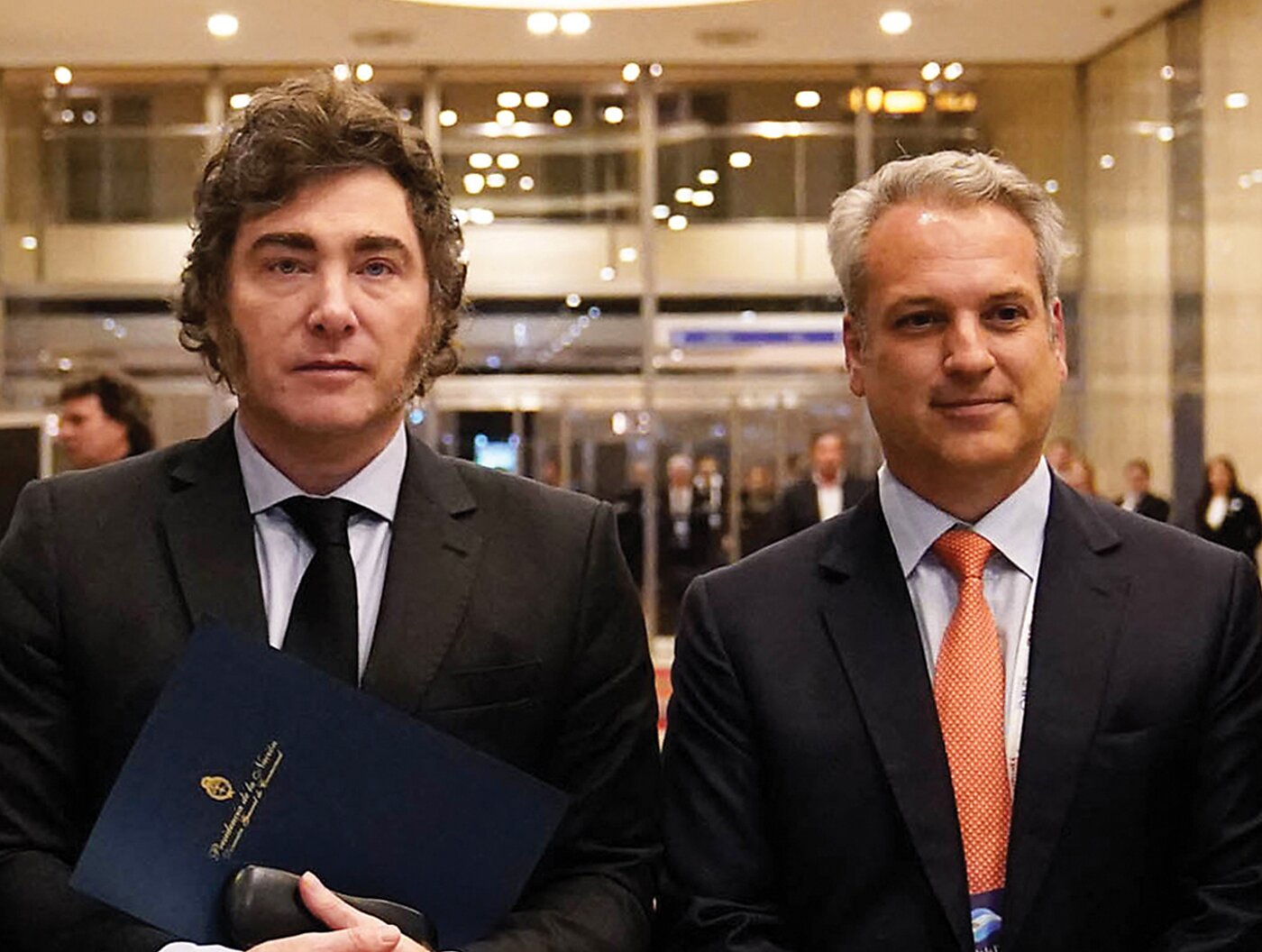
Cato’s two-day conference in Buenos Aires—cohosted with Argentine think tank Libertad y Progreso—brought together a remarkable coalition of leaders who are shaping the classical liberal revival in Argentina and beyond. Policymakers, scholars, journalists, and top advisers to President Javier Milei (left) gathered to explore how liberty can take root and flourish. Cato’s Ian Vásquez (right), vice president for international studies, played a key role in organizing the event.
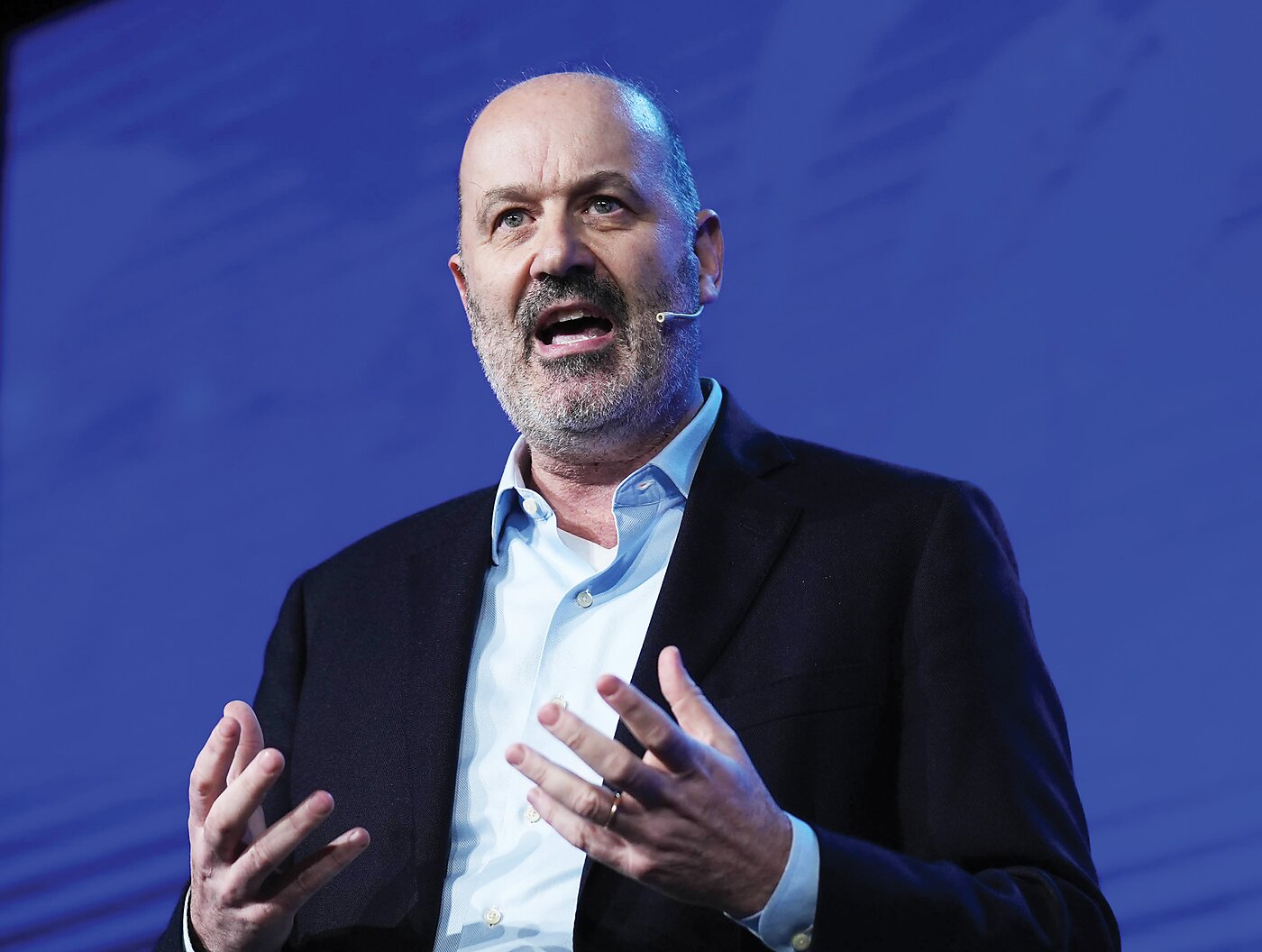
Federico Sturzenegger, then-adviser to President Milei and now Argentina’s minister of deregulation and state transformation, described the politics behind his country’s highly repressed economy and how to achieve economic freedom.
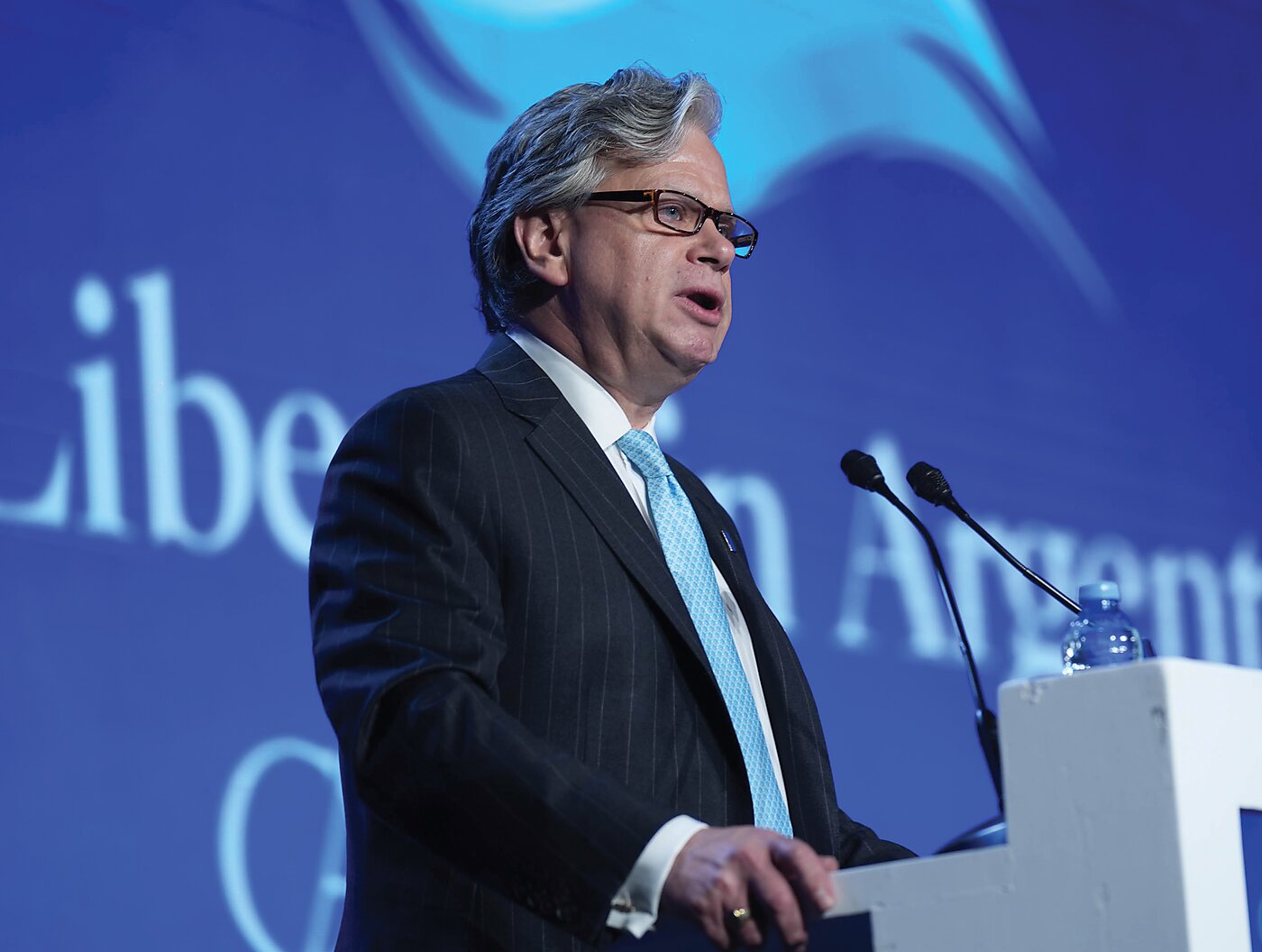
Cato president and CEO Peter Goettler addressed the audience with a clear message: “Argentina must persist in its efforts to roll back the state.” He praised the government’s bold steps toward economic liberalization and urged a continued commitment to limiting government power and expanding individual liberty.

María Corina Machado, leader of Venezuela’s opposition, described how Venezuelans would defeat the regime at the polls and how they would continue their fight for freedom.

Gabriela Calderón (left), Cato fellow in Latin American studies, led a timely discussion on dollarization and fiscal discipline with Emilio Ocampo (right), professor of finance and economic history at UCEMA and a prominent Argentine advocate of dollarization, and Lawrence White (center), professor of economics at George Mason University and a leading scholar of free banking.

Cato senior fellow Johan Norberg sat down for a virtual conversation with Elon Musk to discuss the future of humanity—from innovation and entrepreneurship to the risks of authoritarianism and the promise of free societies.
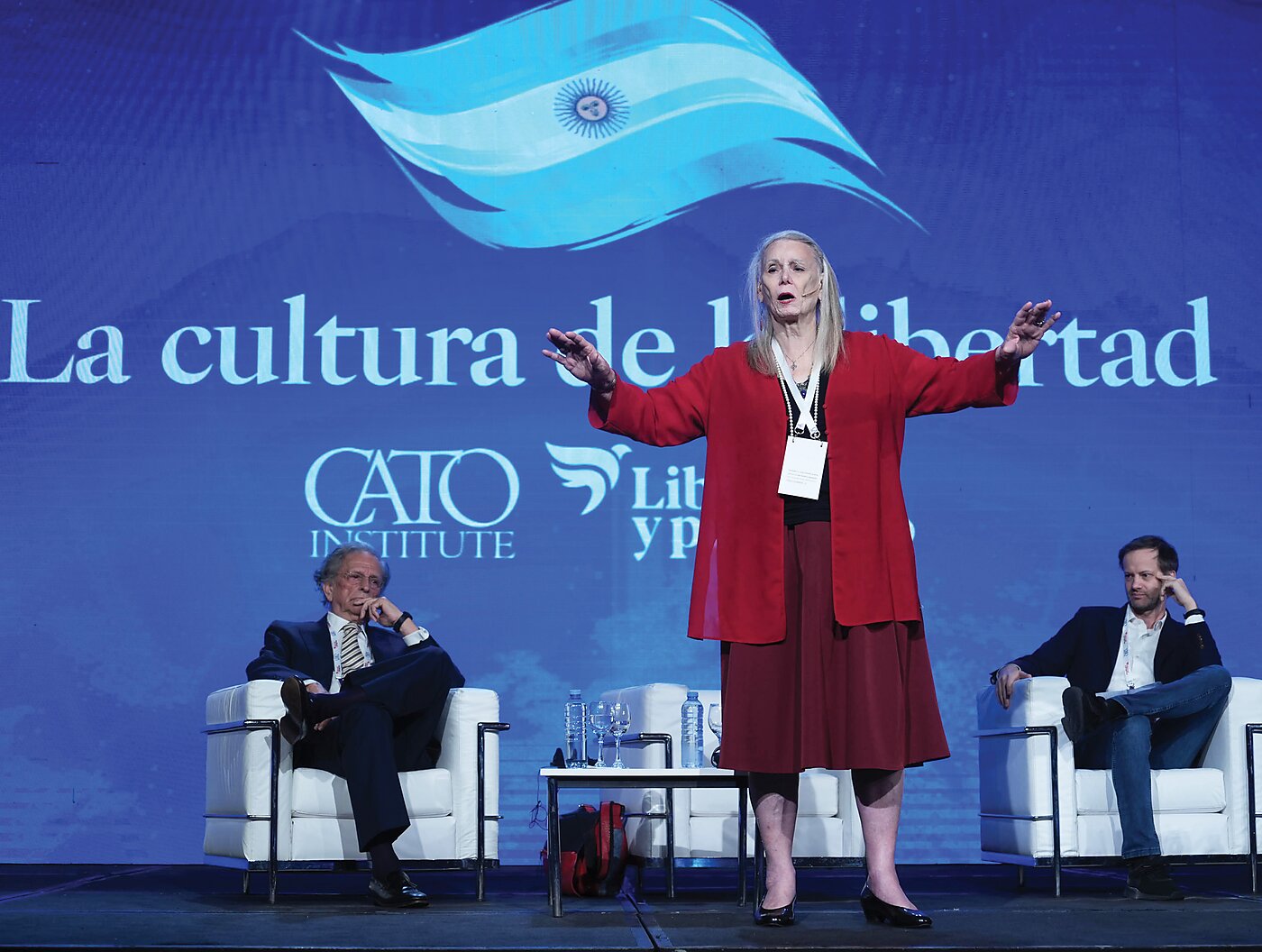
Deirdre McCloskey, the Isaiah Berlin Chair in Liberal Thought at the Cato Institute, delivered an impassioned address on the culture of liberty—arguing that Argentina’s future depends not just on sound policy but on a renewed moral and cultural embrace of individual dignity and freedom. Alberto Benegas Lynch, Jr. (left), Cato adjunct scholar and the preeminent Argentine thinker whom President Milei cites as his intellectual mentor, and Axel Kaiser (right), founder of the Fundación para el Progreso in Chile, joined McCloskey on the opening panel.
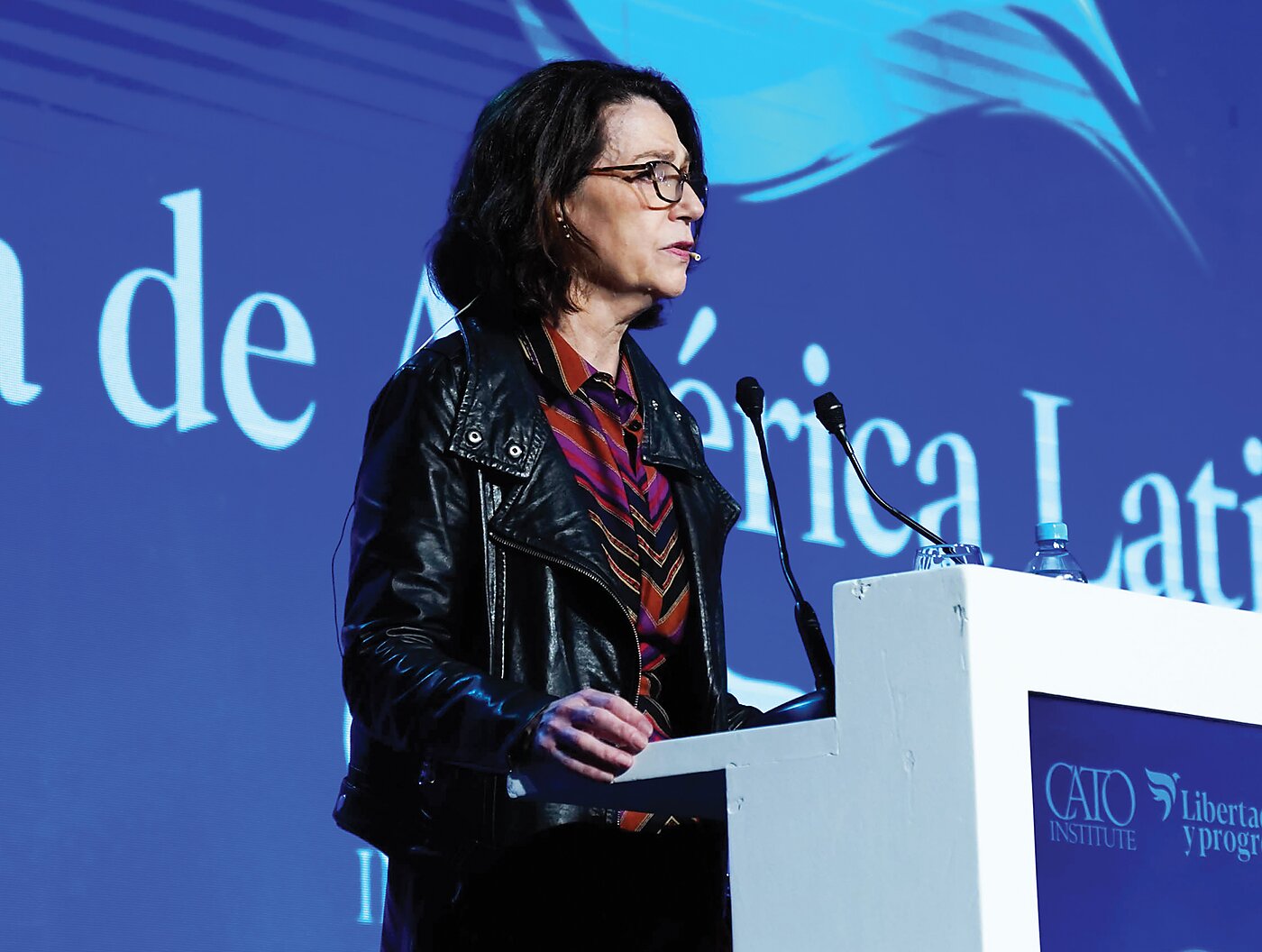
Wall Street Journal columnist Mary O’Grady moderated a panel exploring the historical and cultural legacy of liberty in Latin America and Spain— providing valuable context for today’s reform efforts and the long struggle for individual rights throughout the region.
Our Spanish-language platform, ElCato.org, edited by Gabriela Calderón de Burgos, continues to reach Latin American audiences with libertarian analysis by leading thinkers on the issues most relevant to the region. In February 2024, Cato also hosted a policy forum, “The Resurgence of Argentina’s Classical Liberal Tradition,” featuring Alberto Benegas Lynch, Jr.—Milei’s intellectual mentor, Cato adjunct scholar, and a lifelong champion of liberty. Then, in November 2024, we held an online policy forum from Buenos Aires, “Why Argentina Must Still Dollarize.”
Cato’s role in the global liberty movement is the product of decades of work to build a worldwide network, foster intellectual exchange across borders, and make the most of opportunities to advance the cause of liberty.