—Cato Statement of Principles
Chapter Four
Free Speech and the Pursuit of Truth

Chapter Four
Free Speech and the Pursuit of Truth
Free speech, free expression, open inquiry, diversity of ideas and viewpoints, honest pursuit of truth, and healthy disagreement are essential to the progress of humanity and civilization.
Defending Free Speech Against 21st-Century Threats
Free speech has long been a cornerstone of American liberty, but today it faces mounting threats from all directions— government overreach in regulating social media, attempts to silence dissent through heavy-handed DEI mandates, and efforts to reshape public discourse through policy and regulation. At Cato, we don’t just believe in free speech—we actively defend it.
Thanks to the generous support of our Partners, Cato is investing more than ever in this critical mission, broadening our reach and taking the battle for free expression directlyto the halls of power. Our scholars are shaping national debates, testifying before Congress, influencing major policy decisions, and ensuring that speech remains free in every forum— online, on campus, and in the public square.
Protecting Online Speech
Technology policy senior fellow Jennifer Huddleston is on the front lines of today’s most contentious free speech battles. When Congress moved to ban TikTok, she warned in the Washington Post, Boston Globe, and USA Today and on BBC Radio that such a move would set a dangerous precedent for government control over speech platforms. She frequently speaks to future lawyers at elite institutions such as Harvard Law School.
Huddleston’s work has directly shaped policy discussions. In a February 2024 decision on whether to ban edited videos of President Biden, the Meta Oversight Board cited her research—along with that of Cato fellow for free expression and technology David Inserra—twice, reinforcing their argument that such bans would undermine legitimate political speech.

Rep. Jay Obernolte (R‑CA), vice chair of the House AI Task Force, joined Cato senior fellow Jennifer Huddleston for a fireside chat at Cato’s “Understanding AI: AI Policy for 2024 and Beyond” conference in April 2024. Together, they explored how public policy is shaping the future of artificial intelligence—asking whether government is fueling innovation or standing in the way, what lessons AI policy can draw from earlier tech revolutions, and where the next frontier in AI regulation may lead.
Huddleston has also taken the fight for free expression to Congress. In March, she testified before the House Committee on Oversight and Reform on AI policy, cautioning lawmakers against stifling innovation through misguided regulation. She expanded on these warnings in June at a public hearing before the House Task Force on AI, and in July, she briefed House staffers on AI’s implications for civil liberties.
Cato has also been a convener of critical discussions on AI and free speech. At our December 2024 event, “Understanding AI and AI Policy in 2024 and Beyond,” Huddleston hosted Rep. Jay Obernolte (R‑CA), chair of the congressional AI task force, for a deep dive into regulatory proposals for the 119th Congress. In October, she also moderated a Cato forum with Consumer Technology Association CEO Gary J. Shapiro on how government policies can stifle businesses’ ability to adapt and innovate.
Libertarianism.org
Bringing Liberty to New Audiences

Challenging DEI’s Free Speech Threats
Cato is also leading the charge against the speech-chilling effects of modern DEI mandates. Erec Smith, research fellow and cofounder of Free Black Thought, has been a powerful voice in exposing how DEI programs suppress open discourse. In March, he testified before the House Judiciary Committee, arguing that DEI policies are designed to perpetuate racial divisions rather than resolve them. He took that message to national audiences through op-eds in Newsweek and The Dispatch, a debate on Dr. Phil, and interviews on CNN. Smith’s work has had a real-world impact. When Sen. Eric Schmitt (R‑MO) joined him at a Cato policy forum on DEI’s dangers, their discussion highlighted how top-down DEI mandates stifle speech and critical thinking on college campuses and beyond. Then, in January 2025, President Trump signed executive orders rolling back DEI requirements in government agencies and hiring—many of which mirrored recommendations from Cato’s Handbook on Executive Orders and Presidential Directives.
In 2023, Cato’s Gene Healy wrote: “DEI is largely a state-sponsored industry. Policymakers—and private donors—who worry about rising illiberalism on campus should stop subsidizing its growth,” which is effectively what the latest executive orders have scaled back.
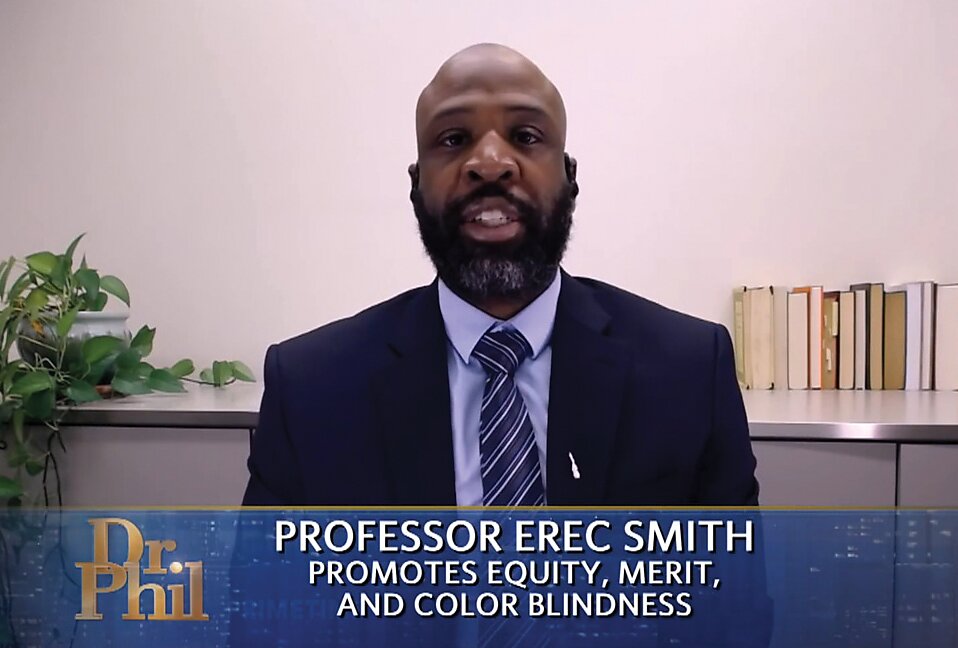
Erec Smith, Cato research fellow and cofounder of Free Black Thought, appeared on Dr. Phil Primetime in April 2024 to debate DEI—challenging the push for equality of outcomes over merit-based, individual achievement.
In 2023, Cato’s Gene Healy wrote: “DEI is largely a state-sponsored industry. Policymakers—and private donors—who worry about rising illiberalism on campus should stop subsidizing its growth,” which is effectively what the latest executive orders have scaled back.
The Work Continues
Cato is not merely an observer in these debates—we are a driving force in the fight to keep speech free in the digital age. Whether it’s standing up to government censorship, defending online expression, or challenging authoritarian DEI policies, Cato scholars are shaping the policies and legal battles that will define the future of free speech in America.
Transforming Education with Viewpoint Diversity
In today’s classrooms, too many students are pressured to pick a side rather than engage in meaningful, open-ended discussions. Civil discourse is being lost, and ideological echo chambers are taking over. Sphere Education Initiatives are changing that by promoting viewpoint diversity, modeling civil debate on contentious topics, and ensuring that the foundational ideas of a free society can flourish in classrooms nationwide.
Launched in 2019, Sphere equips educators with the tools, training, and resources they need to foster openness, reasoned debate, and civil discourse—helping students move beyond polarization and engage with diverse perspectives. Our ambitious goal was to build a net- work of 8,000 educators reaching one million students annually by the end of 2024. We’ve not only met that goal, but we’ve surpassed it, with more than 12,000 alumni at the end of 2024. And we’re not stopping there. By 2029, we aim to expand our network to more than 25,000 educators.
We hosted two Sphere Summits at Cato’s headquarters in Washington, DC, drawing 365 educators from grades 5–12 classrooms nationwide. Nearly 98 percent of attendees said they would recommend Sphere to a colleague—a testament to the program’s power.
But professional development for educators is just one part of the bigger picture. That’s why Sphere has expanded its classroom content development efforts, ensuring that core ideas—including the principles of a free society, individual rights, open discourse, constitutional governance, and individual liberty—are an integral part of what educators deliver to their students. This year, we launched a significant initiative to develop a robust library of classroom-ready lesson plans, including new content on foundational economic principles, human progress, and civil discourse. With additional staff members dedicated to lesson plan and online content development, plus a new advisory board of top educators guiding the process, Sphere is ensuring that these resources are both rigorous and engaging for grades 5–12.
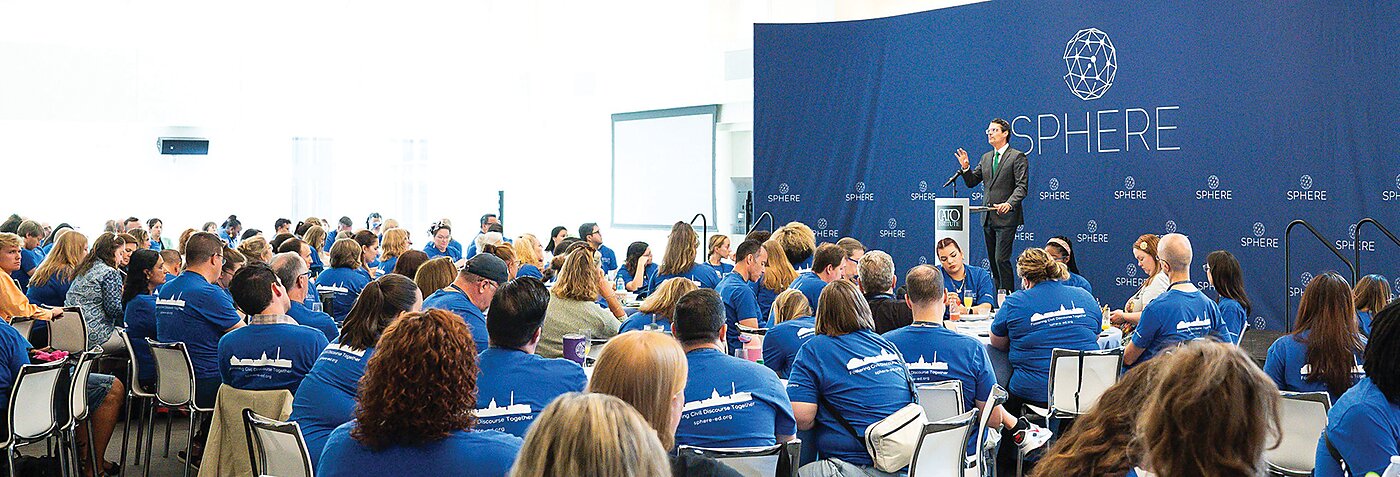
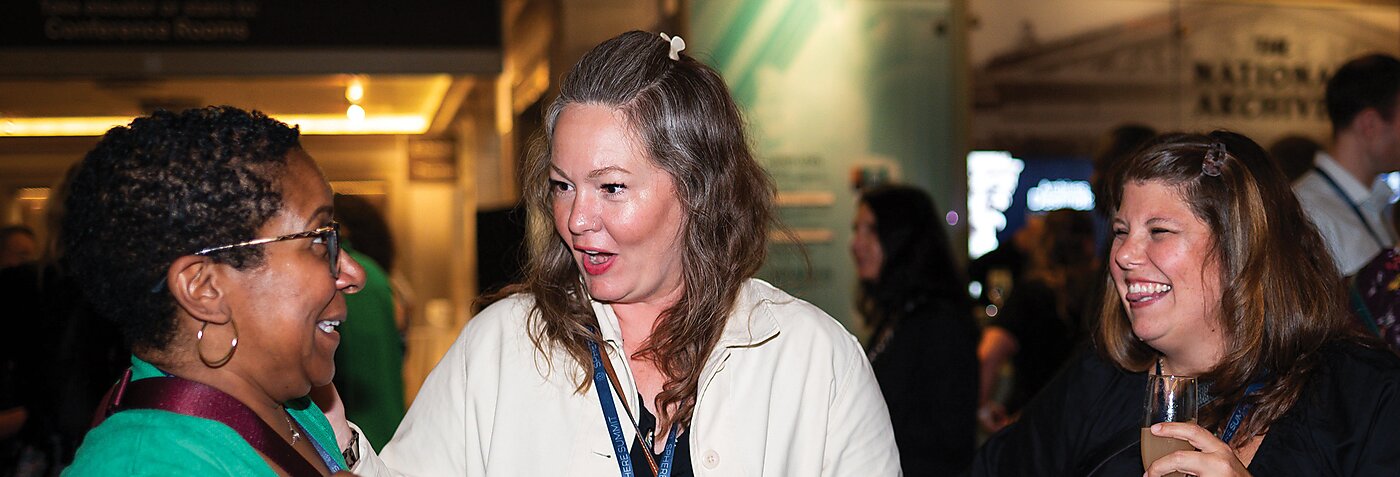
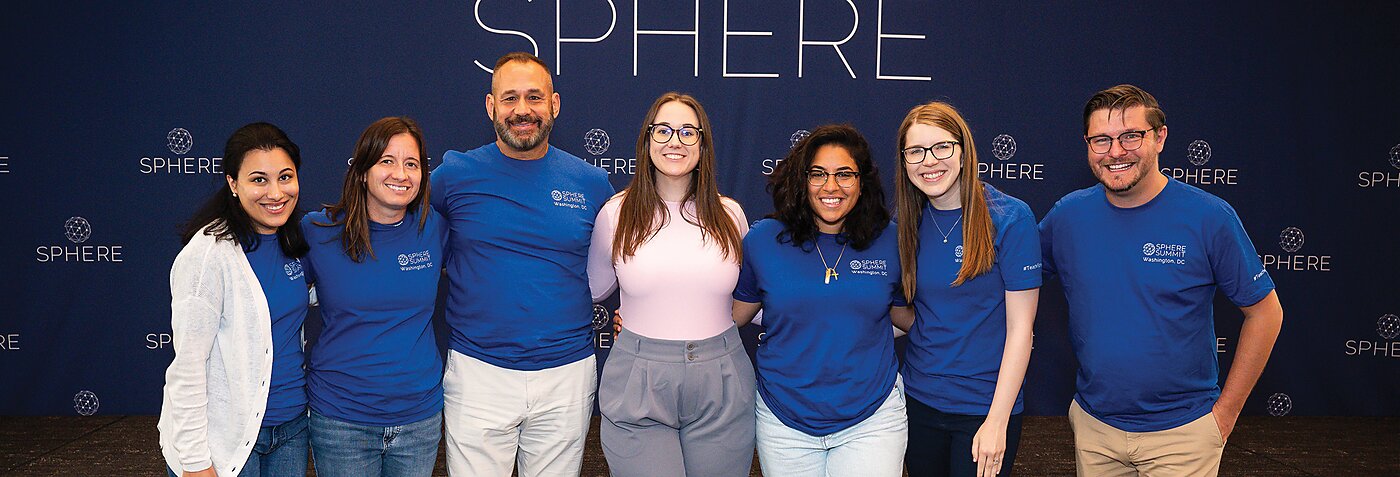
Sphere’s new Human Progress Lesson Plan Series provides high-quality, ready-to-use classroom materials that integrate lessons on history, progress, and innovation from Cato’s HumanProgress.org team. To make these resources even more accessible, we launched the Human Progress Box, a carefully curated collection of books, lesson plans, and teaching guides sent directly to educators at no cost. This initiative has already reached thousands of teachers eager to bring fresh and optimistic perspectives into their classrooms.
Sphere on the Road brought professional development to educators where they are, delivering 93 training sessions across the country. Nearly 400 educators attended a standout event in September, where they learned how to better facilitate viewpoint diversity in the classroom.
In June, we launched the Sphere Alumni Fellowship: a six-month, full-scholarship fellowship for alumni. The program kicked off with a dynamic Shark Tank–style competition, in which fellows pitched bold ideas to advance civil discourse and competed for funding to bring their projects to life.
At a time when too many students are taught what to think instead of how to think, Sphere is leading the way in restoring intellectual curiosity, open debate, and true civic engagement. The movement is growing— and we’re just getting started.
Cato University: Educating the Next Generation of Free Thinkers
A 2024 survey by the Foundation for Individual Rights and Expression (FIRE) found that 63 percent of college students believe it is sometimes appropriate to shout down a speaker with opposing views. The past year’s campus protests, higher education scandals, and growing intolerance have laid bare a troubling reality. Many universities have abandoned the classical liberal values that once defined them.
Cato University is changing that.
Relaunched in 2024 as an educational program exclusively for college and graduate students, Cato U brings students to the Cato Institute for the flagship multiday conference and promotes classical liberalism nationwide with additional on-campus programs. Cato U equips the next generation with a deeper understanding of free speech, limited government, and sound economics.

Cato’s goal is bold: to educate more than 850 students through Cato University by the end of 2026—restoring classical liberal ideals where they are needed most.
This past August, 85 students from 30 states gathered at George Mason University for a three-day session, “The Use and Abuse of State Power.” Former president of the American Civil Liberties Union Nadine Strossen was interviewed by two Cato interns for an opening keynote conversation about the First Amendment on campus. Broadcast on C‑SPAN, this opening discourse set the stage for a weekend of rigorous discussion.
In November, Cato University met in Chicago for a post-election session on fiscal policy. Romina Boccia, director of budget and entitlement policy, and Adam N. Michel, direc- tor of tax policy studies, led 40 students in an in-depth exploration of government spending and taxation.
Cato’s Internship Program: A Launchpad for Libertarian Leaders
The highly competitive Cato internship program offers students hands-on experience with public policy research.
A core component of a Cato internship—which former interns identify as transformative and edifying—is the John Russell Paslaqua Intern Seminar Series. This series bears the name of a former intern who passed away in 2017, just two years after completing the program. These seminars cover topics ranging from public policy, economics, history, and political philosophy to writing and speaking skills, presented by Cato’s staff across more than 40 sessions.
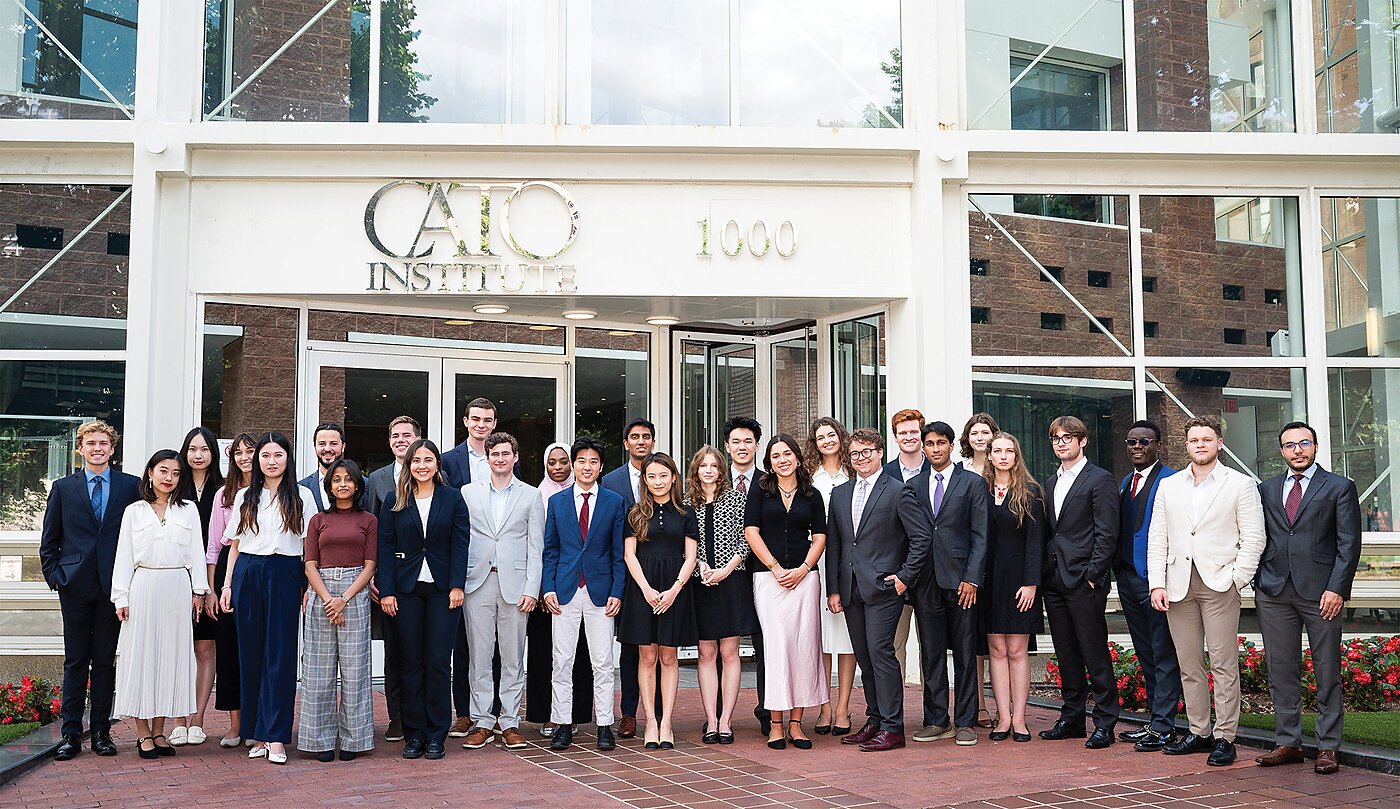
The John Russell Paslaqua Intern Seminar Series was established in 2019 by John’s father, Kenneth Paslaqua, to honor his son’s legacy. Encouraged by the success of the series in inspiring and preparing hundreds of young libertarians to embark on their careers—just as the Cato internship had for John—Kenneth provided funding through 2028 for the seminar series.
Thanks to Kenneth’s generosity, more than 430 young students have had the opportunity to follow in John’s footsteps since 2019, participating in research tutorials, professional development workshops, and deep-dive lectures on the philosophical underpinnings of libertarianism.
Cato Internship: In Their Own Words


