—Cato Statement of Principles
Chapter Seven
Choosing Your Own Path

Chapter Seven
Choosing Your Own Path
Freedom enables each individual to choose the path of his or her own life and to live it, with dignity and respect, as they wish, consistent with the right of others to do the same.
Putting Patients in Control
The freedom to make our own informed health decisions, to control our incomes and health care spending, and to maintain bodily autonomy are all fundamental to preserving human dignity. The more government seeks to exercise control over health spending and regulation, the more it strips these freedoms from individuals.
Cato’s Director of Health Policy Studies Michael F. Cannon continues to drive the debate on real reform. His proposal to expand tax-free health savings accounts (HSAs)—reducing the tax code’s influence over health decisions—gained serious traction in Congress. In 2024, Washingtonian magazine recognized Cannon as one of DC’s “Most Influential People” for the fourth year in a row, noting that his push to raise the HSA contribution limit to $7,500 was included in legislation that cleared the House Ways and Means Committee.
Additionally, both a Republican Study Committee budget proposal and a health reform manifesto from Rep. Chip Roy (R‑TX) reflected his prescription for capping the tax exclusion on employer-provided health insurance.
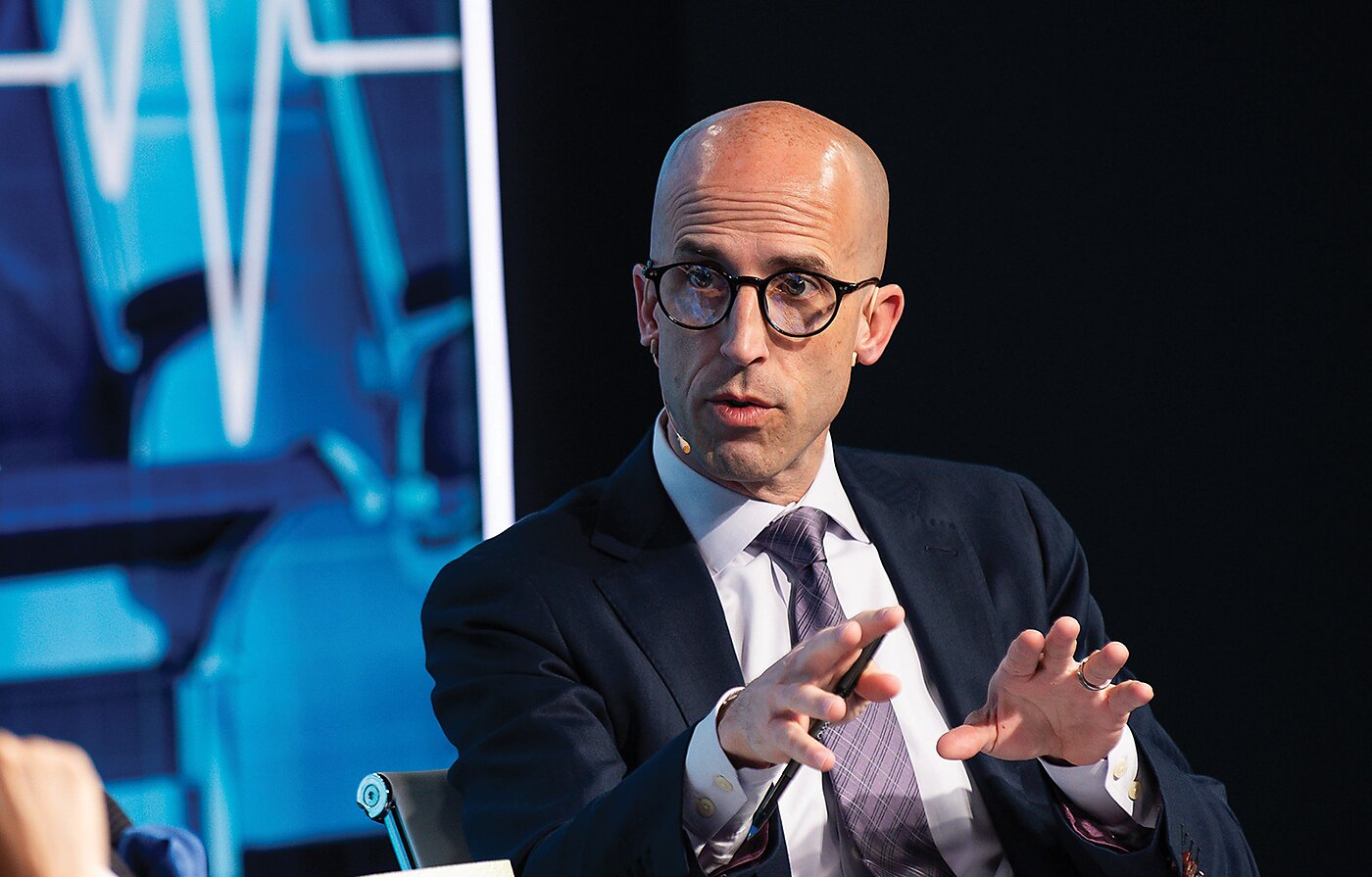
Michael F. Cannon, director of health policy studies, hosted two public policy forums to explore why proposed Biden administration regulations would strip insurance from sick patients and why the Medicare bureaucracy negotiates drug prices so poorly.
Cato senior fellow Jeffrey A. Singer is leading efforts to deregulate health care and expand access to mental health services. Dr. Singer has long recommended removing regulatory barriers to competent psychologists prescribing psychoactive medications. His advocacy gained ground in 2024 when Utah became the seventh state to pass legislation restoring that freedom.
Singer also tackled the erosion of trust in medical institutions. Alongside Cato’s Ryan Bourne, he screened the documentary COVID Collateral: Where Do We Go for Truth? and led a discussion with Dr. Jay Bhattacharya (now director of the National Institutes of Health) and former Centers for Disease Control Director Robert R. Redfield on the failures of the COVID-19 pandemic response and the suppression of scientific debate. He also hosted a forum on the book Blind Spots: When Medicine Gets It Wrong by Dr. Martin Makary (now commissioner of the Food and Drug Administration), exposing systemic flaws in modern medicine.

Robert R. Redfield (left), former director of the Centers for Disease Control and Prevention, spoke with Ryan Bourne (right), R. Evan Scharf Chair for the Public Understanding of Economics, after a screening of the film COVID Collateral: Where Do We Go for Truth?

During the same film discussion, Jay Bhattacharya (left), who in 2025 was appointed director of the National Institutes of Health, discussed how we should approach the next pandemic with Vanessa Dylyn (right), director of the film.
Meanwhile, Cannon took direct aim at the Biden administration’s unlawful push to restrict short-term insurance plans, a type of health insurance Congress exempted from Obamacare and all other federal health insurance regulations. In a March 2024 policy analysis, Cannon argued that Biden’s proposal isn’t about protecting patients—it’s about protecting Obamacare. Cannon briefed Biden administration staff members on how the Biden proposal would strip health insurance from the sick. His influence extended beyond US borders, as he traveled to seven European countries to promote his latest book Recovery: A Guide to Reforming the U.S. Health Sector, and to brief nine international think tanks, as well as television, podcast, and newspaper audiences, on myths surrounding the US health sector.
Back at home, Cannon took the fight against government overreach straight to state legislators, testifying (once again) before the Kansas House of Representatives’ Committee on Health and Human Services to oppose Medicaid expansion. His relationships with journalists shaped the debate over Medicaid reform and other issues. Through research, testimony, and high-impact events, Cato’s health policy scholars are ensuring that the future of American health care is driven by freedom, choice, and competition—not government control.