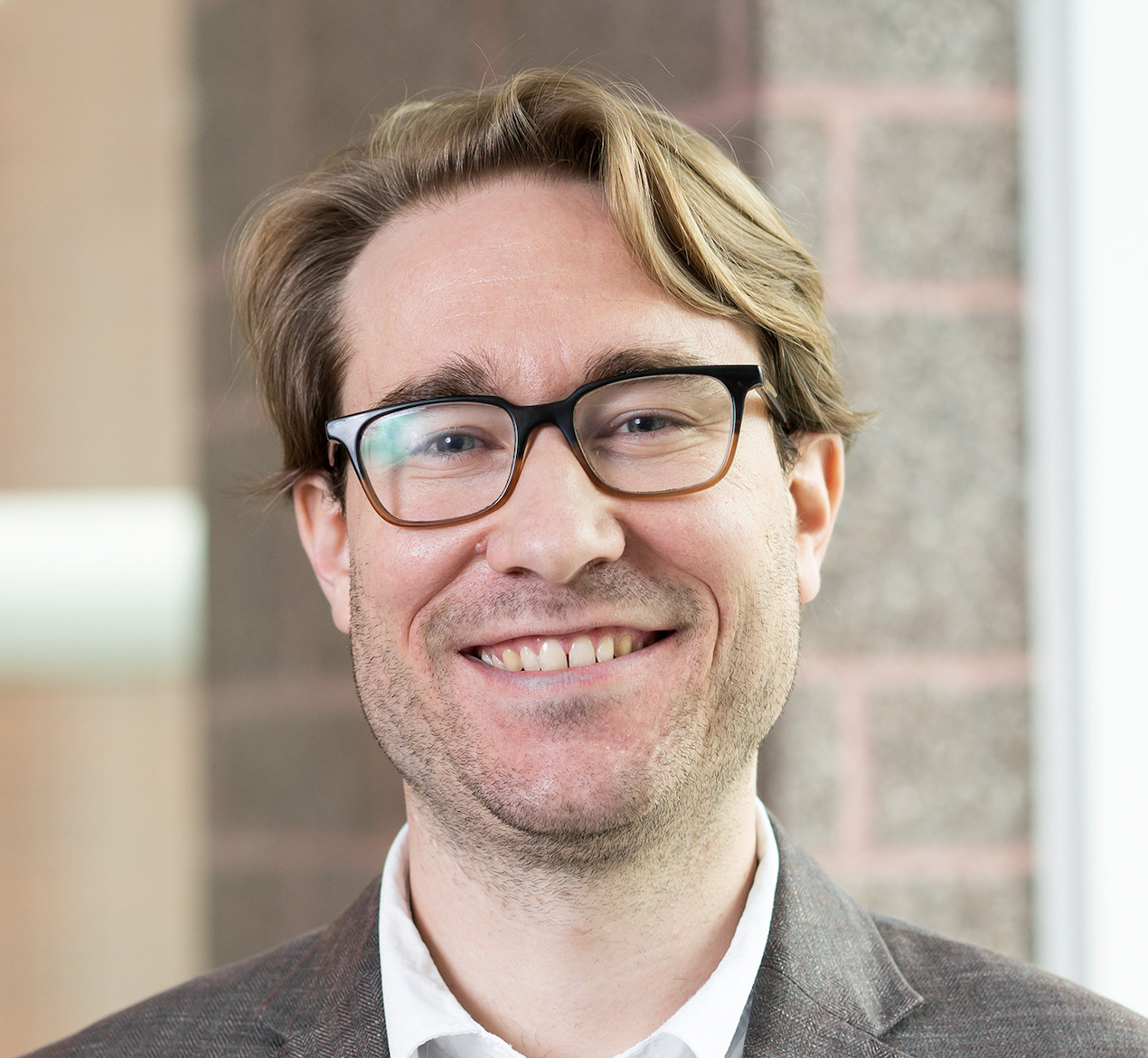
Nancy Wickham Sphere Photo

Middle school teacher Nancy Wickham in front of a United States flag painted by students at Mountain Middle School in Colorado for a Veterans Day project.

here is no shortage of concern about the technological, political, and cultural forces that are shaping the education of America’s next generation. The prevalence of social media, short-form video content, and artificial intelligence has prompted worrisome news stories about students arriving at college without the attention span required to read a book, much less think critically about conflicting ideas or engage with classmates of a different opinion.

A hyperpolarized political environment doesn’t help, as lawmakers and bureaucrats are increasingly dictating curricula across the country and prohibiting some viewpoints altogether.

For educators, these pressures are already shaping everyday classroom interactions.

“The curiosity—the willingness to learn—is what we’re struggling with,” said Dr. Travis Towne, a civics and financial literacy teacher at Lenoir County Early College High School, a public school in North Carolina. “For so long, they’ve been told they have to think this way or that way.… I had to pry out any willingness to converse.”

But something changes when students are given permission to explore diverse viewpoints.

“Once we start, then they’re all chatty as can be, because now the floodgates are open,” Towne said. “All the questions they had and were shut down—now they start coming out, and that’s what I want.”

Towne credits much of his success in fostering a climate of civil discourse to his work with the Sphere Education Initiatives, which the Cato Institute launched in 2019 in response to rising demand for more viewpoint diversity in education. Towne is one of more than 20,000 public and private school educators in Sphere’s growing network. These educators come from across the political spectrum, but they all share a common goal: cultivating openness, curiosity, and civil discourse in their classrooms—then sending students into society with the habits of mind necessary for the responsibilities of citizenship.

Sphere offers year-round learning to educators through conferences at Cato headquarters and workshops in schools nationwide. Educators have access to webinars on pressing current events, a podcast (The Teacher’s Sphere), and small mentorship groups where they can workshop ideas with fellow alumni and Sphere staff. Sphere provides educators with robust lessons, tools, and explainers across disciplines covering topics including economics, politics, and human progress.

Free Society - Sphere Article - Julian Kenneth Braxton

Julian Kenneth Braxton guides students through a lesson on civil discourse in a Politics of Identity class at the Winsor School in Boston, laying the groundwork for meaningful conversations with students from Sidney High School in Montana.

Julian Kenneth Braxton, a history teacher and the Bezan Chair for Community and Inclusion at the Winsor School, a private all-girls’ school in Boston, remembers a visit by Sphere director Allan Carey a few years ago for professional development.

“As history teachers we are used to these difficult conversations, but I think now and then, it feels a lot more loaded, just the climate we’re in,” Braxton said. “What Allan gave us is the opportunity to think about this in some really nuanced and important ways, and to really get into these important issues.”

For many alumni, the transformative moment comes during the summer at the five-day Sphere Summits, where educators learn from Cato’s policy scholars, who present and engage in conversation with scholars from other organizations.

“It’s incredible to get to see civil discourse in action, to hear such diverse perspectives from authors who I would have perhaps never heard of or learned about,” said Nancy Wickham, a social studies teacher at Mountain Middle School, a public charter school in Colorado. “That’s so reinvigorating for educators, getting to sit and listen and observe. It’s difficult to pinpoint sessions, but I appreciate sessions that challenge me as a listener to be open to perspectives that are so different from my own. The panels on immigration and globalization were very interesting and caused me to think about my own biases.”

Free Society Sphere Alumni Fellowship Image

High school teacher Travis Towne (middle right) discusses ways that he fosters civil discourse in the classroom at Sphere’s Alumni Fellowship Program. The panel also includes Sarah Lane (far left), Sphere’s educator engagement specialist, and educators Enaye Englenton (middle left) and Kimberley Briles (far right).

Sphere events don’t just inspire reflection—they spark action. Building on a long-standing collaboration connecting students across 2,000 miles, Braxton and his longtime friend and colleague Brad Faulhaber, a social science teacher at Sidney High School in Montana, used the Sphere Alumni Fellowship—a program for veteran Sphere Summit participants—to deepen their work on civil discourse.

“Montana offers a range of experiences that our students don’t have,” Braxton said. “The first few classes, it’s all just getting to know each other. ‘What do you like?’ ‘What do you do in a normal week?’ The Montana students will talk about hunting, and so early on, you begin to think, ‘Oh, wait a second, they have big passions about the Second Amendment.’”

For Braxton, these are valuable moments: “If you discover something about someone’s political ideology, that should not be an invitation to stop. That should be an invitation to ask a question. You may want to be friends, you may not, but not because of their political ideology.”

Back in North Carolina, Towne has developed his own methods to create similar interactions. For one exercise, he employs a simple setup involving objects such as cones or cards, and structured turn-taking, to transform unwieldy debates into chances for students to fully articulate their thoughts and ask better questions. With Towne facilitating, one student at a time will hold the object, explain their reaction to a policy or philosophical dilemma, and respond to others’ questions.

Those small but meaningful shifts in how students encounter ideas are building the civic habits a free society depends on.

“They’re not trying to argue with the person. They’re trying to identify what their thought process is for that idea,” Towne explained. He found this approach works even for controversial topics such as abortion policy: “Students that traditionally hold more of a liberal viewpoint were more conservative than was assumed, and vice versa, after we did the activity. They would have never realized that if they hadn’t had the conversation and the ability to hold the cards up.”

These discussions require teachers to be equipped with the skills and tools to implement civil discourse for discussing complex issues. The best teachers practice lifelong learning—which is why Towne joined Sphere’s new Alumni Fellowship Program, where teachers brainstorm new projects and curricula to bring Sphere’s approach into more classrooms.

The program transformed Wickham’s annual Civics Day project; she had been bringing local officials to Mountain Middle to speak about civic engagement, but now she connects students directly with local nonprofits for community service projects.

“We got 300 students out of the building for the entire day, and they were engaged in civic learning work, from visiting the nursing home to trail work and trash cleanup.” Wickham developed the projects with other Sphere fellows and staff: “Getting to share challenges and obstacles with others was helpful.… It’s how I ended up developing this program. I am hopeful that this will become more of a collaborative, school-wide initiative, and I do my best to narratively tie it into what we’re doing in the classroom.”

For the 250th anniversary of America’s Founding, Wickham worked with Sphere to create lesson plans about the Declaration of Independence and other historical documents such as the Magna Carta. One lesson guides students through a team rewrite of the document using modern language.

“They loved doing it last year,” Wickham recalled. “They wanted to share their versions with everyone. Kids who typically are zoned out are asking me after class, ‘Can we rewrite Hammurabi’s Code too?’”

Sphere’s lesson plans at sphere​-ed​.org provide new methods for teaching timeless ideas and critical periods of history, expert insights into pressing policy areas, and frameworks for discussing contentious news. In January, a PBS NewsHour Classroom article about immigration raids in Minnesota encouraged students to use Sphere’s tips for healthy discourse norms as a guide for discussing the issue and other contentious topics. Cato’s reputation for nonpartisanship makes Sphere curricula approachable, and surveys show that skeptical teachers overwhelmingly say that reputation was strengthened when they met the Sphere team. Nearly 2.5 million students every year are taught by the current network of Sphere teachers. Many of those students will graduate having been exposed to more of the core principles of liberty underpinning individual rights and constitutional governance, as well as optimistic data from Human Progress.

Thousands of teachers have joined Sphere in its mission because it doesn’t tell students what to think—it helps teachers give students permission to think and speak freely.

Free Society Allan Carey Sphere Alumni Fellowship

Allan Carey (left), director of Sphere Education Initiatives, moderates a conversation at a Sphere Summit on elections and voting with Gréta Bedekovics (middle), director of democracy policy at the Center for American Progress, and Walter Olson (right), a senior fellow at the Cato Institute’s Robert A. Levy Center for Constitutional Studies.

“My students can guess my political ideology by reading the letters to newspapers I write, but maybe not, because I try to be nuanced,” Braxton said. “What I try to get my students to do is to really think specifically about issues that really matter to them, and how to articulate that, but also how to be open.… We do live in these news silos—that’s one of the things I worry about—and our students know that, and they acknowledge that. For one assignment, I asked them to look at some news stories, and they were purposeful about looking at different media they don’t normally look at, and they found it very interesting.”

Those small but meaningful shifts in how students encounter ideas are building the civic habits a free society depends on.

The future will be brighter if we can get every student this interested in asking questions about what defines America in this 250th year of our nation’s Founding, namely the ideas that guided the American revolutionaries then and that guide Cato’s work today: individual liberty, limited government, free markets, and peace.