PHOTOGRAPHY BY VÍCTOR SANZ
Flemming Rose Reflects on the State of Free Speech, 20 Years After the Muhammad Cartoon Controversy

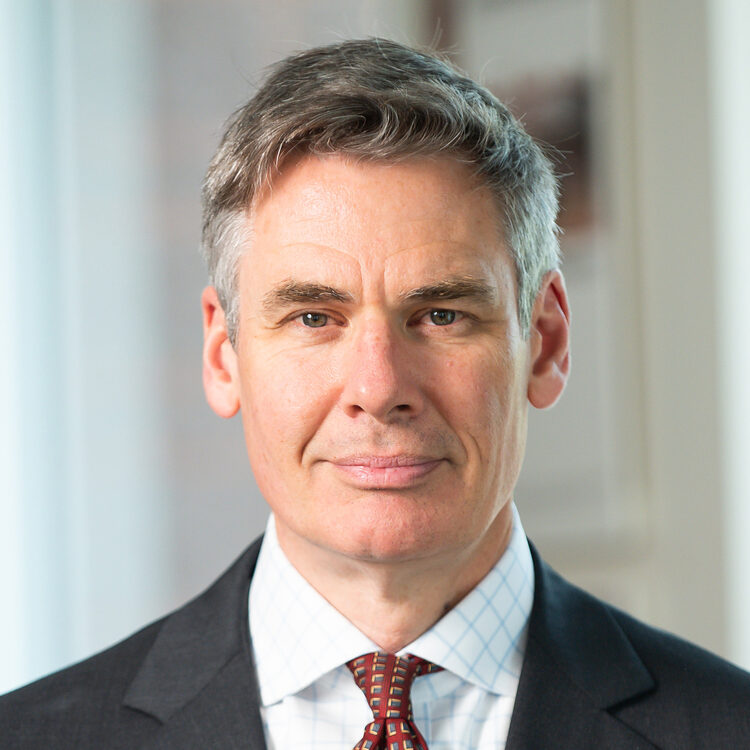
This September marked two decades since the Danish newspaper Jyllands-Posten published cartoons of Muhammad, igniting a global maelstrom over free speech, tolerance, and multiculturalism. Jonathan Fortier, the director of Libertarianism.org, sat down in Copenhagen for a wide-ranging interview with Flemming Rose, who spearheaded the publication of those cartoons as the culture editor at Jyllands-Posten in 2005.
Rose, a senior fellow at Cato who is now the editor in chief of the news outlet Frihedsbrevet, reflects on how his experiences in the Soviet Union shaped his views on the importance of free speech, why we should guard against a culture of self-censorship, and the ongoing battle for freedom of expression and tolerance around the world. Those themes have taken on renewed significance in recent weeks following the assassination of conservative commentator Charlie Kirk. The following transcript has been lightly edited for clarity and length.

JONATHAN FORTIER: Twenty years ago, you published the Muhammad cartoons in Jyllands-Posten, where you were working as the culture editor, and you were very quickly thrown into a storm.
FLEMMING ROSE: Well, very quickly in Denmark, but it became a big global scandal or debate several months later. It was in the early fall of 2005. I had returned to Denmark in the spring of 2004 after having been a foreign correspondent for 14 years, based first in the Soviet Union, then Russia after the Soviet Union fell apart, then the United States during Bill Clinton’s second term, and then I returned to Russia in the fall of 1999 and stayed there until 2004. So, I was not part of the debate in Denmark at that time about immigration, Islam, integration, individual rights, group rights, what does it mean to be a minority, or a minority within a minority, which of course is the individual. But I quickly found out as a culture editor that this is one of the key issues on the political agenda, not just in Denmark, but
in Europe in general.
In August 2005, the Danish wire service Ritzau published a story about a writer who had written a children’s book about the life of the Prophet Muhammad, and he went public saying, “I wrote this book, but I couldn’t find an illustrator. I had big problems finding an illustrator.” Two illustrators turned down his offer, and the one who finally took the job insisted on anonymity, which of course is a form of self-censorship—you do not want to appear under your own name because you are afraid of repercussions. And this became a big story in Denmark. It was on the front page of every big paper, including my paper at the time, Jyllands-Posten, and we published some of the illustrations for the book. So did other newspapers.
The problem with self-censorship compared to censorship is that it is not visible. You cannot see it, and you can only identify it empirically if somebody tells you, ‘I’m censoring myself.’
But in the aftermath, there was a debate about whether there was self-censorship. Was he telling the truth, this author? If there is self-censorship, is that self-censorship based in reality, or is it just some result of paranoia or a distorted imagination? As we debated those questions inside the paper, a reporter came up with a very creative idea: “Why don’t we ask illustrators or cartoonists to answer that question by inviting them to draw the Prophet Muhammad?” That idea landed on my table. I wrote a letter to cartoonists and received the 12 cartoons that we published two weeks later, after some debate about whether this just was an isolated incident or part of a broader pattern. The blowback became worse and worse with time. The initial blowback was from Islamic communities, religious people in Denmark, Christians, some politicians, and artists or people working within the creative sector. They criticized Jyllands-Posten and me for being xenophobic. I was accused of having Muslims for breakfast, that I was against immigration, even though I’m married to an immigrant myself. So that was one part of the debate—was this an unfair attack on a minority? I think that’s a fair argument, and you can have different opinions, and I’m quite sure that there are people who would perceive it that way. The other part of that discussion, which I identified with, was the free speech debate, or the self-censorship debate, that this was basically not about any specific group—it was about demands for restrictions on free speech, and self-censorship that was spreading to museums, book publishers, galleries, the movie industry, and so on and so forth. I just wanted to have a debate about this issue, and I really received one.
Fortier: Over the ensuing months, what became clear is that you stuck to your principles, that you defended free speech despite all the criticism, and you defended free speech in the context of liberal democracy and its values of tolerance and openness. What was it in your experience that gave you that set of tools or that set of principles to remain committed despite those challenges, not just in that year, but in the 20 years that followed?
Rose: I didn’t recognize in the moment that my perception maybe differed from many of my countrymen. But later, when I reflected on what transpired, I think that my experience living and studying in the Soviet Union really played a key role.
I studied Russian language and literature at the University of Copenhagen. This was at the height of the Cold War. Leonid Brezhnev was still general secretary. Dissidents were being thrown in prison or being sent abroad or losing their jobs, some of them even killed. I lived there for one year as a student in 1980 and ’81, and that’s also when I met my wife. When I came back, I began working at the Danish Refugee Council as a translator with people who had left the Soviet Union as refugees. Through that work, I came in contact with writers, dissidents, artists based in Western Europe, and I consumed their literature. I did not study Sovietology at university, but my political and historical education came through these channels, and these people became role models for me.
I grew up in Denmark in the ’60s and ’70s—a quiet, prosperous country. There was some debate, but not existential choices you had to make because of what you were thinking about this and that. On the contrary, these people in the Soviet Union whom I came to know really made choices because they insisted on standing by what they were thinking and meaning about the Soviet system, if they were believers or had opinions that one way or the other contradicted the official propaganda. And of course, later I understood that these people were like you and me, individuals with their own flaws, but their courage and their willingness to stand up, knowing that they probably would have to pay a very high price, made a huge impression on me. That was a formative experience. I really admire these people, and I didn’t think about it in a conscious way at the time of the cartoon crisis, but I think on a subconscious level, I would have been kind of embarrassed if I’d had to look at myself in the mirror and compare myself to these people or the choices they made, and, seeing them as heroes, if at the end of the day I was not able to do the walk and just willing to do the talk.

Danish author Kåre Bluitgen struggled to get a children’s book about the Prophet Muhammad published in the mid-2000s, inspiring Flemming Rose to publish Muhammad cartoons in JyllandsPosten as a test of self-censorship. (Photo by Jens Noergaard Larsen/SCANPIX/AFP via Getty Images)
I’m not comparing myself to them, because I had security support of the government. I worked at a big newspaper. I did not lose my job. The price they paid for the choices they made was far higher, but I’m just saying that they were role models to me, and I was inspired by the consistency, because that’s when your values and your point of view is really tested, when you have to pay a price and sacrifice something and nevertheless you choose to stand by what you think.
If you do not cultivate free speech and tolerance, then it will fade away, even in the most stable democracy.
Fortier: One of your central concerns is self-censorship—the other side of the censorship coin. Why is that? Did you see a lot of self-censorship in the Soviet Union?
Rose: In the Soviet Union, you had both. You had very visible censorship. You had censors working at publishing houses, movie production, everywhere. But the problem with self-censorship compared to censorship is that it is not visible. You cannot see it, and you can only identify it empirically if somebody tells you, “I’m censoring myself.”
Some years ago, I read a very good definition by a Serb writer, Danilo Kiš: “Self-censorship is reading your own text with somebody else’s eyes.” So you read your own novel or short story or essay not with your own eyes but with the eyes of the censor, in order to figure out: What will other people say? Not from an aesthetic point of view, but will this be allowed or not allowed? Will I get punished for this or not? And that, of course, is a disastrous situation for a creative individual, an artist, writer, journalist, or whatever.
Fortier: Presumably, the self-censorship in the Soviet Union was to prevent oneself from criticizing the Soviet authorities and the ideology of communism.
The Muhammad cartoons that you published revealed that the self-censorship was about the issue of Islam, especially Islam in the West. Where else do you see self-censorship occurring?
Rose: I think in Denmark today, there is a lot of self-censorship when it comes to the war in Ukraine. It’s very clear that Vladimir Putin invaded Ukraine in February 2022 and Russia is the aggressor. But as someone who has been studying the Soviet Union, Russia, and Ukraine for the past 45 years, I think it’s more complicated than the media or the politicians and other voices in the public debate try to bring across. That’s no defense for Putin and Russia, but it means that the debate has been very one-sided, and I think a lot of people are afraid of even asking politically incorrect questions like, for instance, is Ukraine a democracy? Are we really defending a democracy? And I think the obvious answer today is no, it’s not about democracy.
It doesn’t justify Russia’s invasion. But because we have framed this war as a war between democracy and autocracy, there is the implication that if you start questioning the political system in Ukraine, it might be perceived as a justification for the invasion, which it is not. Same with Trump, in fact. Speaking about the United States in Denmark and Western Europe, people do not want to voice any support or positive statement about what Trump is doing. You can criticize Trump for a lot of things, but there might also be singular instances where in fact he’s doing something right, and a lot of people in Denmark and Western Europe will refrain from saying so publicly.
In a democratic society, I do not get imprisoned if I say something that goes against the grain, but I will be socially ostracized, so I think self-censorship is also about social psychology: You want to belong. You want to be part of decent society. You don’t want to stick out, go against the grain. It’s uncomfortable. You don’t want to be criticized. You don’t want to be asked uncomfortable questions. So I think self-censorship in that respect, in a democratic society, has a lot to do with social psychology.
Fortier: In an earlier conversation, you said that free speech and speaking one’s mind is not natural, that we much more naturally are inclined to group belonging and conformity with our peers.
Rose: You and I are not born with a gene for loving freedom of expression or supporting democracy. In fact, there’s so much in human nature that goes against the concept of free speech as an individual right, because of what I just talked about. Yes, most people want freedom of speech for themselves, but they don’t want to extend that right to people with whom they disagree. And in that sense, it’s very unnatural. That’s why I always make the point that you cannot isolate freedom of expression. You have to combine it with tolerance—that is, the ability to live with things that you actively dislike or hate. And that is very difficult. It’s like a toddler when it eats something that it doesn’t like and spits it out. It’s the same when you are exposed to speech that you don’t like—you switch off the television, you throw away the newspaper, you leave the room. You do not attend a speech or a seminar. You don’t want to listen to politicians that you dislike or with whom you disagree.
So that means that a culture of free speech, a culture of tolerance—you can never take it for granted, because there is so much in human nature that goes against tolerance and prompts us to be intolerant. That is, in fact, the default position for any human being, to be intolerant. So you have to practice it. You have to learn it in school, in the family, at the workplace, at university, in all settings. And if you do not cultivate free speech and tolerance, then it will fade away, even in the most stable democracy.
You cannot isolate freedom of expression. You have to combine it with tolerance—that is, the ability to live with things that you actively dislike or hate.
Fortier: One of the justifications for censorship one encounters frequently is that we need to respect others, and especially respect the religious beliefs of certain groups or the moral principles that they hold dear. You were accused of violating those values, of disrespecting the Muslim minority population in Denmark. But you make an interesting claim—that in fact you were showing a greater, higher respect for the Muslim community in Denmark.
Rose: I would make the argument that publishing those cartoons was a practical exercise in integrating the Muslim community into Danish society and showing them the kind of respect that I would show to any other citizen or individual in Denmark. By publishing those cartoons, we were not asking more of Muslims than of other groups and individuals, and we were not asking less. We were asking exactly the same of them as every other individual and group in Denmark, and that is that you cannot except your belief, your political conviction, from criticism and debate. In doing so, we recognized them as equals and as part of our society.
Fortier: Did you find any sympathetic voices that supported this approach?
Rose: Yes, some years later. Things were very heated back then—a lot of emotions involved and a lot was at stake. But some years later, some of the imams said, “Yes, Jyllands-Posten did have a point in publishing those cartoons, and we needed to have that debate.”
I would also say that I received a lot of letters from what I would call minorities within minorities—individuals within the Muslim community who disagreed with imams or certain parts of the religious doctrine, who saw themselves as certain parts of these communities but didn’t feel that they had the freedom or courage to speak out because it would have disastrous consequences for them.
Fortier: What is your assessment of the state of free speech now? We’re talking at a time when the EU is passing legislation to censor online speech.
Rose: We need to be thinking about it for sure. It’s a different space than the printed word, but I think it all involves human beings, human beings as individuals and as part of society and groups. So human nature is the same, even though you can argue that some of the digital platforms try to exploit human nature in a not very constructive way. But I think that’s maybe another debate.

Flemming Rose in his office at Jyllands-Posten in February 2006, just months after the publication of Muhammad cartoons ignited an international controversy. (Photo by Erik Refner/AFP via Getty Images)
There is a specific example in Denmark that kind of illustrates recent developments. In 2015, right after the attack on Charlie Hebdo in Paris, we had a terrorist attack on a free speech seminar and on the synagogue in Copenhagen, and two people were killed, and there was a big debate in Denmark. Two years later, the Danish Parliament voted to abolish the blasphemy law. That was a response to that terrorist attack, in a way—basically saying that we do not need less freedom of expression. We insist that we need more freedom of expression in order to fight these kinds of threats, and we will not bow to the intimidation and the violence.
Fast-forward to 2023, the same Danish Parliament passes a law criminalizing improper treatment of religious texts, which, translated to normal human language, means banning of Quran burnings. It was basically a reintroduction of the blasphemy law that had been abolished five or six years before. And there had been no terrorist attacks. There had been threats, there had been demands from the Organisation of Islamic Cooperation, but they had also been very vocal during the cartoon crisis. So basically, the Danish government caved in, and I think they caved in because of the new geopolitical situation in 2023 compared to 2017 or 2018, and the new geopolitical situation is that we have a war in Europe. We have a very turbulent geopolitical landscape where power is shifting from the West to other parts of the world. I think in that context, Denmark and Europe in a broader sense would very much like the support of the global south in its confrontation with Russia. I think that might have been part of the motive, because it turns out that with Ukraine the global south doesn’t see this as their conflict, and to some extent they support the Russian position. So it might be that, in order to gain new friends or accommodate some of these sentiments, the Danish government compromised on this fundamental value to any democracy—freedom of expression and the freedom to criticize religion.


LEFT: Sri Lankan Muslims burn a Danish flag in a February 2006 protest over Muhammad cartoons published by the Danish newspaper Jyllands-Posten. (Photo by Lakruwan Wanniarachchi/AFP via Getty Images)
RIGHT: Protesters take to the streets in February 2006 in Nazareth, Israel. (Photo by Marco Longari/AFP via Getty Images)
I also think it’s an irony that these Quran burnings had been taking place in Denmark for several years. The Muslim community in Denmark, of course, didn’t like it, but they had internalized the notion that they should not try to use violence against these Quran burners, because by doing that, they would just give them publicity and prove their point. So these Quran burners could be seen in different parts of Copenhagen where you had Muslims living, and they did not interfere. We had one incident before an election, and they reacted with violence in Nørrebro, a part of Copenhagen, and they learned from that experience that it did not serve their interests. From that point, we did not have any violence or destruction of property connected to these Quran burnings. So, you could say that when they passed this law, Danish society had arrived at a point where Muslims had been able to learn to live with an act that they hated. They practiced, in fact, tolerance. Then the Danish government turned around and criminalized this activity. We had the first conviction according to this law in the summer of 2025—two individuals were convicted and fined 10,000 kroner.
In a broader geopolitical context, wars usually are not productive when it comes to the status of the freedom of expression. You saw that after 9/11 with the Patriot Act. War is bad for freedom usually. I think that is also part of what is driving the EU and the way the Digital Services Act is being applied, for instance, to so-called disinformation and misinformation. It has become a very powerful narrative tool if you want to silence your political opponents or points of view with which you disagree. This is very prevalent in the media. The media talks a lot about how disinformation and misinformation are impairing our democracy, but if you look at the academic literature and research, there is no serious indication that misinformation and disinformation are polluting our minds, or that it is possible to manipulate society to such an extent.
To me, it’s more of a tool in the hands of those in power to delegitimize certain points of view. And this goes back, in fact, to the essence of what freedom is about—courage. And those who want to undermine freedom, they use fear.
Fortier: What is your assessment of the state of free speech in the United States? How do you see things developing there culturally, and the way that free speech is exercised at other institutional levels in universities, in the press, and elsewhere?
Rose: I haven’t been to the United States for a while. I speak here on the basis of what I read and hear, so I will not pretend to provide you with any authoritative point of view, but I think the United States still has the best protection of free speech anywhere in the world through the First Amendment.
On the social and cultural level, I think there are a lot of problems. The killing of Charlie Kirk is an attack on the culture of free speech, which is extremely important for the flourishing of free speech. It requires a cultivation of tolerance in society—that citizens do not threaten, intimidate, use violence, or try to ban speech they don’t like. The same goes for calls to notify the employers of people who cheered Kirk’s killing, as JD Vance asked supporters to do.
The basic tenet of the First Amendment is about the government, and that’s very important. But in a society, the health and the exercise of freedom of expression has not only to do with the government, even though it is the most important part and is key to free speech protection. You also have free speech culture at universities, cancel culture at big companies, even though they are private enterprises and they’re not doing anything illegal, but it is also part of the equation when you talk about a free speech culture. And of course the polarization, the fight between mainstream media and new media. So I think the free speech culture at the moment is not very healthy in the United States, while the legal system still is the best in the world.
Fortier: You’ve said that you feel like we are in a free speech recession. Do you feel that things have deteriorated since 2005, or have they held steady?
Rose: My sense is that things are getting worse. It doesn’t mean that will continue forever. As I said, every generation has to fight its own battles. It will stop at some point, and then hopefully we will see a development in a different direction. When I said that about a free speech recession, I was quoting my good friend and ally, Jacob Mchangama, who is in the United States now at Vanderbilt University and published a very good book on the history of free speech a couple of years ago. We can track this all the way back to around 2004, so this free speech recession has been ongoing for a while. In 2006, the European Union published a recommendation to its member states to enforce hate-speech laws more rigorously. It was about instituting Holocaust denial as a criminal offense in every member-state country, and that’s kind of the matrix. Then in Eastern Europe, they said, “Well, if you want to criminalize Holocaust denial, then we also want to criminalize denial of the crimes of communism.” Then the Baltic countries said, “Well, if you want us to criminalize that, then we also want to criminalize denials of Soviet occupation for 50 years.” Every group and every country with its own history can come up with their own suggestions on how to limit the public space when it comes to opinions and speech.
It goes back to something I said many years ago that was also a key challenge during the cartoon crisis and its aftermath. Denmark used to be quite a homogeneous country, and even though there are multicultural and multiethnic countries in Europe, I would say that the trend for the past 30 years has been that we are becoming more diverse when it comes to culture, ethnicity, and religion. And of course, when we become more diverse, we have more diverse values, we have more diverse speech, we have clashes because people believe in their faith or they belong to a political ideology. So my point always was that I praise diversity, but if you welcome diversity when it comes to religion, ethnicity, and culture, you have to precondition it on a rising diversity of speech as well.
What I saw back then was that to provide space for this diversity of cultures, the governments in Western Europe insisted on less diversity when it comes to speech, so that meant less space for freedom of expression in order to provide a setting for a peaceful coexistence of different religions, ethnic communities, and cultures. And to me, that’s absurd. It’s a contradiction in terms. But of course the politicians do that because that’s the way to preserve peace, even though we have no empirical evidence confirming the theory that you will get less violence if you limit freedom of expression. In fact, there is empirical indication, if you look at hate incidents in Germany and France and the UK over the past several years, that these new laws limiting so-called hate speech do not lead to fewer hate incidents—quite the contrary.
I think the free speech culture at the moment is not very healthy in the United States, while the legal system still is the best in the world.
Fortier: Misinformation and disinformation seem to be a justification for much of the censorship that we’re seeing, especially the censorship of online platforms. Where does this come from?
Rose: I think this has been one of the key tools throughout history when those in power wanted to silence their opponents, to label what they were saying as disinformation or misinformation and a threat to the public good. When I learned about these new attempts to use misinformation and disinformation to limit free expression in our part of the world, it reminded me of what I had witnessed in the Soviet Union. Many of my friends who had gone to prison or labor camps or were in exile—they had been convicted in the Soviet Union for distributing “false information” that undermined the Soviet Union and its social and political system. Basically, they were accused, when they criticized the Soviet Union, of spreading disinformation. So, it seems that even though we now are very critical of Russia, we have imported a tool. They have also reinvented it—in Russia now you can get long prison sentences for spreading fake news about the Russian army. That is, in fact, a reinvention of the Soviet penal code.

Jonathan Fortier, the director of Libertarianism.org, interviews Flemming Rose in Copenhagen, Denmark.
Fortier: Yes, and we’ve certainly learned in the last five years that today’s disinformation or misinformation is tomorrow’s verified fact.
Rose: Exactly—we learned that about COVID. The lab theory was banned by the US government, and Facebook and others were told to delete posts, and today it seems as if the lab theory is now a dominating theory. And we should have known, of course, because that’s the way knowledge develops, that what seemed to be wrong yesterday turns out to be right tomorrow.
Fortier: What role do organizations like the Cato Institute have in this fight for free speech and in encouraging a culture where we aren’t censoring ourselves?
Rose: I think Cato is very important. It played an important role in my personal life. I worked for Cato for four years, and I’m very grateful to Cato and its staff. They provided me a space for talking and writing about free speech for a while, and I felt the support of Cato at a very difficult point in my life. What I like about Cato compared to many other think tanks in the United States is that it is value-driven. Of course, you want to influence specific laws, and there are scholars at Cato doing very important work to influence policymakers and reform the system. But Cato will never sacrifice its fundamental values to get influence with the government, and a lot of other think tanks in DC would be happy to do that. So the point that Cato works for the long haul—standing up, fighting, explaining specific values that are key to the American experience—I find very, very inspiring. It’s very easy to get lost in a day-to-day policy battle, and think tanks often have to prove their value to donors by explicitly saying, “We influence this law. We influence this decision. See how important we are.” And Cato is probably also doing that, but Cato is also working not just for today, for tomorrow, but also for the next 10, 50, and 100 years. I find that very inspiring.