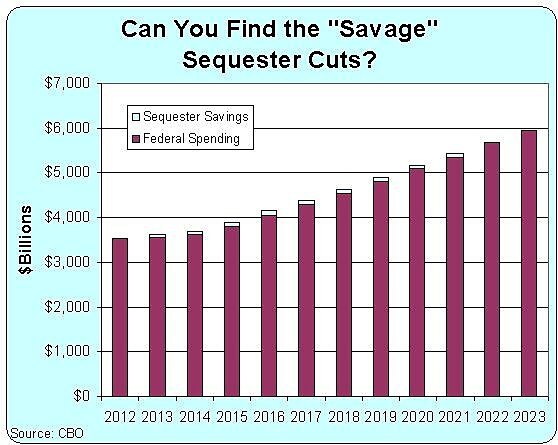
At the AEIdeas blog, Tom Miller finds researchers are reaching conclusions about RomneyCare that their data do not necessarily support, and are claiming ObamaCare will perform similarly, despite major differences between Massachusetts and the nation as a whole.
Cato at Liberty
Cato at Liberty
Topics
General
On ObamaCare’s Discriminatory Subsidies, Brewer Bows When Arizona Should Keep Slugging
Arizona Gov. Jan Brewer (R) recently set aside her vociferous opposition to ObamaCare’s costly Medicaid expansion by announcing she will support implementing that expansion in Arizona. A significant factor in her reversal, she claimed, was that if Arizona did not expand its Medicaid program, then some legal immigrants would receive government subsidies while U.S. citizens would get nothing.
Brewer’s analysis of this “immigration glitch,” and her remedy for it, are faulty. Fortunately, she, Arizona’s legislature, and its attorney general have better options for stopping it.
An odd and unforeseen result of the Supreme Court’s decision upholding ObamaCare is that, in certain circumstances, the law will now subsidize legal immigrants but not citizens. What triggers this inequity is a state’s decision to implement an Exchange — not the decision to opt out of the Medicaid expansion. (Even if a state implements both provisions, legal immigrants would still receive more valuable subsidies than citizens.) The good news is that states can therefore prevent this inequity simply by not establishing an Exchange. If Brewer wants to avoid this “immigration glitch,” there is no need to expand Medicaid. She already blocked it when she refused to establish an Exchange.
The bad news is that the Obama administration is trying to take away the power Congress granted states to block those discriminatory subsidies, and the punitive taxes that accompany them. Contrary to both the statute and congressional intent, the IRS has announced it will impose that witch’s brew in all states, even in the 32 that have refused to establish an Exchange.
Oklahoma attorney general Scott Pruitt has filed suit to stop that stunning power grab. If Brewer is serious about stopping the “immigration glitch,” the way to do it is by filing a lawsuit similar to Oklahoma’s, while adding a complaint that the Obama administration’s illegal subsidies also violate the Equal Protection clause.
How “the Immigration Glitch” Emerged
ObamaCare aims to offer some form of tax credit or subsidy to purchase health insurance to all citizens and legal immigrants below 400 percent of the federal poverty level (about $92,000 for a family of four). Generally, people below 138 percent of the poverty level would receive subsidies through their state’s Medicaid program, while citizens and legal immigrants between 100–400 percent of poverty would receive tax credits and/or subsidies to purchase private health insurance through state-created health insurance “exchanges.”
In a slight departure from those general rules, Congress also made legal immigrants below 100 percent of poverty eligible for those Exchange subsidies. Why? ObamaCare originally would have required states to expand their Medicaid programs to all citizens up to 138 percent of poverty level. But since states have the option of excluding legal immigrants from their Medicaid programs, and could continue to do so under that expansion, Congress made legal immigrants below the poverty level eligible for Exchange subsidies if they live in one of those states. Since ObamaCare supporters expected all states to implement the Medicaid expansion, they reasonably believed all citizens and legal immigrants below 400 percent of poverty would receive some form of tax credit or subsidy.
Then along came Chief Justice of the United States John Roberts.
With six of his colleagues, Roberts voted to declare ObamaCare’s Medicaid mandate unconstitutional. Four of those justices then voted to strike down the entire law on the grounds that the Medicaid mandate was not severable from what remained. But rather than vote with them, Roberts voted with the other four justices—including two who held the Medicaid mandate to be constitutional—to preserve the law and simply make the Medicaid expansion optional for states.
Roberts claimed he was exercising judicial restraint. In reality, he put in place a new law that Congress never would have enacted. ObamaCare still makes the aforementioned legal immigrants eligible for Exchange subsidies, provided their state establishes an Exchange. But under the law as amended by John Roberts, if that state does not expand Medicaid, an inequity appears: some legal immigrants receive Exchange subsidies while otherwise identical citizens, if not already eligible for Medicaid, receive nothing. Given the sensitivity surrounding the law’s treatment of immigrants (remember “YOU LIE”?), there is zero chance such a bill could have passed Congress. So if you want to know whom to thank for this inequity, thank John Roberts. This inequity is one more reason Roberts’ severability analysis was faulty, and the joint dissenters had it right: the Court should have struck down the entire law based on the unconstitutionality of the Medicaid mandate alone.
How States Should Respond
Be that as it may, state officials need to understand what causes the “immigration glitch,” how they can avoid it, and that most of them already have.
- What causes this glitch are the Exchange subsidies, not a state’s failure to expand Medicaid. It is the Exchange subsidies that are available to (some) legal immigrants but not to otherwise-identical citizens. And since Exchange subsidies are available only through state-created Exchanges, it is a state’s decision to create an Exchange that creates this inequity.
- If states want to prevent this inequity, they should do what 32 states have already done and refuse to establish an Exchange. If states don’t create Exchanges, there can be no Exchange subsidies, and thus no inequity. At this point, it appears there are only two states where this inequity might appear: Idaho and Mississippi. Those are the only states that might end up implementing an Exchange but not the Medicaid expansion. They and all other states can avoid this glitch simply by not establishing an Exchange.
- Expanding Medicaid doesn’t really eliminate the inequity because citizens would still receive a less-valuable subsidy than legal immigrants. Legal immigrants would receive subsidies to purchase private insurance, while citizens would get Medicaid coverage, which is notorious for providing inferior access to care. This inequity was present in the original law, and will exist in the 16 or so states that are implementing both an Exchange and the Medicaid expansion.
- This glitch is yet another reason why the Obama administration’s attempt to dispense $500 billion in states that refuse to create Exchanges — half a trillion dollars of subsidies that Congress never authorized — is illegal and wrong. (ObamaCare supporters claim the IRS has the legal authority it needs. To which I say: if you’re so sure, debate me.) Among other evils, the administration is reintroducing this discriminatory provision into the 32 states that have eliminated it. States, employers, and individual taxpayers therefore have one more complaint they can lodge against the administration’s actions in federal court: the unauthorized subsidies the administration is trying to dispense also violate the Equal Protection clause. They are available to legal immigrants but not to otherwise-identical U.S. citizens.
This latest glitch is one more reason why John Roberts’ opinion was ill-considered, why Congress should repeal ObamaCare, and why, until Congress does, states should implement neither an Exchange nor the Medicaid expansion. When a massive new entitlement program unfairly favors one group over another, the proper response is not to enact a second massive new entitlement program. The proper response is to block the first one.
Brewer is correct that it would be unfair for Arizona residents to pay for ObamaCare’s Medicaid expansion in other states, while receiving none of the benefit. (Actually, the inequity is even worse than that. ObamaCare’s Medicaid expansion is entirely deficit-financed. So it is future generations, rather than current Arizona residents, who will pay for it.) The way to stop the “immigration glitch,” and this much larger inequity, is by filing a companion suit to Oklahoma’s. If Arizona expands Medicaid, it will blow a huge opportunity to stop all of ObamaCare’s inequities once and for all.
Related Tags
Why GDP Data Shouldn’t Be Interpreted in Ways that Support Keynesian Spending
Fighting against statism in Washington is a lot like trying to swim upstream. It seems that everything (how to measure spending cuts, how to estimate tax revenue, etc) is rigged to make your job harder.
A timely example is the way the way government puts together data on economic output and the way the media reports these numbers.
Just yesterday, for instance, the government released preliminary numbers for 4th quarter gross domestic product (GDP). The numbers were rather dismal, but that’s not the point.
I’m more concerned with the supposed reason why the numbers were bad. According to Politico, “the fall was largely due to a drop in government spending.” Bloomberg specifically cited a “plunge in defense spending” and the Associated Press warned that “sharp government spending cuts” are the economy’s biggest threat in 2013.
To the uninitiated, I imagine that they read these articles and decide that Paul Krugman is right and that we should have more government spending to boost the economy.
But here’s the problem. GDP numbers only measure how we spend or allocate our national income. It’s a very convoluted way of measuring economic health. Sort of like assessing the status of your household finances by adding together how much you spend on everything from mortgage and groceries to your cable bill and your tab at the local pub.
Wouldn’t it make much more sense to directly measure income? Isn’t the amount of money going into our bank accounts the key variable?
The same principle is true — or should be true — for a country.
That’s why the better variable is gross domestic income (GDI). It measures things such as employee compensation, corporate profits, and small business income.
These numbers are much better gauges of national prosperity, as explained in this Economics 101 video from the Center for Freedom and Prosperity.
The video is more than two years old and it focuses mostly on the misguided notion that consumer spending drives growth, but you’ll see that the analysis also debunks the Keynesian notion that government spending boosts an economy (and if you want more information on Keynesianism, here’s another video you may enjoy).
The main thing to understand is that GDP numbers and the press coverage of that data is silly and misleading. We should be focusing on how to increase national income, not what share of it is being redistributed by politicians.
But that logical approach is not easy when the Congressional Budget Office also is fixated on the Keynesian approach.
Just another example of how the game in Washington is designed to rationalize and enable a bigger burden of government spending.
Addendum: I’m getting ripped by critics for implying that GDP is Keynesian. I think part of the problem is that I originally entitled this post “Making Sense of Keynesian-Laced GDP Reports.” Since GDP data is simply a measure of how national output is allocated, the numbers obviously aren’t “laced” one way of the other. So the new title isn’t as pithy, but it’s more accurate and I hope it will help focus attention on my real point about the importance of figuring out the policies that will lead to more output.
Related Tags
Goldwater Attorney: ObamaCare-Compliant Exchange Would Violate Idaho’s Health Care Freedom Act
Idaho Gov. Butch Otter (R), who added Idaho to the multi-state challenge that sought to overturn ObamaCare as unconstitutional, now supports helping the Obama administration implement the law by establishing and funding a health insurance “exchange.” Exchanges are new government bureaucracies that enforce ObamaCare’s many regulations, channel billions in deficit-financed government subsidies to private health insurance companies, and help the IRS penalize individuals and employers who fail to purchase government-approved insurance. So far, some 32 states have refused to establish an Exchange themselves. If Idaho’s legislature authorizes an Exchange, they will make Idaho the only state where a Republican legislature and governor acted together to implement this essential piece of ObamaCare.
One could argue this is a debate Idaho shouldn’t even be having. Establishing an ObamaCare compliant Exchange would violate Idaho state law.
In a letter sent to Idaho legislators today, Goldwater Institute attorney Christina Sandefur explains, “establishing a PPACA state health insurance exchange in Idaho would conflict with the state’s Health Care Freedom Act.” Idaho’s Health Care Freedom Act protects the “right of all persons residing in the state of Idaho in choosing the mode of securing heatlh care services free from the imposition of penalties” including “any civil or criminal fine, tax, salary or wage withholding, surcharge, fee or any other imposed consequence.” Sandefur explains (as I have explained elsewhere), “State exchanges that conform to PPACA are inconsistent with this safeguard because they are the key vehicles for implementing the individual mandate tax,” as well as the penalties ObamaCare levies on employers under the employer mandate. Idaho’s Health Care Freedom Act forbids state officials or state-created non-profits from doing anything that helps to enforce such penalties: “No public official, employee, or agent of the state of Idaho or any of its political subdivisions, shall act to impose, collect, enforce, or effectuate any penalty in the state of Idaho that violates the public policy set forth in [this Act].” As a result, Sandefur writes, “Idaho public officials who operate exchanges would be violating state law,” and “the Attorney General is charged with taking legal action against those who do so.”
Otter himself signed the Health Care Freedom Act into law in 2010, and was the first governor in the nation to do so. The purpose of that Act was to prevent state officials from doing what Otter is now trying to do. “What the Idaho Health Freedom Act says,” Otter boasted at the time, “is that the citizens of our state won’t be subject to another federal mandate or turn over another part of their life to government control.” Yet he is now trying to subject Idaho residents to those mandates, and violating his own law to help the federal government implement ObamaCare. The best spin I can put on this is that Otter is getting some very, very bad advice about the Health Care Freedom Act and ObamaCare’s Exchanges.
The situation in Idaho is a replay of Arizona, which enshrined a similar Health Care Freedom Act in its Constitution. As Arizona officials were wrestling with whether to establish an Exchange, Sandefur and her Goldwater Institute colleagues threatened legal action if Arizona did so. That threat was likely a major factor in Gov. Jan Brewer’s (R) decision to oppose an Exchange.
Related Tags
The Great Hillsdale College Debate: Flat Tax or Fair Tax?
I’m at Hillsdale College in Michigan for a conference on taxation. The event is called “The Federal Income Tax: A Centenary Consideration,” though I would have called it something like “100 Years of Misery from the IRS.”
I’m glad to be here, both because Hillsdale proudly refuses to take government money (which would mean being ensnared by government rules) and also because I’ve heard superb speeches by scholars such as Amity Shlaes (author of The Forgotten Man, as well as a new book on Calvin Coolidge that is now on my must-read list) and George Gilder (author of Wealth and Poverty, as well as the forthcoming Knowledge and Power).
My modest contribution was to present “The Case for the Flat Tax,” and I was matched up — at least indirectly, since there were several hours between our presentations — against former Congressman John Linder, who gave “The Case for the Fair Tax.”
I was very ecumenical in my remarks. I pointed out the flat tax and sales tax (and even, at least in theory, the value-added tax) all share very attractive features.
- A single (and presumably low) tax rate, thus treating taxpayers equally and minimizing the penalty on productive behavior.
- No double taxation of saving and investment since every economic theory agrees that capital formation is key to long-run growth.
- Elimination of all loopholes (other than mechanisms to protect the poor from tax) to promote efficiency and reduce corruption.
- Dramatically downsize and neuter the IRS by replacing 72,000 pages of complexity with simple post-card sized tax forms.
For all intents and purposes the flat tax and sales tax are different sides of the same coin. The only real difference is the collection point. The flat tax takes a bite of your income as it is earned and the sales tax takes a bite of your income as it is spent.
That being said, I do have a couple of qualms about the Fair Tax and other national sales tax plans.
First, I don’t trust politicians. I can envision the crowd in Washington adopting a national sales tax (or VAT) while promising to phase out the income tax over a couple of years. But I’m afraid they’ll discover some “temporary” emergency reason to keep the income tax, followed by another “short-term” excuse. And when the dust settles, we’ll be stuck with both an income tax and a sales tax.
As we know from the European VAT evidence, this is a recipe for even bigger government. That’s a big downside risk.
I explore my concerns in this video.
To be sure, there are downside risks to the flat tax. It’s quite possible, after all, that we could get a flat tax and then degenerate back to something resembling the current system (though that’s still better than being France!).
My second qualm is political. The Fair Tax seems to attract very passionate supporters, which is admirable, but candidates in competitive states and districts are very vulnerable to attacks when they embrace the national sales tax.
On dozens of occasions over the past 15-plus years, I’ve had to explain to reporters that why anti-sales tax demagoguery is wrong.
So I hope it’s clear that I’m not opposed to the concept. Heck, I’ve testified before Congress about the benefits of a national sales tax and I’ve debated on C‑Span about how the national sales tax is far better than the current system.
I would be delighted to have a national sales tax, but what I really want is a low-rate, non-discriminatory system that isn’t biased against saving and investment.
Actually, what I want is a very small federal government, which presumably could be financed without any broad-based tax, but that’s an issue for another day.
Returning to the issue of tax reform, there’s no significant economic difference between the flat tax and the sales tax debate. What we’re really debating is how to replace the squalid internal revenue code with something worthy of a great nation.
And if there are two paths to the same destination and one involves crossing an alligator-infested swamp and the other requires a stroll through a meadow filled with kittens and butterflies, I know which one I’m going to choose. Okay, a slight exaggeration, but I think you get my point.
Related Tags
Great Moments in State Government: Bureaucrats Threaten Family with Possible Prison Sentence for Rescuing Bambi
As a public finance economist, I normally focus on big-picture arguments against excessive government.
If the public sector is too large, for instance, that undermines economic growth by diverting resources from the productive sector of the economy.
The damage is then compounded by a needlessly destructive and punitive tax system.
But I’ve also discovered that it helps to personalize the analysis by pointing out examples of ridiculous and wasteful behavior by government.
That’s one of the reasons I share horror stories as part of the U.S. vs U.K. government stupidity contest — such as the world’s most pointless sign linked nearby.
Some actions by government, however, belong in a different category. I’m not sure what word I would choose to describe them — perhaps venal, evil, despicable, reprehensible, or disgusting would be good options.
Am I being overly dramatic? Perhaps, but is there any other reaction when the government persecutes a family with possible jail time for rescuing Bambi?
Here are some absurd and disturbing details from the Indianapolis Star.
When Connersville police officer Jeff Counceller first encountered the baby deer, she was curled up in the corner of a front porch.It was clear the fawn was injured. Counceller could see the wounds… If left to its own, the animal would surely die… So the Councellers took in the deer, which they named Dani, cleaned and dressed its wounds and nursed it back to health, all with the intention of turning it out into the wild once it was big enough and strong enough to have a chance on its own. …she was unable to stand, and her maggot-infested wound was ugly. The Councellers contacted DNR at the time but were told to return the deer to the wild and let nature take its course. “It would have been a death sentence,” Jeff said.
So the family did what any decent people would do. They nursed the deer back to health. But decency and government often are in conflict.
Trouble is, what the Councellers did is against the law. Now, more than two years after rescuing the deer, more than six months after conservation officers began an investigation, the Indiana Department of Natural Resources wants them prosecuted. …DNR officials began an investigation that entailed half a dozen visits to their home and numerous calls to local authorities. In July, the agency issued an eight-page report and asked for a special prosecutor from another county to handle the case. Why the charges are being sought now — six months later — isn’t clear.
I think the answer is obvious. The bureaucrats from the Department of Natural Resources are sulking because their imperious demands weren’t obeyed.
So they’re lashing out at an innocent family, as indicated by the following excerpts.
…when the DNR came calling, the Councellers say they were almost ready to release Dani back into the woods. They were just waiting for the summer drought to pass and the nearby corn crops to mature enough to offer cover and food for Dani. They say they weren’t aware it was illegal to keep the deer.
That’s when the bureaucratic nightmare began.
When the DNR began its investigation, the Councellers say the conservation officer suggested they obtain a rescue permit. But that was denied. Soon, the DNR said the deer must be euthanized, that it was a safety threat to humans.
Fortunately, an unknown good Samaritan intervened and freed Dani before the government could kill the helpless animal.
But on the day of Dani’s scheduled execution, the deer turned up missing, its enclosure left open. The Councellers say they didn’t arrange the escape or know how the deer was freed but acknowledge that they didn’t probe too deeply to find out.
But no good deed goes unpunished when spiteful bureaucrats are involved.
…there was nothing but silence from the DNR until the Councellers received notice of the charges earlier this month. They plan to fight the case, even though jail is unlikely and the lawyer costs — which could reach $5,000 — are significantly higher than a likely fine. It’s a matter of principle, they say. They don’t want to plead guilty for trying to help an animal and when they had no criminal intent.
Not surprisingly, the rest of the community is on the side of the deer (and the persecuted family). Indeed, there’s even a Facebook page for folks who want to register their displeasure with this example of government thuggery.
“People are outraged at the DNR and that the government has nothing better to do than harass these people,” said John Waudby, an Indianapolis man who created the Facebook page after hearing about the story. “Anybody in their right mind would have done the same thing.”
All things considered, this story from Indiana shouldn’t be part of the government stupidity and incompetence contest. Given the venality of the bureaucrats, it belongs with this list of horrifying examples of government thuggery.
- A story of vicious IRS persecution.
- A women jailed overnight because she let her kids play outside.
- Cops legally stole $17,000 from a man who committed no crime.
- Threatening to send a woman to jail because someone whistled at a whale.
- Two stories of innocent people who were victimized by the idiotic Drug War.
- A video about how the EPA tried – and fortunately failed – to destroy a family.
- A story about the Justice Department’s discriminatory attack on a hapless homeowner.
- The government treating child molesters more leniently than people who accidentally omit irrelevant info from forms.
In a just world, a court will immediately dismiss the charges against the Counceller family.
I would urge that the family then be awarded damages, but that’s not the right response. The bureaucrats would merely shrug and let taxpayers pick up the cost.
The only good outcome is to unceremoniously fire every bureaucrat who played a role in this outrageous episode.
Like most bureaucrats, I suspect the paper pushers at the Indiana Department of Natural Resources are overpaid. So losing their pampered positions would be genuine punishment and it would send a message to the rest of the crew not to harass innocent and good people.
School Choice Is Nice, but It’s Freedom That’s Key
This is National School Choice Week, and that’s great. Having the ability to choose a school is certainly better than being assigned to a single, government institution. But just being able to choose a school must not be the ultimate goal. That must be total educational freedom, both because freedom is the most basic of human rights, and because freedom best provides education for the whole of society.
Unfortunately, when you’re stuck in day-to-day ed policy grappling – Which studies show what about test scores? How much did New York City spend on rubber rooms? – you can easily lose sight of the major, broad reasons that educational freedom is so crucial. In honor of National School Choice Week, here’s a quick refresher:
Freedom involves choice, but a little choice is hardly freedom
You can have choice without having freedom. You don’t have freedom if you can choose between Wendy’s and McDonald’s for a burger, but are forbidden from having any other food. Or if you can select between the local Methodist and Lutheran churches, but nothing else that might satisfy your beliefs or spiritual needs.
Freedom means being able to choose from any options that others are freely willing to provide and that don’t force harm on others. We’re not particularly close to that, for any meaningful number of people, in any school choice program.
No one is omniscient
People make bad choices all the time. But guess what? That includes the people who presume to know what is “best” for each and every child. It is the inescapable reality of humanity that no person or group is even close to omniscient, which is why the argument so often proffered against choice – we can’t let people make bad choices for their kids – is utterly backwards. Because human beings are so limited, it is far safer that power reside in voluntary agreements between educators and parents than with central authorities. When bad decisions are, inevitably, made in the former, only small numbers are hurt. When in the latter, everyone goes down.
Unintended consequences
There’s been a lot of coverage lately of Rice University student Zack Kopplin’s crusade against voucher programs, which allow people to choose schools that teach creationism. Were Kopplin’s argument fundamentally that taxpayers should not have their money taken against their will to schools with which they might disagree, it would be one thing: vouchers do transfer taxpayer money, though they provide far more overall freedom than does public schooling. But Kopplin’s argument – like the arguments of so many people on numerous education issues – isn’t ultimately about freedom. It’s about prohibiting others from learning something he doesn’t like.
This is first an omniscience problem – Kopplin is so sure he is right about creationism that he’d keep people from freely choosing it. But assume Kopplin is right and creationism is entirely wrong. That hardly makes his demand one that, if met, would necessarily produce net educational good. No, potentially serious, negative, unintended consequences could accompany freezing people out of religiously based education. For instance, traditional Christian morality calls for married, two-parent families, and one of the few things in social science that one would call pretty firmly established is that coming from such a family gives a child a significant leg up. Religious people also tend to have much greater stocks of social capital than the nonreligious, also generally a plus.
In light of those things, would it be worth undermining religion because you think creationism is nonsense? Maybe, maybe not – like most matters, there are far too many caveats, unanswered questions, and variables surrounding religiosity to make an absolutely conclusive determination. But those who attack choice because they don’t like what some might choose often don’t contemplate the potential negative consequences of their actions at all. And without freedom, if those negative consequences prove real, it inflicts harm on everyone.
Special-interest capture
“Concentrated benefits and diffuse costs,” and “everyone is self-interested.” Put those together, and you quickly grasp why the systems that serve society best tend strongly to be the ones in which people interact voluntarily, not those in which government is in charge.
When I want to buy a computer, I am almost guaranteed to get one with terrific functionality and reliability. Why? Because the people who make and sell computers – selfish, profit-seeking corporations – have to produce something good or I, and countless other selfish, profit-seeking customers, will go somewhere else.
Not so with public schools. They take my money no matter how they perform, and my only hope for satisfaction is to vote in politicians who will reform them. But I also want the politicians to provide strong defense, transportation, fiscal discipline, etc., and I can’t focus just on the politics of education. In contrast, teachers unions, administrator associations, and other edu-employee groups can and do focus on education, and will do so more than anyone else because their very livelihoods are at stake. And what do these self-interested people want? More money and less accountability, the opposite of my interest. But the politicians will tend to pay much more attention to the employees on education then to me because they are single-issue and highly motivated, while I am highly divided.
In stark contrast to buying a computer, I lose, the producer wins, and that is how the system is designed.
Competition, innovation, and specialization
A free market is really just the economic outcome of having free people, and these three things – competition, innovation, and specialization – are what drive the success of free markets. Providers in a free market compete for customers, and two keys to winning that competition are providing the best product at the best price. Do that, and customers will leave the other guy and come to you. And how do you make better products at better prices? Innovation!
Of course, not all customers want or need the same thing; some may need a big flatbed for haulin’ stuff, others a tiny hatchback to save on gas. Given that, free markets also feature specialization, where customers with different needs can get products well suited to them because there is money to be made in catering to smaller groups. In contrast, and despite the fact that all children are unique individuals, what do we get from public schooling? One set of standards and tests, because, generally, money can only go to the single, government system of schools.
We need freedom, which is the most basic human right and the key to delivering the best education for the entire society. As we pursue school choice, we must never lose sight of this much bigger goal.