According to Census Bureau and United Nations data, the immigrant share of the US population (14.8 percent) ranked 54th worldwide among 206 countries in 2024. Among the 51 wealthiest countries—nations with a GDP per capita PPP greater than $50,000—its ranking has fallen from the 43rd percentile in 2000 to the 24th percentile in 2024. Its ranking for per capita growth in its immigrant population since 2015 was similarly low: the 29th percentile. The US accounted for most of the net increase in the worldwide immigrant population in the 1990s but accounted for only 17 percent of it since 2020.
Figure 1 plots the relationship between per capita GDP (PPP) and the immigrant share of each country’s population. The United States ranks 54th out of 206 countries. Moreover, the US immigrant share is visibly far below where the trendline would predict for a country with its high per capita GDP. Meanwhile, Australia is slightly above the trendline and is roughly where the United States would be expected to be based on its GDP per capita. The United States is about 76 million immigrants short of Australia’s share of immigrants.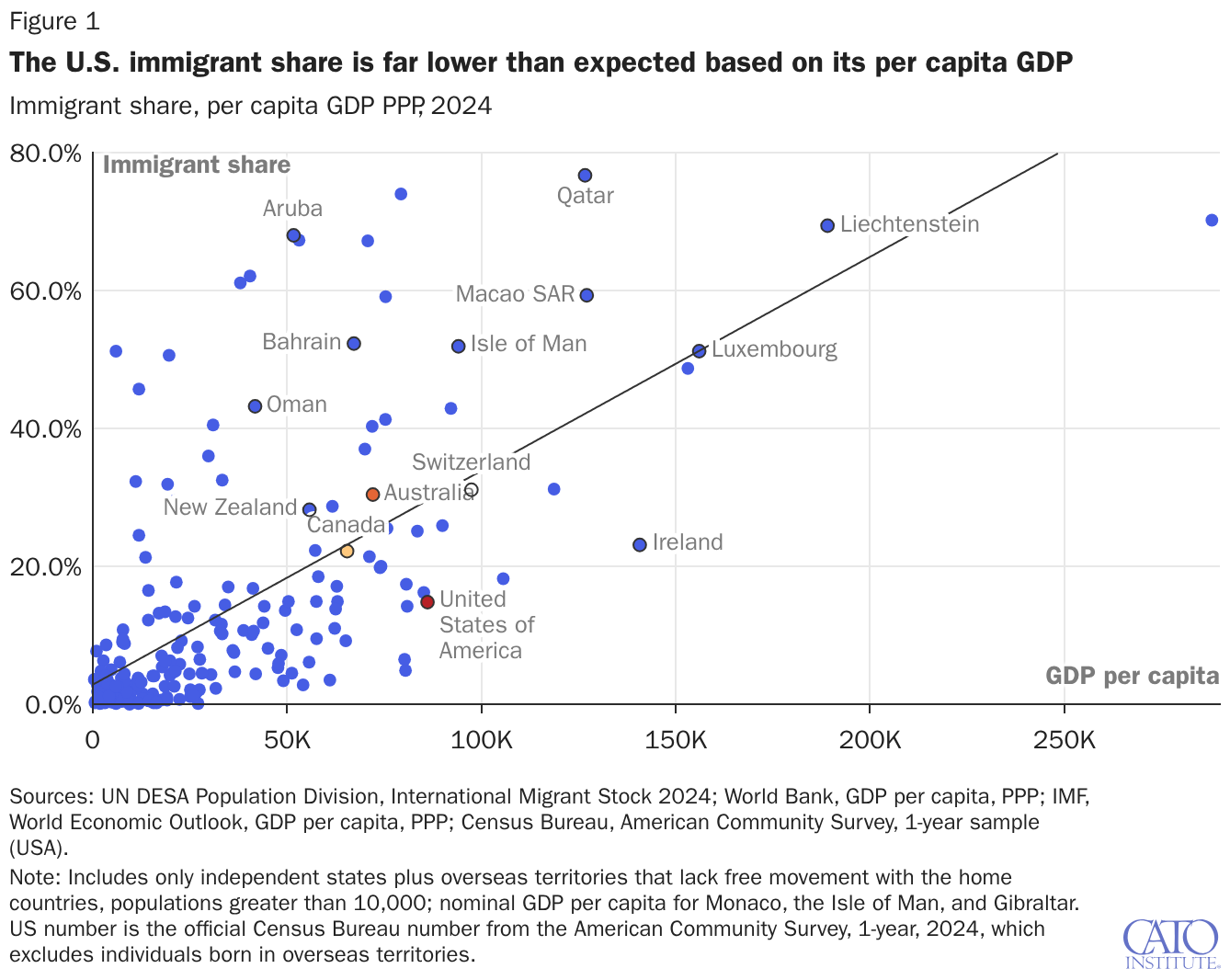
This analysis includes countries with populations greater than 10,000—defined to include all independent countries plus territories without free movement with their home country. The US immigrant share in the UN data (15.2 percent) includes Puerto Ricans and other natural-born citizens born in overseas territories. Because these individuals are not immigrants, our analysis uses the official 14.8 percent immigrant share from the Census Bureau’s 2024 American Community Survey. US territories such as Puerto Rico and Guam are excluded because Americans can move there freely; American Samoa, which controls its own immigration, is included. The UN data also counts some people born in a country as immigrants because they do not receive citizenship (e.g., in Gulf states like Qatar).
Figure 2 shows the immigrant share in each country with GDP per capita above $50,000. It makes sense to focus on this group of countries because these are the places immigrants would naturally be most interested in reaching. Of the 51 countries, the United States sits at number 39 (24th percentile). This has fallen from the 43rd percentile in 2000, and that is with a significant assist from its unusually large illegal immigrant population. Including only legal immigrants would drop the US to 42nd of the 51 wealthiest countries. The median for the group of countries is 22.3 percent (Israel). The United States is about 33 million immigrants short of the median immigrant share for wealthy countries.
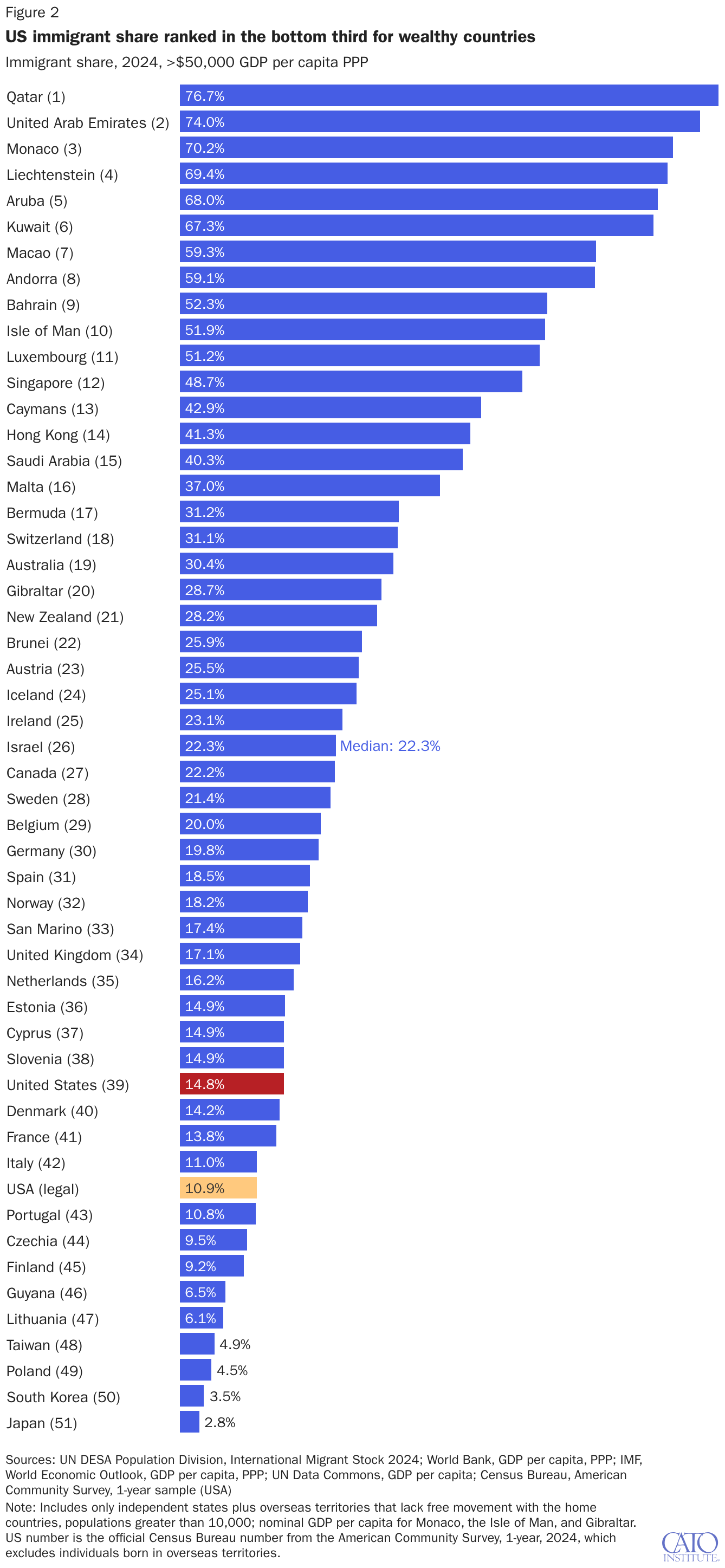
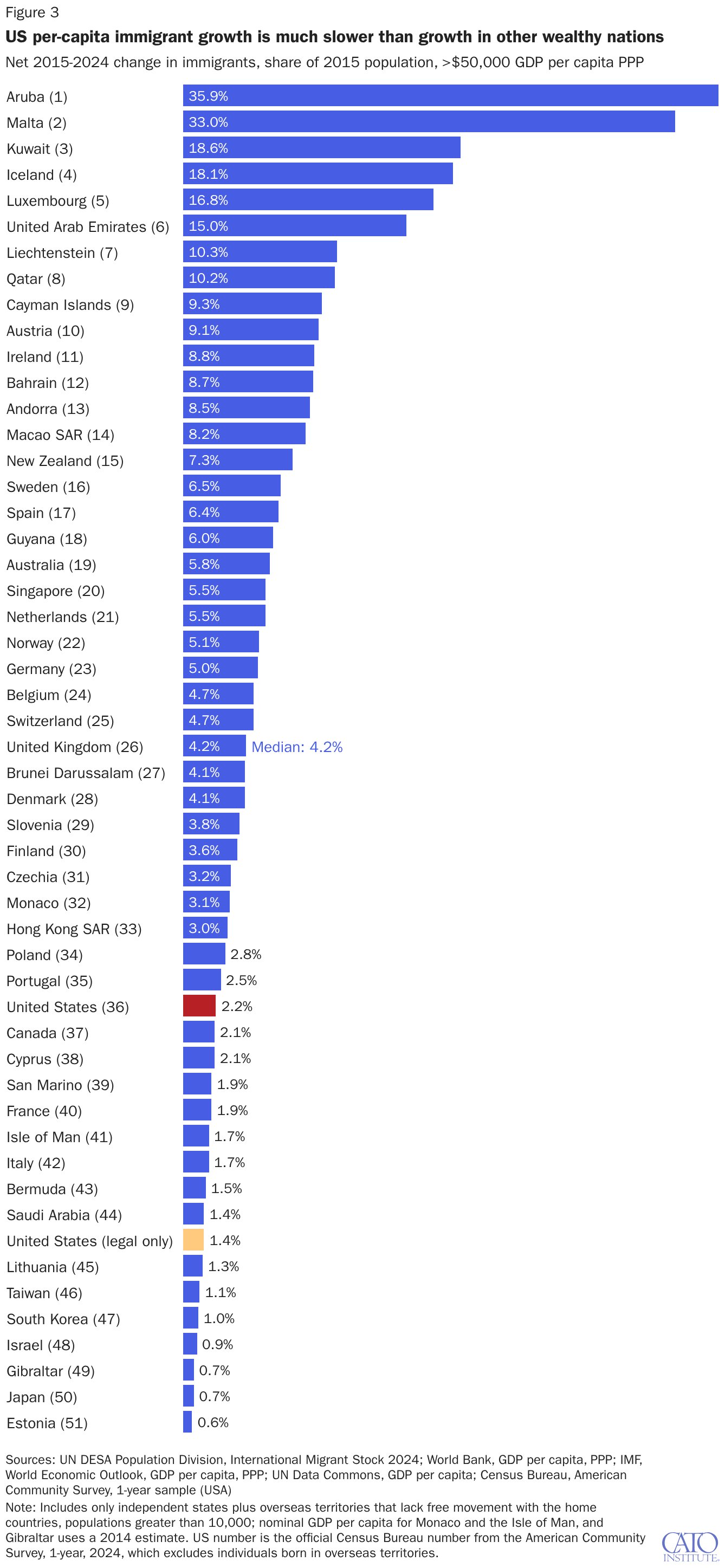
Figure 3 shows the increase in the immigrant population in each of the wealthiest countries from 2015 to 2024 as a percentage of the country’s 2015 population. Restricting the analysis to these more recent changes, the United States ranks similarly low—in the bottom third (36th, or the 29th percentile)—among the 51 wealthiest countries. The US permitted an increase in its immigrant population equal to 2.2 percent of its 2015 population. For the United States to have reached the median (United Kingdom—4.2 percent), it would have had to have allowed an increase of about 13.6 million immigrants, compared to the 7.1 million it actually added—nearly twice as many.
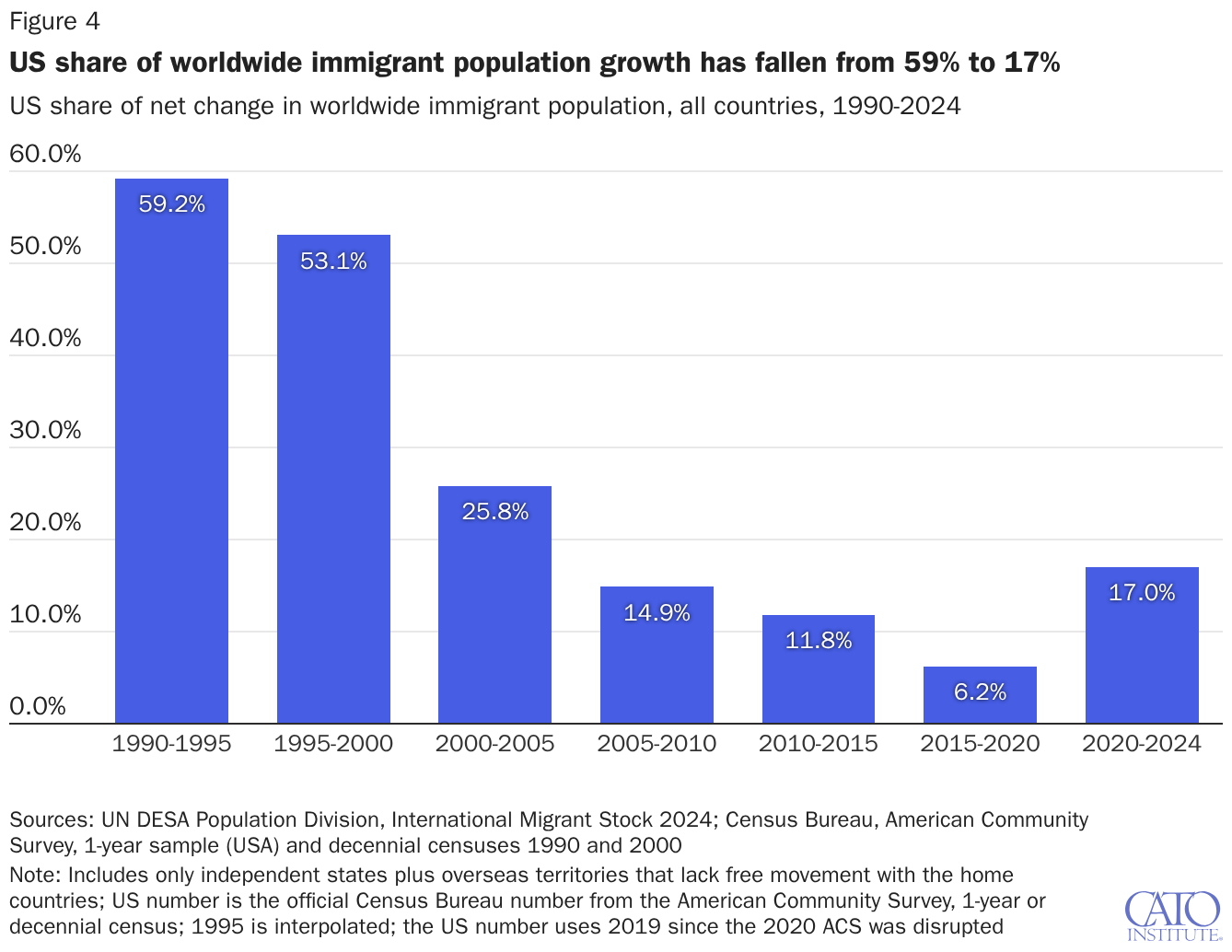
Another way to visualize the United States falling behind in the global competition for labor is in Figure 4: the share of the increase in immigrants across all countries that went to the United States. From 1995 to 2000, the United States accounted for more than half (53 percent) of the net increase in the immigrant population. From 2015 to 2020, the US percentage had dropped to 6 percent before recovering to 17 percent from 2020 to 2024—still far below its late-1990s level. Overall, immigrants are becoming much more likely to choose other countries rather than the United States. Other countries are expanding immigration opportunities, while the United States has kept the same basic immigration law with the same outdated caps since 1990.
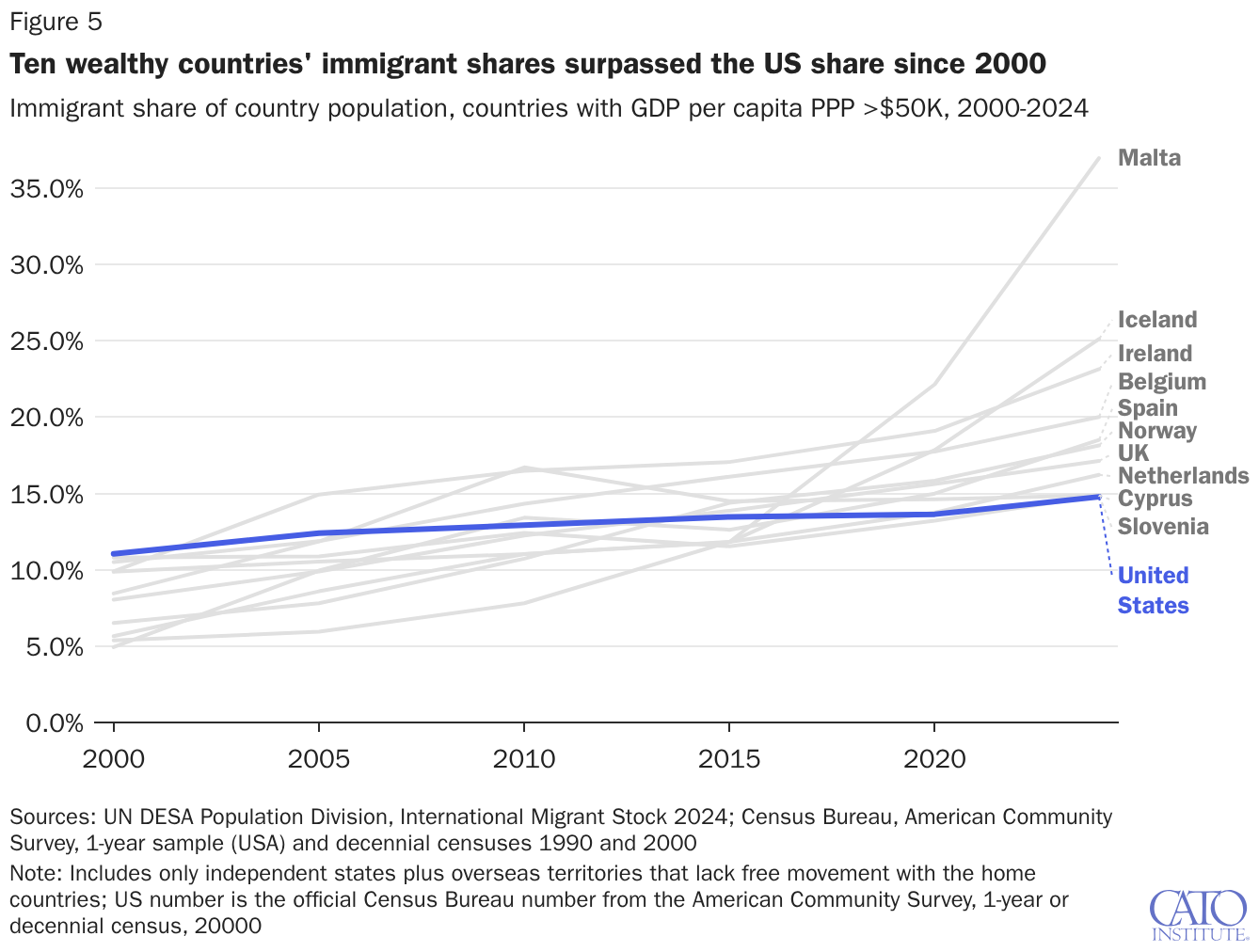
For instance, Figure 5 focuses on the ten wealthy countries that have surpassed the United States in immigrant share since 2000. This group includes Malta, Iceland, Ireland, Belgium, Spain, Norway, the United Kingdom, the Netherlands, Cyprus, and Slovenia. All ten started the period below the United States, but by 2024 each one had passed it. From 2000 to 2024, their immigrant shares rose by 12.5 percentage points on average, from as little as 4 points in Slovenia to 32 points in Malta, while the US share rose by only 3.7 points (from 11.1 to 14.8 percent). They are rapidly expanding their immigrant shares by attracting a wide variety of immigrants—asylum seekers, refugees, employment-based immigrants, and others.
In 2025, the US immigrant share flatlined, so these conclusions will likely continue to hold. In 2026, the immigrant share is likely to fall.
If the United States wants to stay competitive, it should end President Trump’s arbitrary bans on legal immigrants and create more ways to legally immigrate here. It should start by eliminating the caps on employment-based immigrants already in the United States seeking adjustment to legal permanent residence. It makes no sense to count these immigrants who are usually already employed on a temporary work visa against the cap (particularly if they were already counted against a temporary work visa cap). Congress should also reform its outdated immigration categories and processes that can take over three years.
The new members of Congress have a historic opportunity to reform the outdated legal immigration system and make the United States competitive for talented and hard-working immigrants again.

