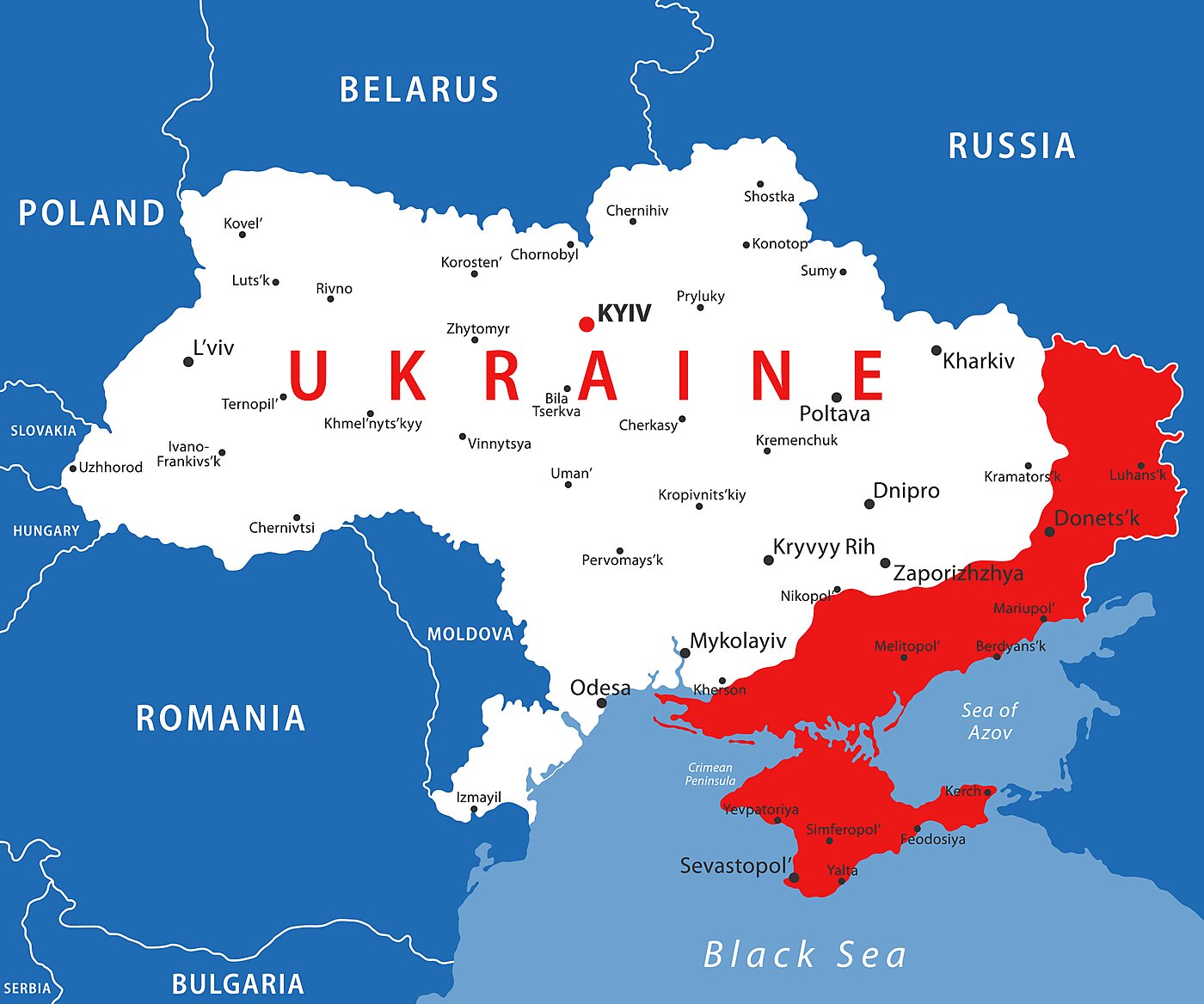
Negotiations to end the war in Ukraine are bogged down on the same issues that have bogged them down for years: territory and security guarantees. Kyiv is clinging tightly to the demand for US security guarantees. Yesterday, Ukrainian President Volodymyr Zelensky tweeted that
it is essential that this document on security guarantees provides concrete answers to what concerns Ukrainians the most: what actions partners will take if Russia decides to launch its aggression again.
President Trump should tell Zelensky—again—that this isn’t going to happen.
First, Zelensky’s demand that various partners specify what actions they will take if Russia attacks Ukraine again is far more than the Washington Treaty commits the United States to do. The Europeans in the 1940s wanted the Americans to commit to doing specific things in the event of a Russian attack. The Americans, both to get the treaty through Congress and to preserve their freedom of action, said no. The result was a treaty that did specify an attack on one member would be treated as an attack on all, but that each member would respond by taking “such action as it deems necessary, including the use of armed force, to restore and maintain the security of the North Atlantic area.”
Further, in deference to American sensibilities at the time, the treaty specified that its “provisions [would be] carried out by the Parties in accordance with their respective constitutional processes.” (This was back in an era when Congress was more jealous of its role in matters of war and peace.)
So Kyiv is asking for something not just equivalent to NATO membership—it’s asking for something beyond NATO membership. This is certain to be a red line for Moscow, but it should also be for the United States, albeit for different reasons.
As Joshua Shifrinson and I pointed out in Foreign Affairs in 2023, giving Ukraine security guarantees would commit the United States on paper to do something clearly not in its interest: Fight a war against Russia on its border to pry Ukraine out of its sphere of influence. If you had told George Kennan or Dwight Eisenhower that we were considering war with Russia for those ends, either would have told you to have your head examined.
Further, such a commitment would be inherently noncredible. Joe Biden declined to defend Ukraine after Russia invaded on the grounds, as he put it repeatedly, that doing so would amount to “World War III.” President Trump, on the All-In Podcast, responded in the affirmative to the question of whether he would “guarantee that no matter what, you’re not going to put American boots on the ground in Ukraine.”
So you have two American presidents, from different political parties, who have revealed, amid an actual invasion of Ukraine, that they do not view the United States as having interests in Ukraine worth fighting Russia over ourselves. This makes a paper commitment to do just that at some point in the future inherently non-credible.
It would further risk turning NATO and the transatlantic alliance more generally into a tiered alliance, in which Washington has commitments to all kinds of states, some of which are more meaningful than others. This could lead Russia to start questioning which commitments were more like those made to the original 11 members and which were more like the ones given to Ukraine.
Kyiv clearly wants security guarantees, or at a minimum, something it can market at home as being “security guarantees,” as a condition for ending the war. The Trump administration has said repeatedly that it will not offer Ukraine anything deserving of the term “security guarantees.” In the negotiations surrounding the minerals deal, for example, Trump remarked, “I’m not going to make security guarantees, but we’re going to make sure everything goes well.”
Trump should continue to be clear with the Ukrainians: The United States will not provide Ukraine with security guarantees, nor will it back a “tripwire force” manned by the so-called “Coalition of the Willing,” should they resurrect the idea. We can’t blame the Ukrainians for continuing to ask, but they can’t blame us for continuing to decline.
