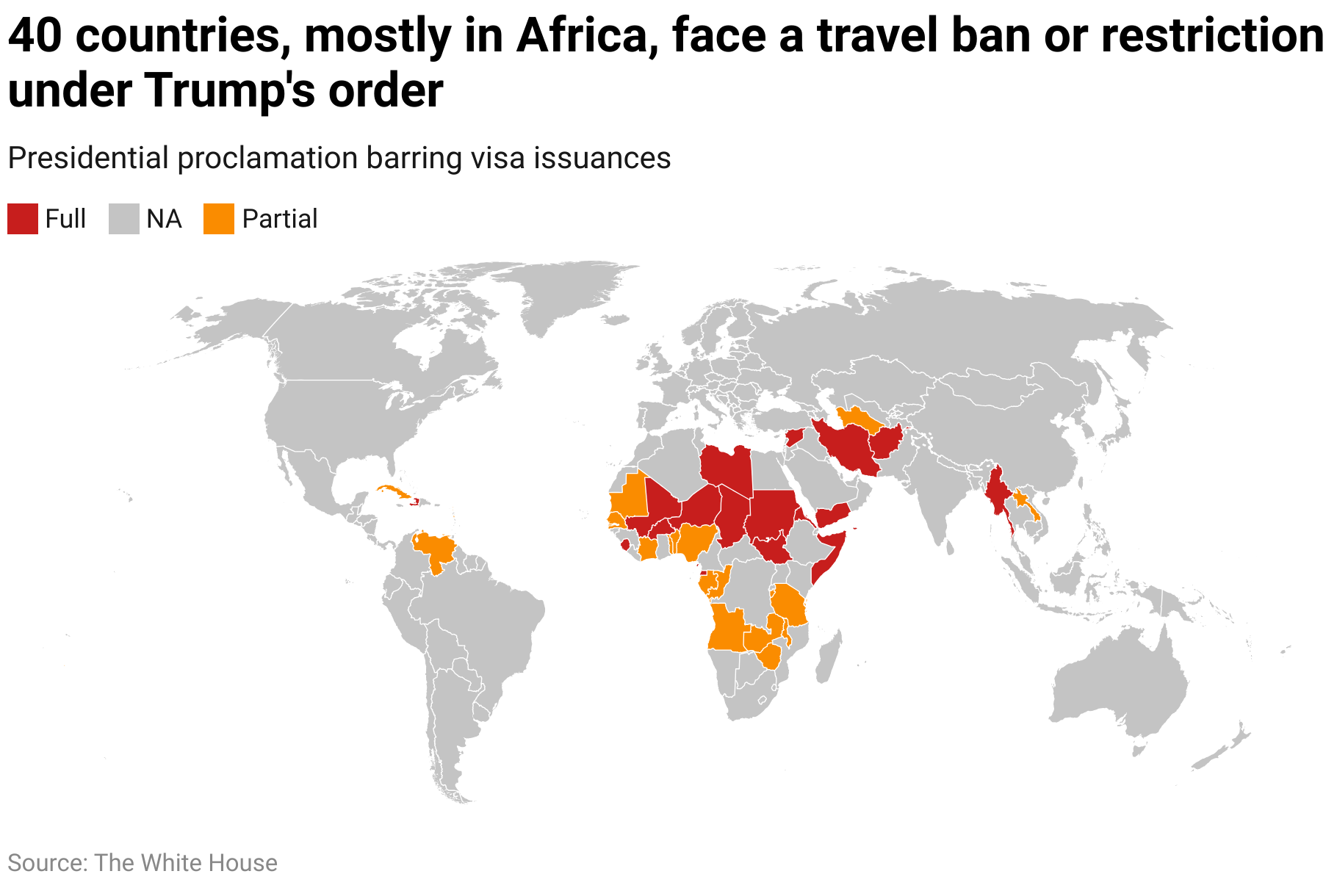
President Trump signed a new proclamation that bans nearly all legal immigration from about 40 countries, covering about one in five legal immigrants from abroad and nearly 400,000 legal immigrants over three years. Although it exempts some foreign workers and travelers from certain countries, this ban does not include any categorical exemption or waiver for spouses, minor children, or parents of US citizens or legal permanent residents, making it far harsher than his prior bans.
Although the proclamation divides countries into either “full” or “partial” ban categories, this is only relevant for nonimmigrant or temporary visas. With only very minor exceptions, all permanent immigration from these countries is banned.
The ban repudiates the immigration system Congress created. The Trump administration is reimposing via executive order the national origins system that governed immigration policy from 1924 to 1965. After four decades of rigorous debate, Congress ended that system. In the Immigration Act of 1965, it allocated the caps on immigrant visas equally between countries and prohibited discriminating against immigrant visa applicants based on their race, sex, nationality, place of birth, or place of residence.
The president primarily argues that there is no way to vet immigrants from these countries. As I’ve detailed, however, Congress considered and rejected this argument in favor of continued discrimination. Moreover, the United States obviously has much more resources and capabilities to vet legal immigrants from these countries than it did in the 1960s. Of course, the president fails to provide any evidence that security vetting is less effective for nationals of these countries.
Every immigrant from these countries has the burden of proof to demonstrate their eligibility for an immigrant visa. If they fail to meet their burden, the current law requires that they be denied. This presidential proclamation only rejects those who can demonstrate to the satisfaction of this administration’s bureaucrats that they are who they say that they are and that they are not a national security threat—exactly what the opponents of discrimination argued in 1965.
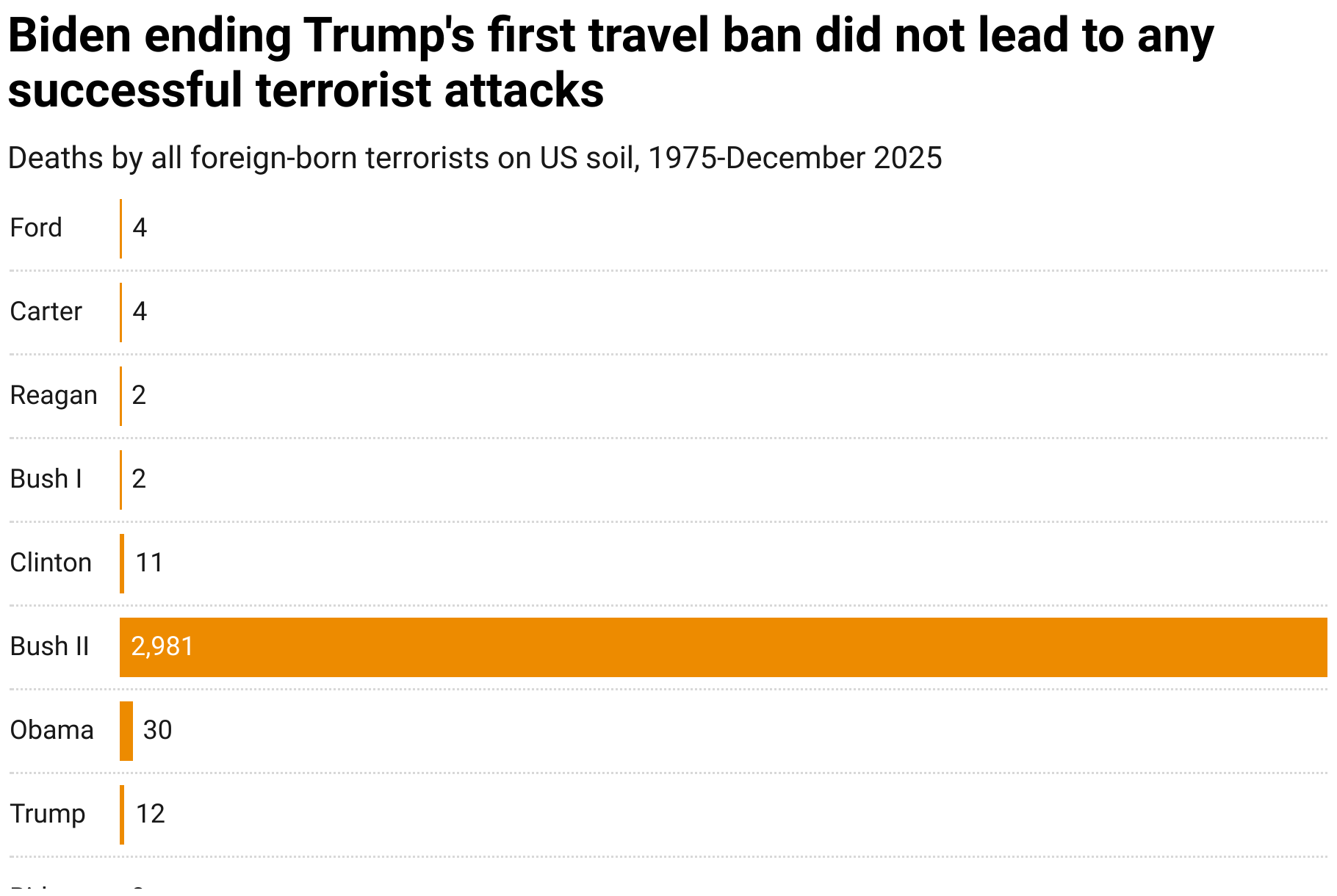
Unfortunately, the Supreme Court made a challenge even to this extreme repudiation of a core legal principle of the immigration system much more difficult. In 2018, the Court upheld the first Trump administration’s so-called “Muslim ban,” which affected immigrants from six countries. This ban is far more extreme, but as I warned at the time, the Court’s decision does not indicate a limiting principle on the president’s power to ban immigrants unilaterally. Despite the assertions that the ban was needed to prevent terrorist attacks, the repeal under the Biden administration of Trump’s original ban resulted in no terrorist attacks.
The Immigrants Targeted
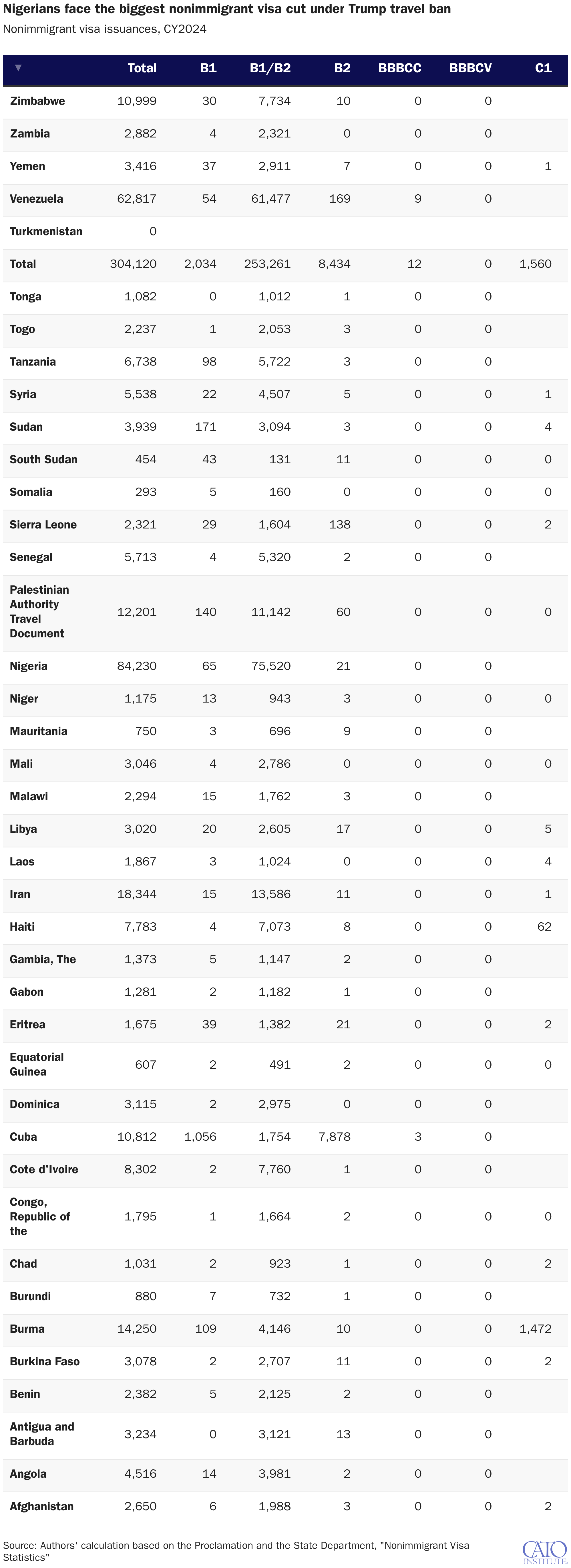
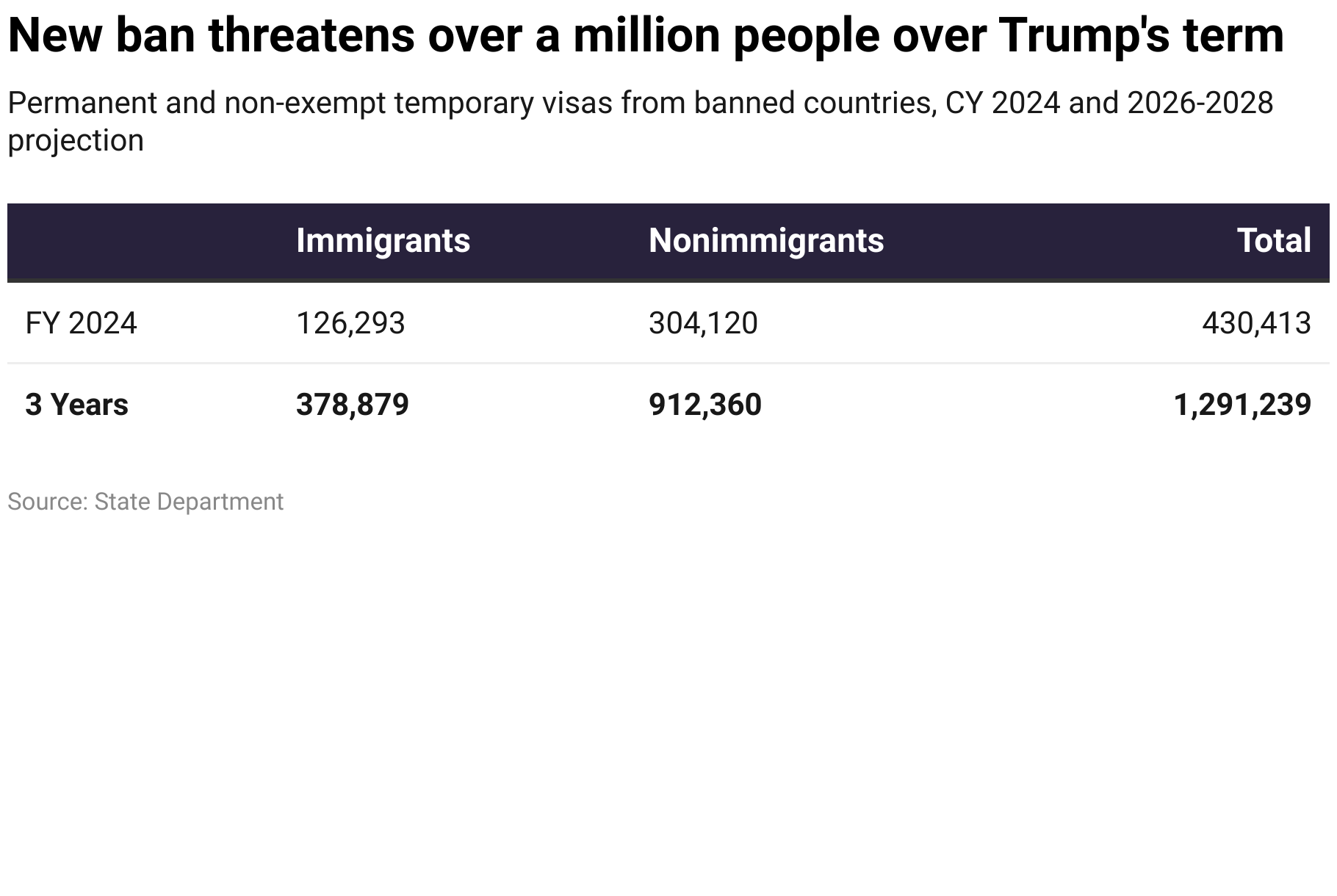
Over the next three years, 400,000 legal immigrants and nearly 1 million tourists, business travelers, international students, foreign workers, and other temporary visitors will face this ban.
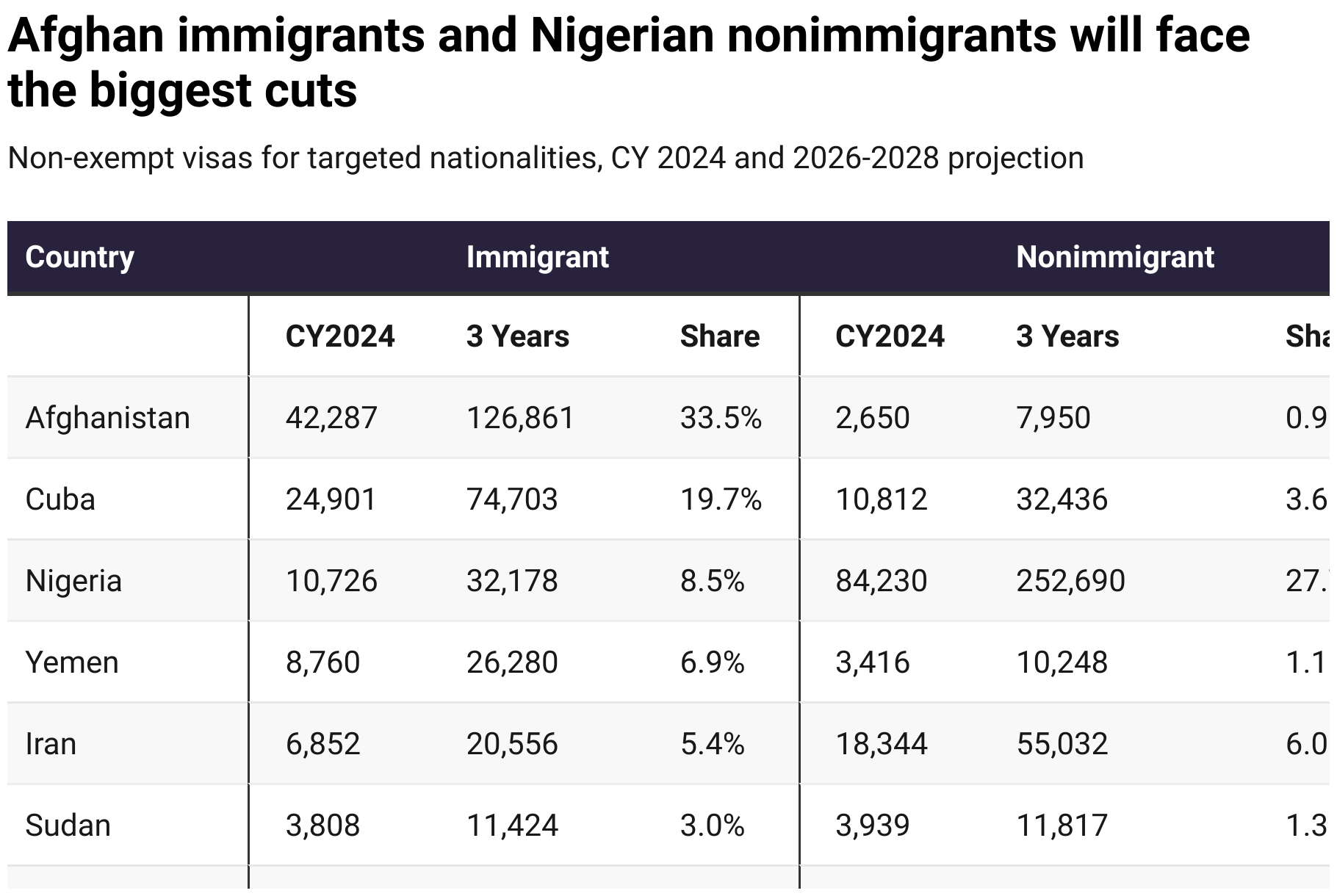
The table below lists the nationalities targeted under the ban. Afghans (34 percent of the total legal permanent immigrants) and Cubans (20 percent) will account for the majority of permanent legal immigrants barred under the proclamation. Nigerian and Venezuelan non-immigrants will account for nearly half of the temporary visitors barred.
Overall, one in five (19 percent) of all legal permanent immigrant visas would be affected by the ban. That includes 33 percent of African immigrants and 42 percent of legal immigrants from majority Muslim countries.
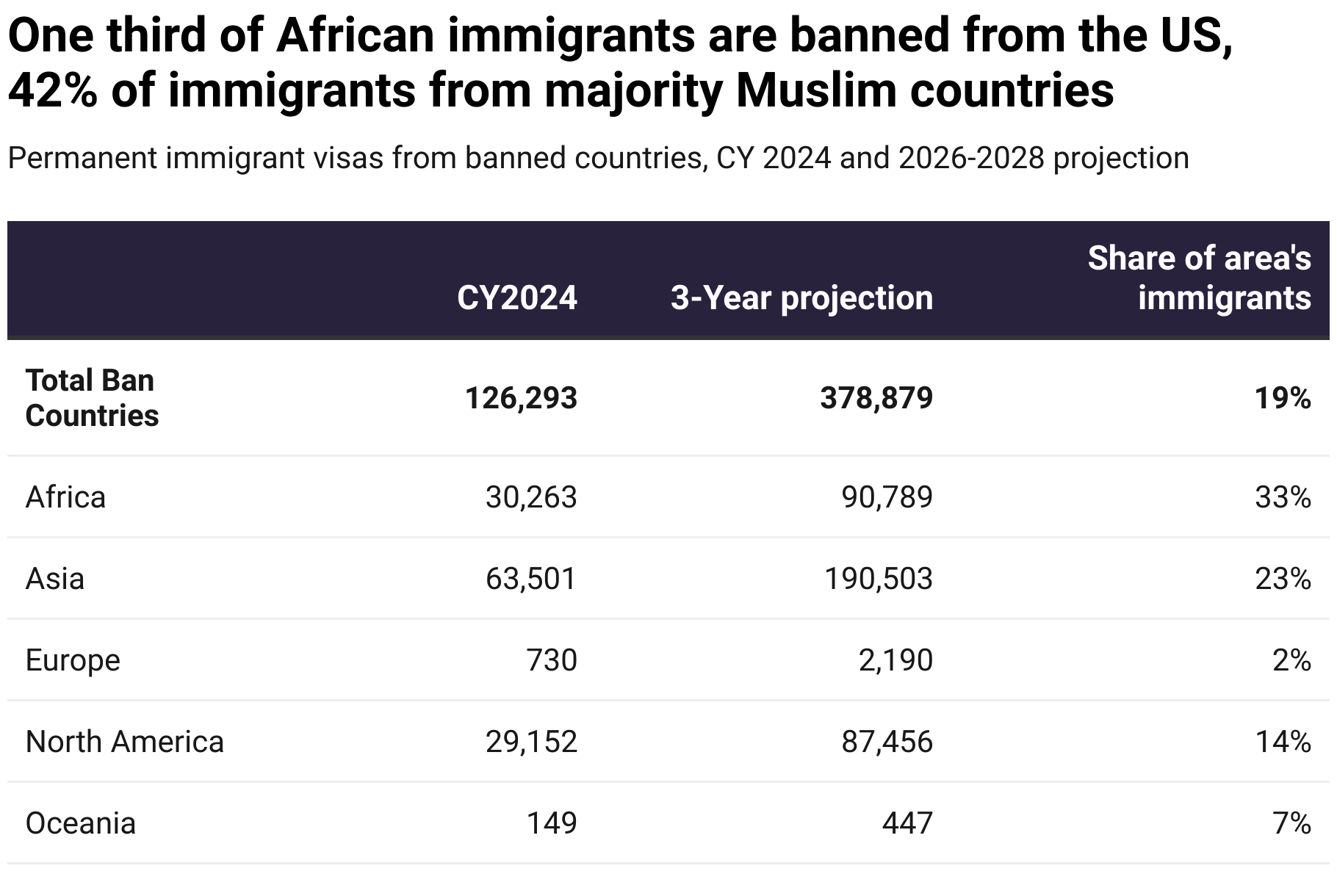
Among permanent immigrants, over 140,000 over the next three years will be fiancés, spouses, and minor children of US citizens and legal permanent residents—nearly 76 percent, or almost 90,000, of whom will be spouses and minor children of US citizens. Nearly one in five legal immigrants barred by the ban would fit into this category for US citizens.
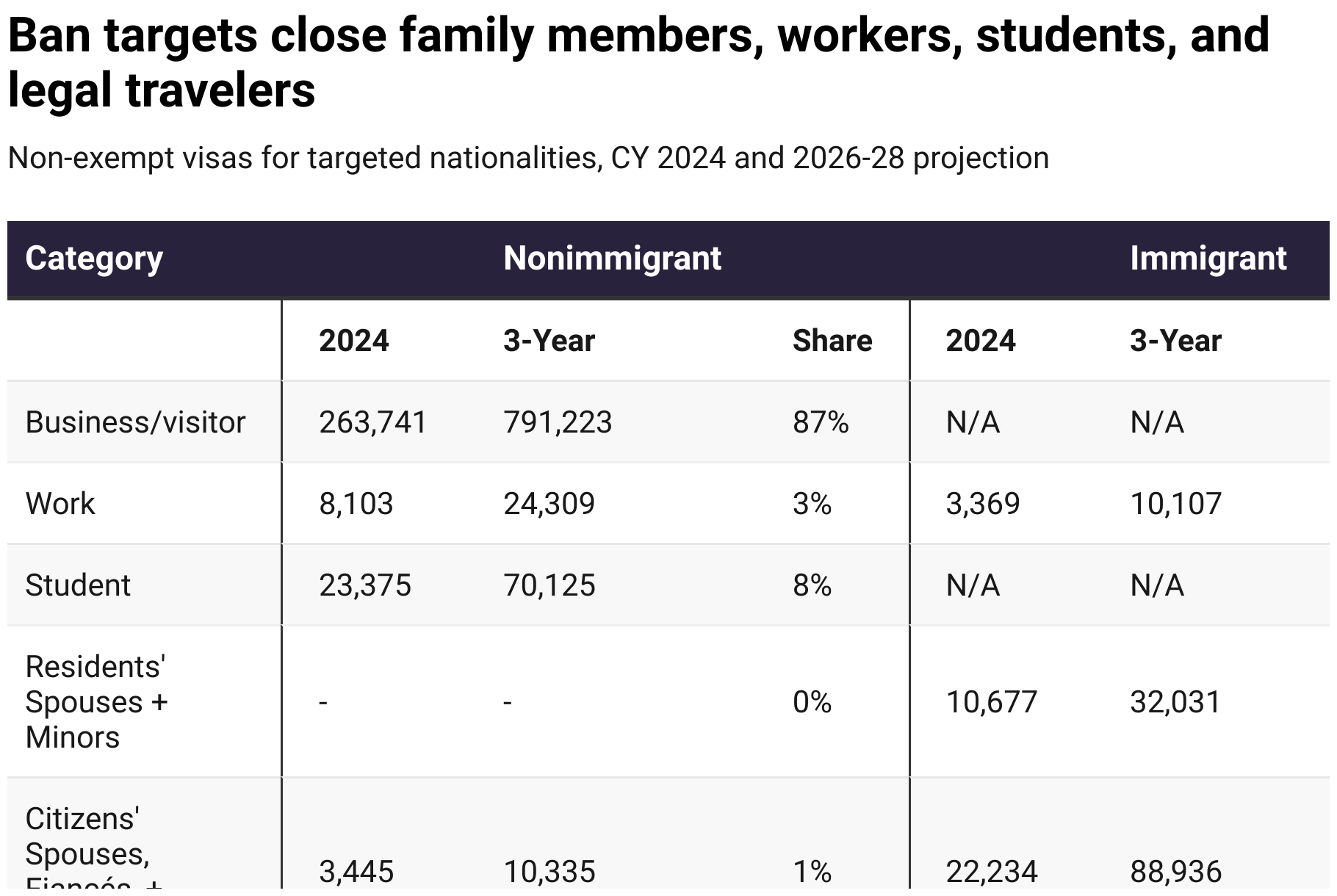
Exemptions are allowed for certain immigrants, including current legal permanent residents and anyone currently inside the US, among several other categories. There is a “national interest” exception, but the June 2025 ban had the same exception, but had no process to apply for it. Moreover, the exemption for people currently inside the United States may not matter because the Department of Homeland Security already announced that it will throttle applications from the 19 nationalities targeted under an earlier version of this ban (imposed in June).
Another exemption applies to athletic team members for major sporting events. This exemption is necessary because the United States is hosting the World Cup (2026) and Olympics (2028), but the failure to include fans in the exemption is a direct violation of the promises made by the US (during the first Trump administration) when it won the right to host these games. In his 2018 letter to FIFA requesting to host the World Cup, Trump said, “all eligible athletes, officials, and fans from all countries around the world would be able to enter the United States without discrimination.”
In March, the US chairman of the 2028 Olympics organizing committee said: “America will be open and accepting to all 209 countries for the Olympics…. We will welcome the people from the around the world.” The United States has proven itself an unreliable actor, jeopardizing these opportunities in the future.
The Flimsy Justification
The primary justification for this unprecedented restriction on legal immigration is that it is not possible to screen immigrants from these countries effectively because their governments do not share sufficient information about them. Therefore, the US must adopt this ban to “protect its citizens from terrorist attacks and other national security and public safety threats,” reads the proclamation.
1. Current law already addresses cases of insufficient information. Every immigrant visa applicant has the burden of proof to demonstrate that they qualify for a visa. If they are unable to prove who they are and their eligibility for the visa, they are already banned. The only people who get visas from these countries are people whose backgrounds are carefully documented for the US government. Consular officers denied 55 percent of B visas for business travelers and other visitors in FY 2024 for immigrants, compared to about 25 percent for the rest of the world. It is shocking that President Trump would claim that consular officers are not doing their jobs without any evidence.
2. The actual policy undermines the claim that this is about foreign government information sharing and a lack of information on applicants:
- The ban applies to nationals living outside the targeted country. However, the president implies at different points that this is a ban on travel “from” these places. It is not a place-based ban. This is a nationality-based restriction. Nothing exempts a national from one of these countries from these restrictions if they have never lived under the government, which Trump says does not provide the requisite information. For instance, Iranians acquire Iranian citizenship through their fathers, whether they were born in Iran or not. Most countries outside the Western Hemisphere do not have birthright citizenship, so those born abroad would not necessarily receive citizenship of their country of birth.
- The ban applies to nationals with travel histories to developed countries, including the United States. The ban also applies to individuals with extensive travel histories worldwide, including those in the United States. Only current visa holders are exempt. People who spent considerable time in the United States are not. Most immigrants to the United States have spent time outside their birth country, and this policy’s refusal to account for that demonstrates that it wants to exclude people regardless of their background. According to the United Nations, approximately 66 million nationals from these countries reside outside their home country.
3. The president provides no evidence connecting these nationalities to any threats, past or current.
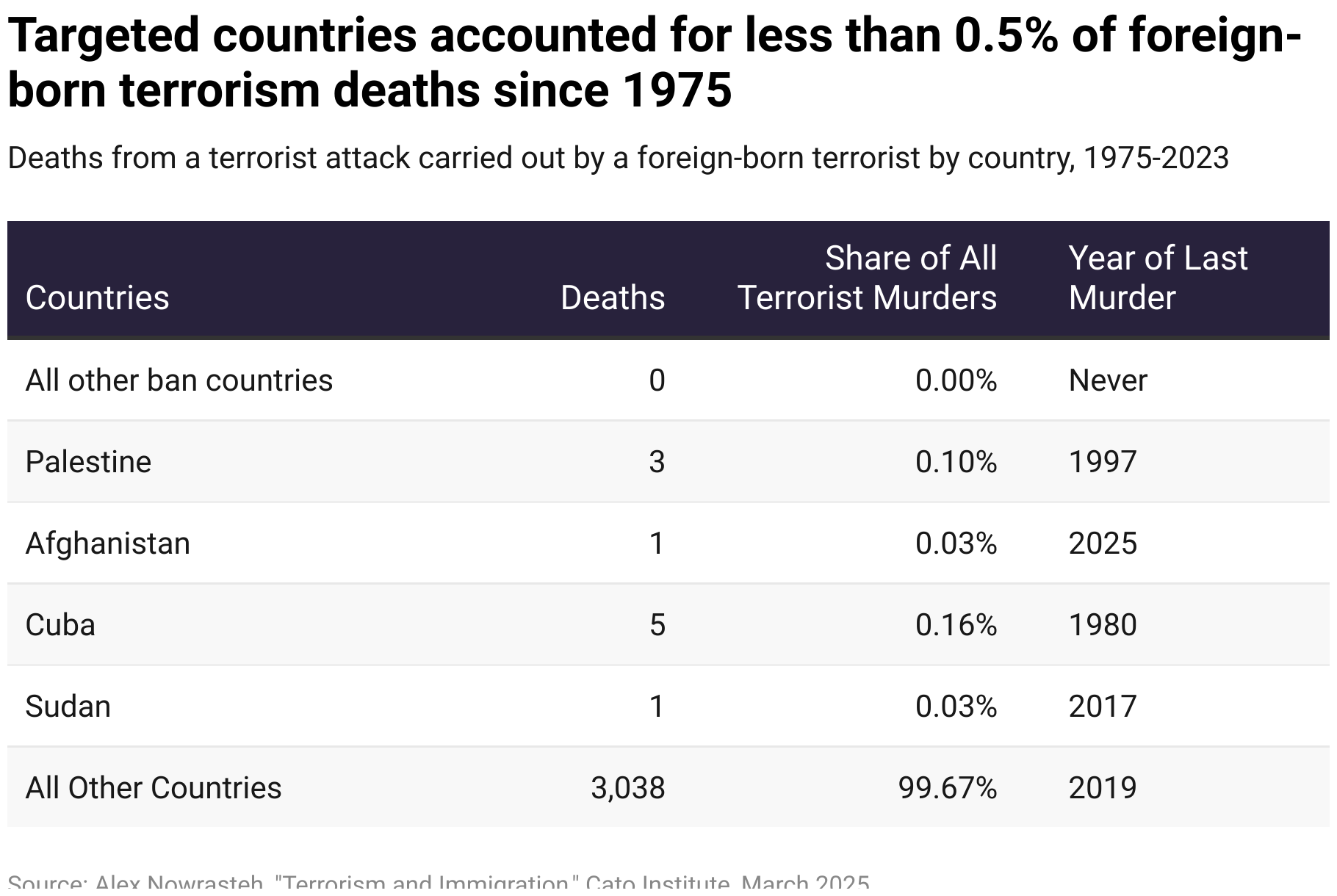
4. The evidence shows this ban isn’t targeting security threats. Based on Alex Nowrasteh’s extensive research on the backgrounds of foreign-born terrorists, we can say that nationals from the fully and partially banned countries account for just 0.3 percent of all foreign-born terrorist deaths in the last 50 years, with only one such death in the last 27 years. They account for a vanishingly small percentage of murders of any type during that period.
5. Getting rid of the last travel ban did not result in terrorist attacks. Trump has said that his previous ban prevented attacks, but there were no attacks by the eight nationalities targeted by the last ban. And when President Biden correctly ended those bans, there were no attacks, proving that the entire premise was false. In fact, throughout President Biden’s administration, there were no deadly foreign-born terrorist attacks for the first time for any administration since 1975. The two immigrants who killed people in terrorist attacks during President Trump’s second term in office would not have been excluded under that ban.
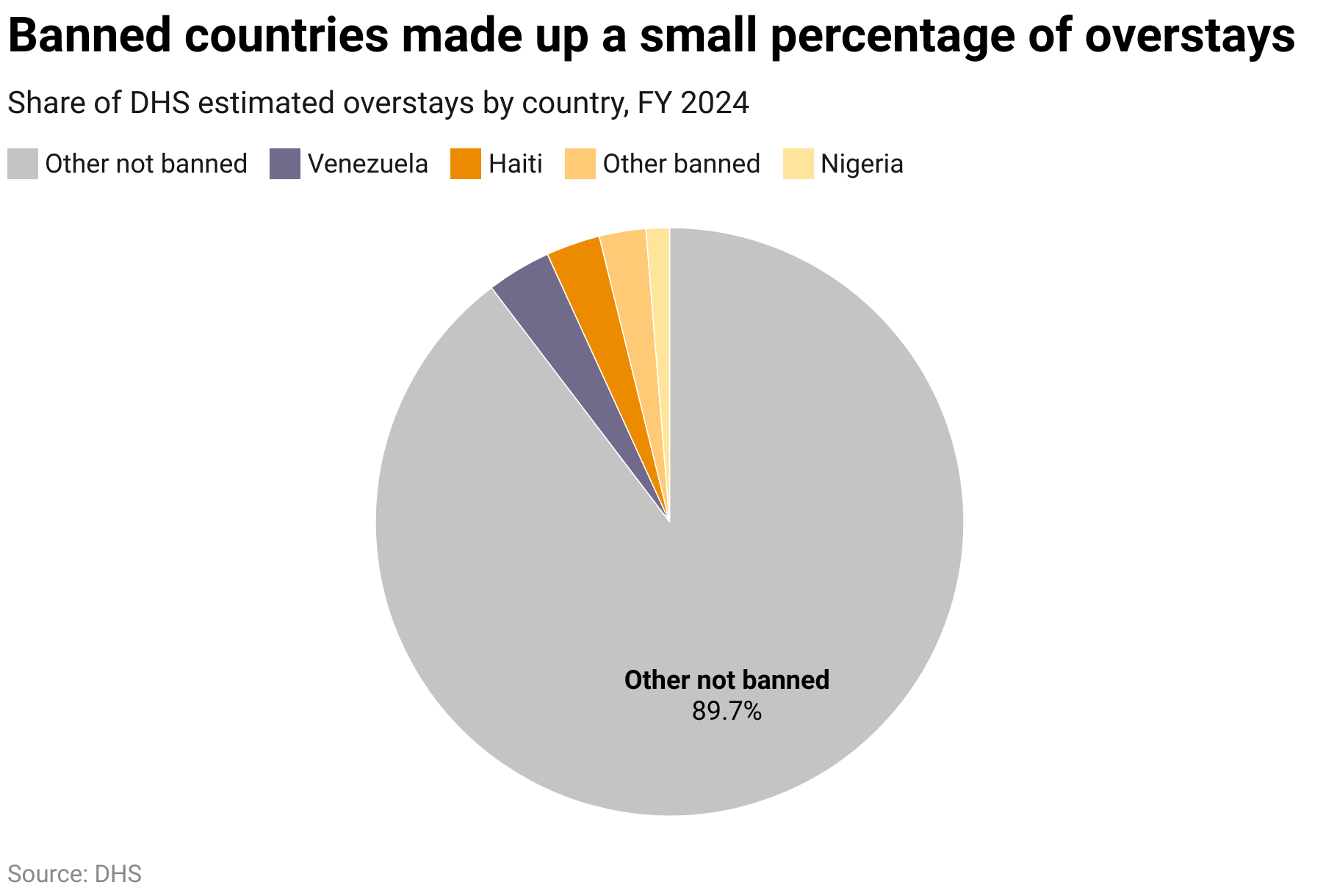
6. Visa overstays don’t justify the ban. The proclamation discusses visa overstay rates based on the Department of Homeland Security’s Visa Overstay Report. The data on which the proclamation relies is both old and unreliable. The overstay rates it uses are two years out of date, and the department’s overstay report has repeatedly been shown not to accurately reflect the actual number of visa overstays. This is because the government does a poor job of tracking temporary visitors when they leave the country or apply for a new status, leading to inflated counts of overstays. In any case, overstays do not demonstrate any unique security threat from these countries. President Trump says that the ban is necessary because of visa overstays and terrorist attacks, but no visa overstays from these countries have killed anyone in a terrorist attack in the last half-century. Moreover, all 40 countries are facing immigrant visa bans for permanent residents. It makes no sense to cite overstays as justification for this ban on all legal immigration.
7. The exceptions undermine the purported justification for the ban.
- Delayed effective date: Between December 16 and January 1, the government will continue to vet and issue visas under regular protocols as if nothing unusual is happening. How can the administration possibly justify delaying this supposedly crucial policy that is necessary to save American lives? It can’t. It obviously does not believe its own statements that there is a serious threat here.
- Exemption for current visa holders: The government graciously exempts all current visa holders from the ban. That is certainly better than the alternative, but it demonstrates that the government does not really believe that these visas were issued improperly to security threats. These people will be able to travel to the United States as if people from these countries aren’t actual threats.
- Exemption for foreign government officials: After spending pages talking about how these foreign governments are such an enormous problem, can’t vet their own people, and participate in terrorism, the president proceeds to exempt all officials from these countries from the ban. How does this make sense? It is worth noting that before the two attacks this year, the last deadly terrorist attack in the United States happened in 2019 under President Trump by someone entering on a diplomatic visa from Saudi Arabia. Trump had let them in to undergo training as part of an arms shipment to one of the world’s most evil governments. The irony is that under Trump, the persecutors get visas, while their persecuted people get bans.
Despite what President Trump believes, immigrants from these countries do contribute to a safer and more prosperous America.