
Over the long run, global inequality has declined dramatically across many dimensions as living standards have improved. While a substantial reduction in worldwide inequality occurred between 1990 and 2021, the last two years in that range reveal far slower progress, reflecting pandemic-era stagnation. These findings underscore the vital role of undisturbed markets in sustaining the trajectory of human progress, as well as the vulnerability of political liberty in times of perceived crisis. The Inequality of Human Progress Index reveals that pandemic-driven shocks to the global economy slowed advances, halting the momentum of earlier growth across many measures of human well-being and stalling progress toward the world becoming better off and more equal.
Still, long-run global progress has been more substantial and widely shared than previously recognized. These findings challenge popular narratives of rising global inequality. Such views have inspired calls for unprecedented interventions, including global wealth taxes, expanded foreign aid programs, and massive redistributive policies—proposals that would be counterproductive to the continuation of broadly shared human advancement.
Introduction
The Inequality of Human Progress Index (IHPI) and the Human Progress Index (HPI) introduced in our previous analysis demonstrated that global inequality in well-being has declined substantially across multiple dimensions since 1990.1 By first measuring human progress across eight distinct indicators—lifespan, infant mortality, nutrition, environmental safety, education, internet access, income, and political freedom—the IHPI can then measure inequality in human progress and reveal a more comprehensive picture of the distribution of global progress than traditional measures that are focused solely on income inequality. Our findings show that improvements in human development have been widely shared rather than concentrated among a small group of countries, with the poorest nations experiencing disproportionately large gains that reduced overall global inequality by many meaningful measures.
For the inaugural iteration of our index, released in 2023, we were able to calculate the HPI for 142 countries continuously from 1990 to 2018. Updating our calculations has allowed us to expand the index to cover from 1990 to 2021. The three additional years of data provide insight into a tumultuous era. Moreover, some of the underlying datasets were updated by the agencies that produced them, so the quality of some annual estimates has improved. This more extensive time span enables us to see how the COVID-19 pandemic and related disruptions affected the pace of global progress, as well as how the pandemic affected the distribution of that progress. In this paper, we offer a clear picture of global inequality to inform policy discussions and provide a fuller and more accurate view of inequality than conversations focused on monetary inequality alone. Accurately assessing the extent and trajectory of global inequality is crucial because beliefs about inequality and whether it is growing shape public policy.
Inequality Concerns and Their Consequences
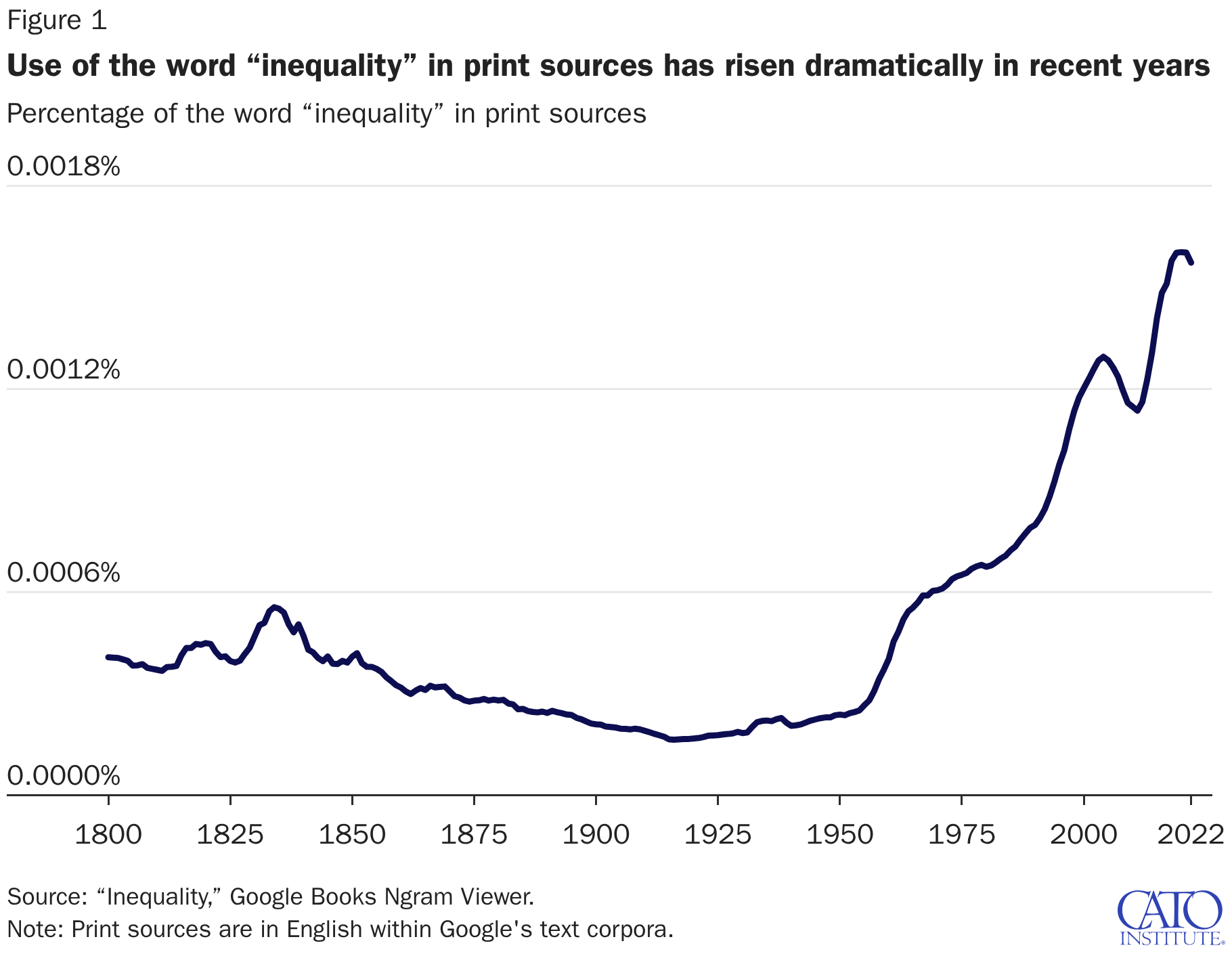
Most discussions of inequality focus narrowly on income and wealth, overlooking the broader picture across other dimensions. In addition, evidence suggests that worries about inequality have grown over the decades: Google’s Ngram Viewer shows a significant rise in the use of the word “inequality” in English-language printed sources beginning around 1955 (see Figure 1). Inequality concerns and misapprehensions about the direction of inequality trends can have real-world consequences, as they often inspire calls for large-scale, government-mandated redistribution of resources through various policies.
Calls for a worldwide wealth tax, for example, have gained steam, bolstered by concerns about allegedly rising inequality. “With inequality increasing, taxing the rich is high on the agenda” begins an August 2025 article summarizing recent public opinion polling on the topic. The author suggests that more than 90 percent of the population in the United Kingdom, Spain, and France support increased taxation on the so-called “super-rich.”2
A May 2025 article in Financial Times titled “Meet the Insurgent Economists Promoting a Global Wealth Tax,” profiled the growing movement, with its intellectual headquarters at the Paris School of Economics, to have the world’s billionaires pay at least 2 percent of their net worth each year to combat worldwide inequality. The author claimed that surveys show “broad public support” for this unprecedented redistribution mandate.3 The advocates of a global wealth tax also support higher taxes on capital gains and inheritances as intermediate measures.
A plan presented by the governments of Spain, Brazil, and South Africa at the United Nations’ Fourth International Conference on Financing for Development in 2025 “aims to create coordination between governments on the taxation of high-net-worth individuals” to counteract global inequality.4 Those “governments are calling on others to join a drive for a fairer, more progressive global tax system. They point to a stark reality: the wealthiest one per cent of the global population owns more than 95 per cent of humanity combined.”5 The governments also proposed the creation of a global wealth registry, despite the danger to financial privacy. “We cannot tolerate the intensity of inequality, which has been increasing in recent years,” claimed José Gilberto Scandiucci, Brazil’s minister-counsellor to the United Nations. Scandiucci’s remarks made it plain that the proposal was inspired by the belief that global inequality is on the rise. Echoing that sentiment, a July 2025 editorial in The Guardian on global inequality claimed that “taxes on wealth are necessary to make societies more equal.”6
The problems with a global wealth tax extend well beyond financial privacy concerns. Many of the countries that have implemented a national wealth tax in the past—such as Austria, Denmark, Finland, France, Germany, Iceland, Ireland, Italy, Luxembourg, the Netherlands, and Sweden—later abolished the tax for good reason.7 Wealth taxes are frequently abandoned due to low revenue production, high administrative costs, enforcement challenges, and capital flight, among other problems. In Norway, for example, an increase in the national wealth tax led to around 80 percent of affluent Norwegian business owners moving to Switzerland, in what The Guardian called a “flood moving abroad.”8 Research finds that a 1 percentage point reduction in the wealth tax rate led to a 60 percent rise in average taxable wealth in a Norwegian municipality.9 A global wealth tax would pose less risk of capital flight, but it would still be fraught with other challenges.
Wealth taxes can also result in questionable double or triple taxation, as wealth is often amassed through income and capital gains that have already been taxed. Because the base of wealth taxes is net wealth and debt is deductible, such taxes also encourage extensive borrowing. Perhaps most concerningly, taxing wealth discourages both savings and risk-taking, ultimately dampening investment and economic growth in rich and poor countries alike.10 These economic impacts suggest that a global wealth tax would likely prove devastating to poor countries’ development.
Global inequality concerns create increased support for ineffective foreign aid programs. In August 2025, the “Our World in Data” project, affiliated with the University of Oxford, ran a piece arguing that combatting global inequality requires “global redistribution through government foreign aid,” with rich countries ideally giving at least 0.15 percent of their national income to poor countries, which is in line with stated UN targets.11 While some note that advances in artificial intelligence (AI) could supercharge development and decrease both poverty and inequality, others fear that AI could contribute to greater inequality between countries. This has prompted United Nations Development Programme (UNDP) scholars and others to recommend targeted aid to preempt such risks.12 “AI Could Affect 40 Percent of Jobs and Widen Inequality Between Nations, UN Warns” reads a representative headline, and the United Nations now advocates heightened international aid in the form of a “global AI fund.”13 However, substantial evidence indicates that foreign aid repeatedly fails to achieve its intended objective of promoting development and shows no clear link between the amount of aid received and a nation’s economic growth.14 Moreover, a focus on foreign aid often distracts from the reforms needed to create a national environment genuinely conducive to development, with research suggesting that foreign aid may harm a country’s political institutions and slow democratization.15
The World Inequality Database—a project funded by the European Union, among other entities, and cofounded by the inequality-focused economist Thomas Piketty—published a paper in May 2025 promoted with the announcement headline, “Convergence Alone Won’t Fix Global Inequality by 2050 Without Ambitious Redistribution.” The authors suggested that all countries should immediately align “both their pre-tax inequality and post-tax redistribution policies with those of the most progressive country in their region.”16 This reflects the belief that economic growth and development alone cannot bring about a convergence in living standards and that only large-scale, government-backed redistribution (whether through a wealth tax, foreign aid spending, or other measures) can counteract inequality.
Every policy carries trade-offs. Many of the sweeping, costly, and often unprecedented measures proposed to counter an alleged surge in global inequality would almost certainly produce unintended consequences. Such interventions risk bloating bureaucracies, hampering economic growth, slowing the worldwide decline of poverty, curbing innovation and technological progress, and undermining privacy, among other harms. More importantly, a clear-eyed look at global well-being reveals that these proposals rest on a flawed premise. A closer examination of global inequality trends reveals a nuanced, but overall far more optimistic picture than the popular narrative of skyrocketing inequality. Because widespread misconceptions about inequality can lead to potentially damaging policy decisions, it is vital to understand the real trends.
Pandemic-Era Disruptions
The emergence and spread of COVID-19 created an unprecedented (in modern times) natural experiment in how external shocks affect the trajectory of human progress and its distribution across countries. Understanding how the pandemic influenced global progress and inequality provides crucial insights into the resilience of developmental gains and reveals which dimensions of human progress proved most vulnerable to widespread disruption. Before analyzing the pandemic’s impact on the Inequality of Human Progress Index, we first examine how the pandemic affected other development measures and a different multidimensional development index, as well as the historical effects of other pandemics on inequality.
While the 14th-century bubonic plague pandemic (also known as, the Plague or the Black Death) is widely thought to have reduced inequality, other historical epidemics show varied outcomes. One research paper demonstrates that the response to the Plague itself was less uniform in the long term than is commonly assumed—for instance, raising incomes in some economies but lowering incomes in others.17 A study of major plagues from the Plague of Justinian (541–542) to 19th-century cholera epidemics found varying outcomes on inequality, with some past pandemics reducing poverty by, horrifically, eliminating the poor themselves.18
Such deaths are, of course, catastrophic and may mask the true extent of economic devastation wrought by pandemics. Another study indicates that between 1915 and 2017, pandemics causing more than 100,000 deaths led to reduced income inequality in subsequent years.19 But contrary to the view that plagues invariably act as societal levelers or produce equalizing effects, other research suggests that the devastating 1918 flu pandemic led to an increase in income inequality in Spain as wages fell.20 Due to the conflicting findings from historical pandemics, the likely impact of a contemporary pandemic such as COVID-19 on inequality was not initially obvious.
The World Health Organization officially deemed the spread of COVID-19 a pandemic on March 11, 2020. The COVID-19 pandemic was characterized by high infection rates, significant lockdowns, travel restrictions, and other forceful policy responses. While vaccine access varied by country, COVID-19 vaccine access started to broaden in late 2020 and early 2021. By mid-2021, mass vaccination efforts were underway in much of the world, and restrictions began to lift. By the end of 2021, many remaining pandemic policies were removed: For example, many countries began allowing vaccinated travelers to bypass quarantine requirements.
The pandemic’s considerable disruptions affected many measures of development and well-being. The COVID-19 pandemic set the UN Human Development Index (HDI) back five years to its 2016 level.21 For the first time since the HDI’s creation in 1990, the index declined for two consecutive years (2020 and 2021). In fact, 90 percent of countries saw declines in 2020 or 2021. Economist Angus Deaton has claimed that during the pandemic, inequality between countries weighted for population increased, but inequality unweighted for population decreased.22 This discrepancy is explained by the fact that in general, rich countries suffered higher death rates than poor countries did amid the pandemic (due to rich countries’ older population age structure), despite notable exceptions such as the highly populous country of India, which was hit relatively hard by the pandemic.
Happily, the global average HDI rebounded and reached a record high in 2023.23 However, the HDI has not rebounded for dozens of poor nations, which have not yet returned to the overall levels of well-being that they saw before the pandemic.24 The World Bank estimates that “poverty rates in low-income countries are higher than before the pandemic,” at least in part because of “setbacks due to COVID-19.”25
That said, despite lackluster economic recoveries in many poor countries, today the global average extreme poverty rate is lower than it was before the pandemic. By one measure, the worldwide extreme poverty rate increased from 8.9 percent in 2019 to 9.7 percent in 2020, then fell to 9.5 percent in 2021 and 9 percent in 2022.26 This change represents the first increase in world poverty in decades. The global extreme poverty rate has since fallen below pre-pandemic levels, reaching an estimated new low of 8.5 percent in 2024.27 That comes despite World Bank researchers noting that the COVID-19 shock “reduced poverty estimates in some countries,” reflecting the higher mortality of economically vulnerable groups.28 In other words, poverty rates fell in some places because impoverished people died at higher rates and, after death, were no longer counted in surveys of poverty. The increase in poverty during the pandemic may be understated as a result of such deaths acting as a counterweight to attempts to measure the economic damage wrought by the pandemic.
Life expectancy, a component of the HDI, similarly fell from 72.6 years in 2019 to 70.9 years in 2021.29 However, global average life expectancy has since bounced back and is at an all-time high of 73.3 years in 2023.30 The trajectory of global average infant mortality was unchanged by the pandemic, as COVID-19 had a very low death rate in non-elderly populations. One study of COVID-19 deaths across nine countries suggested that the median infection fatality rate was 0.025–0.032 percent for people between the ages of 0 and 59.31 Disruptions related to COVID-19 did increase infant and neonatal mortality in some low- and middle-income countries; however, it was not enough to meaningfully affect the global average.32
Updating the Human Progress Index
The Human Progress Index is part of a growing body of work that seeks to measure well-being and inequality in a multidimensional manner. The most well-known metric of multidimensional inequality is the HDI, first created in 1990 by economists Mahbub ul Haq and Amartya Sen and the UNDP. The index was inspired by the capabilities approach that Sen and philosopher Martha Nussbaum developed. Their method emphasizes that development should be measured not just by income but also by a person’s ability to live a life they value. The United Nations also developed an Inequality-Adjusted HDI to reflect disparities across the HDI within countries.
The Global Multidimensional Poverty Index (MPI) represents another model that is trying to capture well-being across more than one metric. It was introduced in 2010 by the Oxford Poverty and Human Development Initiative and the UNDP. Similar to the HDI, the MPI uses three dimensions: health, education, and living standards, measured across 10 specific indicators. It is calculated using the Alkire–Foster method, which assesses both the incidence of poverty (i.e., the percentage of people who are poor) and its intensity (i.e., the average proportion of indicators in which poor people are deprived).
Economic historian Leandro Prados de la Escosura developed another notable assessment of global inequality: an enhanced version of the HDI that incorporates political liberties at specific benchmark dates going back to 1870. His research confirmed the well-documented trend of substantial increases in human development over time while adding two key methodological contributions. Prados de la Escosura developed new approaches to better measure improvements among the highest- and lowest-performing populations. He also analyzed how the distribution of his Augmented Human Development Index changed over time. His analysis revealed that inequality has generally declined since the late 1920s, as significant gains in education, life expectancy, and political freedom reached disadvantaged populations before major income improvements occurred.
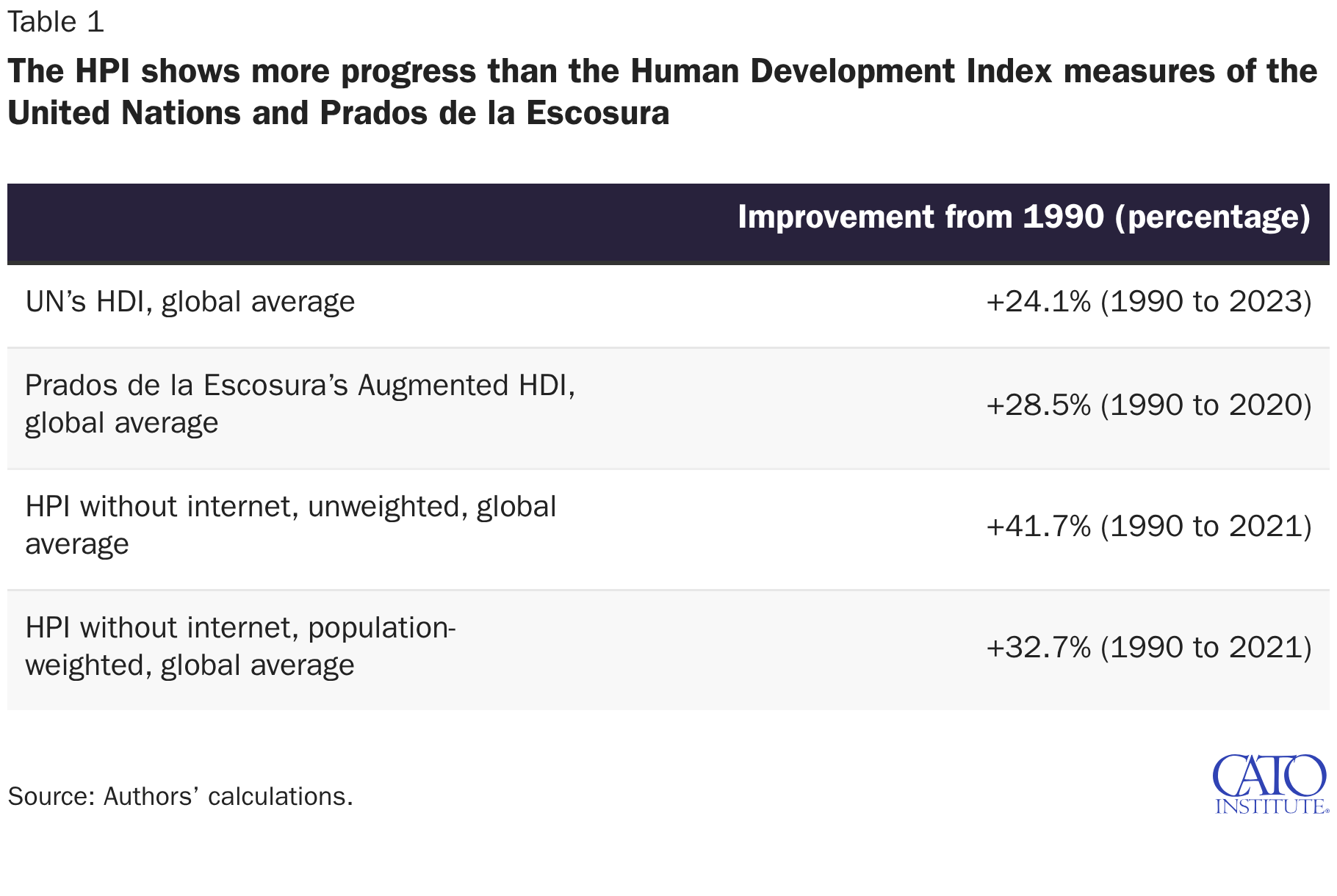
As in the inaugural edition of the Human Progress Index, we again found a more dramatic improvement in human well-being since 1990 than either the UN’s HDI or the Augmented HDI did. Extending the HPI through 2021 enabled us to compare the degree of progress with both the UN’s and Prados de la Escosura’s estimates. The HPI, when we exclude the internet access component which generates a substantial improvement due to greater connectivity, improved by 41.7 percent. If we weight by country population, it increased by 32.7 percent. That is larger than what the UN’s HDI suggests took place in terms of improvements.
Depending on the specifications used, the HPI shows between 8.6 percent and 17.6 percent greater improvement than the United Nations and between 4.2 percent and 13.2 percent greater improvement than Prados de la Escosura’s estimates (see Table 1). This greater estimated improvement likely reflects the HPI’s inclusion of more dimensions of human progress than other development indices. It seems that when progress is measured more comprehensively, greater advances become more evident. The HPI, in short, indicates that average human well-being has improved more dramatically than is generally recognized.
The Inequality of Human Progress Index employs a two-stage methodology to measure global inequality in human progress. First, we construct the HPI, which follows the same mathematical architecture as the UN’s HDI but incorporates eight dimensions of well-being: lifespan, infant mortality, nutrition, environmental safety, education, internet access, income, and political freedom. Each indicator is transformed into an indexed form scaled from 0 to 1, with most components using a nonlinear formulation that awards greater importance to improvements near maximum values rather than treating all improvements equally. These components are then combined using a multiplicative operator that reflects the distributive nature of human development—emphasizing that higher values across all indicators are preferable to concentrated improvement in a single dimension. In the second stage, we calculate inequality measures (i.e., Gini coefficients and mean log deviations) for the resulting HPI values to create the IHPI, which captures how evenly distributed human progress is across countries globally.
The HPI’s eight components of well-being are measured as follows: Lifespan is measured by life expectancy at birth in years.33 Childhood survival uses the infant mortality rate per 1,000 live births.34 Adequate nutrition is assessed through food supply per person per day.35 Safe environment is evaluated using outdoor air pollution death rates.36 Access to opportunity is measured by mean years of schooling. Access to information uses the number of internet users per 100 people.37 Material well-being is assessed through gross domestic product per person.38 Political freedom is estimated via a measure of electoral democracy.
Two component datasets were updated to incorporate more recent data into the HPI’s calculations. First, the Barro–Lee average years of schooling dataset was replaced with the UNDP’s average years of schooling dataset, which provides more current data coverage (although they show slight differences in levels which explains part of the differences between the previous edition of the HPI and this one).39 Second, the Polity5 autocracy-democracy dataset, which terminates in 2018, was substituted with the Varieties of Democracy (V‑Dem) Electoral Democracy Index because V‑Dem provides data for more recent years.40 This explains the remaining differences between the previous edition of the HPI and this one. These changes allowed for the addition of three new years of data: 2019, 2020, and 2021. For more detailed information on the methodology underlying both the HPI and IHPI, refer to the appendix accompanying the inaugural edition of these indices.41
The extraordinary pace of global internet connectivity during the relevant period introduces a potential upward bias to the composite index. To address this methodological concern, we present multiple specifications, both inclusive and exclusive of the internet access component. Inclusion of the internet access metric reflects a defensible position: expanded digital connectivity demonstrably enhances information access, educational opportunities, and economic participation across populations. These benefits represent genuine welfare improvements that merit incorporation within a comprehensive progress framework. However, the rapid acceleration of internet adoption relative to other development indicators risks masking stagnation or decline in alternative dimensions of human flourishing. Both specifications offer valuable insights.
The updated HPI calculations revealed several key findings. The HPI conformed to the broader pattern of development metric disruption observed during the pandemic. The HPI’s sustained upward trajectory through 2019 gave way to stagnation and marginal contraction between 2019 and 2021 across multiple specifications. This interruption occurred regardless of population-weighting adjustments or the inclusion of the internet access measure within the composite index.
Fortunately, the extent of pandemic-induced disruption was limited (see Figure 2). The magnitude of decline remained modest across all variants examined. The unweighted HPI measures, excluding the internet component, registered a 0.002-point decrease from 0.326 in 2019 to 0.324 in 2021, a decline of approximately 0.6 percent. Population-weighted calculations, excluding the internet component, demonstrated even greater resilience, contracting by merely 0.0006 points over the same period—indicating stagnation (a decline of 0.2 percent). Specifications incorporating internet access yielded minor improvements (1.1 percent to 2.3 percent). In short, instead of a sharp drop, HPI growth without internet access stalled or declined only marginally. Including internet access hides this outcome. That is telling because prior to 2019 improvements were sustained and steady. The stalling is a new development.
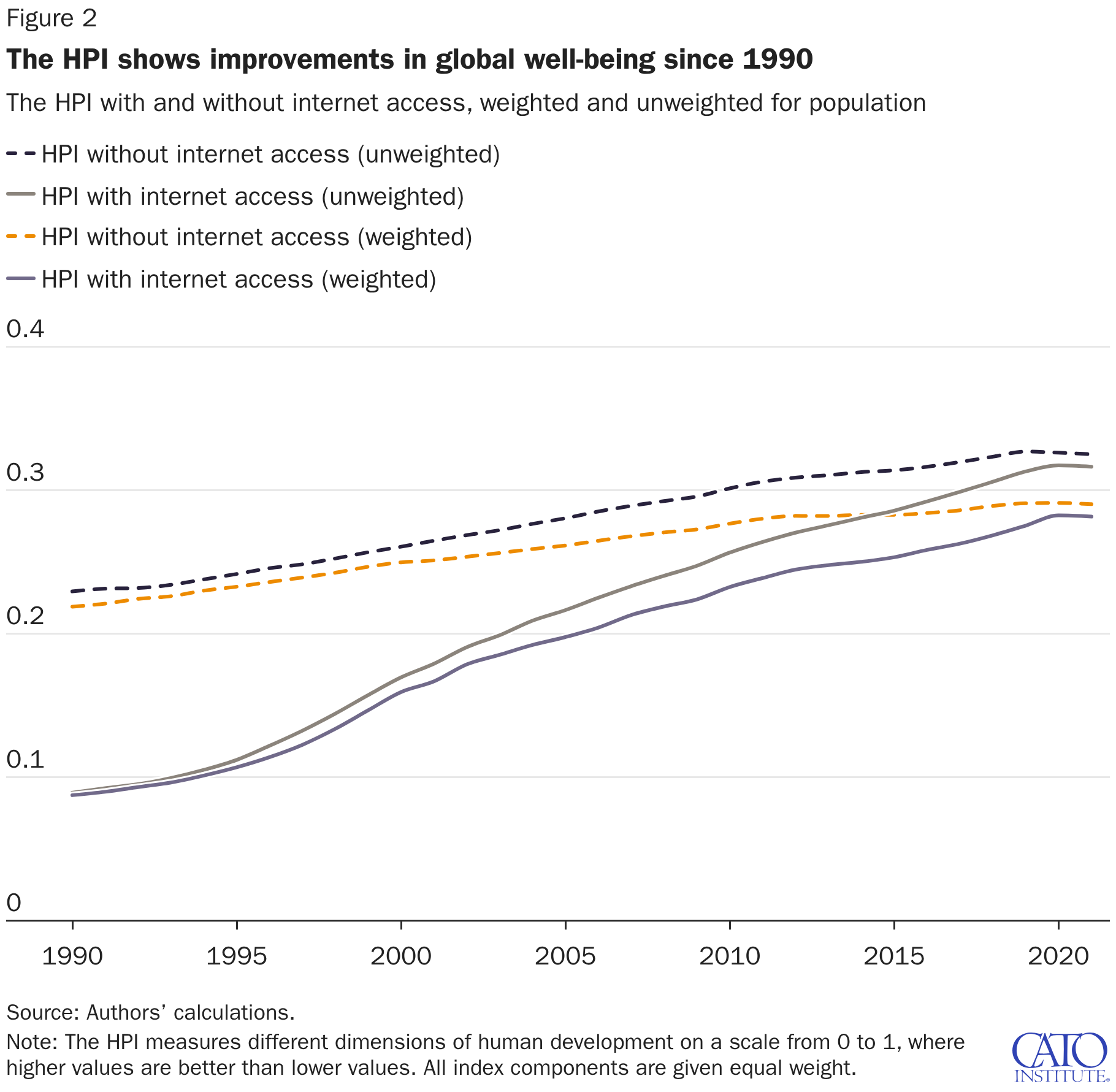
One way to read these findings is that while the pandemic disrupted the HPI’s growth trajectory, the index demonstrated considerable stability during this period of global economic and social upheaval. Progress merely stalled, in contrast to a steep loss of gains in living standards. Given the size of the shock, a temporary stalling is impressive. The uniformity of results across different weighting schemes and component specifications reinforces confidence in the underlying measurement framework’s robustness.
Above all, these findings underscore the foundational role of undisturbed markets in sustaining human progress. Prior research suggests that countries with greater economic freedom demonstrate superior pandemic resilience due to the wealth generated from free-market policies.42 The HPI shows that pandemic disruptions to global economic activity clearly slowed the pace of human progress, although not as much as might have been expected.
The Human Progress Index and Inequality
The IHPI gauges how evenly human progress is distributed worldwide by applying inequality measures to the multidimensional HPI. Applying inequality metrics to the HPI’s scores shows how evenly progress has been shared globally over time and the extent of COVID-19’s disruption. Just as the HPI demonstrates that the pandemic and its disruptions slowed global advances in human progress, the IHPI shows that it also stalled movement toward a more equal distribution of those gains.
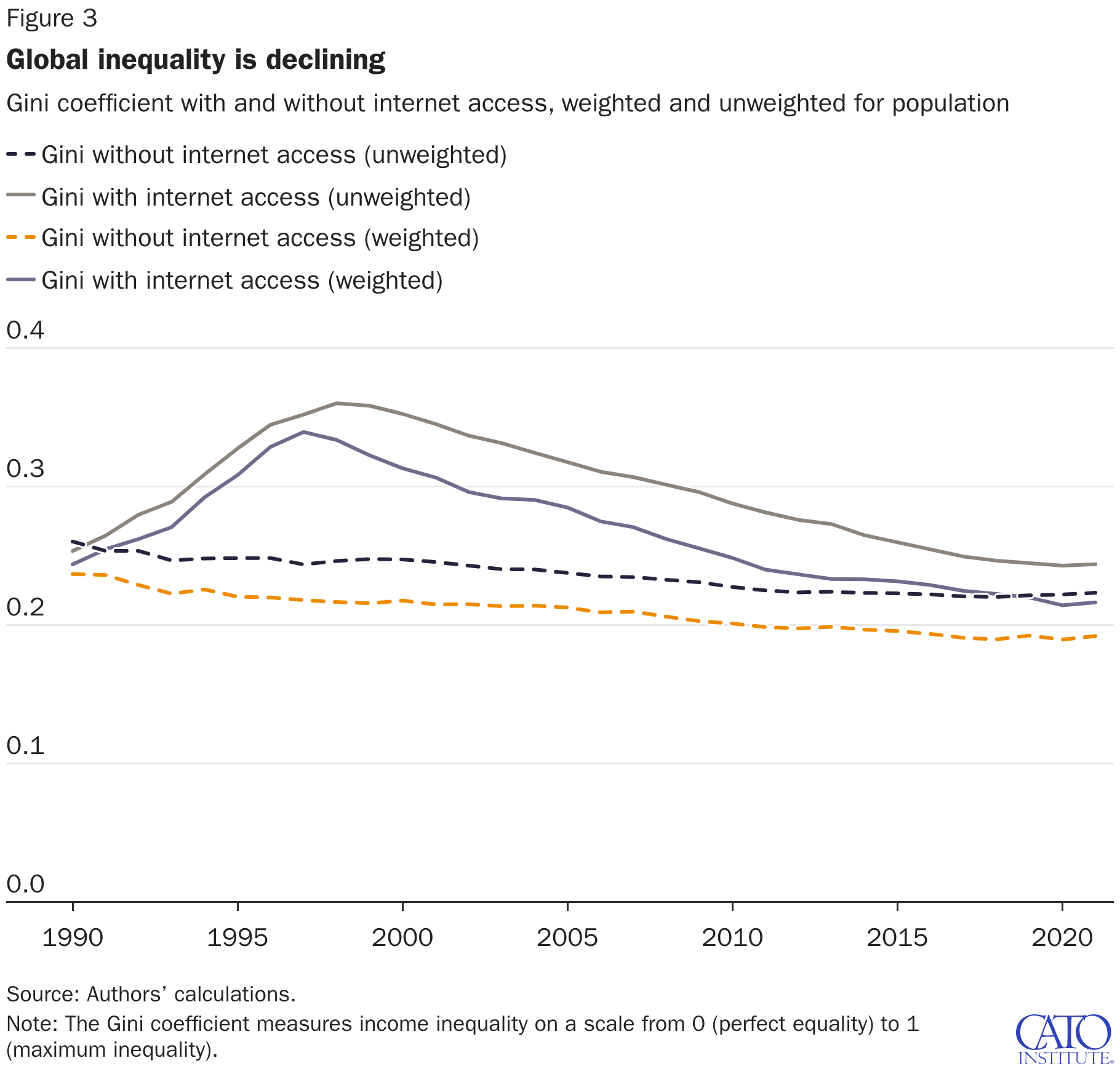
In the long run, inequality has declined. But while inequality fell across all specifications between 1990 and 2021, the final two years show stalling, breaking from a long-run trend of declining inequality. This indicates a period of stagnation amid the pandemic.
Consider the IHPI as calculated using the Gini coefficient, a measure of inequality that quantifies a distribution’s evenness within a population, ranging from 0 (perfect equality) to 1 (maximum inequality). All specifications of the IHPI as measured by the Gini coefficient show a slight reversal or slowdown in the decline of inequality (Figure 3). The unweighted Gini version of the IHPI, excluding the internet access component, saw inequality rise marginally from 0.22118 in 2019 to 0.22308 in 2021, an increase of 0.86 percent. The weighted Gini version of the IHPI, excluding the internet access component, indicates a small decline in inequality from 0.19216 in 2019 to 0.19178 in 2021, a change of approximately –0.2 percent. The population-weighted (and unweighted) Gini, including internet access, also shows a mild but slightly greater decline (–0.3 percent to –1.58 percent). The subtle contrast between including and excluding internet access suggests that inequality improvements in other components have stalled or worsened.
Next, consider the IHPI as calculated using mean log deviation (MLD), which is a measure of inequality that averages the logarithmic deviations of individual scores from the mean, with higher values indicating greater inequality and lower values representing more equality. Note that unlike the Gini coefficient, which ranges from 0 to 1, MLD has no fixed maximum value. One advantage of MLD is its greater sensitivity to changes among the most-disadvantaged members of a population—or in this context, the world’s worst-off countries.
Although global inequality in the HPI measured by MLD had been declining generally since 1990, the pandemic years (2020–2021) again show much the same pattern as with Gini coefficients: continued but far slower declines in inequality, indicating virtual stagnation (see Figure 4). The unweighted MLD variant of the IHPI that includes internet access suggests that inequality fell only marginally from 0.09526 in 2019 to 0.09515 in 2021, a decrease of just 0.00011 points, or 0.12 percent. Weighting for population reveals a decline of just over 2 percent. This, nonetheless, indicates a markedly slower decline in inequality compared with the pre-pandemic trend, once again pointing to stalled progress.
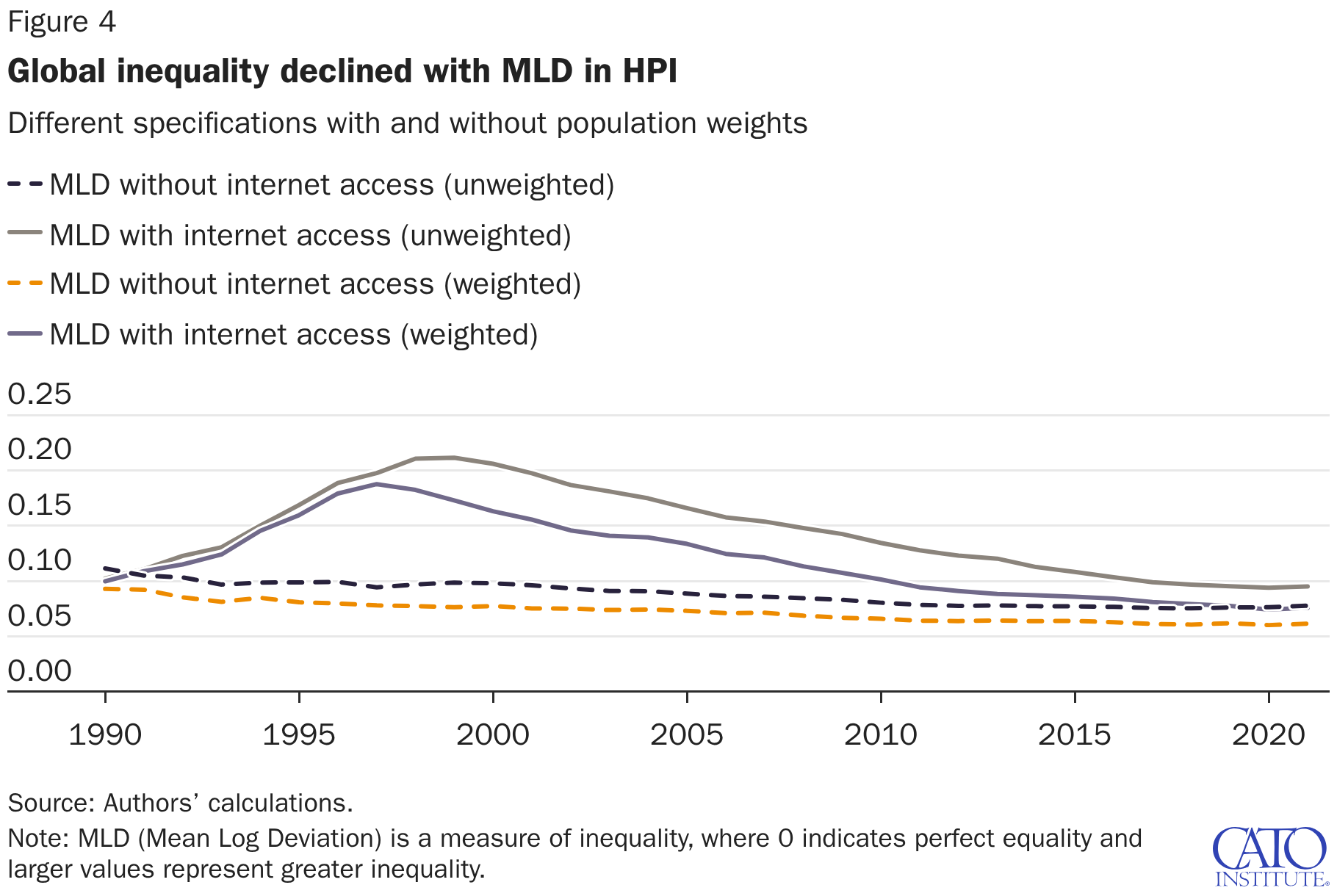
To clarify how the pandemic disrupted prior trends toward broadly shared gains in human progress, it is useful to consider each of the IHPI’s components in turn and analyze how these various forms of inequality changed in the most recent years of data. Doing so reveals which areas of human progress saw the greatest and the least disruption toward greater equality.
Income Inequality
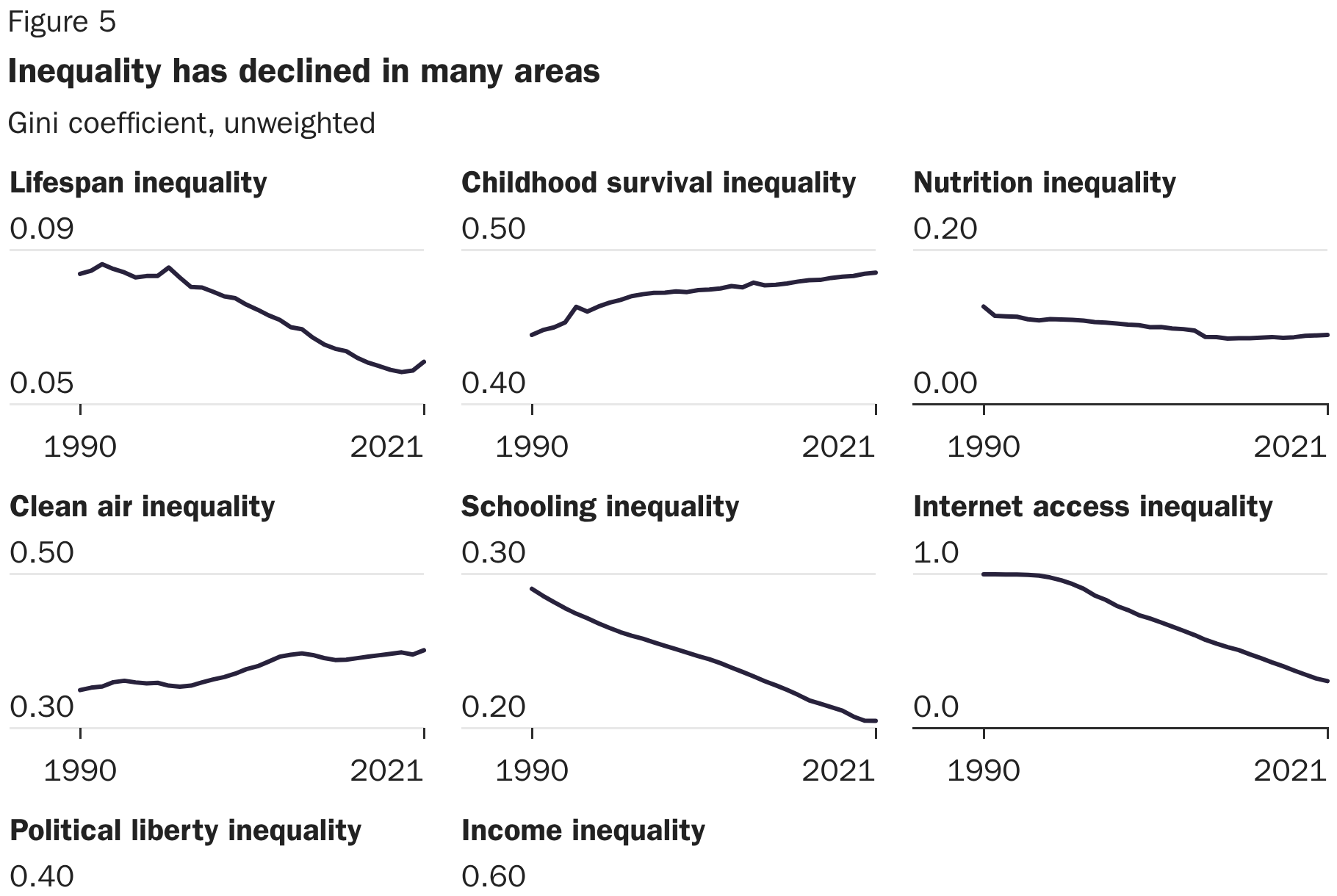
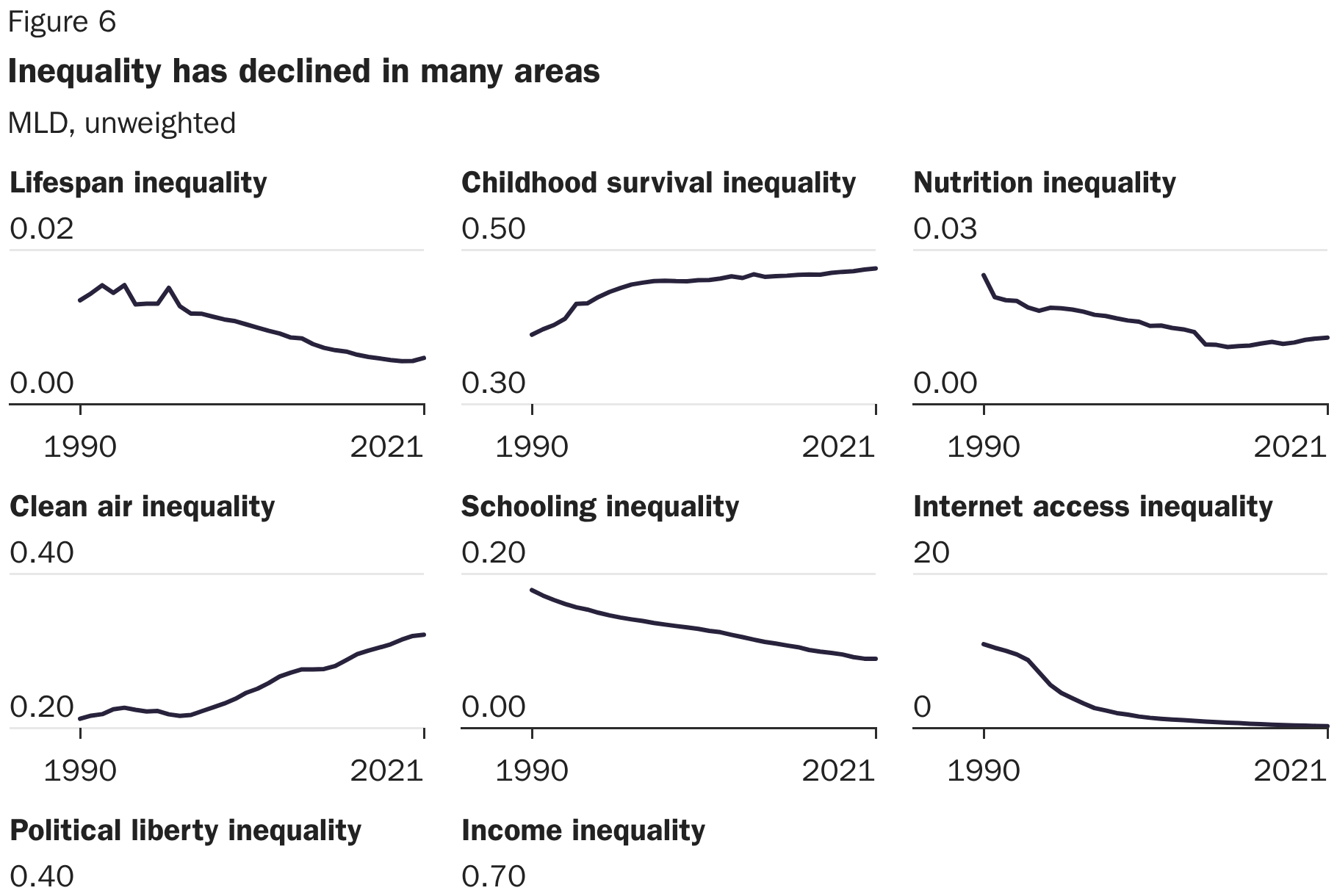
Whether inequality is measured using the Gini coefficient or MLD, both specifications result in similar trend lines for all components of the IHPI, with one exception. That exception is income inequality (see Figure 5 and Figure 6). Both the Gini coefficient and MLD show a substantial long-run decline in global income inequality since the mid-2000s. However, the Gini coefficient suggests that global income inequality declined during the pandemic, whereas MLD shows an increase in global income inequality. Recall that MLD is more sensitive to changes at the lower end of the distribution (i.e., the poorest or worst-off individuals and countries), such that a small improvement or worsening for the worst-off has a relatively greater effect on the MLD than on the Gini coefficient. This finding suggests that pandemic-related disruptions disproportionately hindered progress in poorer countries compared with higher-income countries in closing global income gaps.
That finding aligns with reports that while they saw fewer deaths per capita than rich countries due to poor countries’ younger population structure, lower-income nations, on average, may have experienced more severe and prolonged economic effects from the pandemic. From 2019 to 2021, average incomes dropped 2.2 percent for the poorest 40 percent of the world population, compared to just 0.5 percent for the wealthiest 40 percent of the global population.43 The International Labour Organization estimates that the pandemic erased the equivalent of 255 million jobs in 2020, an impact four-times greater than the 2008–2009 financial crisis. Losses were particularly high in Latin America, the Caribbean, Southern Europe, and Southern Asia.44 Nobel Prize–winner Angus Deaton estimates that population-weighted income inequality between countries increased amid the pandemic, mainly because India saw more deaths per million than other countries at a similar income level and experienced a 10.2 percent decline in income from the pandemic.45 Research suggests that in low-income countries, 77 percent of the population (256 million people) belong to households that lost income because of the pandemic.46
In many cases, economic losses were not direct results of the pandemic but rather came from related disruptions and policy responses. Lockdown and mandated social-distancing policies in lower-income countries with younger populations, who were less vulnerable to COVID-19, often offered minimal health benefits while reducing economic activity among impoverished populations least able to bear such economic sacrifices.47 “Where income is low, fewer jobs can be performed from home,” making job and income losses from lockdowns more severe in low-income areas.48 For example, among low-income households in rural Kenya, pandemic-era lockdowns cut income from jobs, gifts, and remittances by roughly one-third.49 Uganda, a country that enacted a strict lockdown, experienced reduced income, higher unemployment, and widespread household depletion of savings and capital.50 In South Africa, similarly, social-distancing mandates imposed “large reductions in wage income particularly for low-skilled workers.”51
Within poor countries, it was lower-income residents who often suffered the worst economic devastation from lockdowns. A case study of the Latin American megacity of Bogotá, Colombia’s capital, showed that low-income residents were the most likely to face employment losses amid lockdowns.52 Even within high-income countries, lockdowns resulted in a larger increase of economic insecurity in rural areas, which tend to be poorer than urban centers.53
Internet Access Inequality
The trend line measuring internet access inequality tells a simpler and more positive story. Internet access inequality continued its long-term decline in 2020 and 2021 and was unaffected by the pandemic. This pattern is evident regardless of whether internet access inequality is measured by the Gini coefficient or MLD. This outcome is unsurprising, given that while many development indicators were significantly affected by the pandemic, global internet adoption grew. Between 2019 and 2021, International Telecommunication Union data suggest that the number of internet users in the world’s least-developed countries increased by 20 percent, while internet use in Africa rose by 23 percent.54 In Senegal, for example, internet access expanded from 41 percent of the population in 2019 to a majority, 51 percent, of the population by 2021, according to Gallup.55
Private-sector actions coupled with accelerated government regulatory approvals aimed at enhancing communications capacity during the pandemic were instrumental in broadening internet access. For instance, in Kenya, high-altitude internet balloons developed by Alphabet brought internet connectivity to rural areas after the company finally received government regulatory approval in 2020.56 The long-sought approval, held up in regulatory review for almost two years, was part of a “raft of measures to mitigate the disruptions to our life arising from the pandemic,” said then-President Uhuru Kenyatta.57
As global internet uptake increased, internet access inequality fell to an all-time low. The world has never been better off or more equal in terms of access to information via the internet. During the pandemic, the internet increasingly functioned not only as a source of information but also as a means of social connection, as well as a critical enabler of work for many individuals. For example, in the United States, polling from the Pew Research Center indicates that 90 percent of adults viewed the internet as “essential or important to them personally during the coronavirus outbreak.”58 During an otherwise tumultuous period, the growth in internet connectivity and the advancement of equality in internet access stand out as significant areas of progress.
Lifespan Inequality
Lifespan inequality has fallen dramatically since 1990. However, it grew in 2020 and 2021, irrespective of whether such inequality is measured by the Gini coefficient or MLD. Global life expectancy dipped, falling from 73 years in 2019 to 72 years in 2020 and 71 years in 2021, before rising again to 73 years in 2023.59 The rise in lifespan inequality in 2020 and 2021 reflects the decline in life expectancy caused by COVID-19 and its associated disruptions, leaving the global population both shorter-lived and more unequal. COVID-19 erased 10 years’ worth of gains in global life expectancy, owing not only to the disease directly but also to wider repercussions of the pandemic, including interruptions in health care access and provision.60
Research suggests that lockdown policies, in some cases, contributed to health care appointment cancellations and other challenges with accessing care services.61 In low‐ and middle‐income countries in particular, access to already comparatively fragile health systems suffered during the pandemic.
For example, in impoverished communities throughout Bangladesh, Kenya, Nigeria, and Pakistan, the pandemic reduced access to both emergency and routine preventive care.62 Consider also the lack of access to medications: “Due to the lockdown policies caused by COVID‐19 to reduce the incidence of transmission, pharmacy practice in Africa has suffered several setbacks in optimal healthcare delivery as the pandemic has had a potential impact on drug supply, availability, affordability and movement of pharmacists and pharmacy workers.”63
Modern medicine’s importance is clear from the negative impact that pandemic disruptions had on life expectancy. Health care access disruptions occurred in many cases due to heightened financial strain—as health care costs increased, household incomes decreased—and because travel restrictions blocked many residents from reaching medical facilities.64 Pandemic-related policies and disruptions reduced the accessibility of health services worldwide, including “a decrease in planned surgeries, doctor appointments, patient admission to hospital or ER, and access to medicines.”65
However, because the global average life expectancy has since bounced back and now stands at an all-time high, future analysis will likely show lifespan inequality resuming its long-term decline.
Childhood Survival Inequality
Interestingly, despite the pandemic’s negative impact on global average life expectancy, child mortality continued to decline for those under 5 years old in 2020 and 2021. Globally, the mortality rate for children under 5 years old declined from 40 per 100,000 in 2019 to 39 per 100,000 in 2020 and then 38 per 100,000 in 2021, according to the World Bank.66 Child deaths fell particularly sharply in many high-income countries. For example, child mortality fell by 7 percent between 2019 and 2021 among children under 5 years old in 18 European countries.67
There are several explanations for this. First, COVID-19 had a relatively low mortality rate in children; mortality rates were highest among the elderly. The COVID-19 mortality rate was approximately 1.0 per 100,000 children ages 0–19, only 0.6 per 100,000 for those ages 1–4, and a mere 0.4 per 100,000 for those ages 5–9.68 For comparison, according to the US Centers for Disease Control and Prevention, the estimated influenza-associated mortality rate per 100,000 children ages 0–4 for the 2022–2023 influenza season was 1.1 per 100,000 in the United States.69 Second, in high-income countries, social distancing and school closures may have insulated children from other contagious diseases and reduced rates of certain fatal accidents, such as drownings and traffic deaths.70 As a result, during England’s pandemic lockdown (April 2020–March 2021), the country’s child mortality reached its lowest point compared with any period before or since.71
Yet, while such lockdowns likely reduced child mortality in rich countries, they also entailed significant costs. For instance, time will tell whether the learning losses associated with school closures will depress lifetime earnings for the affected cohort; any such decline could damage longevity. (In England, for example, a substantial life-expectancy gap exists between richer and poorer residents.72)
In poor countries, greater disruption occurred. Lockdown measures sometimes had severe consequences for the health of children in low- and lower-middle-income countries, including decreased utilization of health services and more premature deaths.73 In rural South Africa, for example, lockdowns were linked to a significant, albeit temporary, decrease in child healthcare visits.74 In Uganda pandemic-era travel restrictions made it more difficult for families to reach health care facilities, leading to fewer children receiving medical services and hurting pediatric health outcomes.75 However, these effects were generally not great enough to alter national child mortality trends. In other words, the pandemic did not disrupt gains in global child survival rates. Progress in this area continued unabated.
While progress in combatting child mortality should be celebrated, the world nonetheless became less equal on this measure. Gains in reducing child mortality seem to have occurred proportionally faster in wealthy countries than in poor ones, even as child mortality fell in poor countries. This result, which holds whether inequality in childhood survival is measured with the Gini coefficient or MLD, aligns with our findings from the IHPI’s inaugural edition. As we noted then,
To be sure, infant mortality has fallen globally in absolute terms. But improvements since 1990 seem to have happened proportionally faster in high-income countries. These countries have access to the latest medical technology, such as state-of-the-art neonatal intensive care units that improve the chances of survival for premature infants; thus, global inequality may not have declined across this dimension post-1990.76
Since absolute, rather than relative, changes provide the most accurate assessment of progress, it is important to restate that child mortality has decreased overall.
Nutrition Inequality
Global nutrition inequality stayed essentially unchanged from 2018 (the last reported data point in the inaugural HPI) through 2021, based on both Gini coefficient and MLD measurements. The long-term trend since 1990 nonetheless shows declining global nutrition inequality. While the good news is that the pandemic did not lead to regression on this metric of equality, pandemic-era disruptions may have contributed to the arresting of further progress.
A study of low-income households in Bangladesh, for example, found that the “COVID-19 lockdown had a significant impact on household food insecurity, dietary diversity as well as acute malnutrition in children.”77 In South Africa, lockdown policies and resultant unemployment were found to “jeopardize the food security of low-income households dependent on labor income.”78 Nigeria likewise faced greater food insecurity as lockdowns limited workers’ ability to farm, leading to the shutdown of restaurants and food markets.79 The lockdowns in Nigeria have even been described as triggering a “food security crisis.”80 In fact, across Sub-Saharan Africa, initial lockdowns coincided with the critical planting period for the region’s main staple crops, resulting in food shortages.81
Despite such tragic cases, the fact that stagnation in progress toward greater global equality in food access began before the pandemic makes it unclear how much of the slowdown can be attributed to pandemic-related disruptions. Nonetheless, those disruptions clearly compounded challenges in expanding the global food supply and making the world more equal in terms of food access.
Schooling Inequality
Decades of steady increases in average years of schooling worldwide and the consequent reduction in global education inequality were abruptly interrupted by the pandemic, though not canceled out. The pattern is clear regardless of whether the Gini coefficient or MLD was used to measure education inequality. This outcome is unsurprising: Lockdowns and social distancing disrupted schooling in many countries, with children in lower-income countries least able to continue their education through remote learning. In South Africa, only around half of learners ages 7–17 are estimated to have had access to televisions, which were needed to follow the dedicated learning channels used for remote education in that country during the pandemic.82
Around the world, lockdowns and school closures are estimated to have caused roughly half a year of learning loss among students, with substantial variation across countries.83 Some research suggests that female students were particularly likely to complete less schooling due to pandemic-era school closures. In India, where schools were closed for more than 18 months, post-pandemic estimates show girls completed 0.08–0.1 fewer years of schooling compared with their pre-pandemic peers.84 (A smaller subsample of boys in India saw no difference in years of schooling completed as compared with matched pre-pandemic peers.85) Research from Nigeria suggests that “COVID-19 lockdown measures reduced children’s probability of attending school after the school system reopened” while increasing the rate of girls entering into child marriages.86
Evidence indicates that significant learning loss occurred even among students in rich countries who were largely able to learn remotely during the pandemic. For example, American students in some communities fell behind by more than one and a half years in math.87 US public school students in grades three through eight experienced an average learning loss equivalent to six months in math and three months in reading.88
Pandemic-related school closures are expected to have long-lasting impacts on students’ educational trajectories and outcomes. Unfortunately, pandemic-related disruptions to schooling not only harmed student learning outcomes but also stalled progress toward greater global equality in education.
Clean Air Inequality
Global inequality in access to clean air, as approximated by differences in air pollution mortality rates between countries, continued to increase during the pandemic, both according to the Gini coefficient and MLD. As noted in the IHPI’s inaugural edition, which also showed rising global inequality in mortality from outdoor air pollution:
[This] may be the result of the environmental Kuznets Curve, which stipulates that pollution increases with economic growth until a critical point is reached, after which pollution starts to fall. In our case, the rising inequality in outdoor air pollution may reflect that some countries are undergoing this transition.89
During the pandemic, a frequently cited silver lining was the perceived improvement in environmental quality. Shuttered airlines, decreased industrial activity, and reduced traffic amid school and business closures and the shift to remote work led to lower pollution levels.90 Studies confirm decreases in air pollution, including significant declines in nitrogen dioxide and fine particulate matter in the United States.91
In fact, global levels of air pollutants such as nitrogen dioxide, sulfur dioxide, carbon monoxide, and particulate matter declined compared to previous decades, with urban air quality showing moderate to significant improvement.92 In some areas, including Germany, reductions in air pollution during the pandemic failed to affect mortality, whereas in others, such as central-southern Italy and the Chinese province of Jiangsu, decreases in nitrogen dioxide were linked to notable reductions in air pollution–related deaths.93
Unfortunately, the pandemic-related decline in air pollution did not translate into greater global equality in access to clean air. In fact, 2021 was the record-high point for inequality (Gini-wise) in mortality from outdoor air pollution.
Political Liberty Inequality
Political liberty inequality has shown a long-term decline, falling from 1990 until 2012. It then more or less flatlined with a very slight rise until 2019, with a noticeable uptick in 2020 and 2021. Although the long-term decline remains intact, the pandemic-era reversal is cause for concern, driven by a global shift toward diminished political liberty. During the pandemic, numerous countries, including Hungary, made a discernible turn toward greater autocracy and away from liberal democracy.94
The resilience of a democracy is tested by exogenous shocks, including the COVID-19 pandemic.95 Organizations such as Freedom House, the V‑Dem Institute, the Economist Intelligence Unit, and the International Institute for Democracy and Electoral Assistance warned that the pandemic could serve to entrench incumbents’ power and weaken political liberty. Research suggests their fears materialized in multiple countries.96 The V‑Dem Institute launched a dashboard monitoring the impact of COVID-19 policies on democratic standards across countries, tracking violations including enacting emergency measures with no time limit and engaging in abusive enforcement.97 Their Pandemic Democratic Violations Index found major violations in several countries, including China, Egypt, and India.98
Unfortunately, many different measures of political liberty experienced backsliding during the pandemic. The IHPI’s measure of political liberty inequality now draws on V‑Dem’s Electoral Democracy Index, which offers more recent data than the Polity5 autocracy-democracy dataset used in the IHPI’s previous edition. The Electoral Democracy Index was chosen from V‑Dem’s various democracy indices because it provides the purest measure of political liberty alone, unconfounded by other factors. (For example, V‑Dem’s Index of Egalitarian Democracy takes into account education equality and health equality, among other factors.) The inequality trend lines for both approximations of political liberty look similar, with a long-term dramatic decline that is apparent whether inequality is measured with the Gini coefficient or MLD. Despite setbacks during the pandemic, long-term progress toward greater global equality in political liberty remains notable. At the same time, this backsliding underscores the fragility of political liberty and the critical importance of safeguarding it.
Conclusion
The pandemic’s disruption to globalization, trade, and other forms of economic activity measurably slowed the pace of human progress as captured by the Human Progress Index. However, the updated HPI and Inequality of Human Progress Index also demonstrate the remarkable resilience of the modern world. Even amid significant disruptions, on average, only a limited decline has been registered in living standards across most of the HPI’s dimensions, though progress temporarily stalled (see Figures 5 and 6).
Despite the pandemic’s disruptions, the broader historical picture reveals remarkable progress toward global equality in human well-being. Between 1990 and 2021, the IHPI documents substantial declines in inequality across multiple dimensions. The multidimensional approach to measuring human progress provides a more comprehensive picture than considering income inequality alone. The pandemic revealed how vulnerabilities differ across various aspects of human progress. For example, during an otherwise tumultuous period, continued growth in internet connectivity and the advancement of equality in internet access stand out as significant areas of progress, with humanity better connected and more equal in access to information than ever before.
These results highlight how uninterrupted markets are essential for sustaining human progress, as well as the importance of safeguarding political liberty during emergencies. The index demonstrates that pandemic-induced disruptions to global economic activity significantly decelerated broadly shared human advancement, transforming robust growth into stagnation and hindering humanity’s journey toward greater prosperity and equality. Progress is not automatic; it depends on specific conditions, with undisturbed markets and trade proving essential for sustained, broadly shared improvements in living standards.
This analysis reveals a more nuanced and optimistic picture of global inequality trends than prevailing narratives suggest. While the pandemic temporarily disrupted and slowed progress, the long-term trajectory shows substantial reductions in inequality across multiple dimensions of human well-being. That challenges the premise underlying many costly policy proposals aimed at addressing allegedly rising global inequality and points to the need for caution against expanding state intervention based on questionable narratives more generally. Ultimately, policies that allow markets to operate without disruption are more likely to reduce global inequality by raising living standards.
Citation
Follett, Chelsea, and Vincent Geloso. “COVID-19 Slowed but Couldn’t Stop the Fall in Global Inequality: Updating the Inequality of Human Progress Index,” Policy Analysis no. 1011, Cato Institute, Washington, DC, February 3, 2026.

About the Authors


This work is licensed under a Creative Commons Attribution-NonCommercial-ShareAlike 4.0 International License.