PHOTOGRAPHY BY RICHIE DOWNS
Once Silenced by the SEC, Now Free to Speak
For more than 50 years, the SEC made silence a nonnegotiable condition of settlement, muzzling the very people best positioned to criticize the agency. Now that the SEC has rescinded its gag order policy, many of those people are eager to tell their stories.
enry Harrison turned on his phone to a torrent of anxious messages and missed calls as he landed back home in Texas after a family vacation in early July 2009. While Harrison’s wife went looking for coffee in the airport, he listened to a frantic voicemail from his chief compliance officer at Provident Royalties, the oil and gas venture he cofounded a few years earlier. People with badges had just stormed into the Provident office.
“I remember her saying, ‘They’ve taken over the company. They’re saying they’re going to take everything you have. They’re saying it’s a Ponzi scheme,’” Harrison told Free Society. His wife soon returned empty-handed with the news that her credit card had been declined. “It was like going into the twilight zone.”
Harrison had known Provident faced challenges even before he listened to that voicemail. The company had filed for Chapter 11 bankruptcy a month earlier, after natural gas prices collapsed during the ongoing financial crisis. But it still had 290,000 acres of mineral rights and oil and gas leases across Oklahoma and other states, and a turnaround specialist they brought in was confident that Provident could bounce back as the economy recovered.
The next day, the Securities and Exchange Commission (SEC) described Provident as a “$485 million [securities] offering fraud and Ponzi scheme” in a press release announcing an emergency asset freeze. A week later, in written testimony to Congress addressing the SEC’s failure to detect Bernie Madoff’s recently collapsed fraud, SEC Chairwoman Mary L. Schapiro repeated that characterization of Provident as a “$485 million nationwide Ponzi scheme.”
The accusation left Harrison reeling. Provident did raise $485 million from more than 7,700 investors, but the company used those funds to purchase its extensive oil and gas holdings. They had a deal with Sinclair Oil and Gas that guaranteed $150 million in bank financing. Just a year earlier, Provident was fielding eye-popping offers from other well-known names in the industry. A team of executives with decades of experience in the oil and gas industry oversaw operations, while a carousel of attorneys, due diligence firms, consultants, and other professionals had been retained to ensure that Provident complied with the SEC and other regulatory bodies.
Harrison and his cofounder, Brendan Coughlin, spent the next three years at their attorney’s office trying to fight the case, eventually agreeing to a settlement that did not require them to admit to any wrongdoing.
“When we settled the SEC case, we thought that’s it—it’s over,” Coughlin said.
But one particular provision of the settlement agreement would take on enormous significance after the dust settled: a lifetime prohibition on publicly denying the SEC’s allegations. Under the SEC’s gag order policy, otherwise known as the “no-deny rule,” a defendant must agree “not to take any action or to make or cause to be made any public statement denying, directly or indirectly, any allegation in the complaint or creating the impression that the complaint is without factual basis.” Translation: You are signing away your First Amendment right to tell your side of the story for the rest of your life.
The gag order, which the SEC for decades included as a nonnegotiable part of every settlement, initially seemed to Coughlin to be a “relatively minor point.” But its reach would soon become apparent.

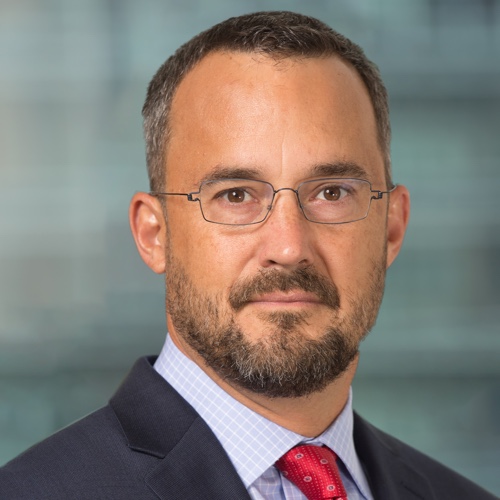
Henry Harrison, cofounder of the oil and gas venture Provident Royalties, settled with the SEC after the agency accused him of running a $485 million Ponzi scheme. He didn’t admit any wrongdoing in the settlement, but the SEC’s nonnegotiable gag order policy prevented him from sharing his side of the story for years.
“Just like Henry, I was asked by people to speak about our case and I’m always hesitant, because the way the document was written, if in fact we broke that gag order, if we talked about it publicly, they could open back up the case and come after us,” Coughlin said. “We’d been through enough. I didn’t want to deal with those people ever again.”
In May 2026, the SEC finally rescinded its gag order policy after years of litigation by people who had settled with the agency but felt their First Amendment rights were violated. As a result, Harrison and Coughlin can now share their ordeal without the SEC threatening to renew its enforcement action.
So can Thomas J. Powell, the lead plaintiff in the gag order challenge whose appeal to the Supreme Court, led by the New Civil Liberties Alliance and backed by 16 amicus briefs from across the ideological spectrum, may well have prompted the SEC to abandon its no-deny policy.
“Imagine that you settle something, and then the other side gets to not only say anything they want to about it, but it’s only their voice that’s ever heard, ever,” Powell, who was targeted by the SEC in a separate case that he believed lacked merit, told Free Society. “That’s our US government, and that’s why it wasn’t okay, and that’s why I took this on.”
Provident’s Beginnings
Harrison and Coughlin entered the oil and gas industry in the mid-2000s, just as fracking and other new drilling techniques were unlocking resources that had previously not made economic sense to pursue.
“We saw that this was going to be a wave that grew and took off,” Harrison said.
They were right. America’s shale gas industry grew by 45 percent per year between 2005 and 2010 as fracking revolutionized extraction methods. Harrison and Coughlin initially worked together on a few one-off deals and considered entering other parts of the industry, such as oil-field services and water hauling.
“Harrison and Coughlin entered the oil and gas industry in the mid-2000s, just as fracking and other new drilling techniques were unlocking resources that had previously not made economic sense to pursue.”
“One of the things we learned fairly quickly—at least in Fort Worth, and it’s probably this way industry-wide—was that the oil and gas business is very much a good-old-boy network, and it’s tough to break into without relationships,” Coughlin said. “One of the other things that we noticed was that everybody needed capital.”
This was the opening that Coughlin and Harrison had been looking for. In early 2005, they met Paul Melbye and Joseph Blimline, who were eyeing land in the Woodford Shale in Oklahoma that had promising natural gas reserves. The idea for Provident was born.
Starting in 2006, Harrison and Coughlin led fundraising through their broker-dealer, Provident Asset Management (PAM), while Melbye led Provident Royalties (PR), which used investor funds to acquire oil and gas interests. Blimline, meanwhile, was employed as a land and trend consultant, spending much of his time in the field and playing a significant role in identifying the best places for Provident to buy acreage.
They raised money through a series of affiliated companies, each conducting its own private offering marketed by PAM—a structure they adopted to comply with SEC rules for private placements. Most investors bought preferred shares that provided monthly dividend payments. About a third of the property the company acquired, 89,500 acres, was held through Provident’s deal with Sinclair. In the summer of 2008, the engineering firm Albrecht and Associates estimated the future net revenue of those interests to be $789 million.
In July 2008, Newfield Exploration proposed buying 11,354 net acres from Provident and Sinclair for $201 million at a value of $17,703 per acre. It was a tempting deal given Provident and Sinclair’s cost basis of approximately $2,400 per acre, but it was also the most valuable portion of their joint assets.
“We conferred with our executive team that was running Provident, and they all thought it was a lowball offer,” Coughlin said. “We thought we could do better, and at this point, the financial crisis was happening, but it really wasn’t affecting the oil and gas markets to the same degree.”
It was a decision that Harrison and Coughlin would soon regret. As summer turned to fall, the Great Recession battered the oil and gas industry. The value of Provident’s assets fell sharply as the Henry Hub natural gas spot price plunged from $12.69 in June 2008 to $3.50 in April 2009. The number of rigs drilling for natural gas in the US fell from a peak of 1,606 in September 2008 to just 665 in the summer of 2009.

A floor crew works on a natural gas drilling platform in the Barnett Shale in North Texas, where the fracking and shale revolution began about 20 years ago. (Photo by Robert Nickelsberg/Getty Images)
“The big bonanza is over,” a construction manager working in the Barnett Shale field underlying Dallas-Fort Worth told the New York Times in the spring of 2009. “Everyone is really shocked how fast everything has turned.”
Provident suspended dividend payments in January 2009 and hired Bridge Associates two months later to spearhead its turnaround plan. On June 22, Provident Royalties filed for Chapter 11 bankruptcy, with Bridge’s chief operating officer David Phelps appointed as chief restructuring officer.
Harrison and Coughlin hoped that restructuring Provident’s debt to Sinclair would give the company some breathing room. But a week after the bankruptcy filing, the SEC obtained an ex parte temporary restraining order and emergency asset freeze. A court-appointed receiver took control of the company on July 6, seized all company records, fired nearly every employee within weeks, and then moved to quickly liquidate all of Provident’s assets at the bottom of a historic bear market. The first auction of about 61,000 acres of mineral interests went for $17.3 million in October 2009, while the second major auction of about 80,000 acres of leases went for $46.6 million in February 2010.
“He sold assets that we knew were worth probably hundreds of millions in a normal market for pennies on the dollar,” Coughlin said.
Watching all those assets disappear in a fire sale was “incredibly maddening and frustrating,” Harrison reflected. “If you really care about the value of the assets and the people and the investors, why would you do that?”
As they reached a settlement with the SEC, another, graver problem loomed, this time criminal. In July 2012, Harrison and Coughlin were each charged with one count of conspiracy to commit mail fraud and 10 counts of mail fraud. The charges were announced as part of the DOJ’s Financial Fraud Enforcement Task Force, which then-President Obama established in November 2009 amid public outrage over the financial crisis.
Harrison and Coughlin knew that a criminal prosecution was possible. Blimline, the former Provident employee who spearheaded the identification of valuable assets in the field, had already agreed to a plea deal in 2010 involving Provident, as well as another alleged fraud in Michigan that preceded Provident. As part of the “cooperation” requirement from that plea deal, he told investigators that he had conspired with Harrison, Coughlin, and other Provident executives to run a Ponzi scheme from the beginning—a claim unequivocally denied by Harrison and Coughlin. Melbye, the third cofounder of Provident, was also cooperating with the government and had reached a plea deal right before Harrison and Coughlin were charged.
During the preliminary hearing for Harrison and Coughlin in July 2012, Blimline’s name was mentioned 58 times, prompting the exasperated judge to repeatedly ask how Harrison and Coughlin fit into the government’s case.
“I agree that it may be thin, but it’s probably enough to get by the probable cause issues in the case,” the judge concluded at the end of the hearing. “Now, whether or not a full trial as to this case would shed a different light on it, it very well might. But what I have in front of me right now, I think that there is probable cause.”
Harrison and Coughlin were determined to go before a jury and clear their names. In November 2012, Coughlin’s attorney predicted to Bloomberg News that “the jury will take less than an hour to return a verdict of not guilty.… I’ve been practicing law for 25 years and I’ve never made a prediction like that before. That’s how confident I am.”
But Harrison and Coughlin were each facing up to 220 years in prison if convicted at trial, and as the government’s plea offers steadily improved—from 10 years, to five, to three, and finally less than two—they began to reconsider.
“There’s no certainty in court, and even though we believed we would win, who plays Russian roulette when there’s an offer you can live with? And isn’t accepting that offer the right thing to do, when you have a family that wants you home and things you want to do with your life that are far more valuable than sitting in prison at the country’s expense?” Harrison said. “It felt like making a deal with the devil. It felt disgusting and dishonorable, like we were letting everyone down. But taking such a huge risk also felt like letting everyone down.… In the end, you just accept that the government has more power.”
In February 2013, Harrison and Coughlin made a deal with prosecutors to plead guilty to conspiring to defraud investors of $2.3 million over a one-month period in January 2009. They were each sentenced to 21 months in prison. Once they factored in time off for good behavior and the last six months in a halfway house, they were expecting to spend about a year behind bars.
“The deal also didn’t require us to pay any additional money, so we wouldn’t be forced to sell our homes and everything else we had left,” Coughlin said. “So we thought: Stop the stress, stop bankrupting ourselves, and get on with our lives. Going to prison actually felt less stressful than going to trial, because there was an end in sight. We hated pleading guilty to something we didn’t do. But that’s really it.”
Blimline, meanwhile, was originally sentenced to 20 years in prison. Two months after the government secured a plea deal for Harrison and Coughlin, prosecutors submitted a sentencing reduction request for Blimline, cutting his sentence down to 12 years. Melbye, who faced up to five years in prison under the terms of his plea deal, was sentenced to 18 months after cooperating with the government.
The civil settlement with the SEC did not protect Harrison from criminal prosecution, and Harrison would leave prison still bound by the SEC’s prohibition on disputing its allegations.
Challenging the Gag Order
I first met Harrison in 2017 when a law professor introduced me to him and his memoir. I found it well written, riveting, and important, and believed Cato should publish it as a book.
There was just one problem: Allowing Cato to publish Harrison’s memoir would breach the lifetime gag order in his civil settlement with the SEC. Thus, Cato had a publishing contract it couldn’t fulfill, an author who couldn’t speak, and a compelling story of exploitation and abuse that the public deserved to hear but that the government had effectively censored.
So we went to court. In January 2019, represented by the Institute for Justice, we filed a First Amendment challenge to the SEC’s gag order policy in the US District Court for the District of Columbia. The complaint argued that the government could not use its leverage in civil litigation to force people to surrender their right to dispute its allegations publicly. A strong case, we believed, and one that the SEC would do everything in its power to derail in order to avoid a ruling on the merits.
What followed was a master class in procedural gamesmanship, bad-faith litigation tactics, and sharp practice. The district court dismissed our case, holding that because Cato was not itself a party to the gag order, it was not technically injured by the policy and could simply publish the memoir—albeit in direct violation of its contract with Harrison and with full knowledge that he would thereby breach the settlement agreement and expose himself to the full retributive wrath of the SEC.
We appealed and the DC Circuit upheld the dismissal, but on a different, and as we repeatedly pointed out, factually erroneous premise. The court ruled that even if we won on the merits, our injury wouldn’t be redressed, because the no-deny provisions were (supposedly) contained in consent decrees issued by various district courts around the country. Those courts could independently enforce the no-deny provisions through contempt proceedings, even if the SEC itself were barred from enforcing them. Therefore, the court concluded, we lacked standing because our injury wasn’t redressable.
But there was a glaring problem with this reasoning: Our complaint (which the district court and the DC Circuit were both obliged to read in the light most favorable to Cato) specifically noted that while it was the official policy of the SEC to incorporate its settlement agreements into enforceable consent decrees, it sometimes failed to do so— including in Harrison’s case. The DC Circuit panel nevertheless embraced the false factual premise presented by the SEC’s lawyers, attributed it to a complaint that demonstrably said nothing of the kind, and used that fiction to dismiss the case. Our petition for rehearing called this out directly, explaining that the court had “read allegations into the Amended Complaint that are not there, that no party has ever contended were there, and that are false to boot.” But the petition was denied without comment.
Fortunately, Cato wasn’t the only organization challenging the gag rule. In a separate case, Powell v. SEC, the New Civil Liberties Alliance (NCLA) mounted a direct regulatory challenge by petitioning the SEC to amend the no-deny rule. The agency refused, arguing that the policy was necessary to preserve public “confidence” in their enforcement actions—a rationale so circular it practically illustrated the constitutional problem.
The Ninth Circuit called that rationale “improper” but still upheld the gag rule on narrower grounds. The NCLA then filed a cert petition in the Supreme Court in March of this year. Two months later, the SEC rescinded its no-deny policy and argued that the challenge was now moot. The Supreme Court denied review the following month.
The lead plaintiff in the NCLA’s case, Thomas J. Powell, initially believed that he was cooperating with an SEC investigation focused elsewhere, but soon realized the SEC was actually targeting him.
After fighting the SEC’s allegations for five years—in a process that involved 300,000 documents, multiple depositions, and more than $4.2 million in legal expenses—Powell agreed to a settlement that required no admission of wrongdoing and a civil penalty of just $75,000. “I’m spending that in a month [on legal fees],” Powell said.
The gag order struck Powell as unconstitutional from the beginning and he initially refused to sign it, but the SEC made clear that it was a nonnegotiable condition of settlement. Powell ultimately agreed on the understanding that the SEC would not issue a press release and that his companies would post the settlement on their websites for three years.
The SEC put out a press release the day the settlement was finalized. When the Dallas Morning News called Powell’s office for comment, his company’s general counsel gave the reporter a statement that included the company’s belief that it had committed no wrongdoing.
“Immediately, we get a call from an SEC agent saying, ‘You can’t do that,’” Powell said. The call went to Powell’s outside counsel, who advised the company to seek a correction. The newspaper updated its online story to remove that part of the statement, with an editor’s note explaining that it “went against Resolute Capital’s agreement with the SEC.” For Powell, the correction illustrated the constitutional problem he had seen from the outset.
“We had settled without admitting the allegations, yet the SEC could publicly characterize the settlement while restricting our ability to respond,” Powell said.
Free to Speak
For more than 50 years, the SEC’s no-deny policy rested on a simple premise: The government’s account of what a settling defendant did should be the only account the public ever hears. The rule applied to everyone who settled, whatever the strength of the case, whatever the defendant’s actual conduct, and whatever the agency’s own conduct had been along the way. Harrison and Coughlin’s ordeal vividly illustrates why the SEC was so eager to muzzle the targets of its sometimes baseless enforcement actions.
“For more than 50 years, the SEC’s no-deny policy rested on a simple premise: The government’s account of what a defendant did should be the only account the public ever hears.”
And that’s what made the policy so corrosive. About 98 percent of SEC civil enforcement actions end in settlement, and many defendants arrive at that point under pressure the public rarely sees: years of investigation, staggering legal bills, asset freezes, and the knowledge that losing at trial could be even more ruinous. Powell spent more than $4 million fighting the SEC and settled for a $75,000 fine. People who have lived through that process know better than anyone how the government uses—and sometimes abuses—its enforcement powers, and they are the people the rule was written to silence. The Constitution guarantees a public trial to ensure that when the government accuses someone of wrongdoing, it must put its cards on the table for all to see. But when nearly every case ends in a private settlement, the cards are never fully disclosed or tested—and a perpetual gag order extends that secrecy indefinitely.
The no-deny rule is gone for now, and that is welcome. The SEC rescinded that policy in May and said it would not hold earlier settlements against people who now want to speak. But the courts never settled the First Amendment question, which means the constitutionality of the government demanding perpetual gag orders as a condition of settlement remains an open question. Powell’s lawyers warned the justices that a rule rescinded overnight can be reinstated overnight, and nothing in the law prevents the SEC from doing just that. An agency inclined to use its enforcement power against disfavored targets would have every reason to silence those targets by resurrecting the no-deny rule.
That is why this story matters beyond the securities industry. Harrison, Coughlin, and Powell are finally able to speak publicly about their respective ordeals, and the public can now weigh their accounts against the government’s. Sunlight, as the saying goes, is the best disinfectant, and for decades the SEC made sure its own conduct stayed in the dark. The rule is rescinded, but the constitutional principle—that the government may not demand silence as the price for escaping the meat grinder of a baseless enforcement action—has yet to be established.