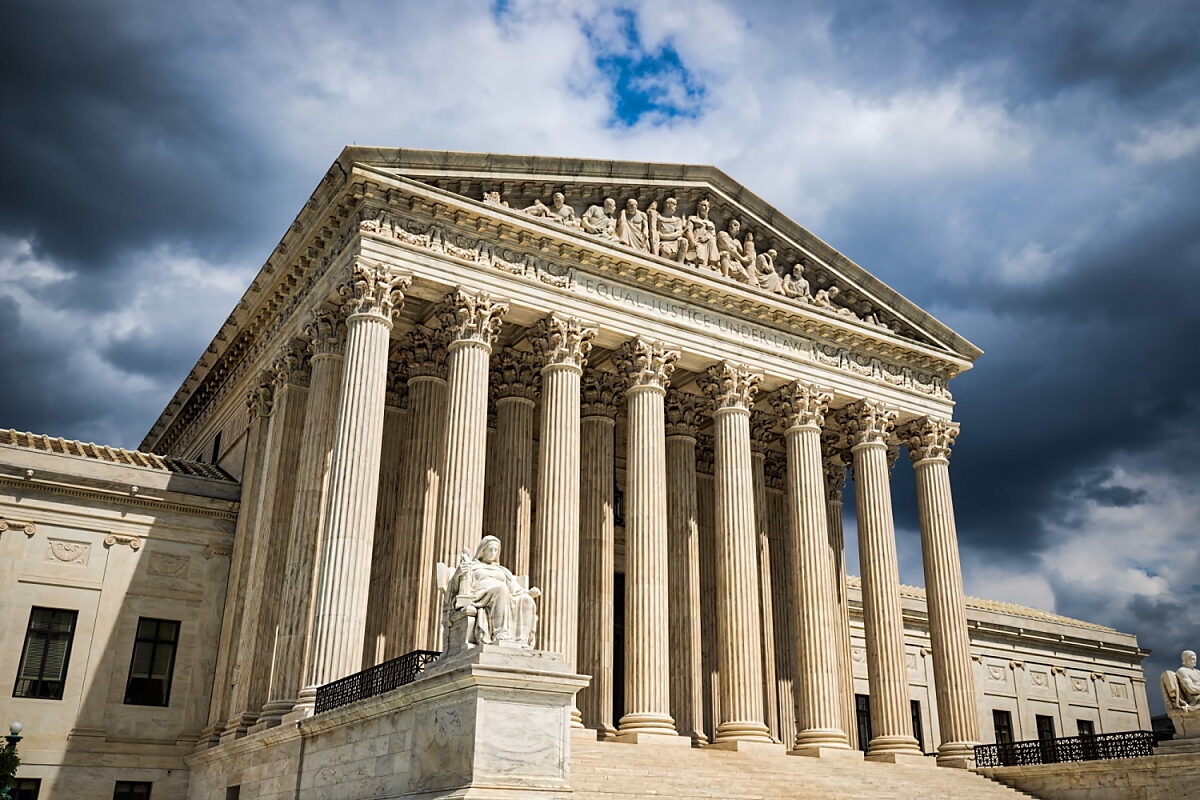
When Richard Hershey stood on a public sidewalk outside the Brookshire Grocery Arena in Bossier City, Louisiana, to hand out pamphlets promoting the Chirstian Vegetarian Association outside a Christian rock concert, he was doing what many generations of Americans have done before him: peacefully exercising his First Amendment rights in a traditional public forum. Yet, local police and arena security officers threatened him with arrest and forced him to leave, even as they left a nearby representative of a commercial radio station entirely unbothered. Seeking justice for this blatant display of viewpoint discrimination, Mr. Hershey filed a federal civil rights lawsuit under a statute commonly known as Section 1983. But rather than vindicate his rights, the federal district court granted the officers qualified immunity, and the US Court of Appeals for the Fifth Circuit affirmed.
Read the rest of this post →

Cato at Liberty
Cato at Liberty
Topics
The Trump Administration Wants to Protect Electricity Customers and Support Data Center Development. Here’s How.
This week, Reuters and Politico reported that the White House plans to expand the Ratepayer Protection Pledge by encouraging utilities, data center developers, and Republican governors to join the effort. The pledge rests on a simple principle: The technology companies driving the AI boom should pay the full cost of the electricity infrastructure they require, rather than shifting those costs onto American families.
That’s the right objective. The next step is finding a policy that actually achieves that.
Public concern over data centers has grown rapidly, driven less by opposition to artificial intelligence than by fears of higher electricity bills. New York Gov. Kathy Hochul recently responded by imposing a statewide moratorium on new data center construction. Other states are considering similar restrictions. Whether those concerns are justified or not, the political reality is clear: If policymakers cannot protect consumers from rising costs, they will eventually protect them by slowing development instead.
America needs a better option. The Trump administration should champion reforms that accomplish both goals at once: accelerate AI infrastructure while ensuring American families never have to subsidize development. Consumer-Regulated Electricity (CRE) offers exactly that solution by allowing developers to build and operate entirely private electricity networks outside the traditional regulated grid.
Read the rest of this post →Related Tags
Is Congress Really Going to Give President Trump New Tariff Powers?
A disclaimer up front: I am not a Russia specialist. I have no particular expertise on the war in Ukraine, and no informed view on whether another round of sanctions on Moscow is necessary, sufficient, or beside the point.
But I do know something about what happens when Congress hands the executive branch, and President Trump in particular, unilateral and discretionary tariff authority. And the tariff title of the Sanctioning Russia Act of 2026—the long-stalled package championed by the late Sen. Lindsey Graham (R‑SC), now backed by the White House and more than two dozen senators—deserves a hard look on those grounds alone.
The bill would authorize the president to impose tariffs of up to 100 percent on the five largest purchasers of Russian crude oil, currently China, India, Slovakia, Hungary, and Azerbaijan, and on the five largest buyers of Russian natural gas, which last year were China, France, Belgium, Japan, and Hungary.
Read the rest of this post →Related Tags
Vote Fraud 101: Wrong-Residence Voting
“Two weeks before this year’s primary elections,” according to a recent report, “Texas Attorney General Ken Paxton announced the creation of a tip line for the public to report people or groups suspected of voter fraud.” Oops! “Despite his own warnings, Paxton appears to have used an address where he did not live while voting in six elections in the past two years, including in May’s runoff that made him the Republican nominee for U.S. senator, according to records obtained by ProPublica and The Texas Tribune.“
Paxton’s campaign responded by calling the report “a baseless, lie-filled tabloid story” and said the candidate “is a registered Texas voter who is in full compliance with state law.” Perhaps it would be most prudent to defer drawing conclusions until after a probe can be completed. When that will happen is uncertain, given that Paxton, as incumbent state attorney general, is himself responsible for conducting any such investigation.
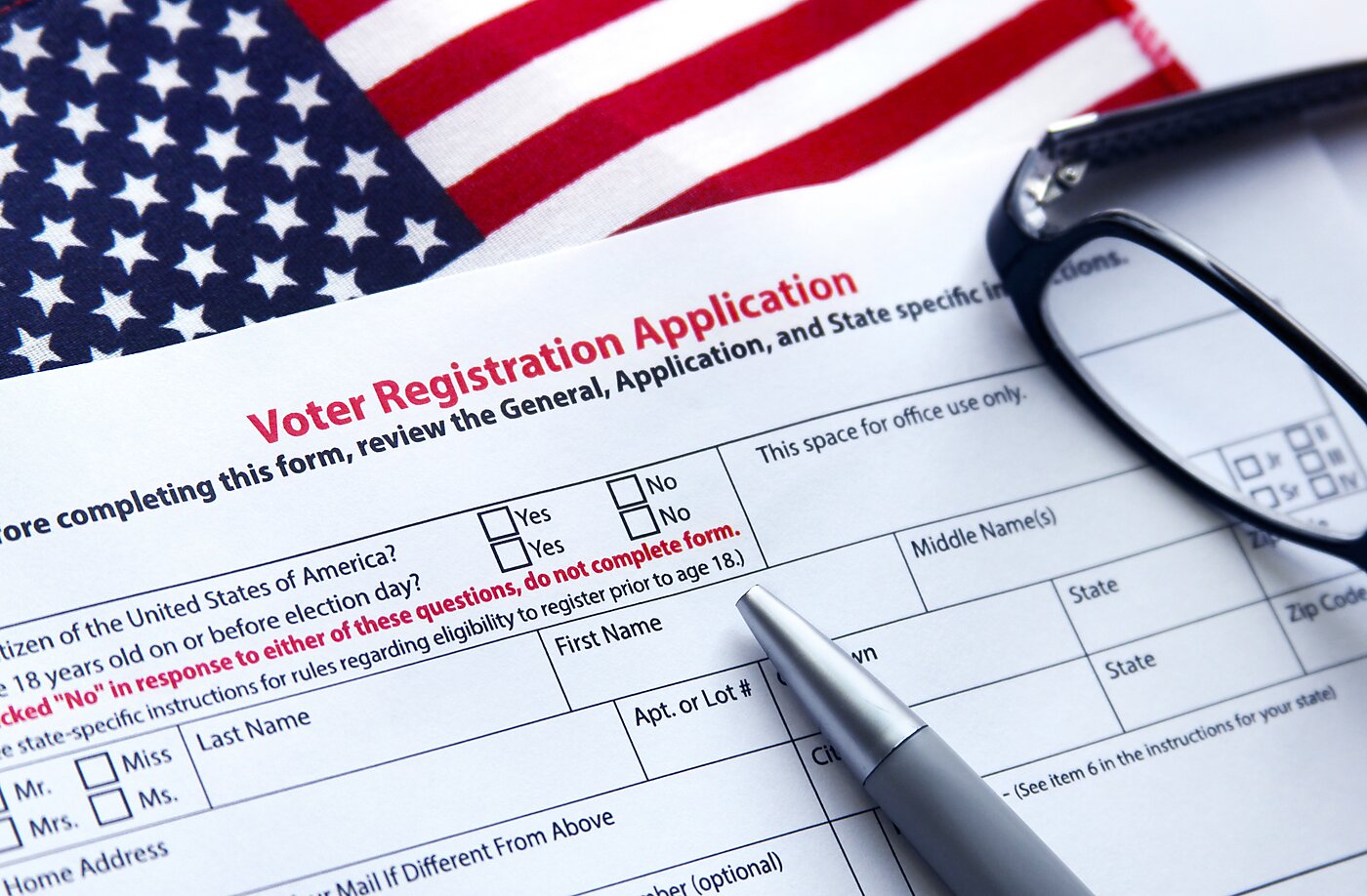
Yesterday, I helped record a Cato video for later release on the subjects of voter fraud and election integrity. While I didn’t bring up the Paxton allegations, I observed that the kind of voter fraud that’s probably committed most often in national elections is the kind carried on by persons with multiple residences who vote from a residence other than the one that the law designates as lawful for that purpose.
Related Tags
The SEC’s Regulatory Agenda Charts the Right Trajectory
Securities and Exchange Commission (SEC) Chairman Paul Atkins put out a statement last week highlighting the release of the SEC’s 2026 regulatory agenda, which aims to return the SEC to its core mission of protecting investors, facilitating capital formation, and maintaining fair, orderly, and efficient markets.
Based on the items on the agenda, the SEC is certainly on the right track. Four issues illustrate this particularly well: enhancing retail exposure to private markets, updating the exempt offering pathways, rethinking the Consolidated Audit Trail, and clarifying the rules surrounding crypto assets.
Related Tags
Let a Hundred Kodaks Bloom?
In a new Wall Street Journal op-ed, senior White House official Peter Navarro argues that the Pentagon’s support for Vulcan Elements and ReElement Technologies is central to breaking China’s chokehold on critical minerals. To explain the administration’s role, he points back to the COVID-era GM-Ventec ventilator partnership.
But the COVID-era proposal to finance Kodak’s production of pharmaceutical ingredients, which Navarro helped spearhead, may prove the more revealing precedent. The proposed $765 million loan was celebrated before its terms were settled or due diligence was completed. The loan was ultimately never issued, and the episode now looks less like an isolated fiasco than an early prototype for the second Trump administration’s governance by deal and governance by headline.
Related Tags
An Old Tanker and a Mexican Detour: How Puerto Rico Finally Started Buying American Natural Gas
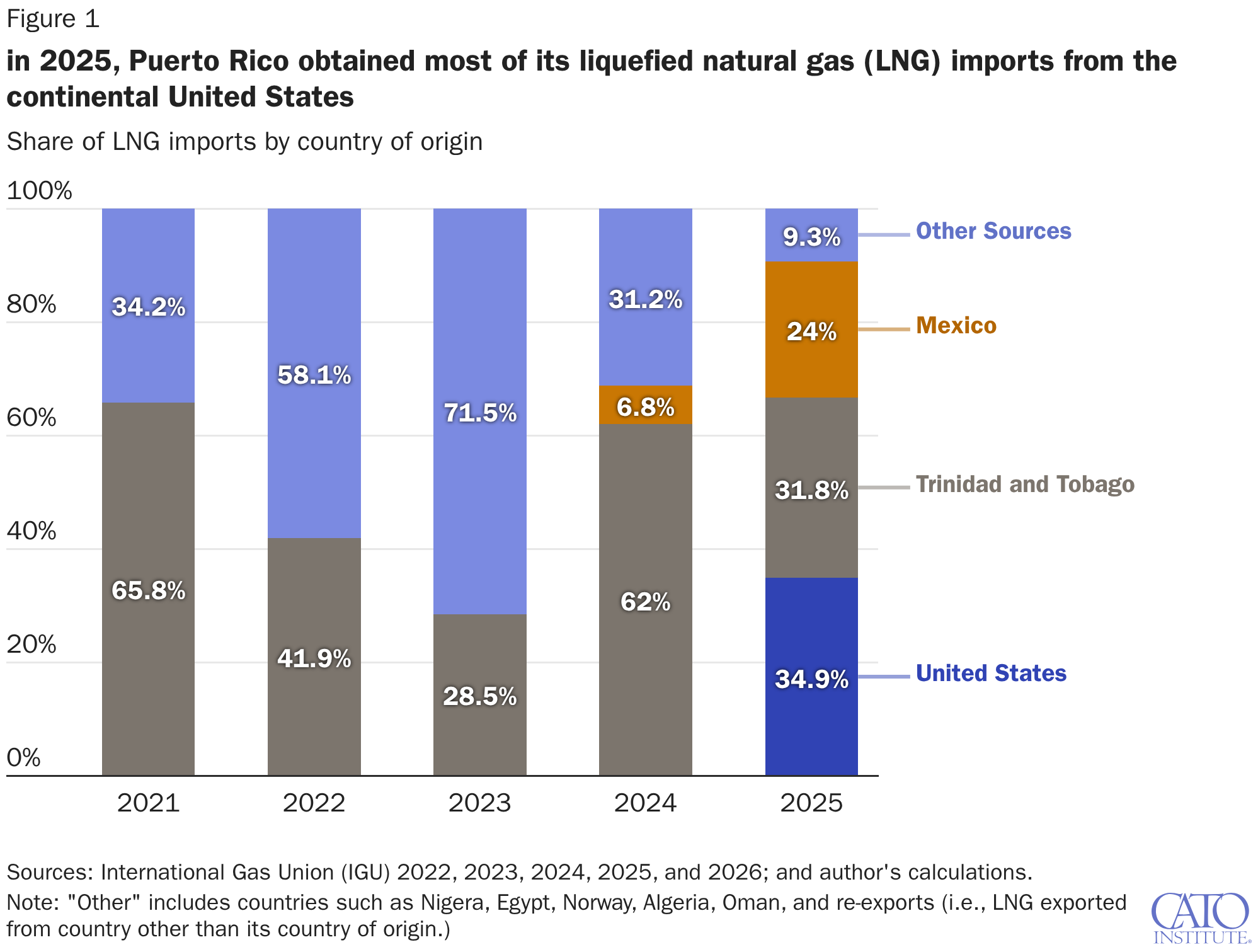
For years, Puerto Rico has been unable to import natural gas from the US mainland. Thankfully, that has now changed. According to the International Gas Union’s recently-released 2026 World LNG Report, the United States last year became Puerto Rico’s largest liquified natural gas (LNG) supplier, accounting for roughly 35 percent of the island’s imports. And that actually understates matters, as the LNG Puerto Rico imports from Mexico — Puerto Rico’s third-largest supplier — is produced from US natural gas. Counting LNG shipped from Mexico but produced from American natural gas, 59 percent of Puerto Rico’s LNG ultimately originated in the United States.
That remarkable turnaround became possible only because market participants found two ways around the Jones Act, the 1920 law restricting shipments between US points to vessels that are built, flagged, owned, and crewed by Americans. For years, the complete absence of Jones Act-compliant LNG tankers effectively placed abundant American natural gas off-limits to Puerto Rico, forcing the island to import LNG from other countries, including Russia, Nigeria, Norway, Oman, and Egypt.