Topic: Foreign Policy and National Security

Boehner Cites, Promotes Americans’ Anxiety

National Journal’s Hotline has dutifully reprinted House Majority Leader John Boehner’s open letter of encouragement to fellow Republicans as they go into the summer recess. In it, Boehner cites Americans’ ongoing anxiety about a number of issues.

“International threats are also contributing to the anxiety American families feel,” he writes.  He continues:

[Terrorists are] bent on destablizing democracies throughout the world. And they are more determined than ever to penetrate our leaking borders and carry out their murderous ambitions against innocent citizens on American soil.

Naturally, Boehner derides Democrats for failing to do security like Republicans do security.

Last year, for example, 152 Democrats voted against the REAL ID Act, which implemented needed driver’s license reforms, making it more difficult for potential terrorists to obtain driver’s licenses or state ID cards, and ensuring that states improve their data security.

Nevermind that false ID was not part of the modus operandi of the 9/11 terrorists. Identification requirements are not very good for tracking or controlling criminals and essentially worthless for stopping suicidal terrorists, but they are very good for tracking and controlling law-abiding citizens.

In Blind Spot: The Secret History of American Counterterrorism, Timothy Naftali frames this kind of letter:

The politics of fear have … prevented a serious national conversation about the true dimensions of the threat. The public has no idea of the tradeoffs between security and freedom. Their elected representatives speak of doing everything necessary to protect them, while each political party argues that it is more likely than the opposition to keep the nation secure.

This perspective turns the Boehner letter into a caricature. Naftali adds, “The American public should be informed that the terrorists cannot win any war against the United States … .”

Is the President Even Paying Attention Anymore?

Via Matt Yglesias, this from President Bush:

“There’s a lot of suffering in the Palestinian Territory because militant Hamas is trying to stop the advance of democracy.”

As Matt properly asks, does it really make sense to argue that Hamas is trying to stop the advance of democracy – when democracy is what put them in power in the first place???

A Telling Analogy

From the Washington Post:

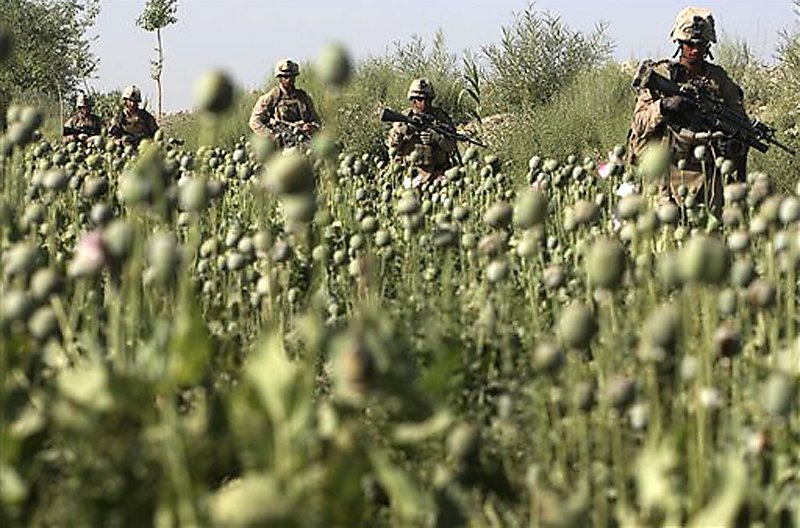
“At this point, it seems like the war on drugs in America,” added Spec. David Fulcher, 22, a medic from Lynchburg, Va., who sat [in a barracks in Baghdad]. “It’s like this never-ending battle, like, we find one IED, if we do find it before it hits us, so what? You know it’s just like if the cops make a big bust, next week the next higher-up puts more back out there.”

Is Opposition to the Bush Doctrine “Isolationism”?

The online version of the New York Times runs the following headline for its story covering its poll on Americans’ attitudes on foreign policy:

Americans Showing Isolationist Streak, Poll Finds

The substance of the poll shows several things: Americans want out of Iraq, they don’t want to deploy US servicemen to try to make peace in Lebanon, and they don’t think that it’s our responsibility to go around the world attempting to force peace on warring nations.

Is that really “isolationism”? I covered the topic of “isolationism” earlier this year when a Pew poll interpreted Americans’ desire to “mind our own business internationally” as a sign of isolationism. (Should we not mind our own business internationally???)

I’ll say one thing: If the media keeps portraying the choice as between the Bush doctrine or “isolationism,” then isolationism is going to end up with a lot more adherents than any of us thought.

“Precipitous” Withdrawal Defined

Former National Security Adviser Zbigniew Brzezinski has never been shy about voicing his opinions. But while his comments on the current crisis in Lebanon before a small group of Washington insiders hosted by Steve Clemons and the New America Foundation has elicited some media coverage, I was most struck by his comments on Iraq.

Brzezinski was an early advocate of a relatively swift military withdrawal from Iraq. In January 2005, he laid out the choices in Iraq in stark but simple terms:

we will never achieve democracy and stability [in Iraq] without being willing to commit 500,000 troops, spend $200 billion a year, probably have a draft, and [impose higher taxes].

As a society, we are not prepared to do that….even the Soviet Union was not prepared to [take equivalent steps in Afghanistan] because there comes a point in the life of a nation when such sacrifices are not justified.

(The full transcript can be found here.)

One year later, Brzezinski made his case again, this time on the op-ed page of the Washington Post:

The real choice that needs to be faced is between:

An acceptance of the complex post-Hussein Iraqi realities through a relatively prompt military disengagement [or]

An inconclusive but prolonged military occupation lasting for years while an elusive goal is pursued.

It is doubtful, to say the least, that America’s domestic political support for such a futile effort could long be sustained by slogans about Iraq’s being “the central front in the global war on terrorism.”

In contrast, a military disengagement by the end of 2006, derived from a more realistic definition of an adequate outcome, could ensure that desisting is not tantamount to losing.

Such talk has been widely panned by the Bush administration’s defenders, who typically dismiss any talk, of any timetable – six months, one year, or ten years – as “cutting and running”.

But Brzezinski remains undeterred. During last week’s meeting he said “We [should] start talking to the Iraqis of the day of our disengagement. We say to them we want to set it jointly, but in the process, indicate to them that we will not leave precipitously.”

He then went on to say “I asked [U.S. Ambassador to Iraq Zalmay] Khalilzad what would be his definition of precipitous and he said four months.”

Four months.

Four months is tantamount to immediate. 130,000 troops cannot be extracted from any country, even under the best of conditions, in a matter of weeks. Doing so in a hostile environment requires that additional measures be taken to ensure troop safety, and this can add weeks or even months to the project. I don’t believe that U.S. troops could be safely withdrawn from Iraq over a period of less than four months, given the conditions on the ground.

However, I have long advocated (e.g. here, here, and here) that the U.S. military’s mission in Iraq be terminated in an expeditious fashion. And I’m hardly alone. Today’s New York Times reports that 56 percent of respondents in their most recent poll favor a timeline for withdrawal; and, according to the most recent Gallup/USA Today poll, 50 percent of Americans favor a troop withdrawal within the next 12 months, while only 8 percent favor sending more troops.

It may be that Khalilzad was speaking out of turn. And it is never wise to base decisions on second-hand information, even from a source as credible as Brzezinski. However, if the Bush administration defines precipitous as less than four months, then we might be onto something.

A military withdrawal from Iraq, conducted over, say, a 12-month period, would provide ample time to coordinate with Prime Minister Nouri al-Maliki’s government on the handover of security responsibilities, and already enjoys support among the American public, and, increasingly, on Capitol Hill. That would hardly be “precipitous” and it certainly is better than our current open-ended policy.

Talking to Bad Guys

In an interview with NPR, former Deputy Secretary of State Richard Armitage wondered aloud why the United States was not engaged in direct dialogue with Syria concerning the ongoing crisis in Lebanon.

We’re not…using all the levers that we have, such as having the Secretary of State talk to the Syrians. I think they want to get involved. I think they want to become more central to the solution. And you might as well give them the opportunity. If they step up to it, fine. If they don’t, we’ll know them for what they are.

NPR’s Renée Montagne followed up:

The administration has made it pretty clear that they are not interested in talking directly to Syria. Why draw that bright of a line?

Armitage:

I don’t know. I think they’ve talked themselves into this.

My own view is … you have to have a dialogue….We have to be able to sit and listen to the Syrians in this case, and see if they have the desire, the courage and the wisdom to get involved in a positive way.

We get a little lazy, I think, when we spend all our time as diplomats talking to our friends and not to our enemies.

On Sunday, John McLaughlin, deputy director of central intelligence from 2000 to 2004, suggested much the same thing in a Washington Post op-ed entitled “We Have to Talk to Bad Guys”:

Among the five lessons to be drawn from the recent fighting in the Middle East is this gem:

even superpowers have to talk to bad guys. The absence of a diplomatic relationship with Iran and the deterioration of the one with Syria – two countries that bear enormous responsibility for the current crisis – leave the United States with fewer options and levers than might otherwise have been the case….We will have to get over the notion that talking to bad guys somehow rewards them or is a sign of weakness. As a superpower, we ought to be able to communicate in a way that signals our strength and self-confidence.

Makes sense to me.

Armitage and McLaughlin are now out of government. Do they still talk to people on the inside? Is anyone listening?

What Does it Say When the Sensible Voices Are “Former” Administration Officials?

Former Deputy Secretary of State Richard Armitage was typically brilliant on NPR this morning, discussing the limited options available in brokering a peace agreement in southern Lebanon. Here is a sampling:

I find a lot of chatter about this peacekeeping force, but I find very few people putting their hands in the air saying they’ve got troops who are willing to do it.

It all sounds like a great idea, but, sorry, each of us are busy with our own problems.

And what of the U.S. role?

If we had excess troops, which I don’t believe we have…, we would be seen as much more partial to Israel and hence would not be acceptable [to the other side].

Armitage served in the Pentagon when President Reagan dispatched U.S. troops to Lebanon in 1982, and he looks back on that period without a hint of sentimentality.

It was a very troubled time. Actually, sooner rather than later…we were seen as taking sides in someone else’s civil war. Ultimately we lost 241 naval and marine personnel….in the October ‘83 bombing.

His experience in 1982 and 1983 conditions his view of the present and future. He was asked, “Are there parallels between that peacekeeping force and now?”

I remember with stunning clarity one of our Israeli interlocutors sitting in my office telling me that ‘Don’t worry about this peace in Galilee operation. We understand our neighbors very well. We understand them better than anyone. We know all the dynamics of the situation in Lebanon.’ That turned out not quite to be the case. I suspect that people in government now are also hearing that from Israel.

Don’t get me wrong. If I thought that this air campaign would work and would eliminate Nasrullah and the leadership of Hezbollah, I think we’d all be fine. But I fear that you can’t do this from the sky, and that you’re going to end up empowering Hezbollah.

The full interview is about eight minutes long, but well worth the time.