Topic: Education and Child Policy

School Funding System Not Broken… It Just Doesn’t Work

We do not claim that the school funding system… is fundamentally flawed, only that there is no correlation at all between the level of per pupil funding and educational outcomes. —Deloitte

Hahahahaha! Ha! Haha! Haaaaaah. Okay. Now a little context.

Last November, the British government “published” a study of its state school system that it had commissioned from the accounting firm Deloitte. Maybe “published” is too strong a word, since there was apparently no press release, no news conference, no effort of any kind to make the public or the media aware of its existence. Perhaps that’s because the study found no correlation between spending and achievement in Britain’s state schools, and the current government’s policy is to increase spending on state schools in an effort to be seen to be doing something.

The sad thing is, the same fundamentally flawed funding systems and dysfunctional political incentives exist in the United States, too… and with much the same effect:

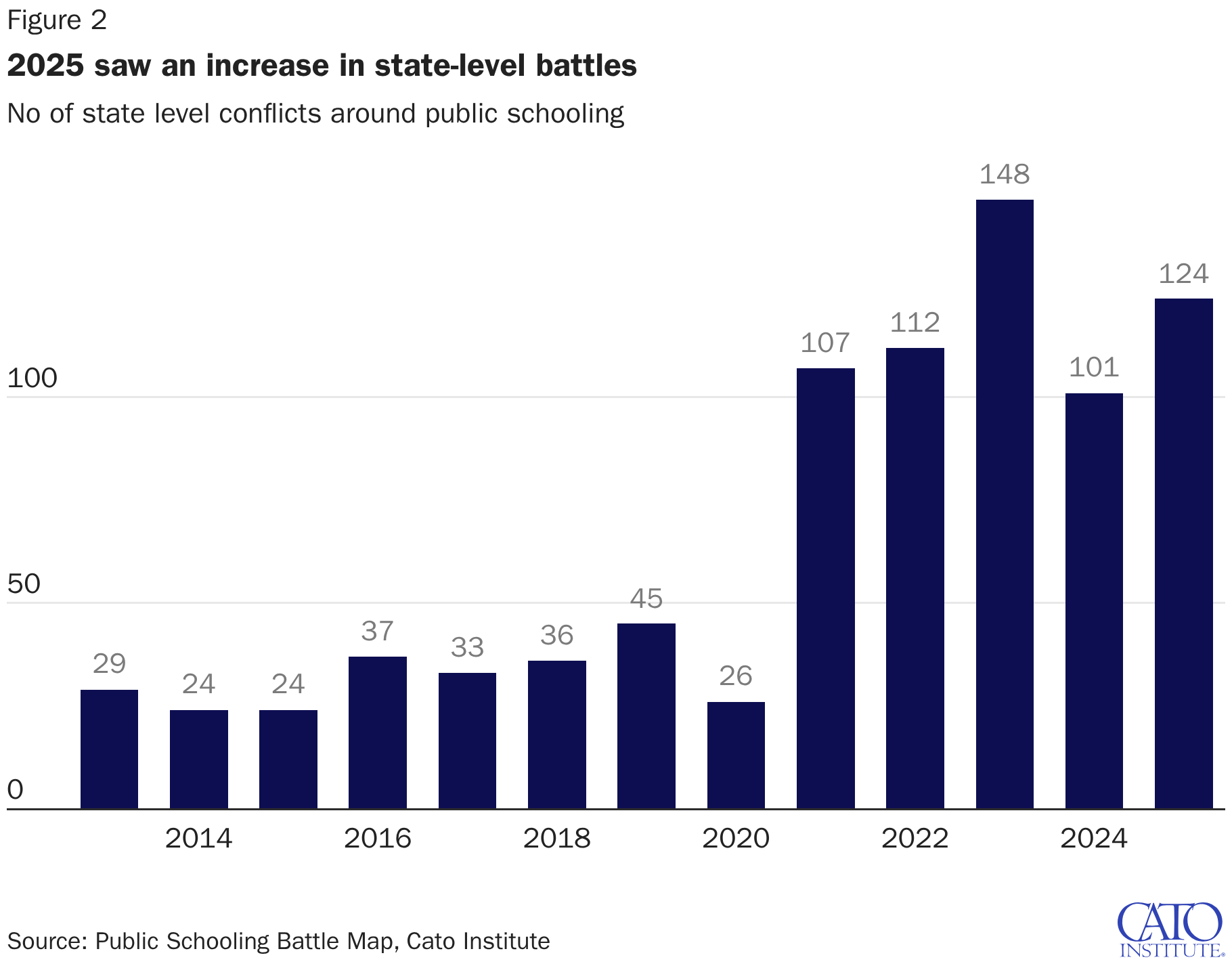
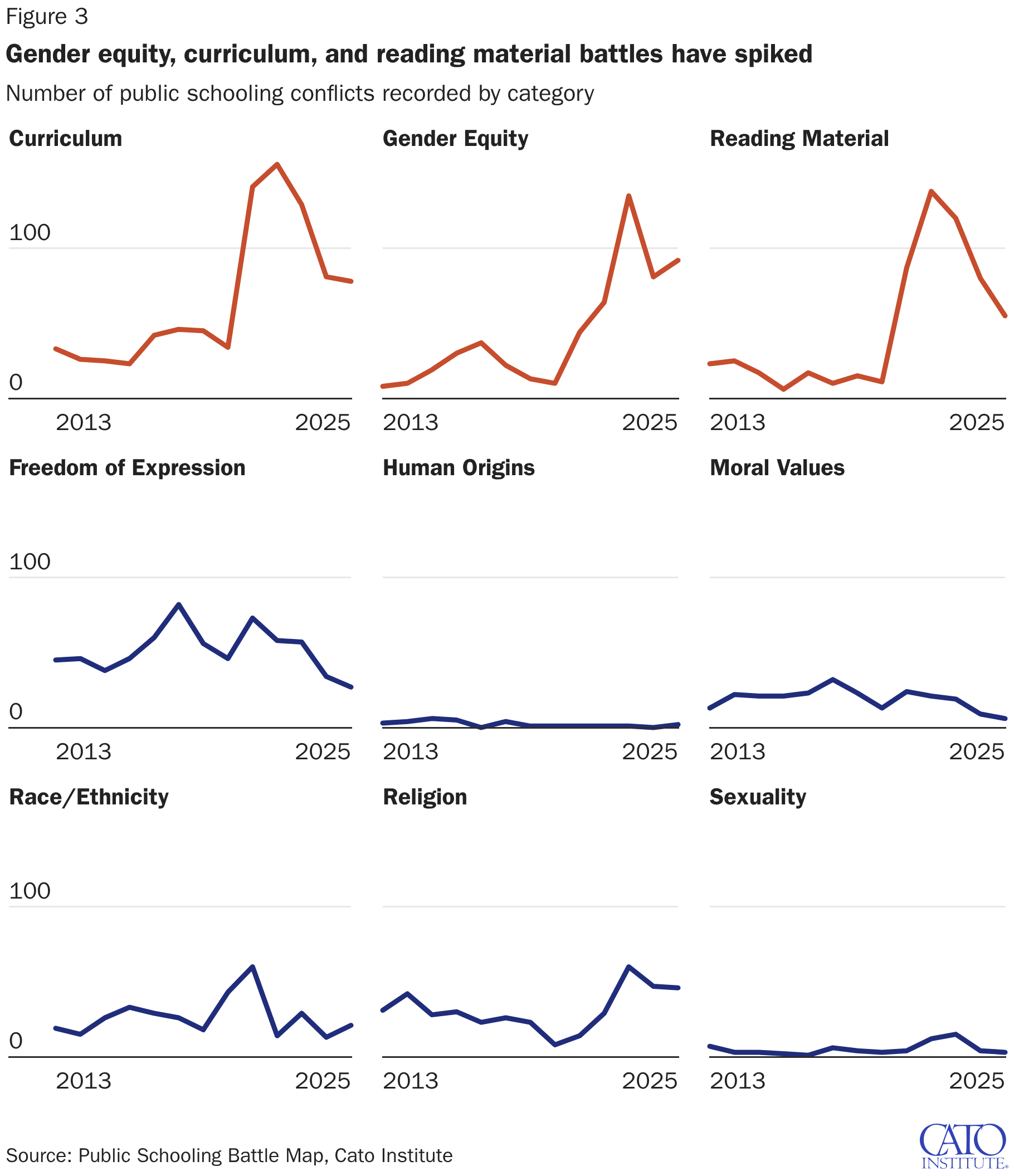
Chart of trends in U.S. public schooling

Hat tip: Joanne Jacobs.

Pushed into Common Core? Thanks For Volunteering!

If someone pushed you into a wall, would you turn around – after you regained consciousness, of course – and say, “it’s fine. I totally smashed my face voluntarily”? No, you  wouldn’t, but it seems Chester Finn, President of the Thomas B. Fordham Institute, would. After all, he just wrote the following about how state adoption of Common Core national curriculum standards has been “totally voluntary”:

This was—and remains—totally voluntary, but decisions grew more complicated when the Obama administration started pushing states toward such adoptions by jawboning, hectoring, and luring them with dollars and regulatory waivers.

Doesn’t sound truly voluntary at all, does it? And let’s not forget, taxpayers – who live in states – had no choice about sending their dollars to Washington in the first place.

Wait. I take that back. It was totally voluntary. They’d just go to jail if they refused to pay up.

How to Engage with Cato on Social Media

In case you haven’t been following what the Cato Institute has been doing lately on social media, here’s an accessible list of all of Cato’s current projects across different social media platforms:

Facebook

Twitter

Teachers Union Calls For Divestment From Education Reform Supporters

Last week, the American Federation of Teachers released a blacklist of financial asset managers that fund organizations supporting education reform and/or switching from defined-benefit to defined-contribution pension systems, such as StudentsFirst, the Show-Me Institute and the Manhattan Institute. The report urges AFT affiliates to pressure pension fiduciaries not to invest their money with such asset managers. The AFT also makes a not-so-subtle threat to go after the donors to other think tanks and education reform groups:

This report is not intended as a one-time publication. Future versions will incorporate additional political organizations and their donors. The AFT is committed to shining a bright light on organizations that harm public sector workers, especially when those organizations are financed by individuals who earn their money from the deferred wages of our teachers.

This isn’t the first time the AFT has employed strong-arm tactics, but I find it hard to muster any outrage. As this report makes clear, the AFT’s mission is not about providing the best education for children, it’s about protecting the jobs of its members. It makes perfect sense that they wouldn’t want their money going to organizations that they perceive as working against their interests (whether that perception is accurate or not). If they would rather have lower returns on their investments, that’s their prerogative.

That said, if the AFT is going to be consistent and principled, they should support public-sector “right to work” legislation so that no one who wants to teach in public schools is forced to join a union and have their mandatory dues go toward a cause that they oppose. Moreover, the unions should end the practice of having state and local governments collect dues for them, essentially using state power and tax dollars to fund causes that some taxpayers, parents, and even teachers perceive as against their interests.

Of course, they’ll never do that. Without the use of coercion, the entire machine would fall apart.

School Choice Works

The evidence is in: school choice works. Yesterday, the Friedman Foundation for Educational Choice released their third edition of their report “A Win-Win Solution: The Empirical Evidence on School Choice.” The report provides a literature review of dozens of high-quality studies of school choice programs around the country, including studies from scholars at Harvard University, Stanford University, Cornell University, the University of Arkansas, the Brookings Institution, and the Federal Reserve Bank. The studies examine the impact of school choice programs on the academic performance of participants and public school students, the fiscal impact on taxpayers, racial segregation, and civic values.

The report’s key findings included the following:

  • Twelve empirical studies have examined academic outcomes for school choice participants using random assignment, the “gold standard” of social science. Of these, 11 find that choice improves student outcomes—six that all students benefit and five that some benefit and some are not affected. One study finds no visible impact. No empirical study has found a negative impact.
  • Twenty-three empirical studies (including all methods) have examined school choice’s impact on academic outcomes in public schools. Of these, 22 find that choice improves public schools and one finds no visible impact. No empirical study has found that choice harms public schools.
  • Six empirical studies have examined school choice’s fiscal impact on taxpayers. All six find that school choice saves money for taxpayers. No empirical study has found a negative fiscal impact.
  • Eight empirical studies have examined school choice and racial segregation in schools. Of these, seven find that school choice moves students from more segregated schools into less segregated schools. One finds no net effect on segregation from school choice. No empirical study has found that choice increases racial segregation.
  • Seven empirical studies have examined school choice’s impact on civic values and practices such as respect for the rights of others and civic knowledge. Of these, five find that school choice improves civic values and practices. Two find no visible impact from school choice. No empirical study has found that school choice has a negative impact on civic values and practices.

On the same day, a new study from researchers at Harvard University and the Brookings Institution found that a school choice program boosted college enrollment among African-American participants by 24 percent.

While many of the findings show only modest improvement, they consistently show that school choice programs produce the same or superior results across a gamut of measures. Moreover, not all the benefits of choice are easily measurable. Some families are looking for a school that better meets a student’s special needs, instills the parents’ values, inspires a lifelong love of learning, or where a student is safe from bullying. These outcomes are sometimes difficult if not impossible to measure in the aggregate, but parents are in the best position to tell the difference for their own children.

National Standardizers, Time to Speak Out against Federal Coercion

Maybe because it’s now hitting schools, or because it’s gotten high on the radars of Michelle Malkin and Glenn Beck, or because national science standards have raised a ruckus, but for whatever reason the Common Core is finally starting to get the national—and critical—attention it has desperately needed. Indeed, just yesterday Sen. Chuck Grassley (R-IA) sent a letter to the Senate appropriations subcomittee that deals with education urging members to employ legislative language prohibiting federal funding or coercion regarding curricula. That follows the Republican National Committee last week passing a resolution opposing the Common Core.

It’s terrific to see serious attention paid to the Common Core, even if it is probably too late for many states to un-adopt the program in the near term. At the very least, this gives new hope that the public will be alert if there are efforts to connect annual federal funding to national standards and tests through a reauthorized No Child Left Behind Act. And there are certainly some states where nationalization could be halted in the next few months. Perhaps most important, the Grassley letter gives Common Core supporters who’ve said they oppose federal coercion a huge opening to act on their words—to loudly support an effort to keep Washington out. They can either do that, or substantiate the powerful suspicion that they are happy to use federal force to impose standards, they just don’t want to admit it.

School Choice Survives Repeal Attempt in New Hampshire

Just moments ago, New Hampshire’s state senate rejected an attempt to repeal the state’s nascent scholarship tax credit law by a 13-11 vote*. The program grants tax credits to businesses worth 85 percent of their contributions to nonprofit scholarship organizations that fund low- and middle-income students attending private or home schools. The program took effect on January 1 of this year but scholarships will not be distributed until the new school year in the fall.

The support of Senate Education Committee Chairwoman, Senator Nancy Stiles, was decisive in saving the program. Last year, Sen. Stiles had voted against the school choice proposal, but she decided to oppose the repeal because she believed “it would be irresponsible to overturn it without seeing whether the legislation made a positive difference.” She also noted that without having had the opportunity to evaluate the program’s effectiveness, the opponents of the school choice program want to “rescind a program, not based on its effectiveness, but on philosophical differences. I cannot support or be a part of this effort.”

The legislative battle does not end here, however, since the NH House also repealed the scholarship tax credit program in the House version of the budget. Budget negotiations between New Hampshire’s Democrat-controlled House and Republican-controlled Senate are expected to continue until about mid-June.

The law is also being challenged in court by the Americans for Separation of Church and State and the ACLU, who claim that the school choice program violates the state’s historically anti-Catholic Blaine Amendment, which prohibits public funding of private schools. Their argument is based on a false premise, which is why the courts have ultimately rejected it wherever it has been tried. A citizen’s money is her own until it reaches tax collector’s hand. A private donation therefore does not constitute “public funding” even if it qualifies for a tax credit or deduction. While impossible to predict the future, it is likely that the Granite State courts will rule in line with other states’ interpretations of the Blaine Amendment and the U.S. Supreme Court’s understanding of tax credits.

*UPDATE: I originally reported that the vote was 14-10 to table the repeal bill. In fact, one state senator had mistakenly voted for the motion when he intended to vote against it and that was later corrected. The 13-11 vote was along party lines.