Last night, the Senate passed a continuing resolution along with three appropriations bills, one of which, an agriculture appropriations bill, effectively shut down the US hemp industry.
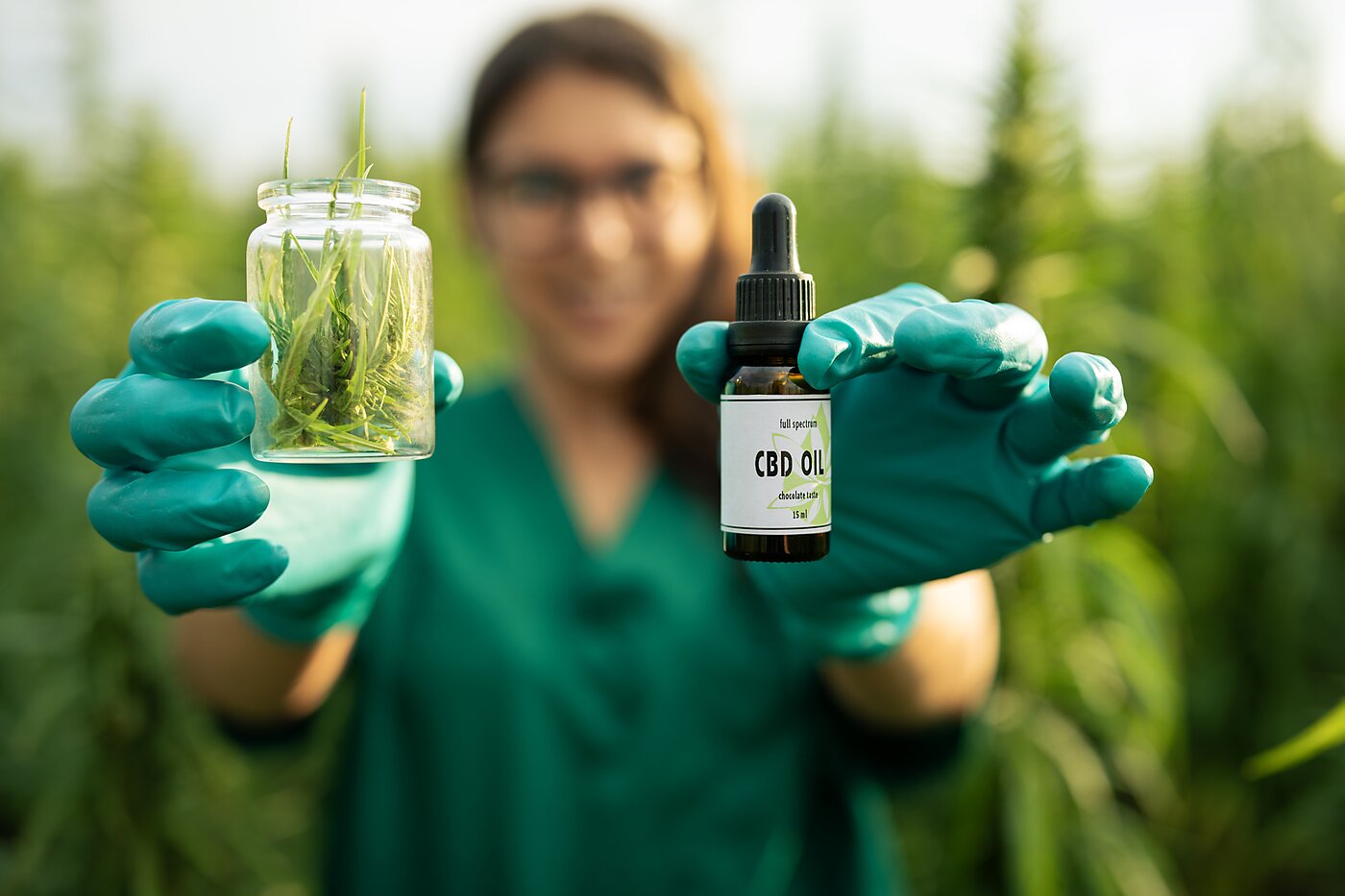
Growers use the plant Cannabis sativa to produce both hemp and marijuana. Under the Controlled Substances Act of 1970, Congress classified “marihuana” (spelled that way in the statute) as a Schedule I controlled substance and defined it broadly enough to include all parts of the Cannabis sativa L. plant and its derivatives. Only the mature stalks, fiber, sterilized seeds, and products made from them—materials with negligible THC and no psychoactive properties—were exempt. As a result, non-intoxicating hemp was treated no differently than marijuana, and growing it legally required a DEA license, which effectively banned commercial production.
That changed with the 2018 Farm Bill, which removed hemp—defined as cannabis containing no more than 0.3 percent delta-9-THC by dry weight—from the Controlled Substances Act and finally legalized its cultivation and interstate commerce under federal law. Senators Mitch McConnell and Rand Paul, both from Kentucky, now one of the nation’s largest hemp producers, championed the reform.
Over the past several years, one of the most popular derivatives of legally grown cannabis has been cannabidiol (CBD). Although CBD is non-intoxicating, it has created a regulatory mess of its own. The Food and Drug Administration (FDA) prohibits adding CBD to food or marketing it as a dietary supplement, yet products are widely available in retail stores and online. The agency’s refusal to create a clear regulatory pathway has left the market in limbo—filled with unstandardized products of uncertain purity and potency.
Delta-8-THC is found in trace amounts in the cannabis sativa plant. However, it can be synthesized from CBD and is now widely marketed.
Delta‑8 THC is far from a fringe product. A recent nationally representative survey found that about 7.7 percent of US adults have tried delta‑8 THC, with use notably higher in states where recreational cannabis remains illegal or where delta‑8 sales are unregulated—roughly 10.9 percent compared to 5.5 percent in states with legal adult-use cannabis. The broader market for intoxicating hemp-derived cannabinoids (excluding CBD) has exploded, rising by more than 1,200 percent between 2020 and 2023—from about $200 million to $2.8 billion in US sales. Within that category, delta‑8 alone generated roughly $1.2 billion in 2023, accounting for about 44 percent of the total hemp-derived cannabinoid market.
Delta‑8 products are now sold virtually everywhere—dispensaries, gas stations, vape and head shops, convenience stores, and online retailers. A survey in Fort Worth found that 11 percent of outlets carried delta‑8 products, most commonly vapes or “flower” (96 percent) and edibles (76 percent). The marketing is equally telling: gummies, vape pens, and edibles packaged to resemble legal cannabis products but sold at much lower prices. That combination of affordability, accessibility, and ambiguity has fueled a booming market that blurs the line between hemp and marijuana—the so-called “hemp loophole”—one Congress likely never intended when it legalized hemp in 2018.
Here’s the loophole—and it’s all about math, not plant chemistry. The 2018 Farm Bill legalized hemp with no more than 0.3 percent delta‑9 THC by dry weight, but it never defined “dry weight” for products like gummies or drinks. A five-gram gummy can legally contain up to 15 milligrams of THC and still qualify as hemp because that’s only 0.3 percent of its weight. The same logic applies to drinks: a 12-ounce seltzer weighing about 340 grams could contain around 10 mg of THC and remain within the limit. The THC in these products usually comes either from trace amounts in hemp extract or from CBD that’s chemically converted into delta‑9 THC.
Congress set the 0.3 percent threshold to differentiate hemp from marijuana in the field, not to regulate finished consumer products. However, because the law limits THC by concentration rather than total amount, manufacturers can easily produce larger products to deliver a psychoactive dose while remaining federally legal. The result is a thriving market for hemp-derived edibles that effectively function as legal low-dose cannabis.
Meanwhile, several states have passed laws limiting the THC concentration (or otherwise regulating) gummies, drinks, and other hemp-derived cannabinoid products. Some states have enacted laws banning so-called “intoxicating derivatives” of CBD, such as delta-8-THC and delta-10-THC.
Many members of Congress have had second thoughts about the 2018 Farm Bill, including one of its original proponents, Senator McConnell. They have inserted language into the agriculture appropriations bill that makes the 0.3 percent THC threshold apply to all forms of THC found in cannabis sativa and “any other cannabinoids that have similar effects (or are marketed to have similar effects) on humans or animals as a tetrahydrocannabinol (as determined by the Secretary of Health and Human Services).” That would make it virtually impossible to grow Cannabis sativa legally.
The language also prohibits hemp-derived cannabinoids that are sold as finished consumer goods or as intermediate products marketed directly to the public, as well as any cannabinoids that are chemically synthesized or produced through processes that don’t occur naturally in the cannabis plant.
President Trump voiced support for the new language.
Senators Rand Paul (R‑KY) and Jeff Merkley (D‑OR) sought to amend the bill to remove the language. They argued that many states have already passed regulations addressing federal lawmakers’ concerns and that a one-size-fits-all top-down approach from the federal government was unnecessary. Worse, it would destroy the hemp-growing industry, putting most hemp farmers out of business. Hemp-derived product markets are among the most valuable end markets for the hemp industry, supporting over 300,000 jobs.
Alas, their amendment failed.
This marks a major affront to adult autonomy. As I wrote in Your Body, Your Health Care,
It is paternalistic for the government to prohibit people from selling, buying, or consuming drugs—even if the prohibition is limited to certain kinds of drugs. It assaults individuals’ autonomy and their right to self-medicate.
Moreover, governments cannot stop people from using drugs. Governments can only make drug use more dangerous by driving it underground into an unregulated, and sometimes deadly, black market.
Twenty-four states and the District of Columbia have legalized recreational cannabis, and 47 states plus the District of Columbia have legalized medicinal cannabis. A Gallup survey found 70 percent of adults favor legalizing marijuana.
Congress has once again mistaken prohibition for prudence. In one night, the Senate passed legislation to reopen the government and shut down a thriving legal industry. Lawmakers who once championed hemp now want to criminalize it again—not because it’s dangerous, but because they don’t trust adults to make their own choices. That’s not public health; it’s paternalism dressed up as policy. If 70 percent of Americans can recognize that adults should be free to decide for themselves whether to use cannabis, it shouldn’t be so hard for Congress to catch up.