<rss version="2.0" xmlns:atom="http://www.w3.org/2005/Atom">
<channel>
<title>David Rittgers (Author at The Cato Institute)</title>
<atom:link href="http://www.cato.org/rss/author.xml?auth_id=1046/" rel="self" type="application/rss+xml" />
<link>http://www.cato.org/people/david-rittgers</link>
<managingEditor>amast@cato.org (Andrew Mast)</managingEditor>
<description>
The Cato Institute seeks to broaden the parameters of public policy debate to allow consideration of the traditional American principles of limited government, individual liberty, free markets and peace. Toward that goal, the Institute strives to achieve greater involvement of the intelligent, concerned lay public in questions of policy and the proper role of government.
</description>
<language>en-us</language>

<image>
				<url>http://www.cato.org/people/images/lowres/rittgers.jpg</url>
				<title>David Rittgers (Cato Institute)</title>
				<link>http://www.cato.org/people/david-rittgers</link>
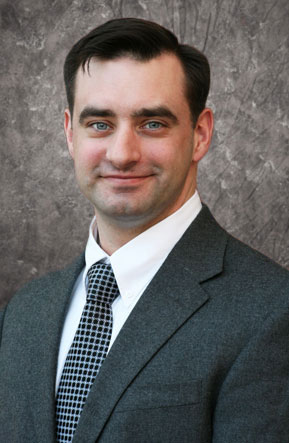
				<description>David Rittgers</description>
				<width>100</width>
				<height>153</height>
			</image><item>
					<title>United States v. Comstock (Legal Briefs)</title>
					<link>http://www.cato.org/pubs/legalbriefs/us_v_comstock.pdf</link>
					<description><![CDATA[In 2006, Congress passed the Adam Walsh Child Protection and Safety Act, one provision of which authorizes the federal government to civilly commit anyone in the custody of the Bureau of Prisons whom the Attorney General certifies to be "sexually dangerous."  The effect of such an action is to continue the certified person's confinement after the expiration of his prison term, without proof of a new criminal violation.  Six days before the scheduled release of Graydon Comstock&#8212;who had been sentenced to 37 months in jail for receiving child pornography&#8212;the Attorney General certified Comstock as sexually dangerous.  Three years later, Comstock thus remains confined in a medium security prison, as do more than 60 other similarly situated men in the Eastern District of North Carolina alone.  He and several others challenged their confinements as going beyond Congress's constitutional authority and won in both the district and appellate courts.  The United States successfully petitioned the Supreme Court to review the case.  Cato, joined by Georgetown law professor (and Cato senior fellow) Randy Barnett, filed a brief opposing the government.  We argue that the use of federal power here is unconstitutional because it is not tied to any of Congress's limited and enumerated powers.  The government's reliance on the Necessary and Proper Clause of Article I, Section 8, is misplaced because that clause grants no independent power but merely "carries into execution" the powers enumerated elsewhere in that section.  The commitment of prisoners after their terms simply is not one of the enumerated powers.  While the government justifies its actions by invoking its <em>implied</em> power "to establish a federal penal system"&#8212;itself a necessary and proper auxiliary to certain enumerated powers&#8212;civil commitment is unrelated to creating or maintaining a penal system (let alone any enumerated power).  Nor can the law at issue fall under the Commerce Clause, because civil commitment involves non-economic intrastate activity.  As the Supreme Court recognized almost 150 years ago in <em>Ex Parte Milligan</em>, "[n]o graver question was ever considered by this court, nor one which more nearly concerns the rights of the whole," than the government's unconstitutional assertion of power against its own citizens.  In this spirit, the Court should affirm the Fourth Circuit's rejection of this blatant government overreach.]]></description>
					<pubDate>Wed, 04 Nov 2009 00:00:00 EST</pubDate>
					<guid>http://www.cato.org/pub_display.php?pub_id=10942</guid>
				</item>
				<item>
				<title>Be a Good Victim (Commentary)</title>
				<link>http://www.cato.org/pub_display.php?pub_id=10691</link>
				<description><![CDATA[In August, a man shot two people to death on a bridge near San Francisco. At the moment of the killings, two on-duty Marin County sheriff's deputies were within 100 yards of the shooter. One was close enough to see the muzzle blast of the shotgun. The police officers, however, did not move against t...]]></description>
				<pubDate>Thu, 22 Oct 2009 00:00:00 EDT</pubDate>
				<guid>http://www.cato.org/pub_display.php?pub_id=10691</guid>
			</item>
			<item>
				<title>National Security Court: Reinventing the Wheel, Poorly (Commentary)</title>
				<link>http://www.cato.org/pub_display.php?pub_id=10573</link>
				<description><![CDATA[One of the side effects of the Guantanamo detainee dilemma is a cottage industry of law professors and national security buffs proposing a national security court, a new federal court designed to deal specifically with terrorist cases. The idea is that just as we have specialized courts for immigrat...]]></description>
				<pubDate>Tue, 22 Sep 2009 00:00:00 EDT</pubDate>
				<guid>http://www.cato.org/pub_display.php?pub_id=10573</guid>
			</item>
			<item>
			<title>Enhanced Justification Techniques (Daily Podcast)</title>
			<link>http://www.cato.org/dailypodcast/podcast-archive.php?podcast_id=973</link>
			<pubDate>Wed, 02 Sep 2009 00:00:00 EDT</pubDate>
			<guid>http://www.cato.org/dailypodcast/podcast-archive.php?podcast_id=973</guid>
		</item>
		<item>
				<title>Expanding Double Jeopardy (Commentary)</title>
				<link>http://www.cato.org/pub_display.php?pub_id=10428</link>
				<description><![CDATA[Welcome to a new age of double jeopardy. The hate-crime statute just passed by Congress expands the potential for federal prosecutions to chilling new levels, and even creates the possibility of retrials for crimes that have already been ruled on by state courts. In one fell swoop, lawmakers have vi...]]></description>
				<pubDate>Fri, 07 Aug 2009 00:00:00 EDT</pubDate>
				<guid>http://www.cato.org/pub_display.php?pub_id=10428</guid>
			</item>
			<item>
				<title>Hate Crime Legislation Would Backfire (Commentary)</title>
				<link>http://www.cato.org/pub_display.php?pub_id=10346</link>
				<description><![CDATA[Congress seems intent on passing new hate-crime legislation. It may sound like a surefire way to tamp down on hate crime, but it won't work.

The law would expand federal jurisdiction from crimes motivated by the victim's race, color, religion, or national origin to include the victim's gender, se...]]></description>
				<pubDate>Fri, 10 Jul 2009 00:00:00 EDT</pubDate>
				<guid>http://www.cato.org/pub_display.php?pub_id=10346</guid>
			</item>
			<item>
			<title>Hate Crime Laws Are Hater-Aid (Daily Podcast)</title>
			<link>http://www.cato.org/dailypodcast/podcast-archive.php?podcast_id=934</link>
			<pubDate>Tue, 30 Jun 2009 00:00:00 EDT</pubDate>
			<guid>http://www.cato.org/dailypodcast/podcast-archive.php?podcast_id=934</guid>
		</item>
		<item>
			<title>Supreme Court Stands Up for Student Privacy (Scholar Comments)</title>
			<link>http://www.cato.org/pressroom.php?display=ncomments&amp;id=243#blurb281</link>
			<description><![CDATA[<p>The Supreme Court's decision today in <em>Safford Unified School District #1 et al. v. Redding</em> was a victory for privacy and decency. The Court held that a middle school violated the Fourth Amendment rights of a thirteen-year-old girl by strip searching her in a failed effort to find Ibuprofen pills and an over-the-counter painkiller.</p>

<p>The Cato Institute filed an amicus brief, joined by the Rutherford Institute, opposing such abuses of school officials' authority. The search in this case should have ended with the student's backpack and pockets; forcing a teenage girl to pull her bra and panties away from her body for visual inspection is an invasion of privacy that must be reserved for extreme cases. School officials should be authorized to conduct such a search only when they have credible evidence that the student is in possession of objects posing a danger to the school and that the student has hidden them in a place that only a strip search will uncover.</p>

<p>The Fourth Amendment exists to preserve a balance between the individual's reasonable expectation of privacy and the state's need for order and security. Unnecessarily traumatizing students with invasive and humiliating breaches of personal privacy upsets this balance. Today's decision restores reasonable limits to student searches and provides valuable guidance to school officials.</p>]]></description>
			<pubDate>Thu, 25 Jun 2009 00:00:00 EDT</pubDate>
			<guid>http://www.cato.org/pressroom.php?display=ncomments&amp;id=243#blurb281</guid>
		</item>
		<item>
			<title>Obama Revives Commissions for Detainees (Daily Podcast)</title>
			<link>http://www.cato.org/dailypodcast/podcast-archive.php?podcast_id=900</link>
			<pubDate>Tue, 19 May 2009 00:00:00 EDT</pubDate>
			<guid>http://www.cato.org/dailypodcast/podcast-archive.php?podcast_id=900</guid>
		</item>
		
</channel>
</rss>