Topic: Foreign Policy and National Security

American Jurisprudence as Sausage-Making: Who Interprets the Constitution?

The Supreme Court is finishing up its latest term, saving its most controversial decisions for last. Americans venerate the Constitution, but judges determine its meaning.

Unfortunately, the result of the judicial process vindicates German Chancellor Otto von Bismarck, who famously said that no one should see his sausages or his laws being made. As I point out in my latest Forbes online column, much of the Constitution is treated like an antique wall decoration: although the federal government is supposed to have only limited, enumerated powers, today it pretty much does whatever it wants.

Unfortunately, there may be no way to avoid judicial rulemaking. Louis Fisher of the Library of Congress argued: “Being ‘ultimate interpreter,’ however, is not the same as being exclusive interpreter.” 

It seems obvious that if you take an oath to support the Constitution, you shouldn’t act in ways that violate the law. Former congressman and judge Abner Mikva argued that a failure by Congress to consider constitutionality “is both an abdication of its role as a constitutional guardian and an abnegation of its duty of responsible lawmaker.”

Still, the judiciary long has had the final say. But that actually is supposed to limit government and protect liberty. As I wrote on Forbes online:

The final say logically goes to the judiciary, since the legislative and executive branches pass and approve/execute laws, respectively, making them the institutions in most need of constraint. Alexander Hamilton argued in Federalist 78 that limitations on government power “can be preserved in practice no other way than through the medium of courts of justice, whose duty it must be to declare all acts contrary to the manifest tenor of the Constitution void. Without this, all the reservations of particular rights or privileges would amount to nothing.”

In this way, the judiciary was supposed to protect individual liberty. In introducing the Bill of Rights, James Madison told Congress: “If they are incorporated into the Constitution, independent tribunals of justice will consider themselves in a peculiar manner the guardians of those rights; they will be an impenetrable bulwark against every assumption of power in the Legislature or Executive; they will be naturally led to resist every encroachment upon rights expressly stipulated for in the Constitution by the declaration of rights.” (Tragically, this is no longer the case.)

Unfortunately, too many judges no longer really “interpret” the Constitution. That is why Madison’s “few and defined” powers for the national government have become “everything and unlimited. Basically, legislative and executive branch officials act however they like, subject only to judges, who decide however they like. It is government by zeitgeist—if it feels good, do it.

That means the rest of us need to work extra hard to “defend and support” the Constitution. It ain’t much of a bulwark for liberty these days, but it really is about all we have.

Business Is Booming in Gaziantep, but There Are Other Worries

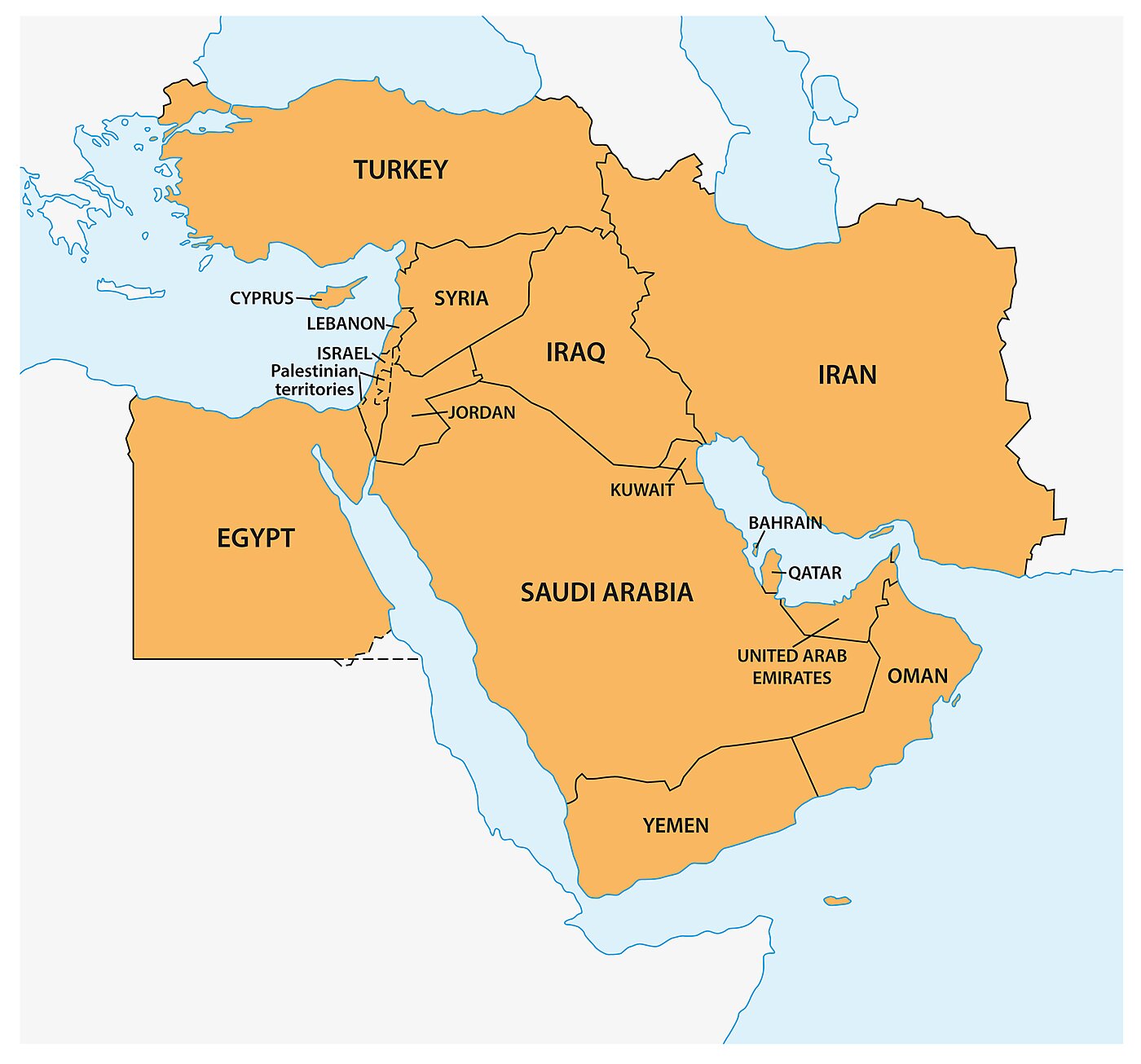
Gaziantep, Turkey – Late yesterday, we traveled from Ankara to Gaziantep, a manufacturing and industrial city in southeastern Turkey, about 30 miles north of the Syrian border. 

It was an eye-opening experience. The city itself is modern and booming. It has several major universities, and is a central hub for commerce and trade. New construction was visible everywhere. The airport was modest, but the flights to and from Gaziantep were full. 
 
The best parts of the trip were the meetings with individual Turks, including business people, students, and teachers. Several families welcomed us into their homes over traditional meals. 
 
The cut off of trade and economic ties since the outbreak of the Syrian civil war has affected some businesses, but most appear to have adapted by finding new markets and new suppliers. Indeed, I and other of my traveling companions were surprised that there were not more outward signs of the brutal war that has raged for over two years, in this city less than 60 miles from Aleppo.
 
The city of Gaziantep, and the surrounding province of the same name, have welcomed hundreds of thousands of refugees from Syria. Syrian refugees are allowed to work. This is a point of pride among the people with whom I met, even though they recognize the hardship that it causes for some already here. They would like more help for refugees from the international community.
 
They also would like leading powers, especially the United States, but also Russia and China, to play a role in resolving the crisis. But that end state could not include Bashar Assad. The sense was that he had to go. One gentleman told me that 40 years of rule by the Assad family was enough. And besides, “he has killed his own people,” he said, “How can he be allowed to remain?” When I explained to another gentleman that it might be hard to find someone who can fill the vacuum left behind, he replied that a Sunni Arab could do the job. Most Syrians are Sunnis, thus they would rally behind a Sunni. And other minorities will then come along. [I’m pretty sure that an Alawite would disagree, and I suspect many Christians would as well.]
 
These people were generally Erdogan supporters. Many worried about how the recent protests were undermining Turkey’s image abroad. They were concerned about the impact on tourism, and on the wider economy. Some, echoing the AKP’s standard line, saw evidence of nefarious foreign plots behind the protesters. Still others felt that the protests started out as a spontaneous expression of concern about Gezi Park, but had been hijacked by interest groups within Turkey, including far left parties, and vehement Erdogan opponents.
 
It is obvious that Erdogan taps into the sentiment among some of the people with whom I met–and arguably many Turks, given that he is the first Prime Minister to have been elected three times–that one shouldn’t be officially ostracized for practicing religion. And it certainly shouldn’t be a crime. In that respect, some Turks believe that the Kemalists went too far. They didn’t merely set up a secular state. They were anti-religious, sneering and dismissive of believers.
 
Others are enthused about the economic revival that has occurred under his watch. One of my hosts explained that many of the protesters were too young to remember the poor economic times, including a financial crisis in 2000-2001 that paved the way for the AKP’s rise to power. The implication was that if Erdogan and the AKP were to lose political control to the opposition, the economy would suffer. 
 
But there is an unsettling authoritarian streak in Erdogan’s behavior. Even strong AKP supporters worry that the party’s identity has become too wrapped up around Erdogan. The party lacks a firm institutional base, and too few voices from within the AKP who can or will challenge Erdogan, or at least help him moderate his ways. He has surrounded himself with sycophants and yes men, a closeted bubble increasingly isolated from reality. They say that in a democracy, the winners of elections have a mandate to govern. They are confident that the majorities that elected them, and returned them to power, are still with them. 
 
Are they? What is going on politically? Has Erdogan overreached? And will the opposition use the recent protests and a growing sense of frustration and unease among some Turks to cut into his power, beginning perhaps with next year’s municipal elections? I’ll write more about that tomorrow.

Only Wusses Go to War Without Cause

President Barack Obama has been evidently reluctant to go to war in Syria, but has started down the long and winding road by deciding to provide weapons to the insurgents. Why he is risking involvement in another conflict in another Muslim nation is hard to fathom.

However, the president did act only after former president Bill Clinton warned that Obama could end up looking like a “total wuss” and “a total fool” if the latter did not drag America into war. If there is anyone who should not be giving war-related advice, it is Bill Clinton.

His “splendid little war” in Kosovo left a mess in its wake, including ethnic cleansing by America’s putative allies. Indeed, he always had a curious view of the purpose of war. He once expressed his frustration that he likely would not be considered a great president without prosecuting a major conflict. 

Moreover, why is Clinton of all people accusing another president of looking like a “total wuss” and “a total fool” for hesitating to go to war? After all, as I relate in the American Spectator, he engaged in all manner of personal maneuvering to avoid being drafted to fight in Vietnam. 

That’s fine by me. It was a stupid war in which tens of thousands of fine Americans died as a result of dumb decisions by foolish Washington policymakers. But it is striking how reluctant he was personally to go to war.  Why, some people might consider him to have been a “wuss.”

As I pointed out:

Intervening in Syria is a serious mistake.  The U.S. has no interest at stake that warrants entanglement in another Middle Eastern civil war.  President Ronald Reagan learned that lesson three decades ago and responded appropriately, by getting out fast.

It’s bad enough if President Obama made his decision because he genuinely believes that the U.S. needs to fight another war in another Muslim nation.  It’s far worse if the president acted to ensure that he doesn’t look like a wuss and a fool.  For there’s no bigger wuss and fool than someone who allows Bill Clinton to manipulate him into going to war.

Read the rest here.


A View from Ankara

Ankara, Turkey — We arrived in Ankara this evening after some sightseeing on the Aegean coast, from the resort town of Kusadasi we traveled to the ancient city of Ephesus. These are the most impressive ruins from the Roman period that I’ve ever seen (excepting Rome).

The amphitheater (pictured below) seats over 24,000 people and is appropriately famous for its sheer size, but the city as a whole was impressive, boasting an estimated population of 250,000 people at its peak circa the 1st or 2nd century AD.

We took a one-hour flight from Izmir to Ankara, the capital. As in Izmir and Istanbul, I was struck by the sense of confidence and growth. Modern buildings are under construction everywhere, and there is an ebullient mood. We passed a large festival with carnival style rides. Cars speed along the main road through the center of town. It is an impressive place. But it will be interesting to see if this upbeat attitude can be maintained in the midst of widespread strikes.

When I first arrived in Turkey, a traveling companion helped me to understand its complexity. The society is characterized by multiple social and cultural divides and disparate identities. Some of the more obvious that I alluded to yesterday include the divide between secular and religious people, and between the military and civilian officials. There is also, of course, the divide between Muslims and non-Muslims. Among Muslims there are those who are very observant and conservative, and others less so. Most are Sunni, but there is also an Alawite community in Turkey, especially near the Syrian border. There are ethnic divisions, most prominently (and sometimes tragically) between the Turks and Kurds, but there are regional divides as well, for example, between the more laid back communities in the coastal cities, and the bustling cosmopolitanism characteristic in the mega-city Istanbul, or here in Ankara. Lastly, there is a traditional political divide between left and right, and various gradations along that continuum.

Consider, then, that someone can be a leftist, a Kurd, and a moderate Sunni Muslim. One can be a relatively conservative, practicing Muslim, and a supporter of the center-right AKP, but also respect a strict separation between church and state, and thus oppose regulations that would impose their beliefs on others. Other more religiously conservative Turks might want tougher laws restricting the use of tobacco or the consumption of alcohol, and be enthused about Prime Minister Recep Tayyip Erdogan’s efforts in this regard. One can be a moderate leftist, a supporter of the main opposition party, the CHP, but also a practicing Muslim.

We Need Real Change at the G8 Meeting

The G8 is meeting in Northern Ireland’s Belfast. The group of important industrial states is chaired this year by British Prime Minister David Cameron.  London’s three top objectives are trade, taxation, and transparency. 

No doubt, there will be a flurry of ponderous public statements and breathless press analyses. But as I argue on National Interest online, the meeting likely will be a waste. 

Trade liberalization is a worthy goal, but the U.S. and European commitment to agricultural subsidies has essentially killed the Doha round under the World Trade Organization. America wants to negotiate the Trans-Pacific Partnership, but including Japan, which wants to protect its farmers, while excluding China, which is the largest economy in Asia, makes the process more than a little complicated. As for a U.S.-European Union agreement, France is standing in the way and other member states are likely to resist liberalization in one area or another.

Only on taxes is more progress likely—unfortunately. As Dan Mitchell long has pointed out, attacks on “tax havens” and such are primarily attempts to mulct more money out of the productive to subsidize the influential. (Influential and greedy. Indeed, higher taxes are used to satisfy perhaps the basest of human emotions, envy.)

Transparency is a better objective, but the greatest offenders are non-G8 members, especially in the Third World. As I point out:

The most important single step in this direction the G8 could take would be to discourage rather than encourage government-to-government transfers, or misnamed “foreign aid.” (G8 gatherings usually include boilerplate promises to up official development assistance.) The wealthy nations should cut the financial windpipe of the most corrupt and wasteful regimes.  Private humanitarian and development assistance from NGOs to private people, and private investment and trade to private companies, are far more likely to deliver positive economic and social results with more limited opportunities for graft and abuse.

Finally, the G8 involves a curious anomaly for the U.S. While Washington pursues greater economic integration in the name of encouraging prosperity and growth, the U.S. could achieve the same result by reducing subsidies to the same countries. The Cold War has been over for 24 years. World War II ended 68 years ago. It really is time for Washington to stop defending Europe and Japan, as well as a number of other, non-G8 defense dependents, such as South Korea.

The Obama administration could make this G8 meeting more useful than normal by adding real substance to the agenda.

Cato Brief Gains National Acclaim

Remember Bond v. United States, that typical story of adultery, federalism, and chemical weapons?  Cato has actually filed four briefs in Bond, most recently last month, the last three making the point that the president can’t expand federal constitutional powers simply by signing a treaty.

Our arguments are based on a 2005 law review article by Georgetown law professor (and Cato senior fellow) Nicholas Quinn Rosenkranz, the primary author of these last three briefs. It’s certainly unusual for a law review article to play a pivotal role in a Supreme Court case, but, as those following Bond know, there’s little “usual” about this case. 

Maybe that’s why the national media is starting to pay attention to our attempt to get the Supreme Court to be faithful to this particular corner of the Constitution: last week, the National Law Journal declared our Bond filing its “brief of the week.”

For more on this case, and our arguments, watch the lunch panel we had on Friday, featuring Nick Rosenkranz and Chief Judge Alex Kozinski of the U.S. Court of Appeals for the Ninth Circuit.  The Supreme Court will hear oral argument in Bond in October.

First Impressions from Turkey

Kusadasi, Turkey, on the Aegean Sea – My impressions from my first 24 hours in Turkey are decidedly personal and narrow–I’m observing Turkish society through a straw. So notwithstanding the images of protest and unrest that are prevalent on Twitter and the international media, the vibe generally is of a confident, vibrant society that is proud of its progress.
 
I arrived in Istanbul yesterday (Saturday), and we spent most of today in Izmir (the ancient city of Smyrna). Doug Bandow wrote a fine column on the political turmoil–I’m reluctant to call it unrest, which makes it sound more serious than it is. But I have begun to pick up on some of the currents of opinion in this complex country that might help to explain how a minor dispute over some trees in Gezi Park has let loose some long-simmering feelings about Recep Tayyip Erdogan and his Justice and Development Party (AKP).
 
I’ve seen lots of pictures on Twitter that prove the protests are not limited to a few hundred (or thousand) in Taksim Square. From my limited perspective on the first evening, at the Istanbul Gonen Hotel, and this morning at the airport, most Turks appeared to be completely oblivious. A wedding party at the hotel went well into the night (though I was too tired to care).
 

Istanbul is a massive, sprawling city, of at least 15 million people. There is construction going on everywhere, but also a fair amount left to do. The back streets are pretty much what you’d expect in a city like this (which is to say crowded and chaotic), but the dedicated bus lanes that operate in parallel with the main highway and elsewhere are popular and, I’m told by someone who uses them regularly, extremely convenient. The primary highways flow smoothly, including from and to the airport. 
 
Erdogan, the former mayor of Istanbul, is given credit for initiating a series of public works projects that will ease some of the traffic congestion, and various economic and governance reforms that have helped Turkey to achieve stunning growth over the past decade. Even during the economic doldrums in the United States and Europe, Turkey has done well. 
 
After a short flight this morning from Istanbul to Izmir, we met over lunch with Cevat Durak the mayor of Karsiyaka, one of the municipalities (about 325,000 people) adjacent to Izmir. Izmir, and Karsiyaka especially, is a stronghold of the main opposition party, the Republican People’s Party (CHP). The CHP is proud of Izmir. Proud, for example, of its ability to maintain a hold on municipal politics, despite AKP attempts to thwart them. More generally, Izmir is proud of being different from Istanbul, and the rest of Turkey. Residents who know a bit about the United States liken it to the more laid back west coast. Think of it as the San Diego of Turkey.
 
Turkish flags, the iconic red with a white crescent and star, are everywhere. In Izmir, however, I saw many flags with Ataturk’s picture superimposed. I had to have one (8 Turkish Lira in the market). I figure this will be a collector’s item when Erdogan bans them.
 
He couldn’t actually do that, of course. Kemal Ataturk, the founder of modern Turkey, is an icon here. His picture is ubiquitous. In some circles, however, and especially among some in the AKP, to be called a Kemalist would be an insult. Erdogan has risen to prominence by promising to push back on some of the excesses of Kemalism, which some see as being anti-religious as opposed to merely secular. Others welcome Erdogan’s assertion of civilian control over the military. 
 
But not everyone is entirely pleased. In the rally held down one of the main streets in Izmir, a little after 6 p.m. local time, there were quite a few Turkish flags with Ataturk. I also saw banners for the leftist parties, the TKP and DSIP. The message on many small banners Boyun Egme, translates roughly to “don’t give up” or “don’t bow down” (to Erdogan and the AKP).
 
Finally, we arrived here in Kusadasi, a beautiful seaside town popular with European tourists. A medium-sized cruise ship was tied up at the pier not far from a Byzantium-era castle/fortress. New and old reside comfortably side by side here in Turkey (except when a new construction project stumbles upon ancient artifacts buried deep below the surface, which apparently happens with some regularity). 
 
As I checked into my hotel, a little after 10 pm, another small rally (several hundred people, I’m guessing) walked just beneath my window. I didn’t see the same left-wing party banners as in Izmir, and most of the flags were traditional Turkish (i.e. without Ataturk’s picture). But the words Gezi and Taksim were obvious even to my untrained (i.e. non-Turkish speaking) eye. This wasn’t a pro-Erdogan rally.
 
Kusadasi, Turkey
 
We’ll be seeing more of the coast tomorrow morning by boat, and then off to Ephesus, an ancient town with both religious and cultural significance. I’ll have time to gather my thoughts, and I’ll try to write more about my impressions of the political winds after we arrive in Ankara.